
Tag Archives: Nature Magazine

Research Preview: Nature Magazine – April 20, 2023

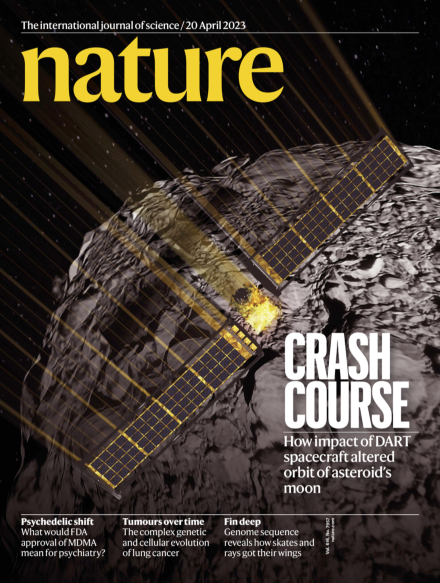
Volume 616 Issue 7957, 20 April 2023

nature Magazine – April 20, 2023 issue: Although currently there is no known threat to Earth from asteroids, strategies to protect the planet from a collision are being explored. On 26 September 2022, NASA and the Johns Hopkins Applied Physics Laboratory successfully tested one such approach: the Double Asteroid Redirection Test (DART) spacecraft was deliberately crashed into Dimorphos, a moon orbiting the small asteroid Didymos, resulting in a change in the moon’s orbit.

Is Africa’s Great Green Wall project withering?

The plan to re-green a 7,000-kilometre swathe south of the Sahara is at risk of losing its pan-African vision and ambition.

A glacier’s catastrophic collapse is linked to global warming

Eleven hikers died after weeks of unusually warm weather led to melting of the Marmolada Glacier in the Alps.

Sunshine is transformed into green hydrogen on an ambitious scale

Prototype facility smashes record for converting solar power to hydrogen for its technology category.

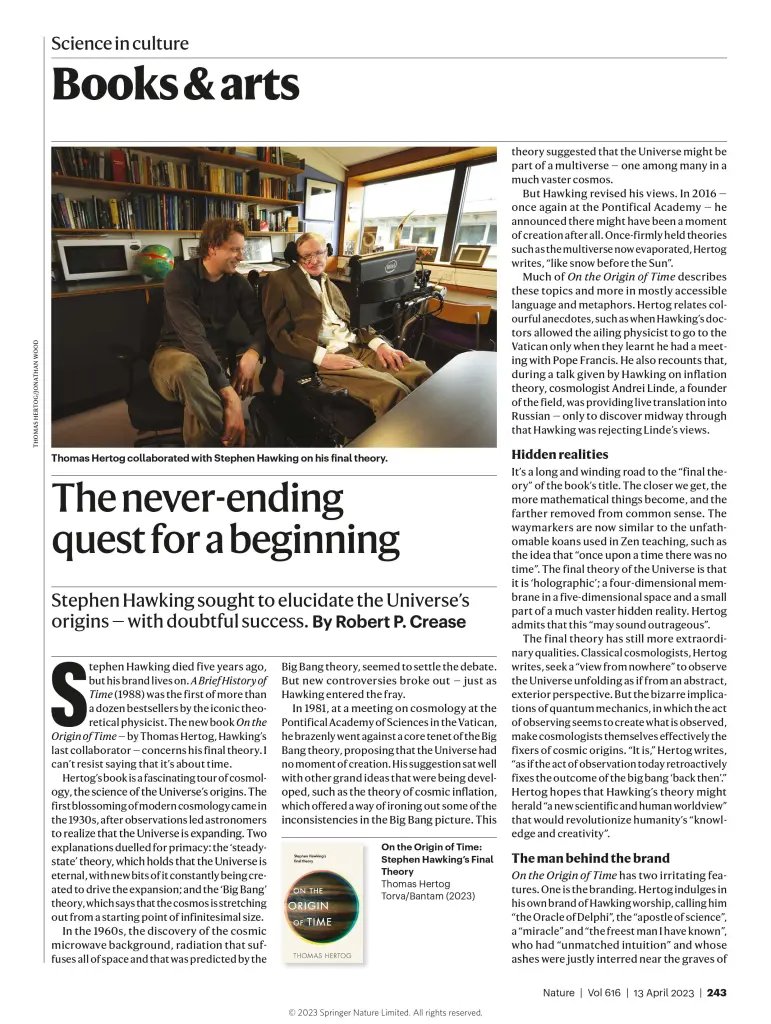
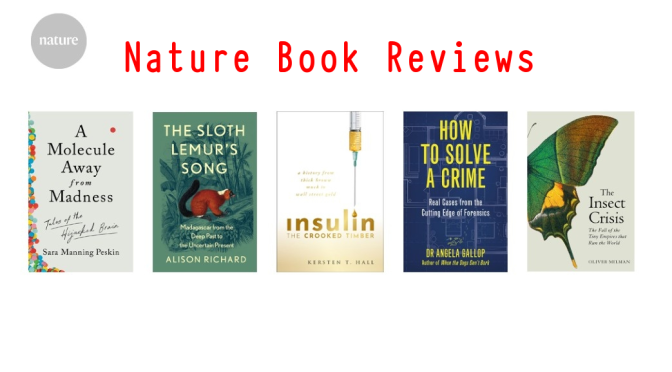
Book Reviews: ‘On The Origin Of Time – Stephen Hawking’s Final Theory’

nature Magazine Science Book Reviews – April 2023

Image

On the Origin of Time

Like his mentor and colleague Stephen Hawking, Thomas Hertog has never shied away from being ambitious in theorizing about the universe. This sweeping book provides an accessible overview of both what we know about cosmology, and some audacious ideas for moving into the unknown. It is an introduction to Hawking’s final theory, but also a glimpse into even grander theories yet to come.

Professor Sean Carroll, author of The Biggest Ideas in the Universe

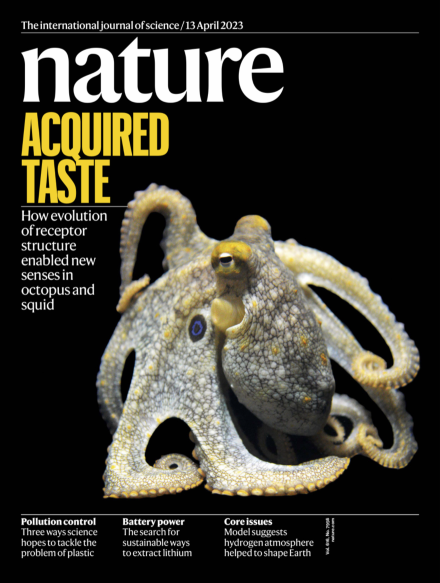
Research Preview: Nature Magazine – April 13, 2023

Volume 616 Issue 7956

nature Magazine – April 13, 2023 issue: Octopuses use chemotactile receptors (CRs) in the suckers on their arms to ‘taste by touch’ as they explore their sea-floor environment. These proteins evolved from neurotransmitter receptors to allow octopuses to detect poorly soluble natural products on contact.

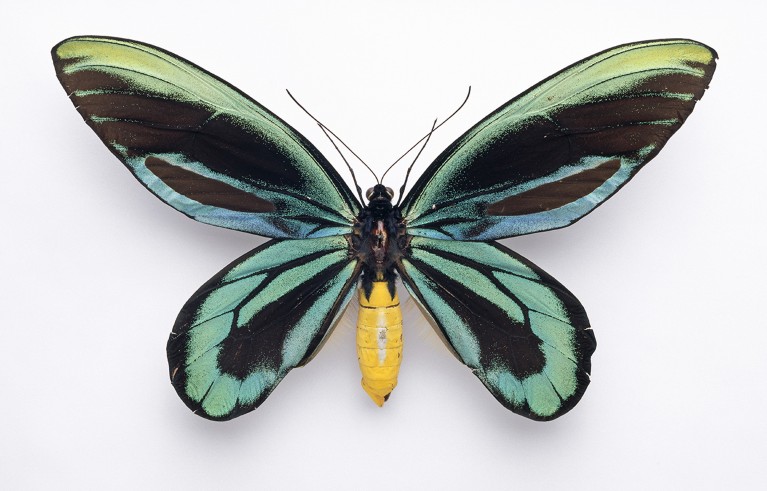
World’s biggest butterfly is low on genetic diversity

Ornithoptera alexandrae, Queen Alexandra's birdwing butterfly.
Rare beauty: the Queen Alexandra’s birdwing can have a wingspan of more than 28 centimetres. Credit: Alamy

An endangered butterfly, found only in Papua New Guinea, has had a small population for a million years.

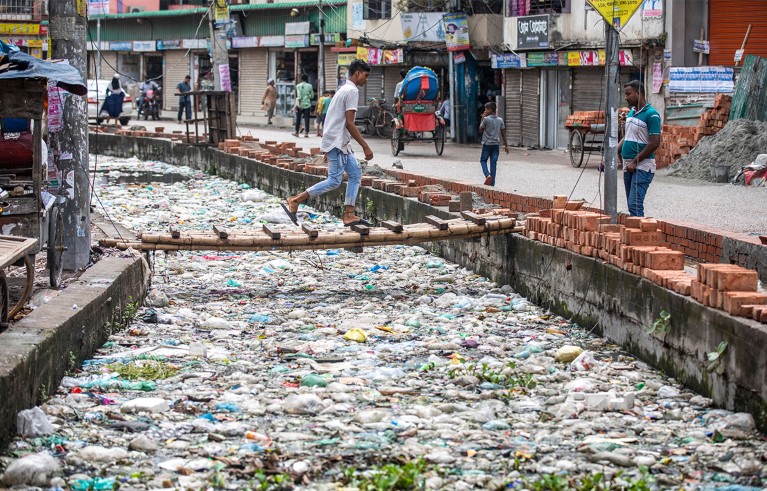
Three ways to solve the plastics pollution crisis

Man walks through a canal which is blocked by piles of plastic waste and food waste dumped, Bangladesh, Dhaka.
A canal blocked by waste, including discarded plastic, in Dhaka, Bangladesh. Credit: Ahmed Salahuddin/NurPhoto/Shutterstock

Researchers are studying how more-sophisticated policies, smarter recycling and new materials could stem the tide of waste.

Research Preview: Nature Magazine – April 6, 2023

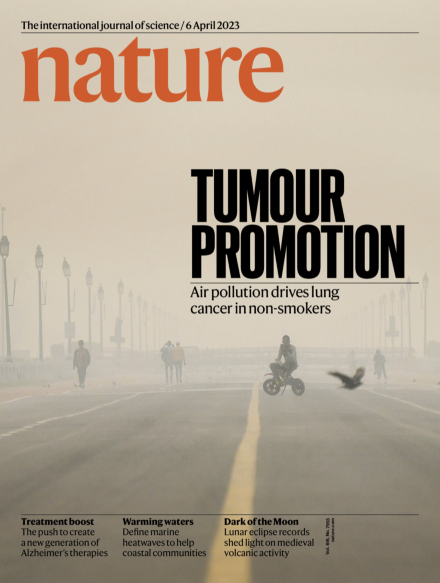
Image

nature Magazine – April 6, 2023 issue: In 1947, Isaac Berenblum proposed that the development of cancer was a two-stage process: the first step introduces mutations into healthy cells, the second then promotes tumour growth through tissue inflammation. In this week’s issue, Charles Swanton and his colleagues investigate the role of particulate matter in prompting the development of non-small-cell lung cancers and find that cancer initiation in response to pollution conforms to Berenblum’s model. 

Carbon dioxide removal is not a current climate solution — we need to change the narrative

Drastically reduce emissions first, or carbon dioxide removal will be next to useless.

Bird-flu virus makes itself at home in Canada’s foxes and skunks

The virulent H5N1 strain now sweeping across the world is adapting to its mammalian hosts in northern North America.

Conquering Alzheimer’s: a look at the therapies of the future

Researchers are looking to drug combinations, vaccines and gene therapy as they forge the next generation of treatments for the condition.

Research Preview: Nature Magazine – March 30, 2023

Volume 615 Issue 7954

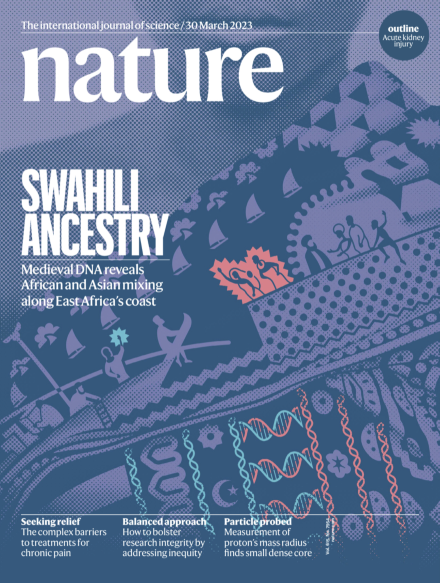
nature Magazine – March 30, 2023 issue: Medieval people on the Swahili coast of East Africa were among the first sub-Saharan people to practise Islam. David Reich, Chapurukha Kusimba and colleagues sequenced DNA from 80 individuals buried in six medieval and early modern coastal Swahili stone towns, dating between 1250 and 1800. Their analysis shows that African women and Asian men began mixing along the East African coast before the year 1000, and that the earliest Asian migrants were of largely Persian origin. 

A gem of a material could provide a shield for spacecraft

Material that includes carbon with the same structure as diamond could be used to protect satellites from space radiation.

It’s bad! Awful! Negative headlines draw more readers

People scrolling online news are 1% less likely to click on an article for each positive word in its title.

GPT-4 is here: what scientists think

Researchers are excited about the AI — but many are frustrated that its underlying engineering is cloaked in secrecy.

Research Preview: Nature Magazine – March 23, 2023

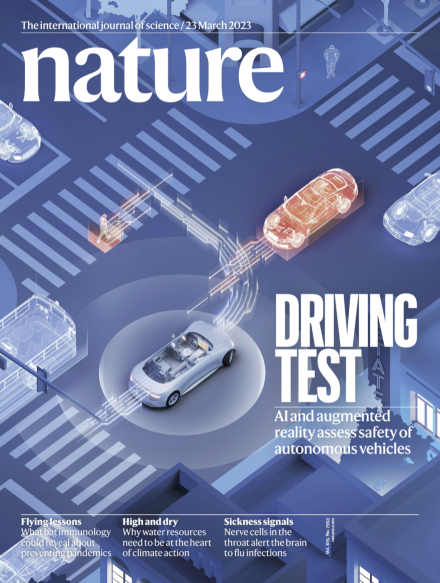
Image

nature Magazine – March 23, 2023 issue: One of the main hurdles to putting autonomous cars on the road is how to ensure the reliability of the artificial intelligence that replaces the human driver. Evaluating the safety of an AI driver to the level of a human in a naturalistic environment would require testing across hundreds of millions of miles — something that is clearly impractical. 

South Pacific plankton go berserk after minor cyclone

The biggest phytoplankton bloom ever recorded in the South Pacific Ocean was triggered by a small but lingering storm.

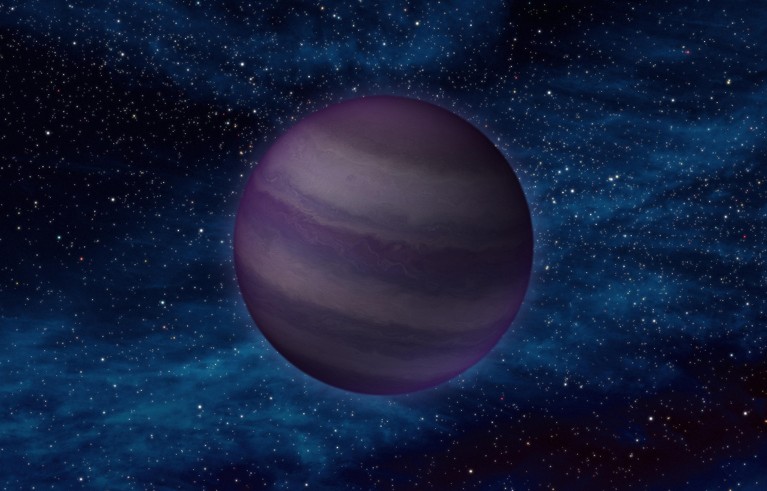
Planet or failed star? A mysterious object blurs the line

A body classified as an exoplanet has been shown to nurture thermonuclear fusion of heavy hydrogen — a trait of objects called brown dwarfs.

Gigantic map of fly brain is a first for a complex animal

Fruit fly ‘connectome’ will help researchers to study how the brain works, and could further understanding of neurological diseases.

Research Preview: Nature Magazine – March 9, 2023

Volume 615 Issue 7951

nature MagazineMarch 9, 2023 issue:

Sims-style ‘digital twin’ models can tell us if food systems will weather crises

From COVID-19 to the war in Ukraine, virtual models could inform global food policy before emergencies unfold.

Big bats fly towards extinction with hunters in pursuit

Human hunt at least 19% of bat species worldwide — especially flying foxes, which can have wingspans of 1.5 metres.

Close-up of a Mauritian flying fox resting upside-down on a banana plant.
The Mauritian flying fox (Pteroptus niger). As relatively large bats, flying foxes are hunted more heavily than other species. Credit: Fabrice Bettex Photography/Alamy

Large tropical bats with narrow home ranges are disproportionately likely to be hunted by humans, according to a global analysis of 1,320 bat species — nearly all of the 1,400 known to science1.

How to stop the bird flu outbreak becoming a pandemic

From tracking the disease’s spread in wild birds to updating human vaccines, there are measures that could help keep avian influenza in check.

A veterinarian injects avian flu vaccine into a goose in Taiyuan, Shanxi Province of China.
A goose being vaccinated against avian influenza in China.Credit: Wei Liang/China News Service/Getty

Fears are rising about bird flu’s potential to spark a human pandemic, as well as its destruction of wildlife and farmed birds. An 11-year-old girl tragically died in Cambodia last week after catching avian influenza. That followed reports earlier this year of the virus spreading from mammal to mammal through a mink farm, and causing mass mortality in Peruvian birds and sea lions. Since the beginning of 2022, more than 50 million poultry birds in the United States, and a similar number in Europe, have either died of the disease or been killed in efforts to stem its spread. Can bird flu be stopped, and if yes, how?

Reviews: The Best New Science Books (Mar 2023)

nature Magazine Science Book Reviews – March 2023

The Good Life

Robert Waldinger & Marc Schulz Simon & Schuster (2023)

Isolation during the COVID-19 pandemic highlighted the link between happiness and good relationships. Scientific evidence for the importance of relationships motivates this always engrossing, sometimes moving, study of happiness, grounded in the Harvard Study of Adult Development. Beginning in 1938, the project has followed two generations of the same families. Current director Robert Waldinger and associate director Marc Schulz show in detail how “the good life is a complicated life. For everybody.”

Life

Paul R. Ehrlich Yale Univ. Press (2023)

Biologist Paul Ehrlich is best known for writing — with his wife, conservation biologist Anne Ehrlich — the 1968 book The Population Bomb, which sold two million copies and was widely translated. Its controversial warning of a crisis of overpopulation gave him global exposure. He became a public scholar working with people from many disciplines: economics, political science, history, law, aviation, military intelligence and dentistry “to name a few”, he remarks in his frank, polyphonic autobiography, dedicated “For Anne: Sine Qua Non”.

Masters of the Lost Land

Heriberto Araujo Atlantic (2023)

Since 2000, more than 2,000 people worldwide have been murdered for defending their lands or the environment. About one-third were Brazilian, mostly from the Amazon rainforest, notes investigative journalist Heriberto Araujo. He tells the story of the courageous Maria Joel, widow of Dezinho, the leader of a small Amazonian farmworkers’ union. Joel has fought to bring to justice the land baron who ordered her husband’s death. Based on four years of research in Brazil, the book is original, detailed and persuasive.

The Leak

Robert P. Crease & Peter D. Bond MIT Press (2022)

Seven Nobel prizes have been awarded for work at Brookhaven National Laboratory in Upton, New York. Yet a leak of radioactive water from the facility turned its 50th anniversary in 1997 into a year of “chaos rather than celebration”, write philosopher of science Robert Crease — author of a history of the lab — and former Brookhaven physicist Peter Bond. Although the incident posed no health hazard, according to federal, state and local officials, it sparked a “firestorm” of activism and politics, captured in this vivid first-hand account.

Graph Theory in America

Robin Wilson et alPrinceton Univ. Press (2023)

The modern development of graph theory — which models relationships between pairs of objects in groups — began in 1876 with James Joseph Sylvester, a British mathematician then in the United States. His work was first published in Nature. In 1976, US mathematicians Kenneth Appel and Wolfgang Haken solved a long-standing conundrum in the field, the four-colour problem. The intervening century is described in this graphically illustrated historical treatise by three British and US mathematicians.

doi: https://doi.org/10.1038/d41586-023-00673-2

Research Preview: Nature Magazine – March 2, 2023

Volume 615 Issue 7950

nature – March 2, 2023 issue:

Custom-built drug shows its powers against tuberculosis

An upgraded antibiotic holds promise for treating tuberculosis strains that are resistant to existing treatments.

Kevlar helps to make one tough synthetic tendon

A water-filled gel has the strength and elasticity of natural tendon.

Big dino, little dino: how T. rex’s relatives changed their size

‘Impressive’ fossil analysis reveals why some dinosaurs were massive but their cousins were tiny.

Research Preview: Nature Magazine – Feb 23, 2023

Volume 614 Issue 7949

nature – February 23, 2023 issue:

Exercise triggers fat breakdown at some times of day and not others

Adipose tissue in mice dumps fat during early workouts rather than late ones.

Cities worldwide claw vast amounts of land from the sea

China, the United Arab Emirates and other countries are adding area by converting wetlands and shallow waters into solid land.

Genome editor tackles disease that can cause sudden death

Scientists repair a mutation that causes heart-muscle abnormalities and can kill without warning.