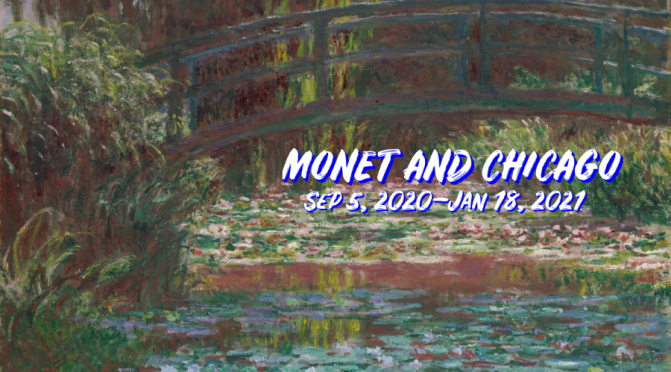
Monet And Chicago Sep 5, 2020–Jan 18, 2021
Learn how the changes Monet made to this painting captured the seaside town he remembered from his youth rather than the tourist destination it had since become.

Learn how the changes Monet made to this painting captured the seaside town he remembered from his youth rather than the tourist destination it had since become.
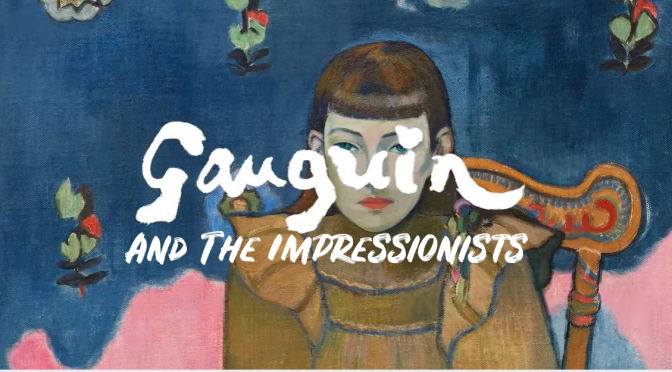
Step into our galleries to experience ‘Gauguin and the Impressionists: Masterpieces from the Ordrupgaard Collection’. Explore the carefully curated collection of Wilhelm and Henny Hansen, who utilised their exceptional eye for quality to assemble works by Renoir, Monet, Degas, Morisot, Manet and Pissarro among many others.
From the Wall Street Journal (June 19, 2020):
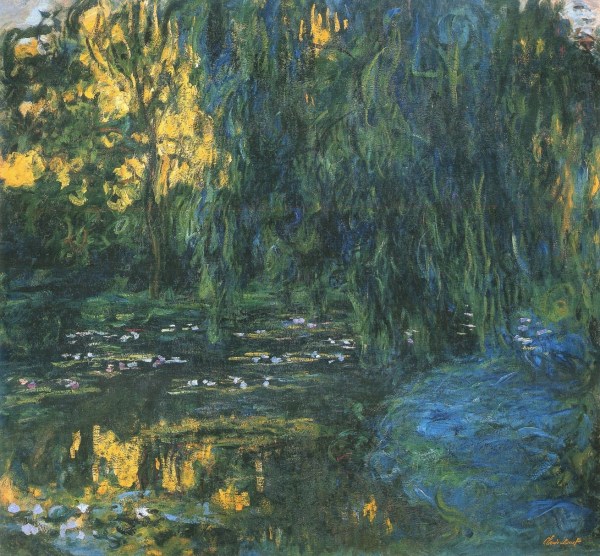 …what perhaps absorbed him most was a suite of 10 paintings of one of the weeping willows he had planted on the shores of his pond in 1893, when he had purchased the property to construct his aquatic paradise. The tree had grown in girth and grandeur over the intervening years, its leafy arms now extending out over the dappled waters like an impassioned conductor energizing an orchestra.
The trees in Monet’s water garden are much less known than the flowers, but they were central to his vision of what that ideal space should include and thus dear to his heart. In 1912, when severe winds and rains wreaked havoc on his horticultural handiwork, what Monet mourned most was the damage to his willows.
Weeping willows, of course, evoke mourning by their very appearance no less than by their appellation, their drooping tendrils the very symbol of sorrow. It’s therefore not surprising, given Monet’s sensitivity to his nation’s plight, that he turned to this tree to express the trauma of the moment.
 In the summer of 1891, Claude Monet began to paint a row of poplar trees that lined the river Epte near his house at Giverny. The trees were auctioned off for timber shortly thereafter, but Monet made a deal with the purchaser to delay cutting them so he could continue to paint the trees through the autumn. Using a shallow rowboat that had slots in the bottom capable of holding several canvases at once, Monet painted twenty-four pictures of the poplars from his floating studio.
The resulting pictures reflect the view at different seasons and times of day and were known as the “Poplar Series” when they were exhibited in February 1892.
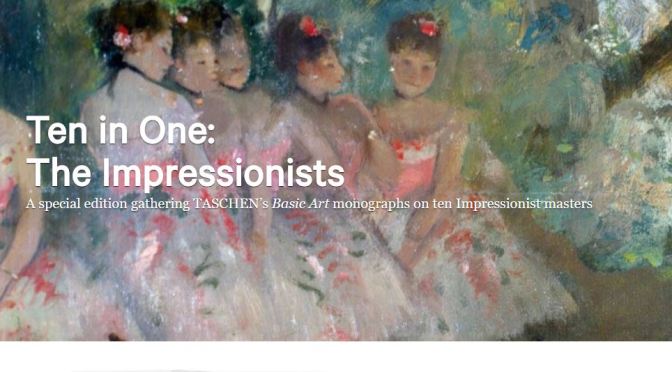
 The lives and oeuvres of Impressionist pillars Cézanne, Degas, Gauguin, Manet, Monet, Renoir, Rousseau, Seurat, Toulouse-Lautrec, and van Gogh are each explored in-depth in TASCHEN’s Basic Art series. Now, this volume combines all 10 monographs into one for the price of three.
“These seductive books have slick production values, excellent illustrations, and smart texts. Each one is a fast-food, high-energy fix on the topic at hand.” – The New York Times Book Review
This book gathers ten Basic Art monographs into one volume featuring:

With blockbuster exhibitions, record-breaking auction prices, and packed museums, Impressionism remains close contender for the world’s favorite period of painting. Its favorite subjects— from dappled harbor scenes and summer days to vibrant Parisian salons and gardens—brim with optimism and joie de vivre. The works once dismissed as unfinished or imprecise are now beloved for their atmospheric evocation of time and place, as well as the stylistic flair of rapid brushstrokes upon canvas.
What we take for granted today—the relativity of perception depending on the viewer, lighting mood, or location to the object—was then the inspiration for some of the finest paintings in art history. Consider Monet’s 30+ variations of the Rouen Cathedral, Cézanne’s dazzling experimentation with color, Gauguin’s primitivist innovations, or Manet’s scandalous nudes: rarely has a single genre produced so many brilliant artists in such a short time.
Since 1985, TASCHEN’s Basic Art series has published some 200 individual volumes, making it the world’s most successful art-book series. Each title contains an extensive text on the artist’s life and work, a detailed biography, and some 100 high-quality color illustrations with explanatory captions. With Ten in One, TASCHEN now presents ten Basic Art monographs in one volume. A must for every art lover!
From a Arts and Culture Texas online article:
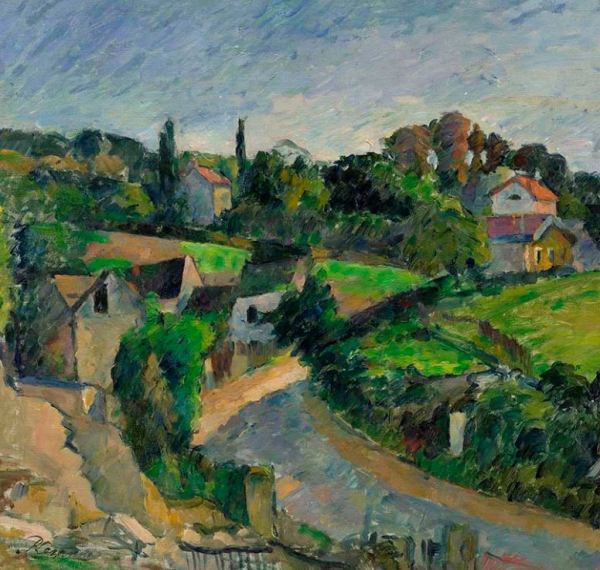 While all of the works on exhibit hold special interest, Aurisch identifies several gems. For example, Van Gogh fans will enjoy his spectacular perspectival rooftop view from the window of his room in The Hague in 1882. Maurice de Vlaminc’s 1906 Dancer at the “Rat Mort” (La danseuse du “Rat Mort”) is a delight with his Fauve treatment of the figure; through color and gestural line, it’s as though we are witnessing a shift into the 20th century. And Henri Matisse’s 1943 still life titled Lemons against a Fleur-de-lis Background (Citrons sur fond rose fleurdelisé) vibrates with lively pink patterned wallpaper and a stacked brick platform, charged with Japonisme energy.
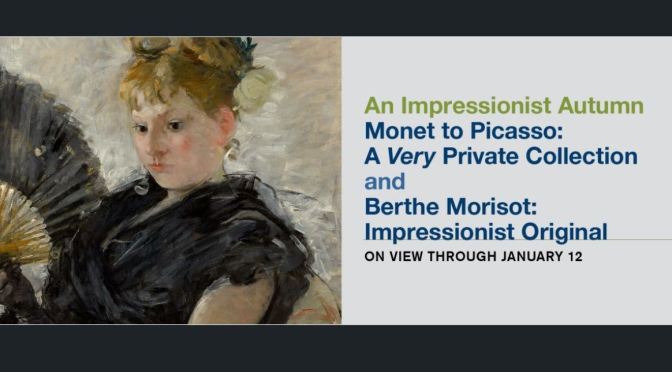
This fall season, the Museum of Fine Arts, Houston presents Monet to Picasso: A Very Private Collection and Berthe Morisot: Impressionist Original, billed together under the theme of “An Impressionist Autumn,” on view Oct. 20, 2019 through Jan. 12, 2020. The two exhibitions offer museum visitors the chance to peek into the private lives of artist, muse, and society at large.
To read more: http://artsandculturetx.com/fall-for-impressionism-morisot-and-monet-to-picasso-at-mfah/
From a Denver Art Museum online article:
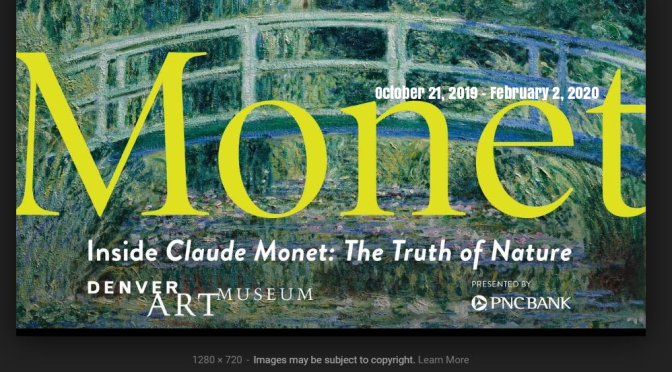
 The Denver Art Museum will be home to the most comprehensive U.S. exhibition of Monet paintings in more than two decades. The exhibition will feature more than 120 paintings spanning Monet’s entire career and will focus on the celebrated French impressionist artist’s enduring relationship with nature and his response to the varied and distinct places in which he worked.
Monet traveled more extensively than any other impressionist artist in search of new motifs. His journeys to varied places including the rugged Normandy coast, the sunny Mediterranean, London, the Netherlands, and Norway inspired artworks that will be featured in the presentation. The exhibition will uncover Monet’s continuous dialogue with nature and its places through a thematic and chronological arrangement, from the first examples of artworks still indebted to the landscape tradition to the revolutionary compositions and series of his late years.
Website: https://denverartmuseum.org/exhibitions/claude-monet


 Boomers Daily