

The London Magazine (December 2, 2024): The latest issue features poetry, short fiction and…

The London Magazine (December 2, 2024): The latest issue features poetry, short fiction and…
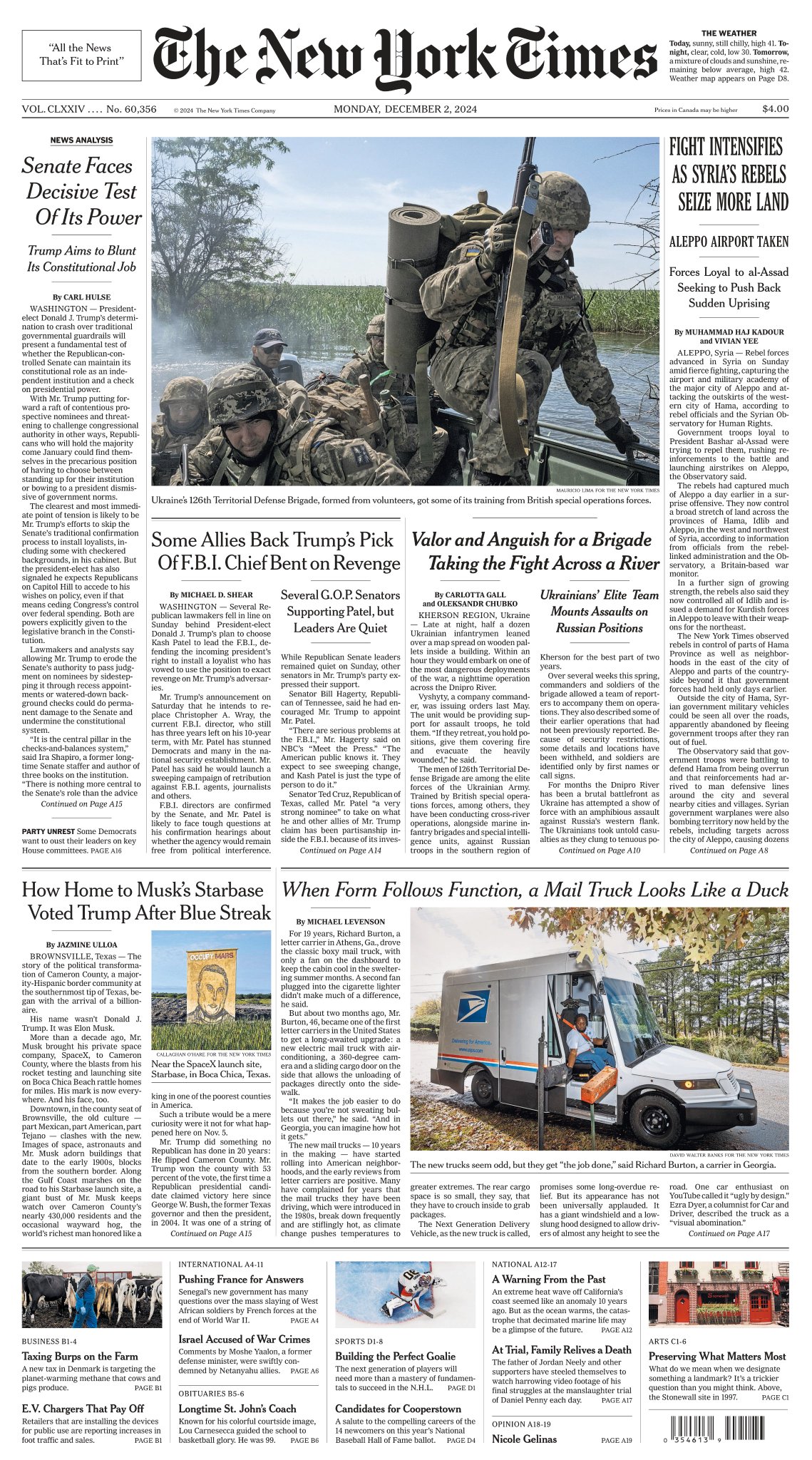
Forces opposed to President Bashar al-Assad have captured the Aleppo airport and are attacking the western city of Hama, according to local officials and a Britain-based war monitor.
Amphibious operations across the Dnipro River at Kherson illustrated the suffering and endurance of Ukrainian forces. A team of Times journalists observed the perilous movements.
Several lawmakers expressed support on Sunday for the president-elect’s plan to install a loyalist who has vowed to use the position to exact revenge on adversaries.
President-elect Donald J. Trump is threatening to challenge the institution’s historic role, and the Constitution, with his prospective nominees and threats to push the boundaries of executive authority.
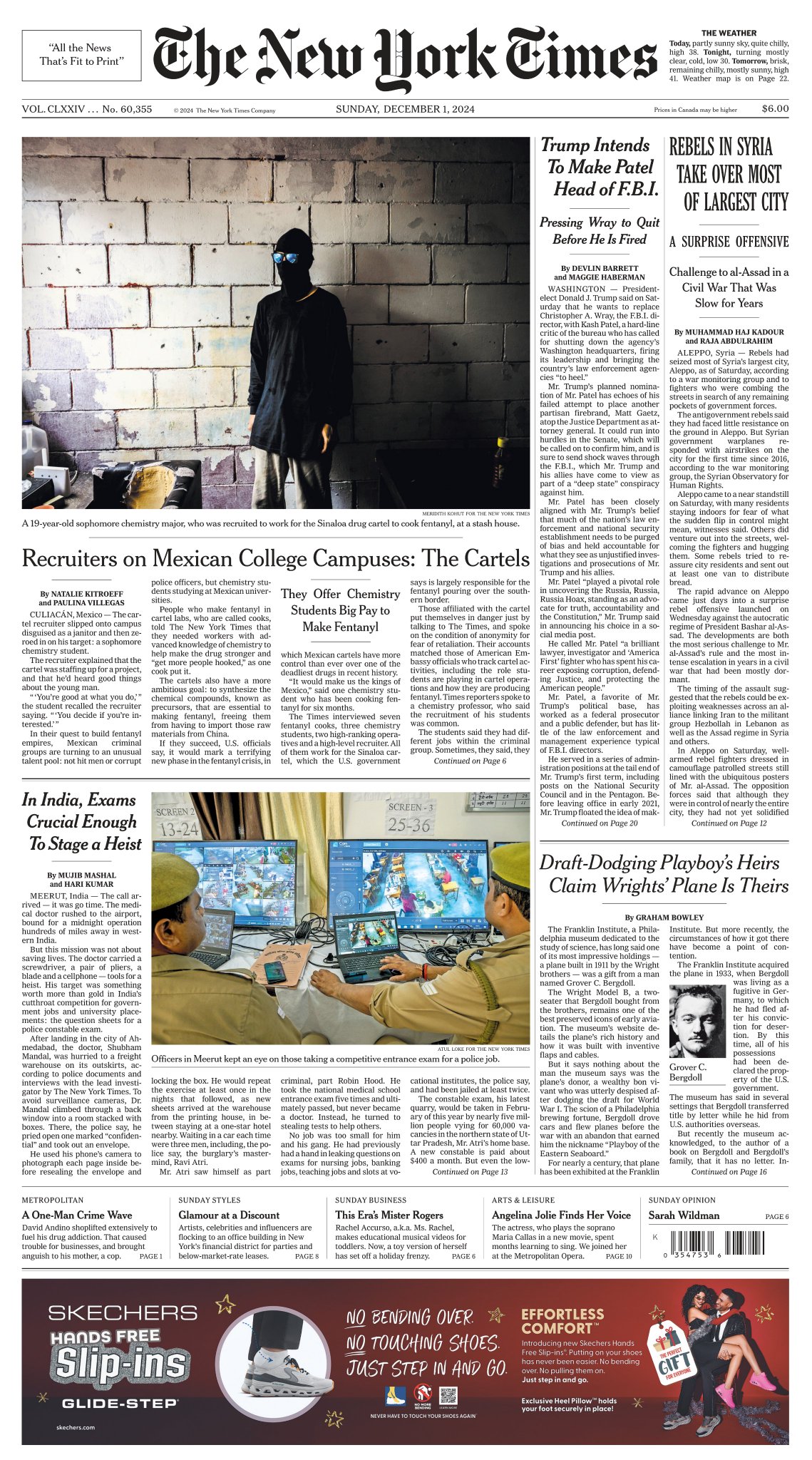
The rapid advance on Aleppo came just four days into a surprise opposition offensive that is the most intense escalation in years in the civil war.
President-elect Donald J. Trump turned to a firebrand loyalist to become director of the bureau, which he sees as part of a ‘deep state’ conspiracy against him.
Donald Trump’s pick to be health secretary, Robert F. Kennedy Jr. has reached a pinnacle of power after a life of fame and addictions and a career intertwined with conspiracy theories.
Criminals turn college campuses into recruitment hubs, recruiting chemistry students in Mexico with big paydays.


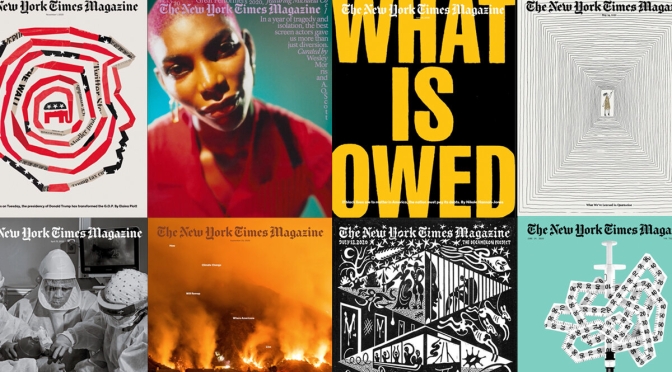
THE NEW YORK TIMES MAGAZINE (November 30, 2024): The 12.1.24 Issue features Susan Dominus on an I.V.F. mix-up; Amir Ahmadi Arian on the director Mohammad Rasoulof; Francesca Mari on deadly superbugs bred by modern warfare; and more.
Two couples in California discovered they were raising each other’s genetic children. Should they switch their girls?
Researchers are trying to understand why resistant pathogens are so prevalent in the war-torn nations of the Middle East.
The magazine’s Ethicist columnist on hypocrisy. By Kwame Anthony Appiah
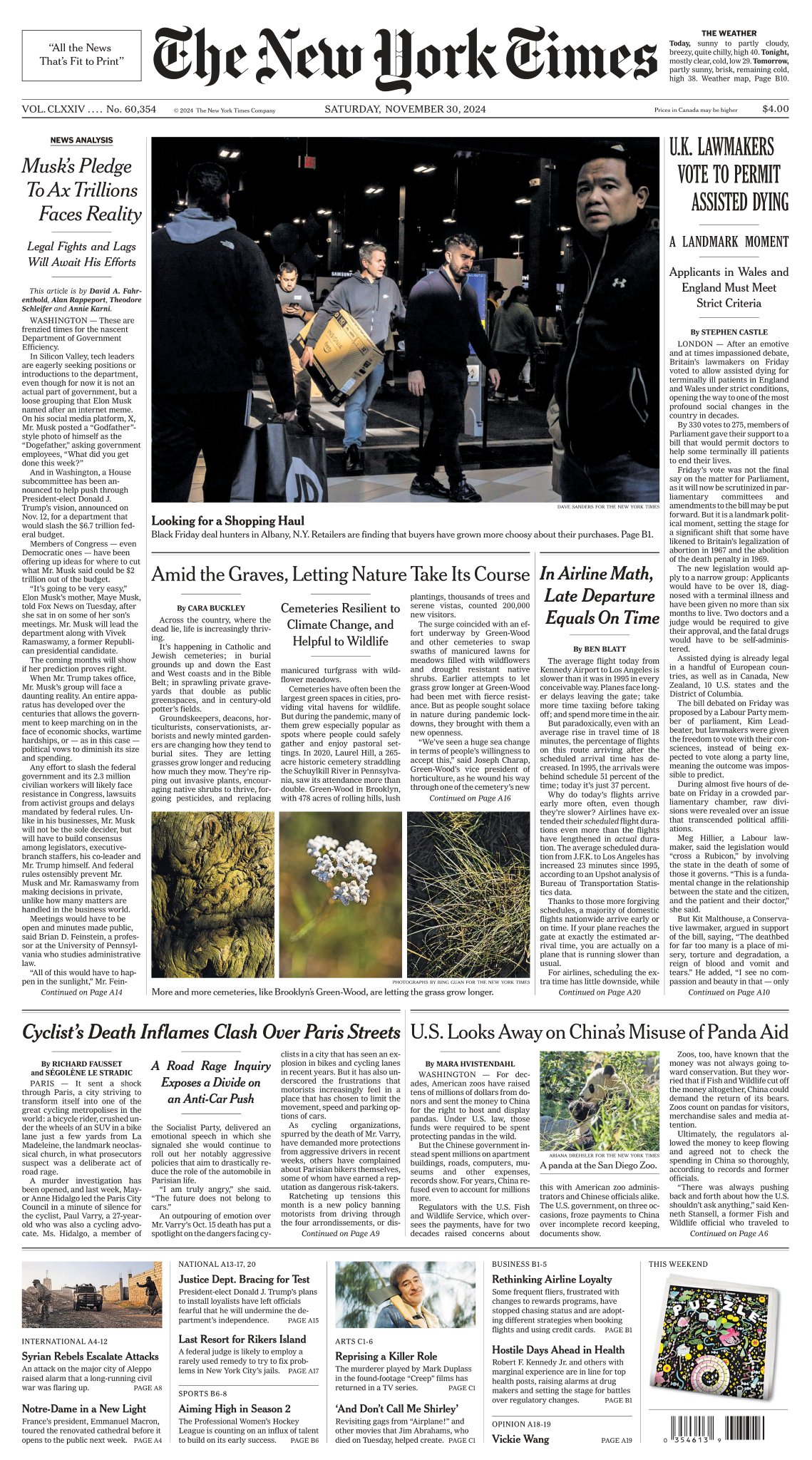
The so-called Department of Government Efficiency, with Elon Musk as co-leader, has advantages that past budget-cutters did not, but laws and court challenges can still make change slow and difficult.
After an emotional debate, Parliament voted on Friday in favor of allowing assisted suicide for some terminally ill people in England and Wales.
More burial sites are forgoing pristine lawns for drought resistant plants and wildflowers that help wildlife. Efforts picked up in the pandemic.
Flying in America has become slower even as official statistics have shown improvement.
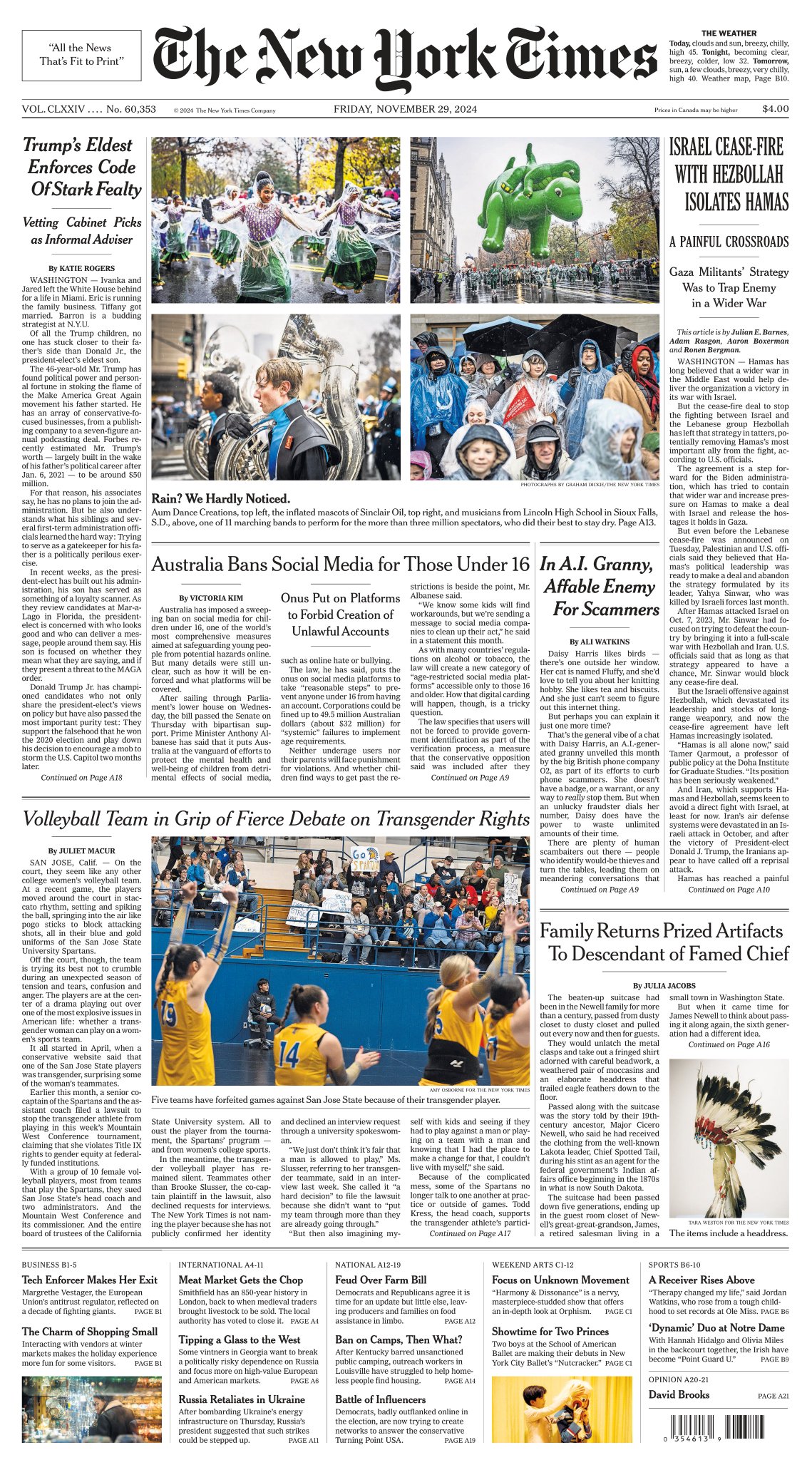
Israel’s offensive against Hezbollah and the cease-fire to stop the fighting in Lebanon have left Hamas increasingly isolated.
His siblings have long retreated from the inner circle, but the president-elect’s eldest son has made a name for himself as the person who can best assess loyalty to the Trump political brand.
The law sets a minimum age for users of platforms like TikTok, Instagram and X. How the restriction will be enforced online remains an open question.
Daisy Harris, an A.I.-generated English granny, has been stymying scammers with meandering, time-wasting conversations. But can she actually make a dent in the flood of fraud?
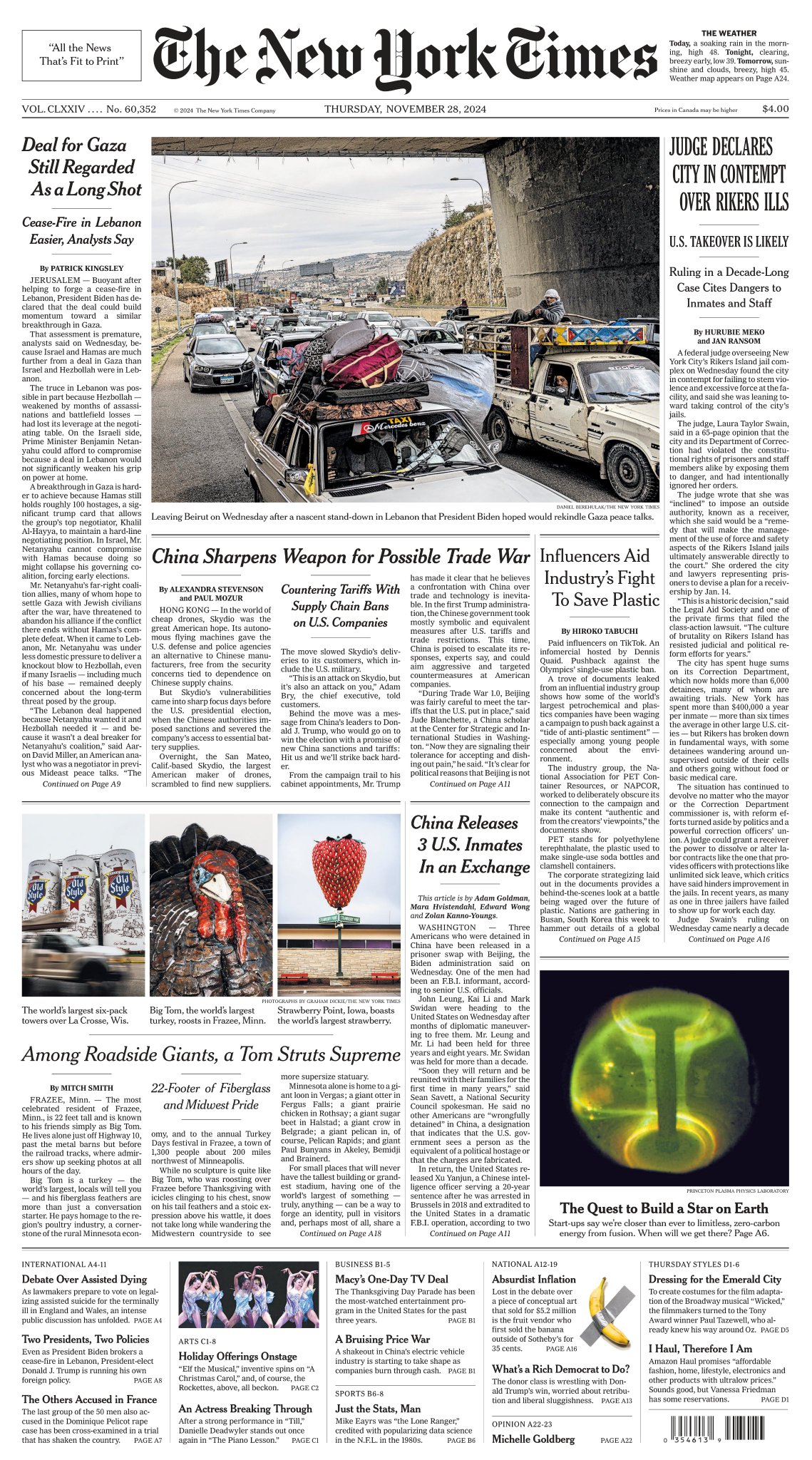
Hamas is unlikely to compromise in Gaza, despite the decision by its ally, Hezbollah, to stop fighting. A deal in Gaza would also be harder for Benjamin Netanyahu, the Israeli prime minister.
The finding was a landmark in a court case that has stretched out over more than a decade. Plans for a receivership of New York City’s jails will be heard on Jan. 14.
A series of swipes at American companies show how China could take the initiative in a new trade war, using its economic dominance to exact pain.
The Americans released, among others, a Chinese intelligence officer who was serving a 20-year sentence in the United States.
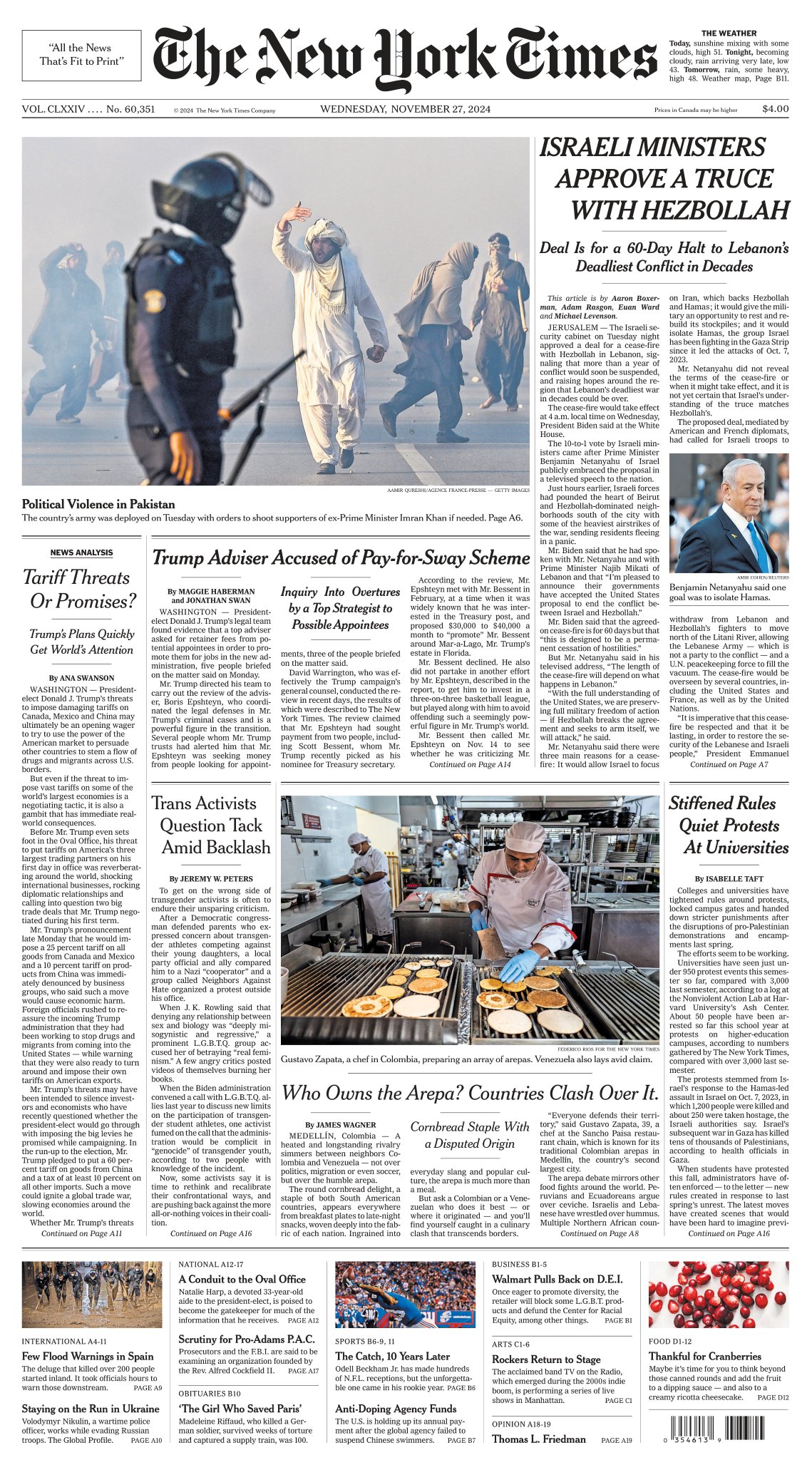
President Biden said the 60-day truce, which the United States helped broker, would take effect early Wednesday, and was intended to become permanent, ending Lebanon’s deadliest war in decades.
Soldiers were ordered to defend government buildings with gunfire if needed, as supporters of former Prime Minister Imran Khan demanded his release from prison.
President-elect Donald J. Trump ordered the investigation by his legal team into Boris Epshteyn, a powerful figure in the transition. Mr. Epshteyn denies the allegations.
The president-elect’s threat to hit Canada, Mexico and China with new tariffs is already rocking business and diplomatic relationships and could topple the trade pacts he signed in his first term.
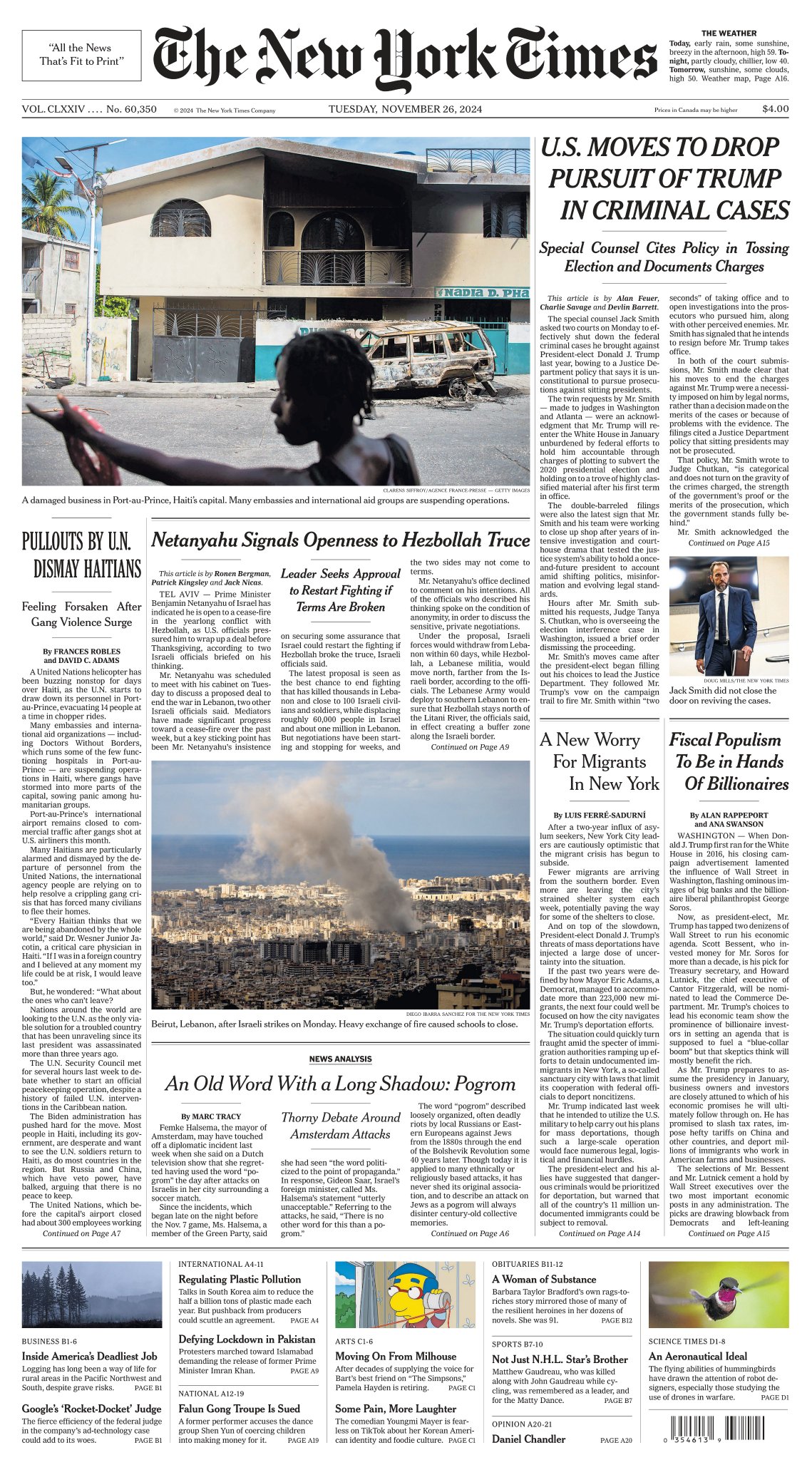
The special counsel effectively brought to a close the Justice Department efforts to hold Donald J. Trump accountable in the election and classified documents cases.
The United States is pushing Israel to reach a deal with the Lebanese militia by Thanksgiving, even as key details remained unresolved, Israeli officials said.
A surge in gang violence over the past two weeks has led international aid organizations to rethink their staff levels in Haiti.
Many have used an old word to refer to recent events. Is it accurate?
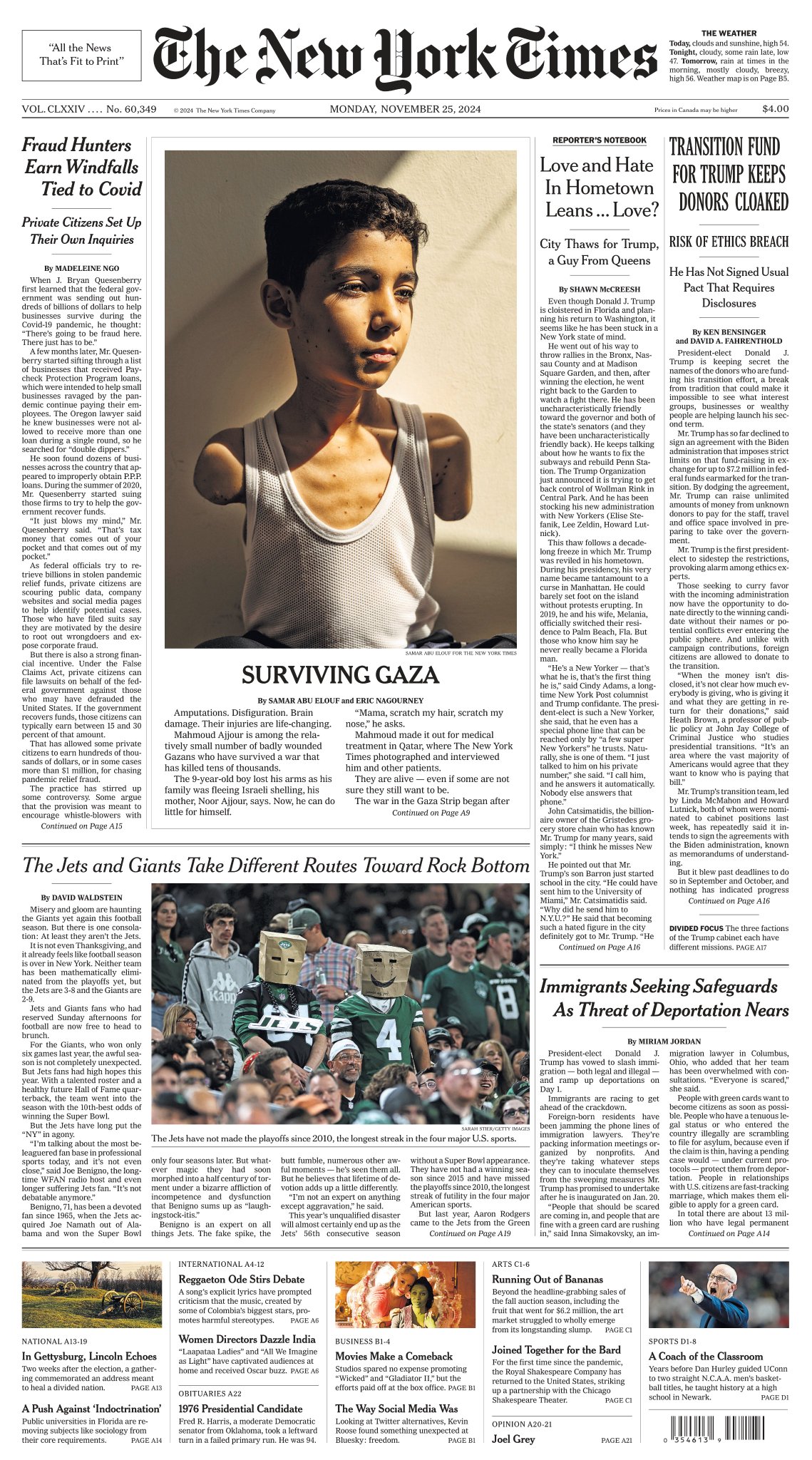
Breaking with past practice, President-elect Donald J. Trump has not agreed to disclose the donors paying for his planning effort or to limit their contributions.
The city tolerated Donald J. Trump, and then it loathed him. Now, some New Yorkers have begun to embrace him. The Kid from Queens couldn’t be happier.
Some private citizens are hunting for potential cases of fraud tied to small-business loans. They have earned big payouts — in some cases, more than $1 million.
The I.C.C. rejected Israel’s challenges to its jurisdiction and also issued a warrant for a top Hamas official. Its chief prosecutor is seeking the arrests for war crimes in Israel and Gaza.
 Boomers Daily