My husband doesn’t enjoy peeling oranges. He doesn’t like the little white webs of pith or the way the juice trickles between his fingers and soaks and stains the skin. He’s not a fan of pips. The citrus-sweet taste he could take or leave. If I had to choose between him and my favourite fruit, I like to think I’d stick with him.
On this episode of The London Magazine Podcast, we speak with Max Wilkinson.Max is a playwright and screenwriter whose award-winning play, Rainer, about a voyeuristic delivery rider riding around London, played at the Arcola Theatre last summer and is being produced for BBC Radio Four’s Afternoon play slot.
When Clare wakes, the car is moving along a wide valley between fields of grazing cattle. She shifts in her seat, her side sweaty where her brother Robbie has been leaning against her. The last thing she remembers is crossing into Austria at a high pass, a young border guard peering in at them through the drizzle. Now the sun is out, and the tarmac is steaming in the heat. At a junction, her father slows down. ‘This is it,’ he says, turning the car. They pass through a village, all whitewashed houses with large overhanging roofs. In the deserted square is a small inn, Der Jäger painted across one wall in beautiful gothic script. Next to the lettering is a twenty-foot-high figure of a hunter in Tyrolean leather trousers and green hat, striding across a mountain side. Clare notices that he has the same jaw as John Travolta in Grease.
A popular, growing class of drugs for obesity and diabetes could, in an ideal world, help us see that metabolism and appetite are biological facts, not moral choices.
English Garden Eccentrics: Three Hundred Years of Extraordinary Groves, Burrowings, Mountains and Menageries
By Todd Longstaffe-Gowan
In the English garden, eccentricity and variety went hand in hand.
What counts as eccentric in the garden, and what counts as a folly? As a child I used to be taken on Sunday walks to the Needle’s Eye in Wentworth, South Yorkshire, a kind of sharp pyramid of stone some forty-five feet tall and pierced by an arched passage.
by Franz Kafka, translated from the German by Ross Benjamin
Kafka’s diaries—made up of false starts, stray thoughts, self-doubts, internal dialogues, dreams, doodles, aphorisms, drafts of stories, character sketches, and scenes from family life—are often very funny.
March 1946. Albert Camus has just spent two weeks at sea on the SS Oregon, a cargo ship transporting passengers from Le Havre to New York City. He’s made several friends during this transatlantic passage.
In his poem “After Avery R. Young,” the Pulitzer Prize–winning poet Jericho Brown writes, “The blk mind / Is a continuous mind.” These lines emerge for me as a guiding principle—as a mantra, even—when I consider the work of Black poetry in America, which insists upon the centrality of Black lives to the human story, and offers the terms of memory, music, conscience, and imagination that serve to counteract the many erasures and distortions riddling the prevailing narrative of Black life in this country.
As I was going to enter college that fall my parents felt that I should build myself up at a summer camp of some sort. They sent me down to a place in the Ozarks on a beautiful lake. It was called a camp but it was not just for boys. It was for both sexes and all ages. It was a rustic, comfortable place. But I was disappointed to find that most of the young people went to another camp several miles down the lake toward the dam. I spent a great deal of time by myself that summer, which is hardly good for a boy of seventeen.
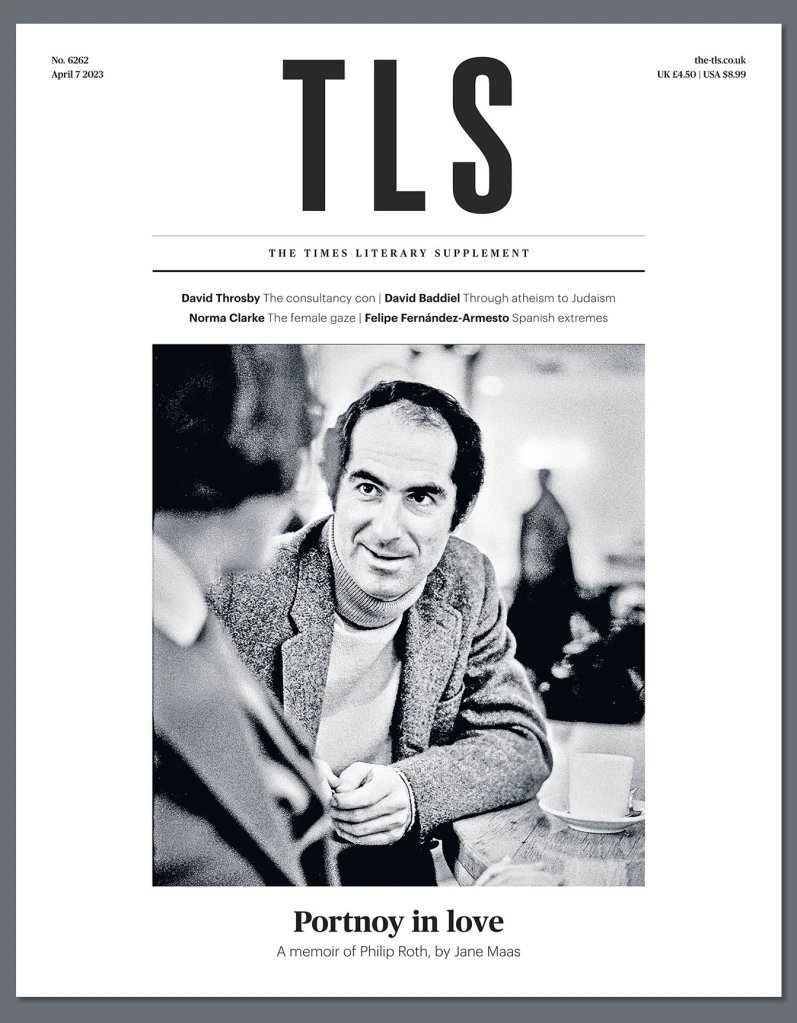
This week’s @TheTLS, featuresJaqueline Banerjee on George Eliot’s double life; Paul Collier on capitalism and democracy; @djtaylorwriter on Inez Holden; @BoydTonkin on Klint and Strindberg; @irinibus on ballet – and more.
‘Displacement City: Fighting for Health and Homes in a Pandemic‘ Edited by Greg Cook and Cathy Crowe
Canada’s major cities have faced the humanitarian disaster of homelessness for decades, but the COVID-19 pandemic laid bare a massive deficit in social programs and widespread inattention to human rights. Are municipal public services designed to essentially produce displacement? Or can we do something to end the growing problem of urban homelessness in Canada?
‘From Layton to Singh: The 20-Year Conflict behind the NDP’s Deal with the Trudeau Liberals’ by Matt Fodor
“As it entered the twenty-first century, the New Democratic Party of Canada ( NDP) faced its greatest identity crisis since its founding four decades earlier,” writes Toronto-based author and political scientist Matt Fodor, in his recent book From Layton to Singh.
Our culture is dominated by efforts to score points and win arguments. But do we really talk anymore?
There was once a time when strangers talked to one another, sometimes eagerly. “In past eras, daily life made it necessary for individuals to engage with others different from themselves,” Paula Marantz Cohen explains. In those moments of unpredictability and serendipity, we confronted difference. There were no smartphones, message boards, or online factions. Maybe because life moved at a slower pace, and every interaction wasn’t so freighted with political meaning, we had the opportunity to recognize our full humanity. Nowadays, she argues, we are sectarian and “self-soothing,” having fallen out of such practice. What we need is to return to the basics: to brush up on the art of conversation.
An entomologist races to find them before they disappear.
Caterpillars are to lepidoptera—butterflies and moths—what grubs are to beetles and maggots are to flies; they are larvae. Even among nature lovers, larvae tend to be unloved. For every ten butterfly fanciers, there are approximately zero caterpillar enthusiasts. The reason for this will, to most, seem obvious. The worm in the apple is usually a caterpillar.
This week’s @TheTLS, features Michele Pridmore-Brown on parenthood; @noosarowiwa on paradise; @TobyLichtig on documentaries; Carlos Fonseca on Pilar Quintana; @wendymoore99 on surgery; new poems by Karen Solie, @RomalynAnte and Steve Ely – and more.
Defamation isn’t the only legal threat to investigative journalism. Data protection and privacy laws are increasingly used as alternatives to a libel claim. Unlike a defamation writ, which claimants generally have only a year to file, data protection and privacy actions can be taken up to six years after publication, and there is no defence of truth.
Medieval Christians understood themselves to be interconnected to an extent that would surprise many people today, at least in Western cultures. Their minds and hearts were legible to other people as well as to God and the devil, and they saw themselves as vulnerable to interference from human and supernatural forces, to both good and bad ends.
The majority of women artists who exhibited at the Salon in the revolutionary period had never before shown their work in public. During the 1790s and early 1800s, several of them submitted self-portraits or portraits of other women artists, presenting, implicitly, an idea of the female painter as both a subject for portraiture and a professional in her own right.
News, Views and Reviews For The Intellectually Curious