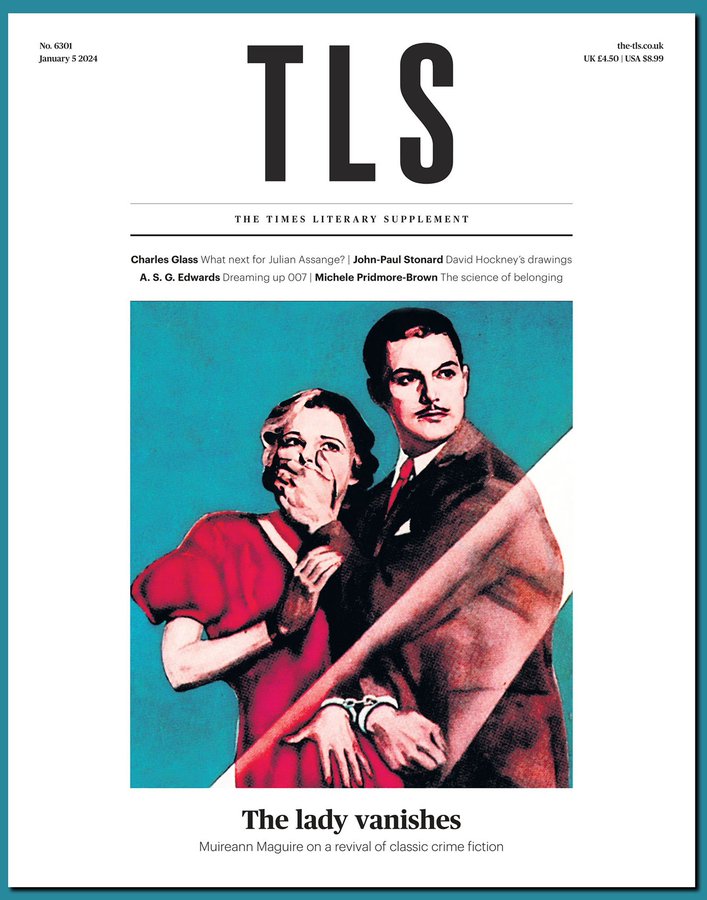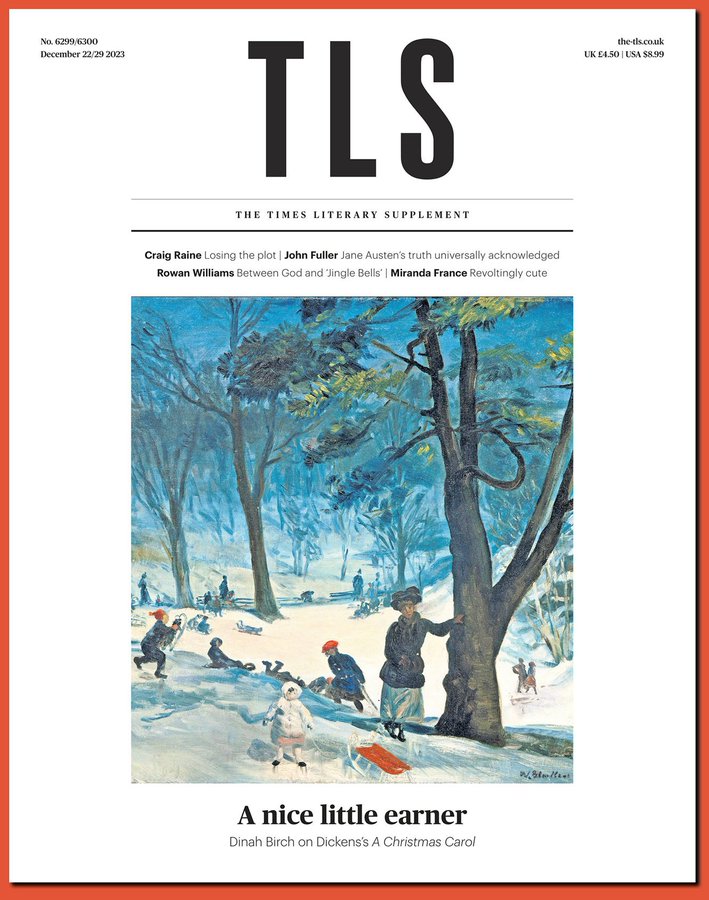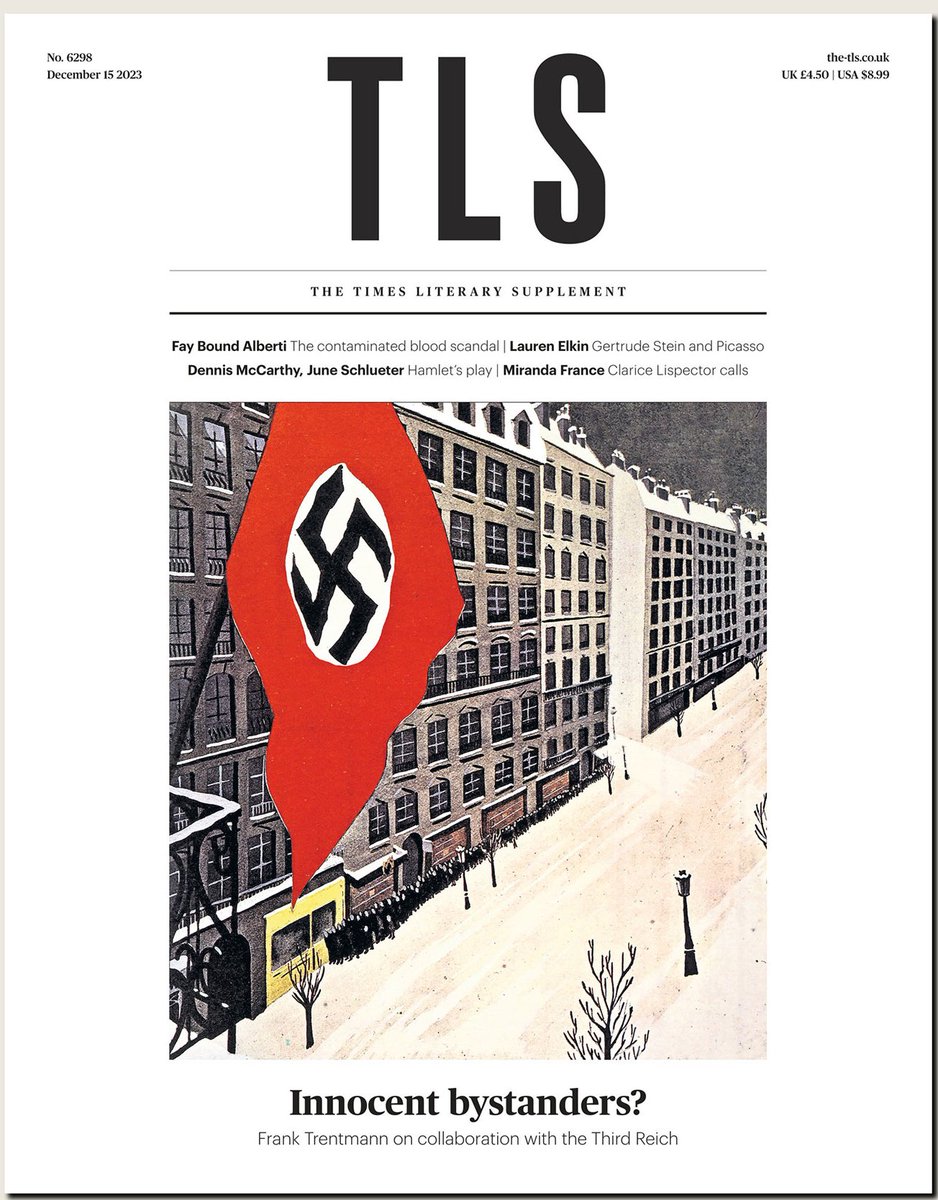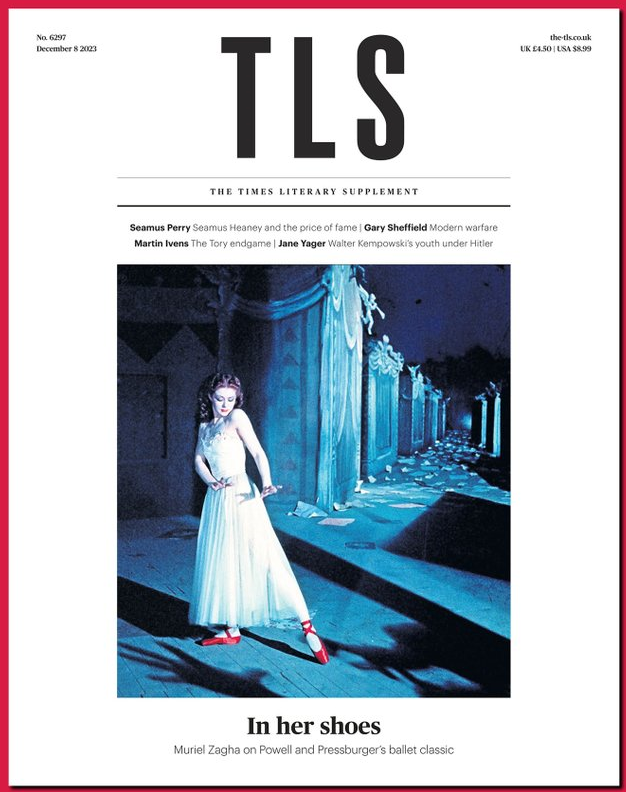
Times Literary Supplement (October27, 2023): The new issue features ‘Tomorrow becomes today’ – J.G. Ballard’s prescient vision; Revolutionary Paris; The modern novel; Germany from the ashes and Oh, what a lovely war!….

Times Literary Supplement (October27, 2023): The new issue features ‘Tomorrow becomes today’ – J.G. Ballard’s prescient vision; Revolutionary Paris; The modern novel; Germany from the ashes and Oh, what a lovely war!….

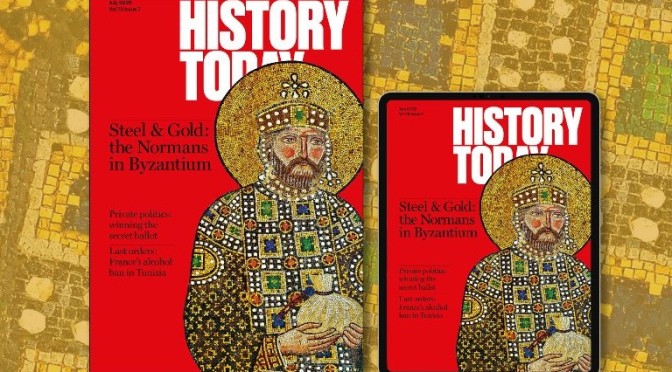
HISTORY TODAY MAGAZINE (NOVEMBER 2023) – This issue features The murder John F. Kennedy 60 years on, the dirty secrets of medieval monks, what the Nazis learnt from the Beer Hall Putsch, Christianity’s bloody history in Japan, and deaf expression in Renaissance art.
Was it the mob? A coup? Cuban dissidents? War hawks? 60 years after the assassination of John F. Kennedy, the theories are still debated. Do any of them hold up?
In the aftermath of the Munich Beer Hall Putsch of November 1923, Hitler was in prison and the Nazi Party banned. But its failure taught him valuable lessons.
Repulsive revelations of bodily infestations were viewed by some in medieval Europe as proof of sanctity. But for most, parasites were just plain disgusting.
Confinement: The Hidden History of Maternal Bodies in Nineteenth-Century Britain by Jessica Cox looks at the engine of the Victorian population boom: motherhood.

Times Literary Supplement (October20, 2023): The new issue features ‘Rocket Man’ – North Korea’s dictator is no joke; A snapshot of Teju Cole; Daniel Dennett’s evolution; Monet’s muses; John le Carré undercover, and more…

German poet Rainer Maria Rilke (1913)
The Times and The Sunday Times (October 15, 2023) – Walking in the footsteps of poets on a new cultural trip, James Stewart takes a wander from Ronda and gets spectacular scenery and ancient traditions all to himself.

Teetering at the edge of the Tajo river gorge, Ronda, 90 minutes’ drive west from Malaga, remains the most spectacular urban setting in Europe. Its cat’s cradle of white streets is haunted by the ghosts of Moorish princes, soundtracked by the strum of guitars and the tinkle of fountains.

If you’re in the mood for romance, nowhere in Spain comes close, Ernest Hemingway reckoned. He’s still right, so long as you’re happy to share your precious moment with massed day-trippers from the Costa del Sol. Expect visitor numbers to grow again when a £1.1 million suspended gorge walk, the Camino del Desfiladero del Tajo designed by the architect behind Malaga’s Caminito del Rey, opens later this year.
Even so, what everyone is really coming to Ronda for – to inland Andalusia – is Old Spain. You won’t find it written on signposts but, like the crackle of duende during a flamenco concert, you’ll know it when you experience it. It’s the country of pueblos blancos and half-remembered battles and scenery of savage beauty; the one that attracted Grand Tour visitors such as Disraeli and Irving long before anyone had thought of the Costa del Sol.

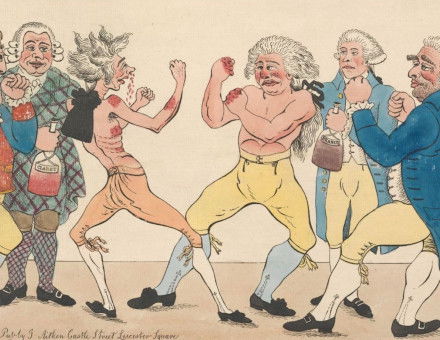
Times Literary Supplement (October13, 2023): The new issue features Deeper Truths – The spiritual quest of the Nobel Laureate Jon Fosse; ‘Woke Wars’ and identity politics; fashion and the Bloomsbury group; Jewish boxers in London; Elsa Morante’s princes and demons and ‘Free Will?’

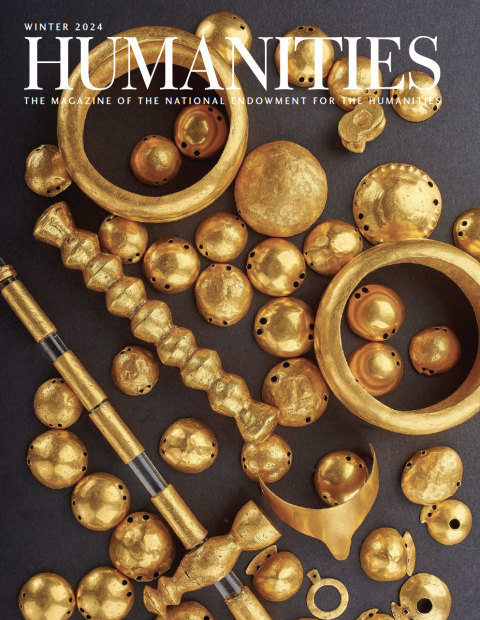
Archaeology Magazine (November/December – 2023):

4,000-year-old cuneiform tablets illuminate the personal lives of Mesopotamian businesswomen
By DURRIE BOUSCAREN
Excavations at the ancient Anatolian city of Kanesh in Turkey have revealed a district where merchants from the distant Mesopotamian city of Assur in Iraq lived and worked. Some 23,000 cuneiform tablets, mostly dating from about 1900 to 1840 B.C., have been found in the merchants’ personal archives in Kanesh.
The parents of an Assyrian woman named Zizizi were furious. Like many of their neighbors’ children, their daughter had dutifully wed an Assyrian merchant. Sometime around the year 1860 B.C., she had traveled with him to the faraway Anatolian city of Kanesh in modern-day Turkey, where he traded textiles. But her husband passed away and, instead of returning to her family, Zizizi chose to marry a local.
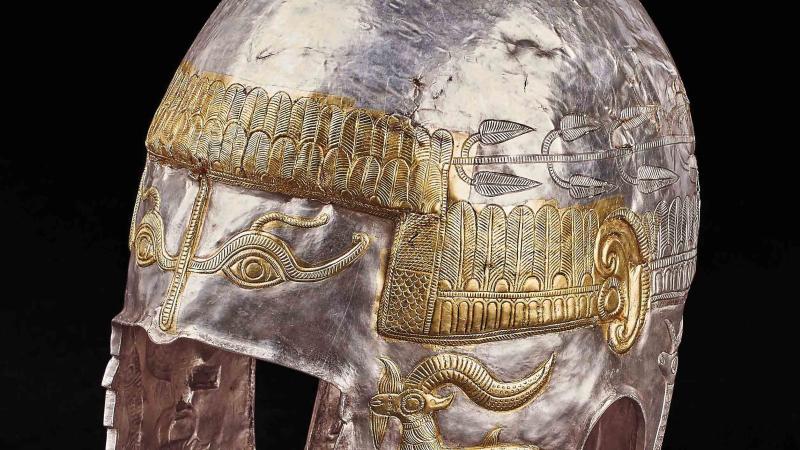
Excavations in Sichuan Province reveal the lost treasure of an infamous seventeenth-century warlord
A Roman noblewoman’s devotion to Isis outlasted even an emperor’s ban on foreign cults
Around 55,000 years ago, a resourceful band of modern humans made a home in southern France
Investigating the mythic origins of the Roman Empire’s ultimate adversary
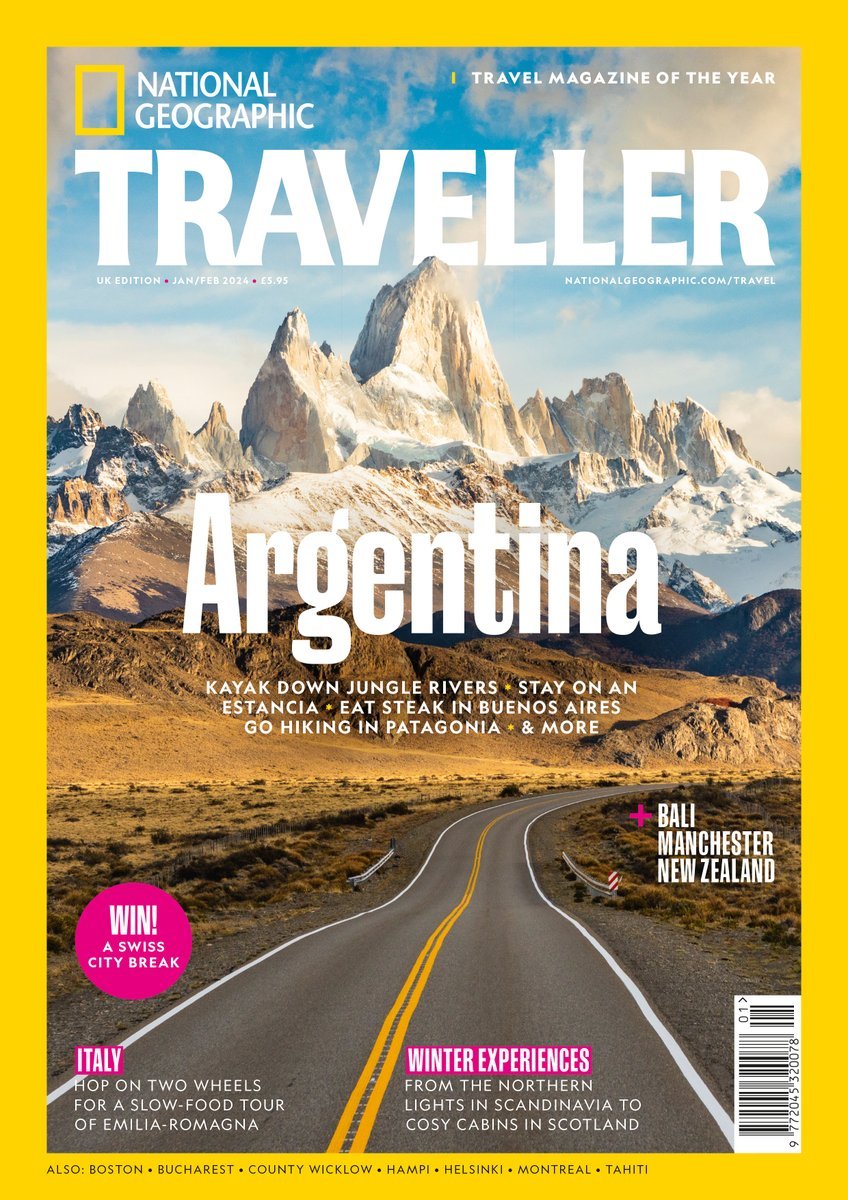
National Geographic Traveller Magazine (November 2023): The latest issue features features 49 unique experiences in New York City, reveals the winners of our annual Hotel Awards, explores Turkeys ancient Lycian Way and helps plan a campervanning adventure in Australia.
Kenya: meet a new generation of Maasai taking safari tourism into their own hands.
Camargue: join the annual pilgrimage of Romani people to Saintes-Maries-de-la-Mer.
Turkey: ancient tombs, lemon groves and mountainside villages await on the sun-drenched Lycian Way.
Australia: pack the campervan for adventures in coastal cities and national parks.
Stockholm: how the Swedish capital is shaped by the ebb and flow of the water around it.
Brighton: right here, right now, visit the original party town and fountain of counterculture.
Plus,long-distance bikepacking in North Wales; reimagining heritage tours in the US; savouring the flavours of Vietnam; unearthing the history beneath Belgrade’s streets; discovering the hotels near the new Ghibli Park in Nagoya; blasting off into space-inspired family experiences; Guadalajara’s hidden quarters; escaping to the country in the North York Moors; ushering in the Day of the Dead with season reads; and packing the essentials for cold-weather camping

Times Literary Supplement (October 6, 2023): The new issue features War Stories – A review of the Iliad; Frances Sputford’s ‘Other America’; In Chaucer’s Shadow; The devil and ChatGPTand Martin Buber’s ‘I and Thou’…

Times Literary Supplement (September 29, 2023): The new issue features The First Folio at 400; how disease shaped global history; novels of queer experience; what Britain laughs at; literary thefts and coincidences – and much more…

How disease has shaped global history
Scientists often make poor historians. Their shortcomings in describing and analysing the past include a failure to shed the whiggish stories that academic history moved away from decades ago. Straight lines are still drawn between Great Men and the impact of their brilliant insights on our view of reality. They also sometimes fail to treat the material of history with the seriousness they bring to their own discipline. Simple questions that are drummed into schoolchildren are frequently ignored in analysing documentary evidence: who wrote this, why, and for whom? The result is context-lite narrative that doesn’t stand up to scrutiny.

Works to commemorate the 400th anniversary of the First Folio
Next year, the Folger Shakespeare Library in Washington DC will reopen after a three-year closure for a large-scale renovation of its building, which dates from 1932. The centrepiece of the new Shakespeare Exhibition Hall, will be, as the press release puts it, something “that only the Folger could produce: all 82 copies of the 1623 First Folio of Shakespeare that were collected by Henry and Emily Folger”. The Folger holds slightly more than a third of all extant copies of the book and now eighty of them will be on permanent show in a “20-foot long visible vault”, while two more will be open in cases as part of an “interactive” visitor experience. Peering into the vault says much about the Folgers’ appetite for cornering the market in Folios but, since nearly all copies differ in some respects, it did make some kind of sense to buy many of them.

Times Literary Supplement (September 22, 2023): The new issue features Playing with Fire – The limitless ambition of Elon Musk; Peter Brown in an antique land; The new New Journalism; A literary critic and murderer; John Gray’s Hobbes for liberals, and more…

ELON MUSK by Walter Isaacson
Walter Isaacson’s intimate account of a tech titan
When Elon Musk was a child, his parents warned him against playing with fire. His response was to take a box of matches behind a tree and start lighting them. Scenes like this are frequent in Walter Isaacson’s new biography of Musk, who has become the world’s richest person thanks to his disdain for authority, instinct for the dramatic and “reality-bending wilfulness” (and because he has applied these traits to good ideas). Isaacson reports that the family’s motto is “Live dangerously – carefully”, but a more apt one might be the maxim quoted by Musk’s cousin Peter: “Risk is a type of fuel”.

The intellectual life of a pioneering historian of Late Antiquity
By Mary Beard
JOURNEYS OF THE MIND – A Life in History by Peter Brown
In the late 1970s, the historian Peter Brown dumped his old dinner jacket on a park bench in Berkeley, California. It was not just a minor act of charity to the local homeless, who may or may not have welcomed a cast-off “tuxedo”. Brown had recently moved from an academic career in Oxford and London to a post in the United States, and he was signalling to himself a new start in what seemed to be a more democratic, less hidebound educational system: more jeans and trainers than black tie. He has been based in America ever since.