
From a Arts and Culture Texas online article:
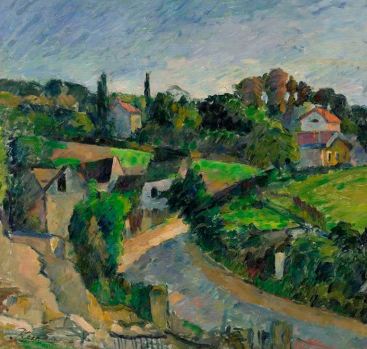 While all of the works on exhibit hold special interest, Aurisch identifies several gems. For example, Van Gogh fans will enjoy his spectacular perspectival rooftop view from the window of his room in The Hague in 1882. Maurice de Vlaminc’s 1906 Dancer at the “Rat Mort” (La danseuse du “Rat Mort”) is a delight with his Fauve treatment of the figure; through color and gestural line, it’s as though we are witnessing a shift into the 20th century. And Henri Matisse’s 1943 still life titled Lemons against a Fleur-de-lis Background (Citrons sur fond rose fleurdelisé) vibrates with lively pink patterned wallpaper and a stacked brick platform, charged with Japonisme energy.
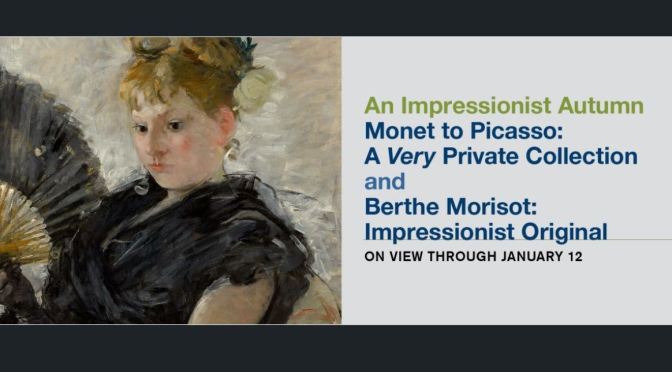
This fall season, the Museum of Fine Arts, Houston presents Monet to Picasso: A Very Private Collection and Berthe Morisot: Impressionist Original, billed together under the theme of “An Impressionist Autumn,” on view Oct. 20, 2019 through Jan. 12, 2020. The two exhibitions offer museum visitors the chance to peek into the private lives of artist, muse, and society at large.
To read more: http://artsandculturetx.com/fall-for-impressionism-morisot-and-monet-to-picasso-at-mfah/
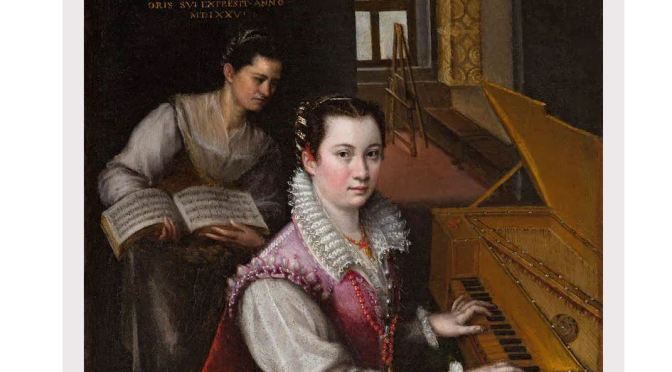
 Born in Bologna in 1552, Lavinia Fontana is often considered to be the first professional woman painter; she was the first to be accepted into the Accademia di San Luca in Rome, and supported her family throughout her life by gaining prestigious commissions for portraits in the city. This self-portrait has been interpreted as a wedding painting; it was completed in the year of Fontana’s marriage to Giovan Paolo Zappi, a fellow artist who became her agent and manager.
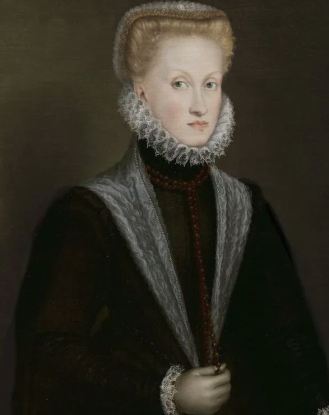
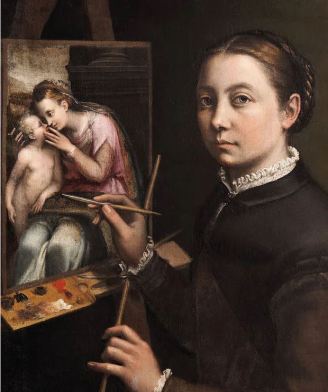 Sofonisba Anguissola was born into an aristocratic family from Cremona in around 1532; she travelled to Rome as a young woman, where her talent was recognised by Michelangelo, and in 1559 became lady-in-waiting to Elisabeth de Valois, Queen of Spain (and a keen amateur painter). She became a court painter to Philip II, and remained at court for some 15 years – at least until her marriage to a Sicilian nobleman after Elisabeth’s death in 1568, for which Philip II provided the dowry. Here she portrays Anna of Austria, who became Queen of Spain after Philip remarried in 1570.
 Part of the Prado’s bicentenary celebrations, this exhibition looks at two of the most significant women artists of the Renaissance. Though born into very different social classes, both Lavinia Fontana and Sofonisba Anguissola rose to heights of prestige that had not previously been scaled by women painters – Fontana at the Vatican, and Anguissola at the Spanish court.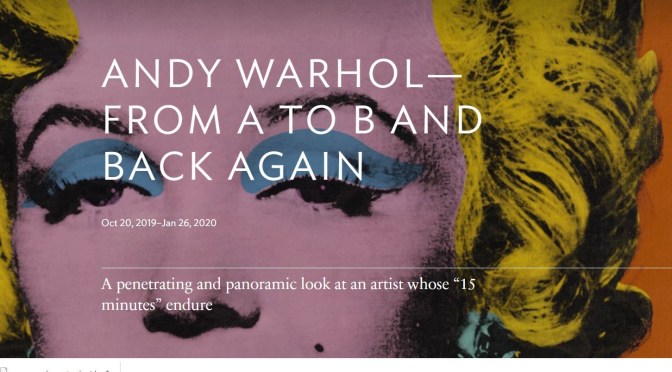
 Warhol, with obvious self-deprecation, described his philosophy as spanning from A to B. As this exhibition decidedly proves, his thinking and artistic production ranged well beyond that, but his true genius lies in his ability to identify cultural patterns and to use repetition, distortion, and recycled images in a way that challenges our faith in images and questions the meaning of our cultural icons.
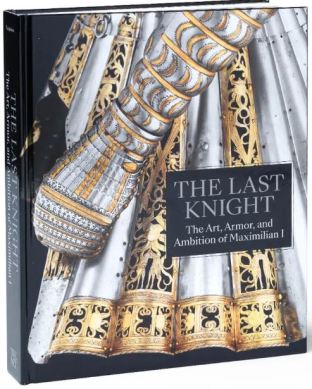 The Last Knight: The Art, Armor, and Ambition of Maximilian I examines the profound significance of European armor at the dawn of the Renaissance, through the lens of Emperor Maximilian I’s (1459–1519) remarkable life. On view only at The Met, The Last Knight coincides with the five-hundredth anniversary of Maximilian’s death, and is the most ambitious North American loan exhibition of European arms and armor in decades. Including 180 objects selected from some thirty public and private collections in Europe, the Middle East, and the United States, The Last Knight will explore how Maximilian’s unparalleled passion for the trappings and ideals of knighthood served his boundless worldly ambitions, imaginative stratagems, and resolute efforts to forge a lasting personal and family legacy.
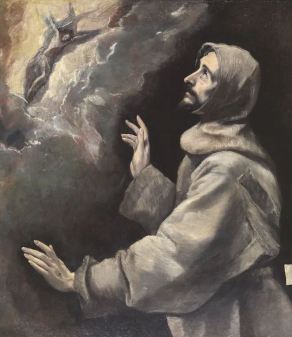 Rediscovered in the late 19th century, celebrated by authors, acknowledged and embraced by the 20th century avant-garde, the artist has enjoyed the dual prestige of tradition and modernity, linking Titian to the Fauvists and Mannerism to Cubism, Expressionism, Vorticism and Abstraction up to the Action painting.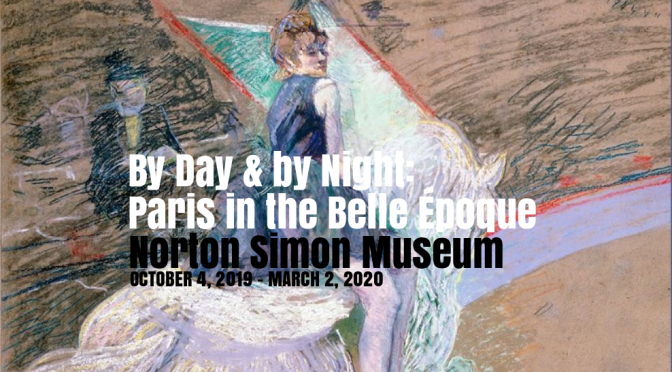
 By Day & by Night: Paris in the Belle Époque surveys the rich range of artistic responses to life in the French capital through a selection of paintings, drawings, prints and photographs from the Museum’s collections. Together these works of art demonstrate that visual artists participated in the inventive spirit of the age by interpreting the everyday as something extraordinary.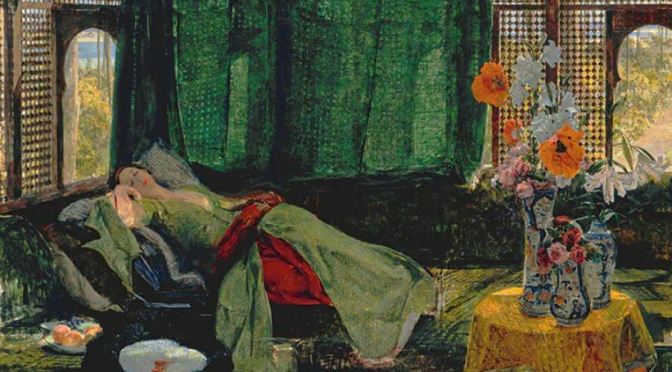
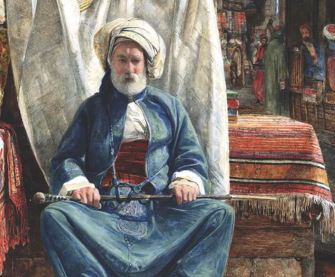 Things take an even stranger turn when he gets to Egypt, and his own features still appear again and again; not, as before, as a barely significant detail in an otherwise busy composition, but as a principal element. In a series of fine single-figure paintings brought together at the Watts Gallery, Lewis represents himself as a Syrian sheikh scanning the horizon of the Sinai desert; as the suave ‘bey’ of a Cairene household, lowering his eyelids as his servant offers him a water pipe; as an impassive carpet-seller in the Bezestein bazaar




























 Boomers Daily