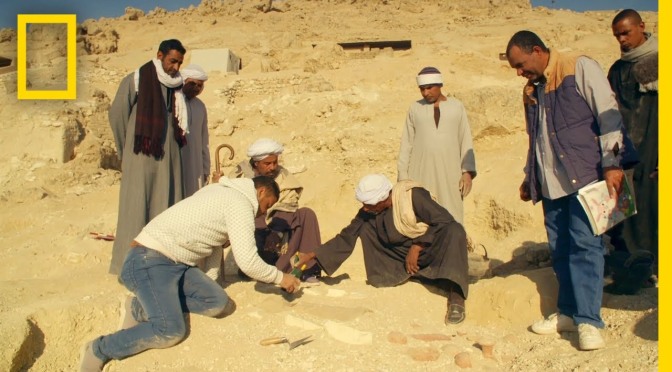
Archaeologists are searching for the tomb of Amenhotep III and in the process they find pottery from the ancient Egyptian celebration of the dead.
About Lost Treasures of Egypt: An immersive, action-packed and discovery-led series following International teams of Egyptologists as they unearth the world’s richest seam of ancient archaeology – Egypt’s Valley of the Kings. For a full season of excavations and with unprecedented access to the teams on the front line of archaeology, we follow these modern-day explorers as they battle searing heat and inhospitable terrain to make the discoveries of a lifetime. Using innovative technology and age-old intuition in their quest to uncover the secrets of these ancient sites, can the team’s discoveries re-write ancient history?
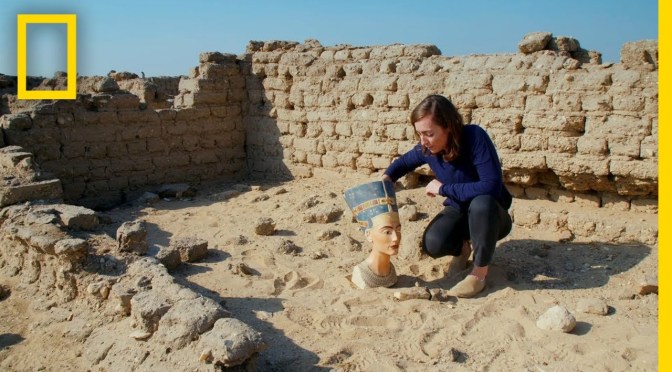
Queen Nefertiti is one of the most famous queens of ancient Egypt, but the location of her tomb is still a mystery.
About Lost Treasures of Egypt: An immersive, action-packed and discovery-led series following International teams of Egyptologists as they unearth the world’s richest seam of ancient archaeology – Egypt’s Valley of the Kings. For a full season of excavations and with unprecedented access to the teams on the front line of archaeology, we follow these modern-day explorers as they battle searing heat and inhospitable terrain to make the discoveries of a lifetime. Using innovative technology and age-old intuition in their quest to uncover the secrets of these ancient sites, can the team’s discoveries re-write ancient history?
Neferneferuaten Nefertiti was an Egyptian queen and the Great Royal Wife of Akhenaten, an Egyptian Pharaoh. Nefertiti and her husband were known for a religious revolution, in which they worshipped one god only, Aten, or the sun disc.
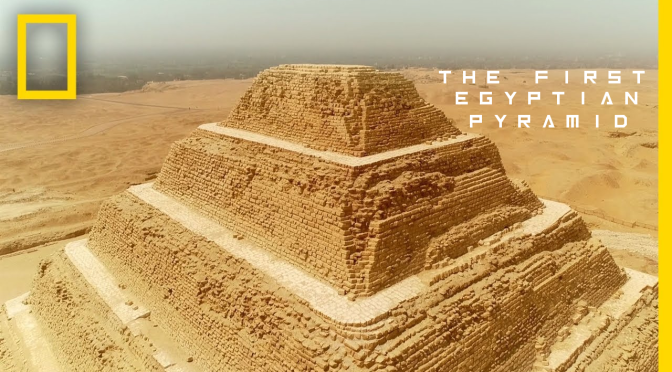
The first pyramid ever built was constructed more than 4,500 years ago, and designed by Imhotep. Archaeologists are looking for answers as to how he came up with this design.
About Lost Treasures of Egypt: An immersive, action-packed and discovery-led series following International teams of Egyptologists as they unearth the world’s richest seam of ancient archaeology – Egypt’s Valley of the Kings. For a full season of excavations and with unprecedented access to the teams on the front line of archaeology, we follow these modern-day explorers as they battle searing heat and inhospitable terrain to make the discoveries of a lifetime.
Using innovative technology and age-old intuition in their quest to uncover the secrets of these ancient sites, can the team’s discoveries re-write ancient history?
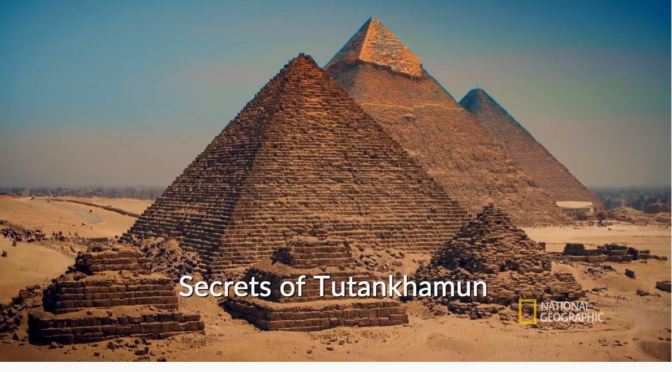
The tomb of Tutankhamun is one of the most famous archeological finds of all time. Now the artifacts that have been shown across the world are returning home to Egypt.
Watch this mini 14-minute tour of the Ancient Egyptian antiquities of the British Museum. Footage was taken in March 2020, one hour before closing time so I was limited in the relics I could see and record. I’ve focussed on the relics of Ancient Egypt, as well as ancient Assyrian exhibits and the enigmatic basalt Easter Island statue.
I show you first-hand the colossal statues of Egyptian pharaohs Amenhotep I and III, Thutmose I, III and IV, Ramesses II, the hugely important Rosetta Stone, a fragment of the beard from the Great Sphinx, the Assyrian reliefs that showcase the famous ‘handbags’ and an ancient Moai statue from Easter Island.
Some come and take this mini tour with Matt from Ancient Architects and please subscribe, like and comment below. All footage is taken by Matt Sibson and is owned by the Ancient Architects Channel.
While We All Know That You Shouldn’t Judge a Book by Its Cover, This is One Case in Which Evaluating Something on Its Appearance is Not Only Accepted, but Encouraged, These Libraries Are Known for Noteworthy Exteriors—think Soaring Architecture With Inspiring Interiors, and That’s Nothing Compared to the Millions of Books Housed Within Their Walls. So Whether You’re a Bookworm or an Architecture Lover, Start Adding These Beautiful Libraries to Your Must-visit List.
The Library of El Escorial, San Lorenzo De El Escorial, Spain Not Only is This Spanish Library a Work of Art, It’s Also Part of a Unesco World Heritage Site. Originally Commissioned by King Philip II, the Library’s Most Dazzling Feature is a Series of Seven Frescoes That Depict the Liberal Arts (Music, Rhetoric, Astronomy, and So on). The Town of San Lorenzo De El Escorial, Which is About 45 Minutes Outside of Madrid, Has Long Been a Favorite of Spanish Royals, and There’s Plenty More to See Here Beyond the Library, Including a Monastery, Gardens, and the Pantheons of Former Princes and Kings.
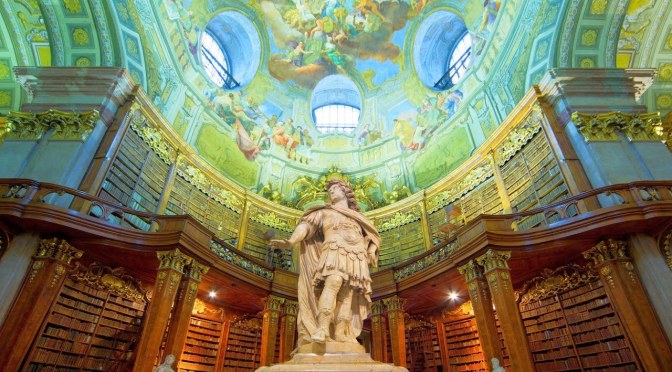
Austrian National Library, Vienna, Austria The Austrian National Library is the Largest Library in Austria, With More Than 12 Million Items in Its Various Collections. The Library is Located in the Neue Burg Wing of the Hofburg in Center of Vienna, One of the Austrian National Library’s Most Jaw-dropping Features is the Huge Fresco on the Ceiling, Which Was Created by Painter Daniel Gran. The Dome is Also Decorated With Statues by Sculptor Paul Strudel That Pay Tribute to the Habsburg Rulers, Among the Exhibits Are Two Exquisite Venetian Baroque Globes: One for the Earth and One for the Sky, Each With a Diameter of More Than One Meter.
George Peabody Library, Baltimore, Maryland The George Peabody Library (Part of Johns Hopkins University) Contains Over 300,000 Volumes Stacked in Five Decorative Tiers. The Books Are Impressive, Sure, but the Cathedral Like-atrium, Marble Floors, and Wrought-iron Details Are the Main Draw Here. Is It Any Wonder the Library Has Become One of the Most Popular Wedding Venues in Baltimore?
Strahov Monastery Library, Prague, Czech Republic The Strahov Monastery in Prague Was Originally Founded in 1143. Despite Wars, Fires, and Other Disasters, the Order Endured and Built Its Library in 1679. The Library’s Best-known Features Are Its Remarkable Ceiling, Which is Covered in Biblical Frescoes, and the “Compilation Wheel” That Can Turn and Rotate Shelves in Order to Make Books Easier to Find Without Knocking Any of Them Over.
Library of Alexandria (Bibliotheca Alexandrina), Egypt Alexandria Was Once Home to the Most Famous Library in the World. Now, Egypt Pays Homage to Its Biblio-heritage With This Sleek Granite Building. The Circular Structure, Designed by Norwegian Firm Snøhetta, is Covered in Carvings Done by Local Artists and Sits Next to a Large Reflecting Pool. Although There Are Plenty of Books in Three Languages (Arabic, French, and English), There Are Also Museums, a Planetarium, and a Lab Dedicated to Restoring and Preserving Ancient Manuscripts.
Listen to the latest science updated, brought to you by Nick Howe and Shamini Bundell. This week, delving into the results of the latest graduate student survey, and assessing ageism in science fiction literature.
In this episode:
00:45 The graduate student experience
The results of Nature’s 2019 PhD survey are in. David Payne, Nature’s Chief Careers Editor, takes us through them. Nature’s PhD survey collection
Things take an even stranger turn when he gets to Egypt, and his own features still appear again and again; not, as before, as a barely significant detail in an otherwise busy composition, but as a principal element. In a series of fine single-figure paintings brought together at the Watts Gallery, Lewis represents himself as a Syrian sheikh scanning the horizon of the Sinai desert; as the suave ‘bey’ of a Cairene household, lowering his eyelids as his servant offers him a water pipe; as an impassive carpet-seller in the Bezestein bazaar. In none of these, however, does he quite meet our eye.
In his mid thirties, an age at which most ambitious artists were making themselves as visible as possible, John Frederick Lewis (1804–76), a successful painter of sporting subjects and Mediterranean scenes, vanished from London for more than a decade. It was an audacious move. He spent two years in Italy, then followed in Lord Byron’s footsteps, travelling through Albania, Corfu, Athens and Smyrna, and after a year in Constantinople he sailed for Egypt. Once there Lewis fell in love with Cairo, and rather than returning to England with his sketchbooks he set up home, staying until 1851. Those years might have been something of a biographical blank had it not been for a visit in 1844 from his old friend William Makepeace Thackeray, who included a somewhat excitable account in his travel book Notes of a Journey from Cornhill to Grand Cairo(1846).




 Listen to the latest science updated, brought to you by Nick Howe and Shamini Bundell. This week, delving into the results of the latest graduate student survey, and assessing ageism in science fiction literature.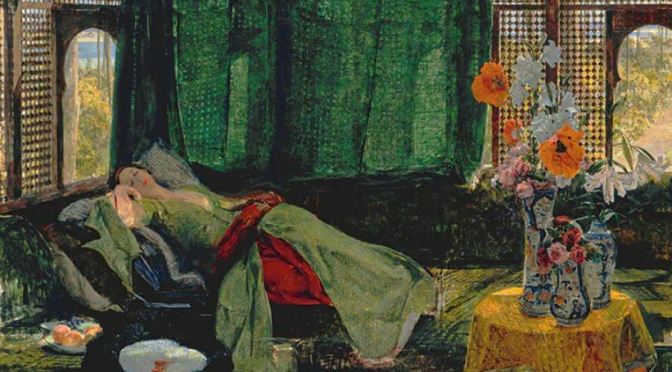
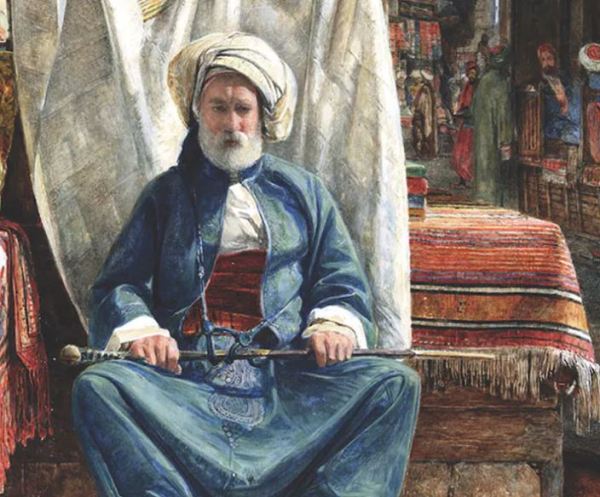 Things take an even stranger turn when he gets to Egypt, and his own features still appear again and again; not, as before, as a barely significant detail in an otherwise busy composition, but as a principal element. In a series of fine single-figure paintings brought together at the Watts Gallery, Lewis represents himself as a Syrian sheikh scanning the horizon of the Sinai desert; as the suave ‘bey’ of a Cairene household, lowering his eyelids as his servant offers him a water pipe; as an impassive carpet-seller in the Bezestein bazaar
 Boomers Daily