
Tag Archives: Democracy

Analysis: The World Ahead In 2026 – The Economist

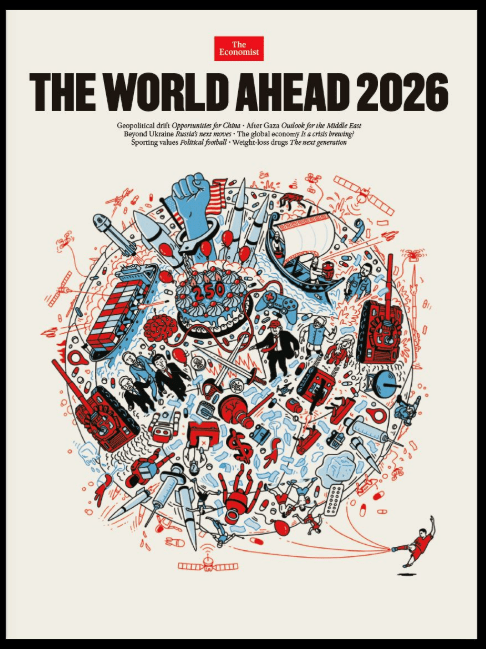
The Economist The World Ahead 2026 (November 13, 2025):

This is Donald Trump’s world—we’re all just living in it. The disruptor-in-chief was the biggest factor shaping global affairs in 2025, and that will be the case for as long as he remains in the White House. His norm-shattering approach has caused turmoil in some areas (as in trade) but has also delivered diplomatic results (as in Gaza) and forced necessary change (as with European defence spending). As the Trumpnado spins on in 2026, here are ten trends and themes to watch in the coming year.

1. America’s 250th.

Expect to hear wildly diverging accounts of America’s past, present and future, as Republicans and Democrats describe the same country in irreconcilably different terms to mark the 250th anniversary of its founding. Voters will then give their verdict on America’s future in the midterm elections in November. But even if the Democrats take the House, Mr Trump’s rule by bullying, tariffs and executive orders will go on.

2. Geopolitical drift.

Foreign-policy analysts are divided: is the world in a new cold war, between blocs led by America and China, or will a Trumpian deal divide the planet into American, Russian and Chinese “spheres of influence”, in which each can do as they please? Don’t count on either. Mr Trump prefers a transactional approach based on instinct, not grand geopolitical paradigms. The old global rules-based order will drift and decay further. But “coalitions of the willing” will strike new deals in areas such as defence, trade and climate.

3. War or peace? Yes.

With luck, the fragile peace in Gaza will hold. But conflicts will grind on in Ukraine, Sudan and Myanmar. Russia and China will test America’s commitment to its allies with “grey-zone” provocations in northern Europe and the South China Sea. As the line between war and peace becomes ever more blurred, tensions will rise in the Arctic, in orbit, on the sea floor and in cyberspace.

4. Problems for Europe.

All this poses a particular test for Europe. It must increase defence spending, keep America on side, boost economic growth and deal with huge deficits, even though austerity risks stoking support for hard-right parties. It also wants to remain a leading advocate for free trade and greenery. It cannot do all of these at once. A splurge on defence spending may lift growth, but only slightly.

5. China’s opportunity.

China has its own problems, with deflation, slowing growth and an industrial glut, but Mr Trump’s “America First” policy opens up new opportunities for China to boost its global influence. It will present itself as a more reliable partner, particularly in the global south, where it is striking a string of trade agreements. It is happy to do tactical deals with Mr Trump on soyabeans or chips. The trick will be to keep relations with America transactional, not confrontational.With rich countries living beyond their means, the risk of a bond-market crisis is growing

6. Economic worries.

So far America’s economy is proving more resilient than many expected to Mr Trump’s tariffs, but they will dampen global growth. And with rich countries living beyond their means, the risk of a bond-market crisis is growing. Much will depend on the replacement of Jerome Powell as chair of the Federal Reserve in May; politicising the Fed could trigger a market showdown.

7. Concerns over AI.

Rampant spending on infrastructure for artificial intelligence may also be concealing economic weakness in America. Will the bubble burst? As with railways, electricity and the internet, a crash would not mean that the technology does not have real value. But it could have wide economic impact. Either way, concern about AI’s impact on jobs, particularly those of graduates, will deepen.

8. A mixed climate picture.

Limiting warming to 1.5°C is off the table, and Mr Trump hates renewables. But global emissions have probably peaked, clean tech is booming across the global south and firms will meet or exceed their climate targets—but will keep quiet about it to avoid Mr Trump’s ire. Geothermal energy is worth watching.

9. Sporting values.

Sport can always be relied upon to provide a break from politics, right? Well, maybe not in 2026. The football World Cup is being jointly hosted by America, Canada and Mexico, whose relations are strained. Fans may stay away. But the Enhanced Games, in Las Vegas, may be even more controversial: athletes can use performance-enhancing drugs. Is it cheating—or just different?

10. Ozempic, but better.

Better, cheaper GLP-1 weight-loss drugs are coming, and in pill form, too. That will expand access. But is taking them cheating? GLP-1s extend the debate about the ethics of performance-enhancing drugs to a far wider group than athletes or bodybuilders. Few people compete in the Olympics. But anyone can take part in the Ozempic games.
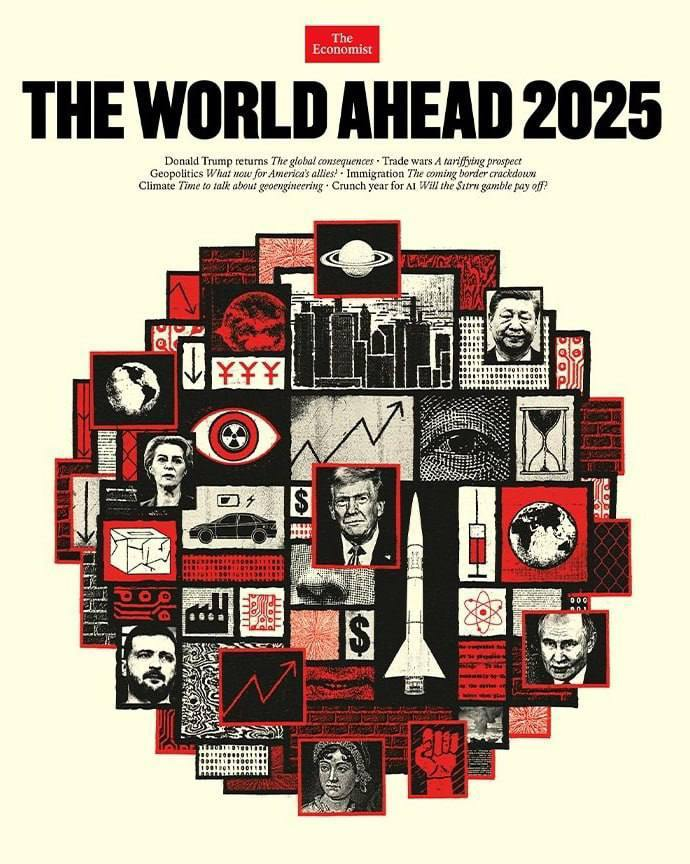
Analysis: The World Ahead In 2025 – The Economist

Image

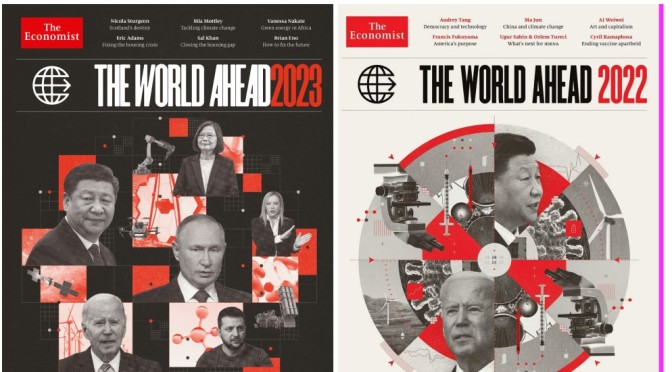
The Economist The World Ahead 2025 (November 20, 2024) : In 2025, as seen on the cover, the main event is Trump’s return to the White House and the global consequences of his policies, such as a new wave of trade wars with China. There is also an expected rise in technologies such as artificial intelligence and autonomous vehicles.

Tom Standage’s ten trends to watch in 2025

A letter from the editor of The World Ahead

The three forces that will shape 2025

Watch the interplay between Donald Trump, technology and radical uncertainty

The cover mentions climate issues and hints at a new phase in the fight for social equality, especially among women. Last year, the cover predicted geopolitical instability, an economic crisis, climate disasters, and the g

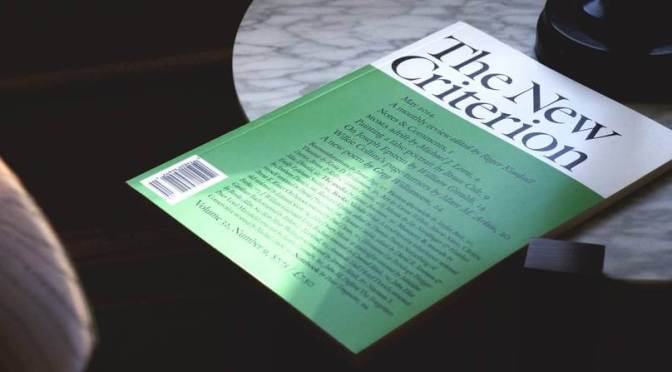
Arts & Culture: The New Criterion -December 2024

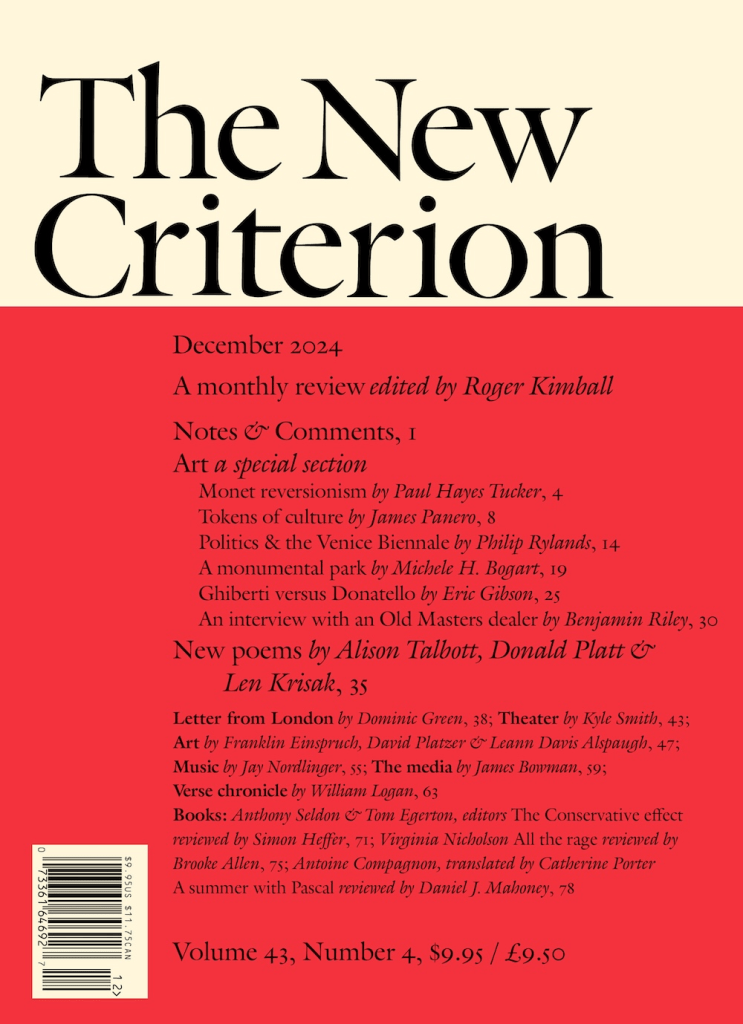
The New Criterion – The December 2024 issue features

Art: a special section

An interview with an Old Masters dealer by Benjamin Riley

Monet reversionism by Paul Hayes Tucker

Tokens of culture by James Panero

Politics & the Venice Biennale by Philip Rylands

A monumental park by Michele H. Bogart

Ghiberti versus Donatello by Eric Gibson

Arts & Culture: The New Criterion -November 2024

Image

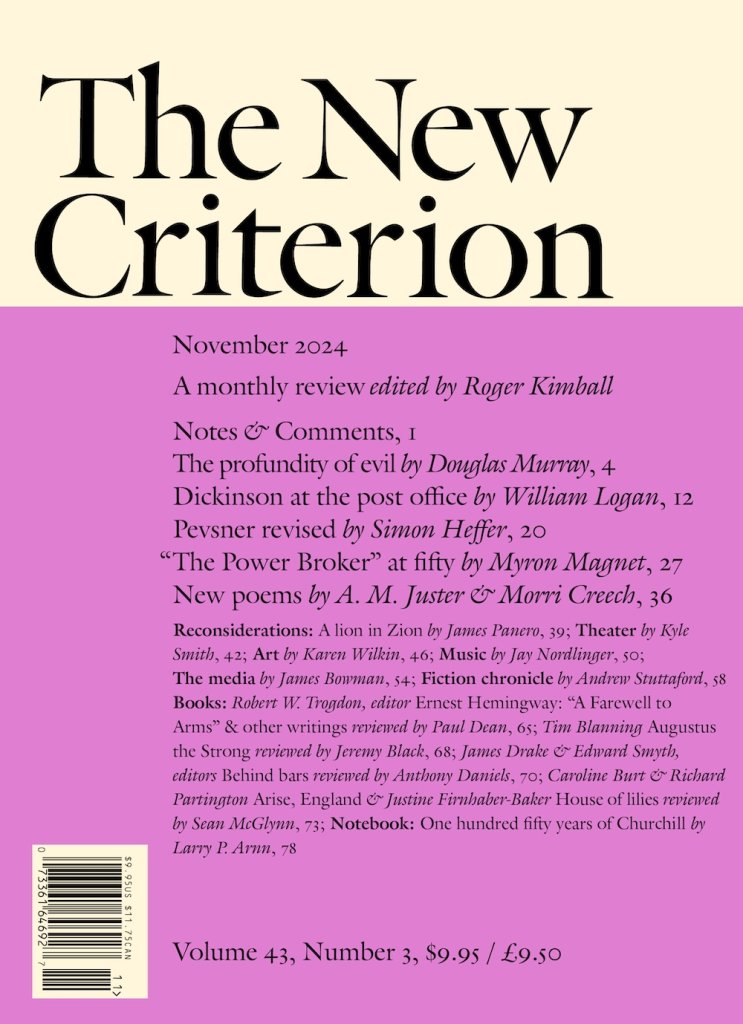
The New Criterion – The November 2024 issue features

The profundity of evil by Douglas Murray

Emily Dickinson at the post office by William Logan

Pevsner revised by Simon Heffer

“The Power Broker” in perspective by Myron Magnet

Arts & Culture: The New Criterion -October 2024

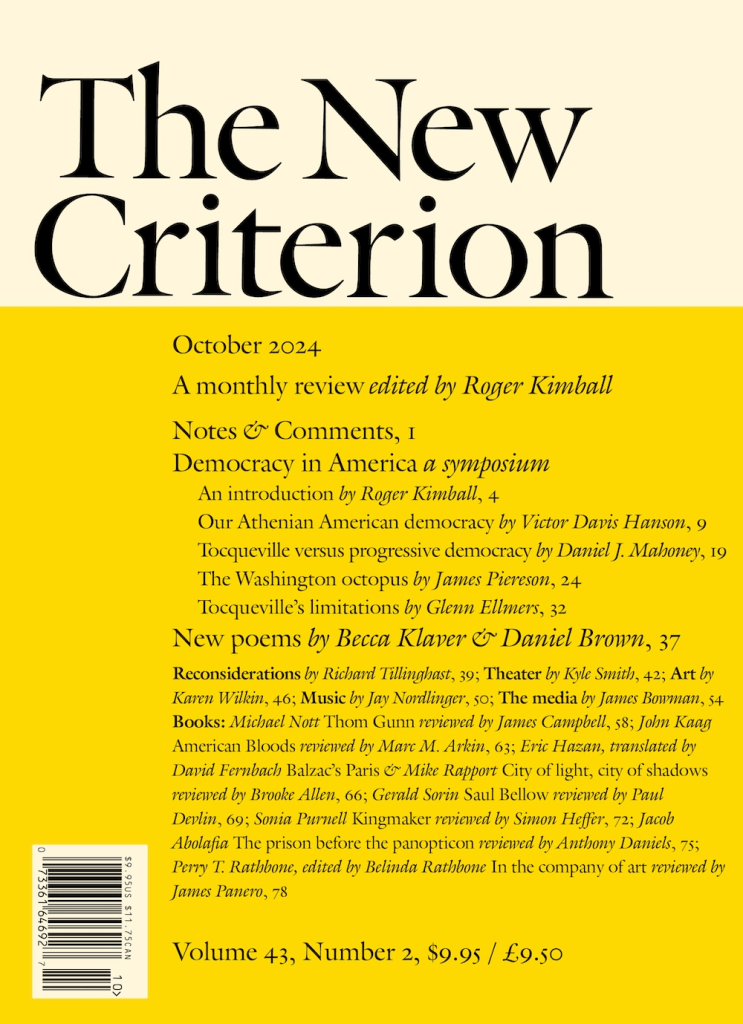
The New Criterion – The October 2024 issue features

Democracy in America: a symposium

Tocqueville’s limitations by Glenn Ellmers

Democracy in America: an introduction by Roger Kimball

Our Athenian American democracy by Victor Davis Hanson

Tocqueville versus progressive democracy by Daniel J. Mahoney

The Washington octopus by James Piereson

Views: Novelist Margaret Atwood On Democracy – “Is It Fragile Or Resilient?”

Financial Times (January 17, 2024) – In a year in which more than half the world goes to the polls, acclaimed novelist Margaret Atwood asks whether democracy is fragile and easily destroyed or flexible and resilient.

This animated monologue is the first of four films examining the state of government, representation, rights and freedom.

Read more at https://www.ft.com/democracy

Previews: The Economist Magazine – Dec 16, 2023

Image

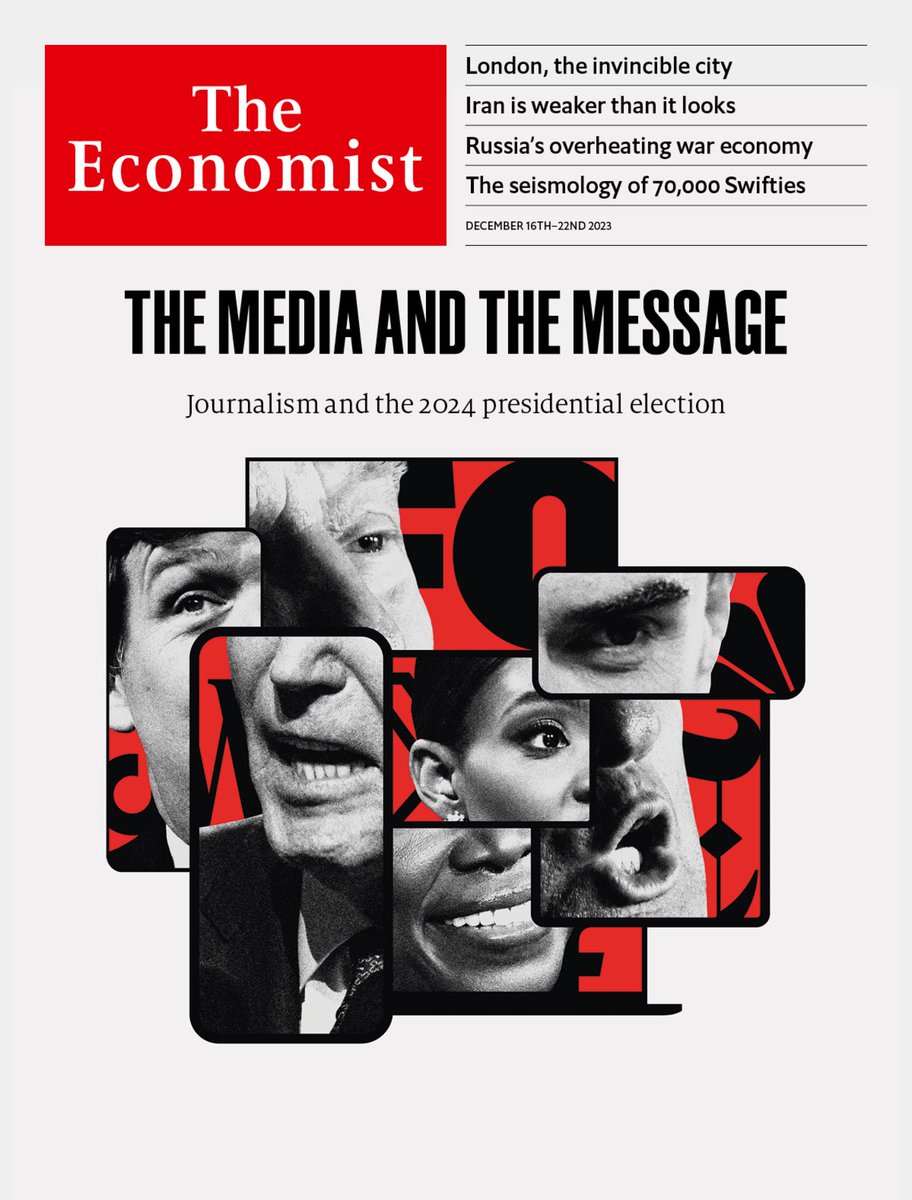
The Economist Magazine (December 14, 2023): The latest issue features ‘The media and the message’ – Journalism and the 2024 presidential election; ‘Can you have a healthy democracy without a common set of facts?; Iran’s regime is weaker than it looks, and therefore more pliable, and more…

Can you have a healthy democracy without a common set of facts?

America’s presidential election is a test of that proposition

Journalists should not spend much of their time writing about journalism. The world is more interesting than the inky habits of the people who report on it. But this week we are making an exception, because the discovery and dissemination of information matters a lot to politics. Don’t take our word for it: “A popular government,” wrote James Madison in 1822, “without popular information, or the means of acquiring it, is but a prologue to a farce or a tragedy; or, perhaps both.” Were Thomas Jefferson offered a choice between a government without newspapers and newspapers without a government, he said that he would choose the press (though that is probably going a bit far).

Iran’s regime is weaker than it looks, and therefore more pliable

America should deter it from escalating the Gaza war, but also engage with it

Twelve months ago Iran was reeling from protests sparked by the death in custody of a young woman who had been arrested for showing too much hair. Its theocratic regime was increasingly isolated, as Arab states forged closer ties with its enemy, Israel. The economy was a mess, adding to popular anger at Iran’s ageing supreme leader and inept president. The Islamic Republic had not seemed so vulnerable in decades.

Previews: The Economist Magazine – Dec 9, 2023

Image

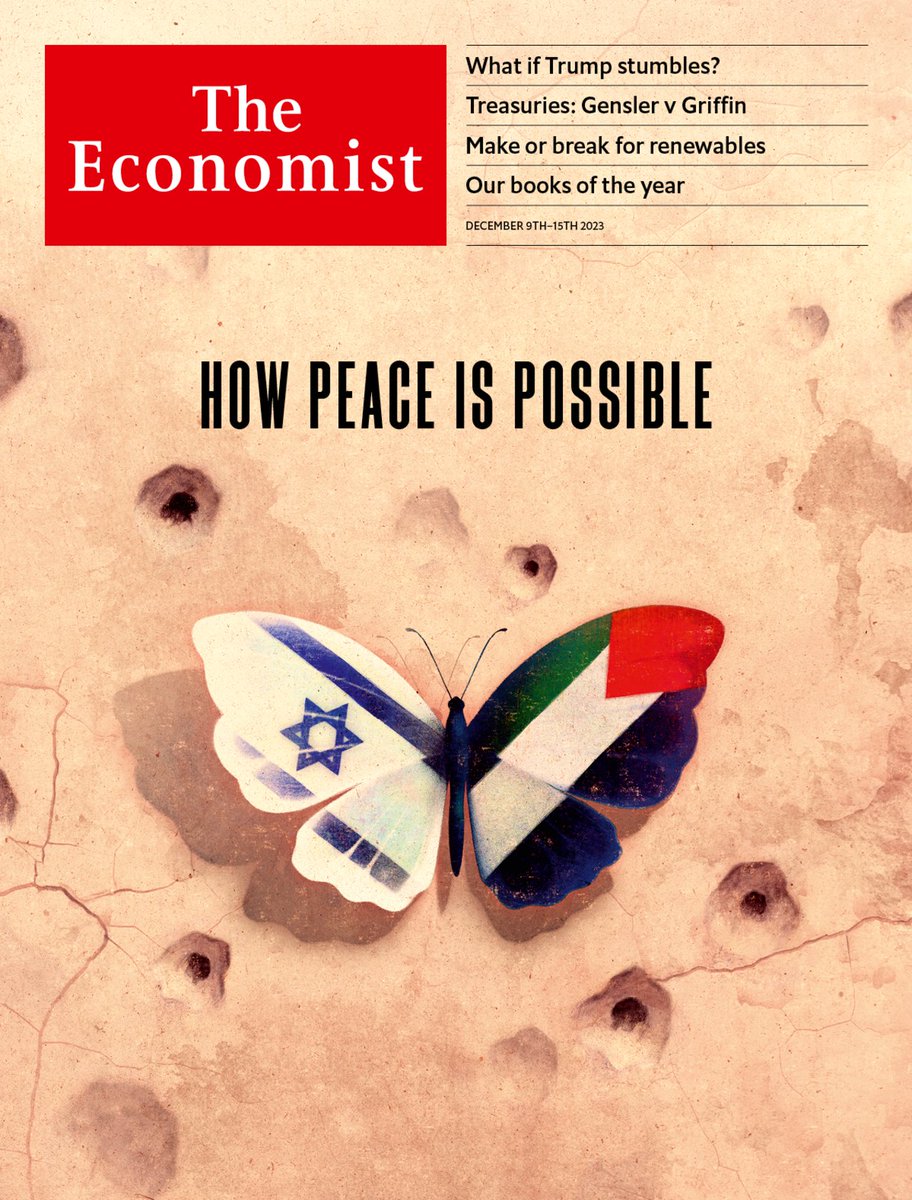
The Economist Magazine (December 7, 2023): The latest issue features Israel and Palestine: how to get to peace – For there to be any hope, both Israelis and Palestinians need new leaders; What if Trump stumbles? – And what might happen if Trump dropped out; Make or break for renewables – Supply-chain dysfunction, rising interest rates and protectionism are making life tough; Our books of the year – This year’s picks transport readers to mountain peaks, out to sea and back in time

Israel and Palestine: How peace is possible

A peace process can go wrong in many ways, but a real possibility exists that it could go right

How to stop over-medicalising mental health

What the world could learn from Britain’s flawed approach

A messy contest is coming to a head behind Donald Trump

Our poll tracker sheds light on that competition. It may yet matter

Previews: The Economist Magazine – Dec 2, 2023

Image

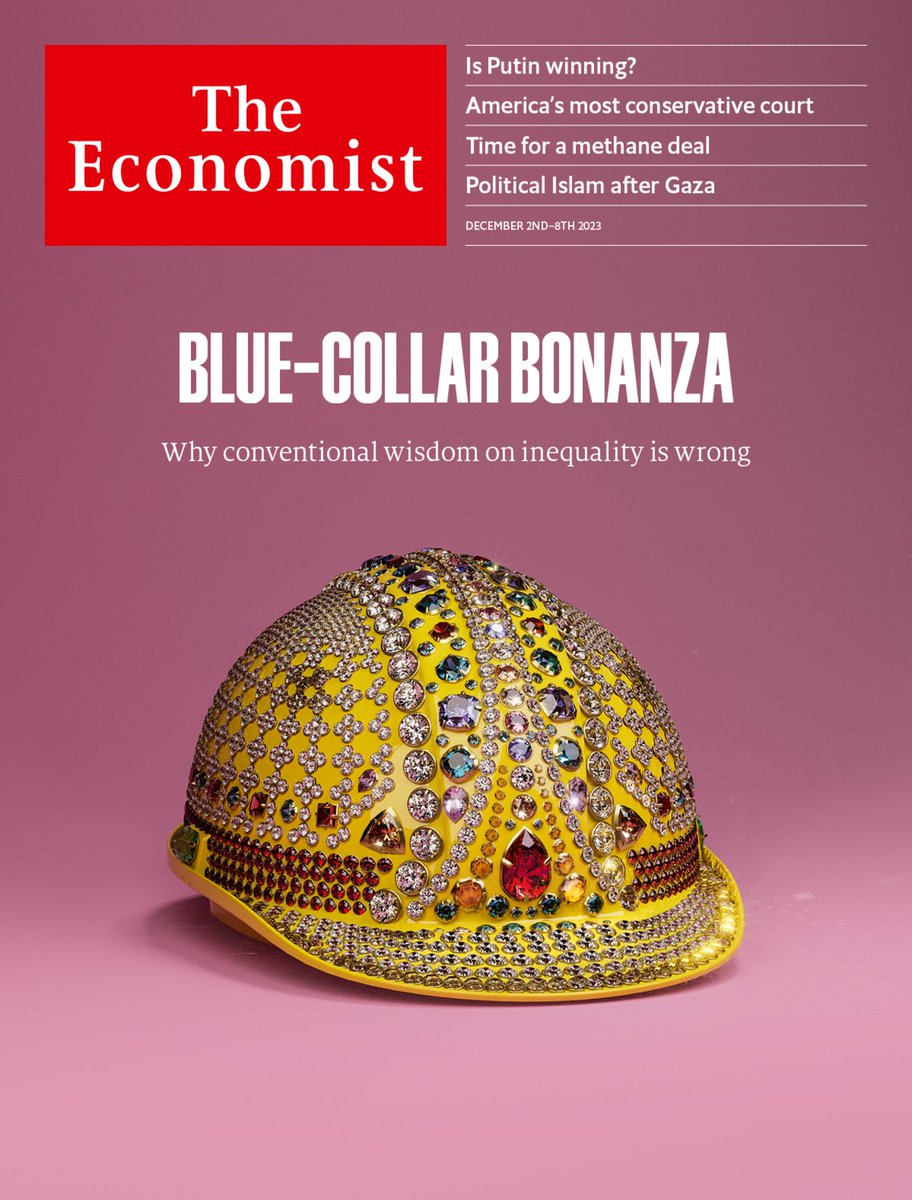
The Economist Magazine (November 30, 2023): The latest issue features ‘Blue-Collar Bonanza’ – Why conventional wisdom on inequality is wrong; Is Putin winning?; America’s most conservative court; Political Islam after Gaza, and more…

A new age of the worker will overturn conventional thinking

Around the rich world, wage gaps are shrinking

Few ideas are more unshakable than the notion that the rich keep getting richer while ordinary folks fall ever further behind. The belief that capitalism is rigged to benefit the wealthy and punish the workers has shaped how millions view the world, whom they vote for and whom they shake their fists at. It has been a spur to political projects on both left and right, from the interventionism of Joe Biden to the populism of Donald Trump. But is it true?

A religious revolution is under way in the Middle East

Demonstrators shout slogans during a protest in support of the Palestinian people in Cairo, Egypt

Can it survive the Gaza war?

Old stereotypes are haunting the Middle East once more. The biggest butchery of Israeli civilians since the state’s creation, carried out on October 7th, has been followed by a slaughter of Palestinian civilians. America, which has funded, armed and defended Israel is again an object of ire. So are its Western allies. Together they are blamed for facilitating Gaza’s pummelling and the displacement of its people. A truce which began on November 24th, and which was set to expire as The Economist went to press, had led to the release of 81 hostages and 180 Palestinian detainees as of November 28th.

Previews: The Economist Magazine – Nov 25, 2023

Image

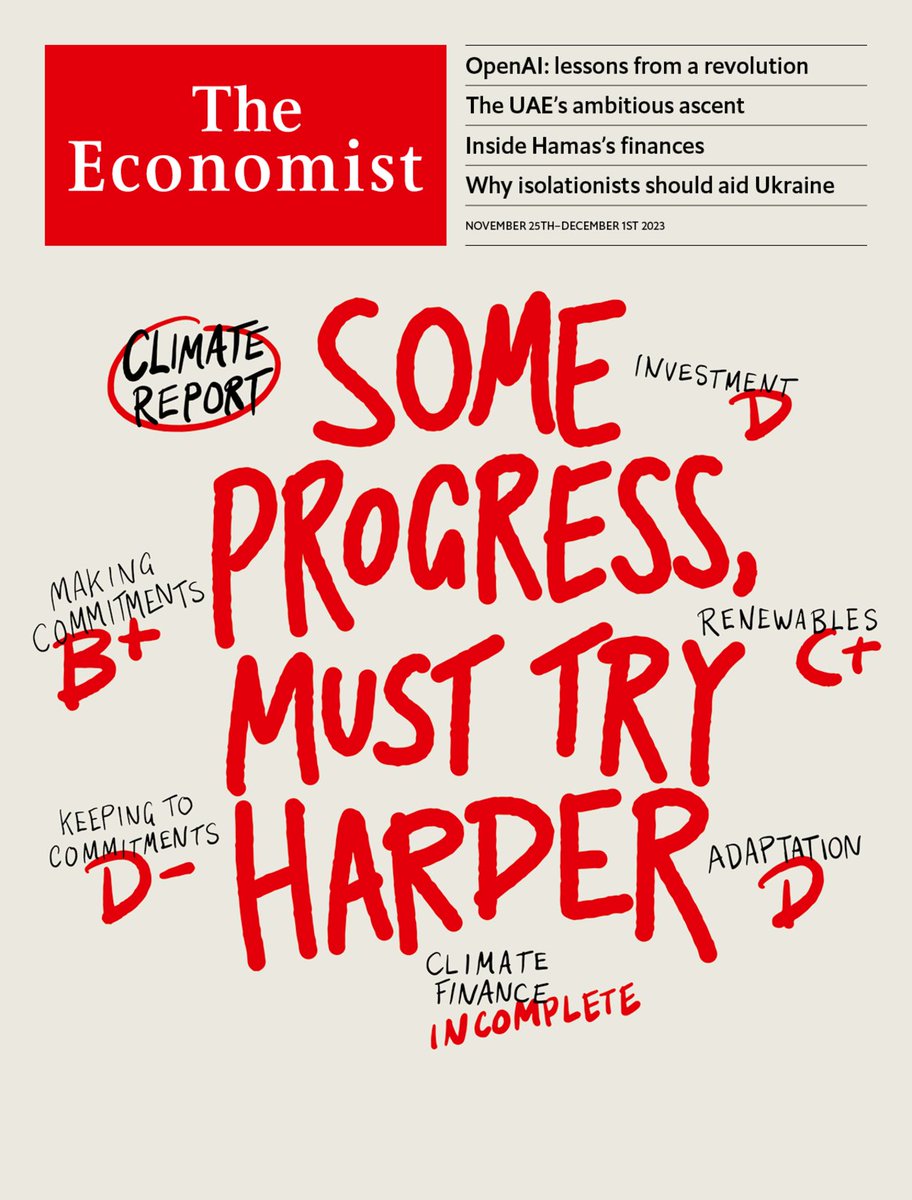
The Economist Magazine (November 25, 2023): The latest issue features The Climate report – Some progress, must try harder….

Progress on climate change has not been fast enough, but it has been real

And the world needs to learn from it

The agreement at the conference of the parties (cop) to the un Framework Convention on Climate Change, which took place in Paris in 2015, was somewhat impotent. As many pointed out at the time, it could not tell countries what to do; it could not end the fossil-fuel age by fiat; it could not draw back the seas, placate the winds or dim the noonday sun. But it could at least lay down the law for subsequent cops, decreeing that this year’s should see the first “global stocktake” of what had and had not been done to bring the agreement’s overarching goals closer.

Lessons from the ascent of the United Arab Emirates

How to thrive in a fractured world

In Argentina Javier Milei faces an economic crisis

The radical libertarian is taking over a country on the brink