The Local Project (December 15, 2023) – Distinctively robust and private, Cloister House I celebrates simple design and timelessness. MORQ creates a refuge inside a family home built around the idea of sanctuary, in a refreshing counterpoint to the busy street it sits upon.
Video timeline:00:00 – Introduction to the Family Home 01:23 – An Interesting Family Brief 02:09 – A Walkthrough of the Home 03:22 – Incorporating the Idea of Retreat and Refuge 04:29 – The Evocative Material Palette 05:45 – Design Properties of the Courtyard 06:26 – Aiming for Sustainable and Durable Design
“The idea of retreat is very much an aspect of the brief, and we felt that creating a fence and leaving the inside as a void creates a peaceful space,” says Andrea Quagliola, co-founder at MORQ. The home of grandparents, Cloister House I welcomes one inside a family home built around the notion of being able to comfortably house just two, as well as cater for lots of visitors. Inside a family home built around a courtyard, the architecture feels almost fortress-like from approach.
Its concrete structural face and concrete cladding comprise of steel that resembles the red earth that surrounds the Western Australia locale of Perth where the home sits, while the interior design combines Italian design nuances, as per Andrea’s roots. The home is split into two distinct volumes – a space for just two people that relates to the central courtyard and a space for visiting family that relates to the rear of the home. This architecture enables the house to feel appropriate in smaller and larger settings, and a customised glazing system allows one to open and close the spaces as desired.
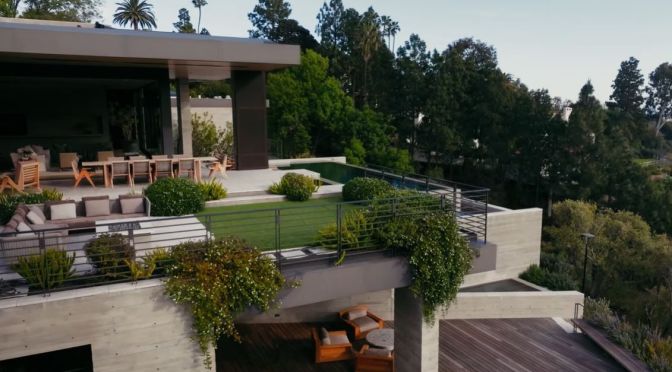
The Local Project (September 26, 2023) – On the hills of Pacific Palisades, in Los Angeles, is Palisades Residence by Abramson Architects, a breathtaking modern home with sweeping views of the canyon backdrop. As the house tour begins from street level, the house opens onto a one-storey main level before descending to the second floor.
Video timeline:00:00 – Introduction to the Breathtaking Modern Home 00:59 – The Riviera Neighbourhood 01:12 – The Layout of the House 01:35 – A Walkthrough of the Home 04:03 – Designing For A Dynamic Climate 04:53 – A Simple Material Palette 05:09 – A Collaborative Process
Journeying further, the main level opens to reveal the living space with dropped ceilings that at first obscure the top of the canyon. However, as the house tour moves further into the living area, the interior design opens up with the ceiling, lifting to gift the occupants breathtaking views of the canyon. From the entry way, the architects have designed a tall space with concrete walls and split skylights, which have been designed specifically to allow light to reflect and bounce into the breathtaking modern home.
The upper level contains the primary suite, which has its own his and hers bathrooms and dressing rooms. Additionally, this level contains the kitchen, dining room, living room and the covered outdoor space that leads to the outdoor entertaining areas. From here, the house tour leads down to the second level where additional living spaces are placed – these three secondary suites complement the interior design of the breathtaking modern home.
The Local Project (September 26, 2023) – Narrow sites and smaller residences tend to provide architects with an opportunity – one that inspires creativity and innovation. This is true of Concrete Curtain, an architect’s own home in inner-city Melbourne, where FGR Architects evocatively draws on materiality and natural light, imbuing the architecture of the family home with a sense of elegance and spaciousness.
Video timeline:00:00 – Introduction to the Architect’s Own Home 01:29 – Designed for a Growing Family 01:39 – A Walkthrough of the Home 03:13 – Playful Additions 03:49 – The Use of Stone Throughout the Home 05:27 – The Calming Materials 05:46 – Proud Moments
Upon entering the architect’s own home, one is met with a garage that is flanked by an ensuite, study and laundry. The house tour then leads into the central foyer area – a core part of the dwelling that allows light to enter from the east and west. The lower part of the residence contains the kitchen, living and dining area that then naturally flows out towards the al fresco dining area.
The spiral staircase leads to the second level, which is split into two segments. On the northern side is the master suite, and on the southern end is the childrens’ bedrooms. This floor also features a playful, blue carpet, which adds vibrancy to the upstairs level. Perhaps the most prominent feature of the architect’s own home is the concrete curtain, which reveals FGR Architects’s intention to illuminate areas with natural light.
Wanting to create a sense of space, the architect leveraged the idea of a sheer curtain to allow for both privacy and openness. As such, the concrete ‘cylinders’ are spaced out in a way that emulates the fold of a curtain. The result is a remarkable feature with a gentle, pleated style that softens the residence and lets light pass through seamlessly. The interior design and materiality of the architect’s own home is vital to its overall effect.
The Local Project (August 1, 2023) – Nestled into the southern Tasmanian landscape sits Room11’s floating home Triptych project – three unique buildings spanning across a pristine Tasman Peninsula locale.
Video timeline:00:00 – Engaging Concrete To Create The Floating Home 00:55 – Introduction to 01:55 – The Client’s Vision 02:20 – The Process Of Arrival 02:47 – Playful Interventions Throughout The Home 03:36 – Utilising Mirrors In The Interior Design 04:09 – Landscaping Inspired By The Journey 04:35 – Bespoke Ventilation System 05:09 – The 4th Built Element 05:36 – Manifesting The Original Idea
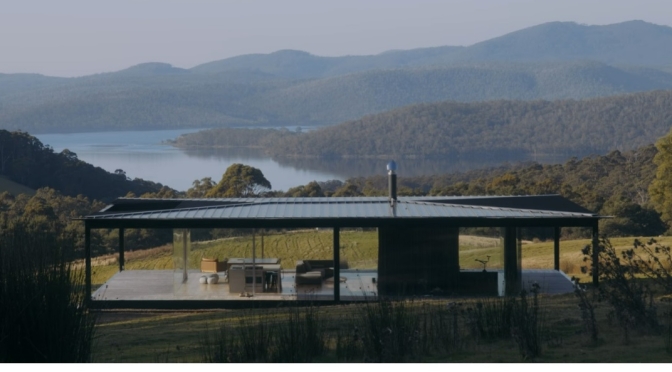
One of the buildings is Koonya, a home with an experience that extends all the way to the horizon. The outdoor sculptural piece (the Pulmonum), main house and Glass House offer a retreat as well as a raw and direct connection to place that is potent and memorable. As such, Room11 establishes a strong and unwavering approach to creating a floating home.
Concrete is abundantly used across the three projects, with Room11 drawing on its solidity to create a standalone floating home in a broad landscape that offers an immense, modern art-like structure whilst still feeling comfortable and providing a sense of sanctuary. The key to establishing architecture in such a remote location is considering and highlighting the qualities of the site.
The large window looking out towards the horizon acts as a piece of art, marking the endpoint of a journey as one descends into the building before being projected into the landscape. The somewhat brutal approach to creating this floating home allowed Room11 to make playful interventions off the main spaces. For example, one of the bedrooms has a low, horizontal window that offers views of the landscape beyond when one lies down. Additionally, the master bedroom has a sheepskin cupboard, providing a playful and enjoyable element that also exudes a feeling of warmth.
The Local Project – (April 4, 2023) – Fulfilling the client’s desire to build their concrete dream house, Shaun Lockyer Architects considers the tactile and environmental benefits of building with concrete. Located in an inner-city suburb of Brisbane,
Video timeline:00:00 – Introduction to the Concrete Dream House 00:32 – The Home and The Area 01:05 – Views from the Home 01:31 – A Modernist Theme on Approach 02:02 – A Walkthrough of the Home 02:22 – A Canvas for Life and Personality 02:40 – Less is More 02:59 – The Materials 03:41 – Controlling and Curating the Light 04:29 – Engaging with the Landscape 05:16 – Client and Architect Relationships
Dilkera embodies responsive design in how it reacts to both its climate as well as its location. Dilkera’s striking concrete façade and distinctive form are largely informed by the subtropical climate. The residence is a direct expression of how a home’s design can manage a rapidly changing mix of rain, heat and humidity – typical conditions of Brisbane and south-east Queensland where the home resides.
So that the inhabitants are not constantly moving between the inside and the outside to avoid the weather, there are deep thresholds, lovely wide eaves and protected edges so there’s a constant sense of being able to live throughout the entire concrete dream house, despite the season. Shaun Lockyer Architects also explores what elements make up a concrete dream house. The home offers vestiges to surrounding scenery, including views of bushland on the eastern side, an expansive river looking across to New Farm Park and The Powerhouse on the western side, and views of the city to the southwest.
Through a bold approach to materiality, Shaun Lockyer Architects designs a robust yet welcoming home. The structure’s materiality is kept minimal and, while concrete dominates, it is complemented by a beautiful stone that forms the base of the house along with black and blond timbers throughout. Concrete floor finishes from the inside to outside are consistent, creating a seamlessness between indoor and outdoor spaces as the concrete transitions to oak cabinetry and extends through to the furniture.
An incremental revealing of what lies beyond this concrete dream house expresses a deliberate modernist theme. As soon as one enters the home there is an opening of space, with a double-height room that becomes the centre of gravity in both the form and architecture of the house. Walking around the home, views through to the landscape and garden reveal themselves, which nurtures a connection to the outside and a sense of the residence’s transparency.
Dilkera expresses the tangible reality of what was once a mere vision of a concrete dream house. To achieve this, Shaun Lockyer Architects prioritised the relationship with the client and in turn created a home that is distinctly different, resulting in a deliberate attempt for the home to engage with the landscape rather than be a dialogue about the building in itself.
The Local Project (March 14, 2023) – Inspired by jungle living and the whimsical idea of a spaceship crash landing into the landscape, Ground House 107R by David Fewson is a structure unlike any other. Beginning as a joint family effort, the guesthouse is complete with thoughtful design, build, furniture and artwork choices.
Video timeline:00:00 – Introduction to the Concrete Bunker Home 00:43 – The Location 01:16 – Ground House Space Station: A Vision 01:34 – A Collaboration of Friends 01:53 – The Layout 02:24 – Ground House’s Space-Inspired Bedroom 02:47 – Ground House’s Ship Lighting 03:13 – The Gift of Natural Light 03:47 – Materials Used Throughout 03:55 – Ground House Spaceship Control Panel: Kitchen 04:09 – Ground House Crash Aftermath: Landscape 04:59 – The Collaborative and Fun Process
The building is a precisely curated space in which one can find respite from urban living. With its charming jungle living experience, Ground House 107R sits on a section of undulating land surrounded by rainforest and is covered in a myriad of flora that helps it to disappear further into the land. Starting from approach, the home’s calming yet magical ambience is first seen as it emerges over the ridge.
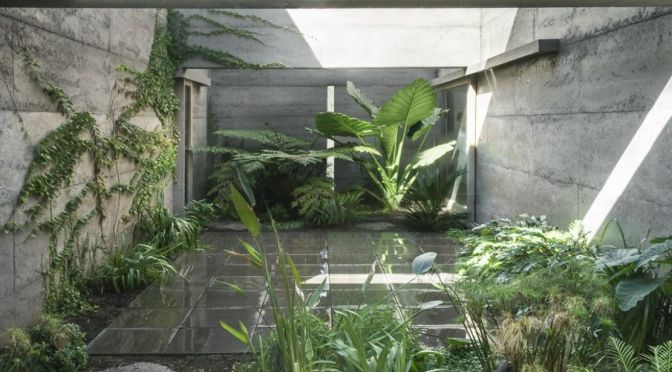
First appearing as a brutalist compound of concrete, the guesthouse is softened by foliage that cascades over the sides of it like a form of art. Organic in its design, the structure features a bedroom, kitchen, living space and bathroom. As the house tour leads around the space, the open plan layout allows for an effortless flow to the outdoors and enforces the feeling of jungle living. In the bathroom, the view through the windowed wall offers a unique view of the home’s material make up.
Additionally, the light that is gifted to the finished structure allows for the guesthouse to breath and emphasises the idea of jungle living. Using only authentic and natural materials, David Fewson and his family have added an element of truth to the interior palette. Using a combination of concrete, real timber and brass, the architect and designers extend their idea of the home forming the shape of a crashed spaceship. Found only a few metres away, the hot tub is settled into the landscape and allows guests to immerse themselves further into jungle living.
At one with the landscape, Ground House 107R’s unique architecture and design elements offer a take on the bygone era and transports it to the contemporary age in which David Fewson hopes guest will find alluring. Located in northern New South Wales, the guesthouse is shrouded in a layer of secrecy that only deepens the charm and characteristics of the site. With its jungle living ideals and employed naturally made materials, Ground House 107R is a place in which serenity can be found in every detail.
The Local Project (December 16, 2022) – Inside one of Melbourne’s most modern architectural homes, the house tour of Hawthorn House showcases Edition Office’s timeless design. Working with Flux Construction, Edition Office plays with light and shadow to reveal the form and characteristics of the home.
Video timeline: 00:00 – Introduction to the Most Brilliant Architectural Home 00:26 – Playing with Light and Shadow 00:44 – Creating a Family Home 01:47 – Filtering Through the Concrete Shroud 02:00 – Views From Each Living Space 02:24 – The Original Brief 02:59 – A Quick but Complex Build 04:14 – Emulating A Sanctuary with Other Worldly Vibes 04:30 – The Skin of the Building 04:46 – A Balancing Act with The Materials 05:05 – Returning to the Project 05:26 – Proud Moments
Over an 18-month building process, Flux Construction and Edition Office have created a house unlike other modern architectural homes. First seen from the outside, Hawthorn House appears as a monolithic structure yet, on the inside, the family home becomes a private sanctuary for its owners. Similar to other modern architectural homes, Hawthorn House suffered from lack of privacy in its suburban location.
To respond to this need, Edition Office has pushed the skin of the building out from the glass line, which allows for both privacy and the softening of light. Upstairs has been provided more privacy through light volumes, a structural choice between the buildings form and glass line that open up to the sky. Furthermore, the light volumes also provide advantageous views and the experience of seeing the seasons as they change.
Employing unique interior design choices that allow for ease of living, the architect and interior designer have configured downstairs as one singular platform. Offering different experiences, each living area has a differing focus. From the front pavilion, the homing in on the northern light and established lemon gum tree offers the owners a space to connect with their surrounds. Experienced in the more intimate rear pavilion, an inward focus of the home brings a soft and warming essence to the interior. Celebrating the structural form of modern architectural homes, Edition Office and Flux Construction operated with a concise approach when completing the house.
Through the connection of materials, the home is a celebration of concrete, timber and glass, which is observed immediately from the exterior shell. Equally as important as the home, the evolving landscape offers a place of cognitive restoration. With a mixed use of exotic species and natives, the green life helps to provide a comforting space that will continue to grow in place. Over the modern architectural home’s form, Edition Office has provided its clients with complete privacy through a humble material palette and lush landscaping.
The Local Project– Following three years of curation, St Vincent’s Place emerges as an award winning home, peppered with art and designed to promote conversation. Crafted by B.E Architecture, the restoration project employs expressive pieces with consistency, enabling the building to be navigated with ease.
Video timeline:00:00 – Introduction to the Award Winning Home 00:21 – A Restoration Project 3 Years in The Making 00:58 – Building Aspects From the Ground Up 01:31 – Compatibility Within the Home 01:46 – A Walkthrough of the Historic Section of the Home 02:03 – The Modern Section of the Home 02:18 – Reinterpretations of the Historic Aspects 02:46 – Encouraging Conversation Through Building and Design 03:36 – A Range of Surprising Features 04:45 – Peaceful Curation and Arrangement 05:09 – A Journey With the Client
Originally owned by a convent, St Vincent’s Place is comprised of three buildings set side-by-side, situated in the Melbourne precinct of Albert Park. The heritage façade – the only historical element that could be retained in the award winning home – represents a significant contribution to the architecture of the area, presenting a combination of stone and delicate black metalwork. Traversing two design styles in a singular project, B.E Architecture dedicates the front of the home to heritage recreation whilst providing a modern extension.
The front of the award winning home captures a formal entrance and living room and upstairs, a master bedroom and dressing room. A studious approach to restorative design is reflected in the treatment of cornices, skirtings and architraves, as well as doorjambs, doors and flooring. In contrast, the back of the building captures a contemporary interior design including a downstairs pool, onsen and steam room, elevated with tiling and considered lighting.
Several features of St Vincent’s Place indicate the designer’s penchant for aesthetic flair. Inspired by pioneering artist Sigmar Polke, sliced agate doors filter natural light with an array of neutral tones. In addition, a large text piece reading ‘Heaven is a Place Where Nothing Ever Happens’ sparks curiosity from its reference, size and impressive incorporation into the award winning home.
“You do feel the magic of how these elements come together here,” says Broderick Ely, Design Director at B.E Architecture. “We curate, we arrange and manipulate these items so it sits very quietly.” Using the even application of decorative elements, B.E Architecture establishes a coherent and award winning home. St Vincent’s Place is structured to gently guide occupants towards its many hidden gems, enabling the mind to wander in unison with the body.
October Project of the Month | Scarborough Béton Brut | Young Architects.
Raw concrete, extensive glazing, and timber accents dominate the design of this home nestled in the hills above Christchurch’s seaside suburb of Sumner. Perched on the edge of a dormant volcano on a 30 degree slope, the form hasn’t been compromised. The structure emerges from the landscape in cubed sections.
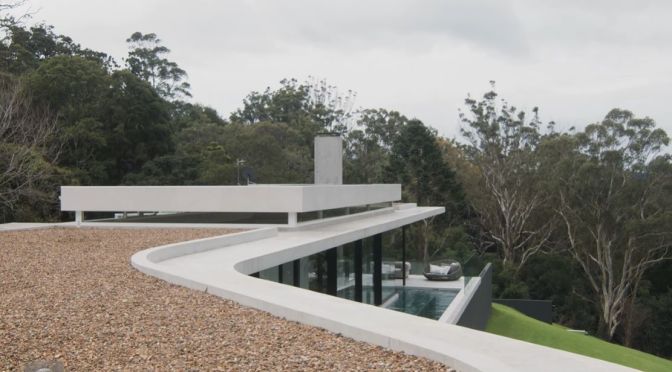
Evoking grandiosity through carefully considered sharp points and rounded edges, the concrete super house by Joe Adsett Architects offers unrivalled views of Toowoomba’s sweeping landscape. Creating a piece of architecture that was befitting of the location and striking natural landscape,
Video timeline: 00:00 – A Welcome to Cliffhanger House 00:36 – The Location of the Super House 00:46 – Building On The Edge of A Landslide Zone 01:36 – Arriving At The Site 02:00 – The Vitrocsa Glazing Suite 02:40 – A Seamless Flow From Kitchen to Outdoors 03:00 – An Extension of The Main Living Area 03:14 – The Material Palette 03:52 – Emulating The Architecture Through Furniture 04:17 – Designing Weather Flexible Houses 04:41 – The Challenging Aspect of The Cantilever
Vitrocsa collaborated with Joe Adsett Architects to produce the concrete super house that fully embraced its location. Balancing at the very top of the site, the concrete super house offers views from East of Brisbane toward Picnic Point and Table Top Mountain. Whilst the home’s location is situated over a ridge, Joe Adsett Architects endeavoured to create more space by cantilevering away from the slope.
By projecting part of the concrete super house out from the built space, the ability to create a more functional living space with privacy from surrounding neighbours arose. Arriving at the concrete super house, the gaze is immediately ensnared by the curving concrete wall that cantilevers away from the base of the home. With the garage underneath the house offering one way of entrance, it is the curved pathway leading to the deliberately oversized glass pivot door that is the striking entrance of the home.
Working with Vitrocsa to create the glazing for the home, the frame of the windows was done with a slender aluminium product comprised of reinforced stainless steel. Made in Australia and designed to Swiss specifications, the framing offers unbroken views of the surrounding landscape whilst also bringing a seamless indoor-outdoor flow into the home. With restrained materials used across the exterior architecture, the interior design choices also reflect the primary theme of the concrete super house.
Softened with veneered timber products and large porcelain tiles, curves and sharp points are repeated through the joinery elements. Furthermore, the furnishings also introduce soft textures and colours that bring a humanising element to the concrete super house.
News, Views and Reviews For The Intellectually Curious



 The Local Project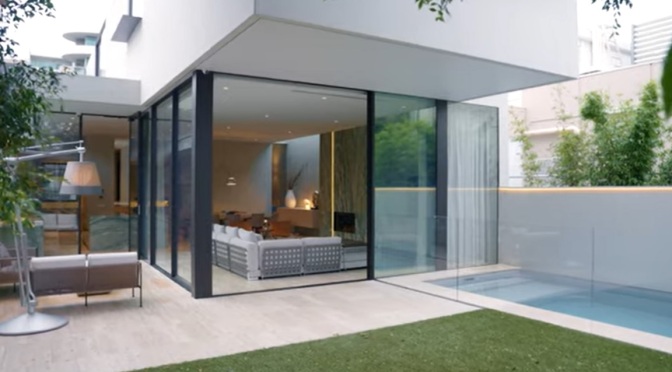



 Boomers Daily