

Chinese tech stocks popular among U.S. investors have tumbled amid the country’s regulatory crackdown on technology firms. WSJ explains some of the new risks investors face when buying shares of companies like Didi or Tencent. Photo Composite: Michelle Inez Simon
Tag Archives: China
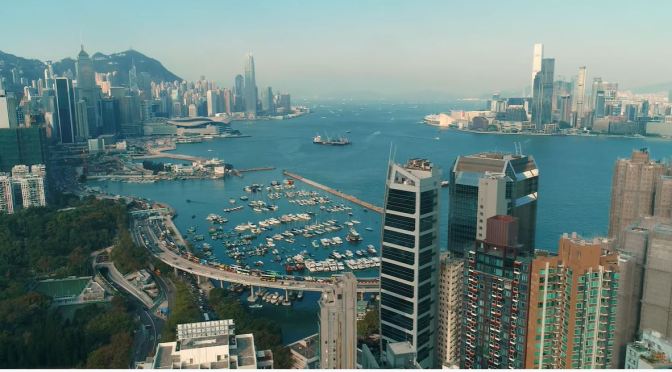
8K Views: Hong Kong
Hong Kong, officially the Hong Kong Special Administrative Region of the People’s Republic of China, is a metropolitan area and special administrative region of China on the eastern Pearl River Delta in South China.

Morning News: Balkans Travel, China Nuclear Arsenal, U.S. Travel Ban
We discuss the creation of a “mini-Schengen” common-travel area in the Balkans. Plus: we analyse what the expansion of China’s nuclear arsenal means for the rest of the world and why the US is persevering with its travel ban on most foreign citizens.

Views: Bamboo Rafting On Yulong River In Ten-Mile Gallery, Yangshuo, China
Sauntering down a country road makes you feel like you are travelling in a painting. This is true of the Ten-Mile Gallery in Yangshuo County, a fairyland on earth.
Video timeline: 0:00 Intro 1:08 Helicopter Journey 8:00 Bamboo Raft trip 39:47 Walking Along the riverside 54:23 Walking among the mountains 1:02:37 Hot air Balloon experience
As the name implies, Ten-Mile Gallery is a picturesque road stretching from the Yangshuo town area to Moon Hill, endowed with rolling hills, endless fields, idyllic villages and clear rivers on both sides. The peaks form natural sculptures in various shapes against the blue sky and beautiful flowers adorn the road.

Morning News: China Cyber Hack Rebuke, Africa Space Race, Mice Plague
The European Union, NATO and the “Five Eyes” intelligence partners have all joined America in accusing China’s government of involvement in hacking campaigns. Now what?
Away from the spectacle of billionaires’ race to the heavens, many African countries are establishing space programmes—with serious innovation and investment opportunities on the ground. And why Australia is suffering from a plague of mice.

Wildlife: Golden Snub-Nosed Monkeys Of China
Meet China’s most affectionate and vocal monkeys in the remote, seasonal forests of Central China. Follow the journey of a baby Golden snub-nosed monkey during the first year of her life as she learns all about her forest home and battles the elements to survive.
The golden snub-nosed monkey is an Old World monkey in the subfamily Colobinae. It is endemic to a small area in temperate, mountainous forests of central and Southwest China. They inhabit these mountainous forests of Southwestern China at elevations of 1,500–3,400 m above sea level.

Aviation: Boeing & Airbus Counter China’s Comac
Boeing and Airbus dominate global aviation, but China’s Comac wants to challenge the duopoly with new planes. WSJ’s Jon Sindreu explains how supply chains, technology and geopolitics could help the Western aircraft makers to protect key markets. Photo Composite: George Downs

Container Shipping: How Maersk Managed Crisis
The global container business is in chaos. Surging consumer demand, covid outbreaks and a shortage of containers has led to higher volume for ocean carriers and congestion at ports.
Maersk, the world’s largest container shipper, has seen record profits. The Danish shipping firm whose customers include Walmart and Nike announced May 2021 first-quarter revenue of $12.4 billion, a 30% increase from a year earlier. Maersk has a fleet of over 700 ships and handles one in every five containers shipped by sea. The company also owns terminals around the world and has a growing land-based logistics business. On average a Maersk container ship calls on a port somewhere around the globe every six minutes.
Like its competitors the company has faced a series of obstacles in the first half of 2021 ranging from the worldwide shortage of shipping containers to the blockage of the Suez Canal. So, with vaccine rollouts in place in the U.S. and consumer discretionary spending shifting towards services will Maersk and its rivals be able to maintain their momentum? And what do bottlenecks at ports and higher freight rates mean for U.S. consumers? Watch the video to find out what’s next for Maersk.

Online Shopping: Alibaba Challenges Amazon (WSJ)
Inside the company’s automated warehouse in China Chinese e-commerce giant Alibaba is challenging Amazon by promising fast deliveries from China to anywhere in the world. WSJ visits Alibaba’s largest automated warehouse to see how robots and a vast logistics network are helping it expand globally. Composite: Clément Bürge

News: China’s Communist Party At 100 – What’s Next?
At the Chinese Communist Party’s centennial celebration, President Xi Jinping called for defiance against foreign pressure. As China challenges the U.S.’s leadership – from AI to defense – WSJ’s Jonathan Cheng looks at what’s next for the country. Photo: Wang Zhao/AFP
 Boomers Daily