Tag Archives: Calories

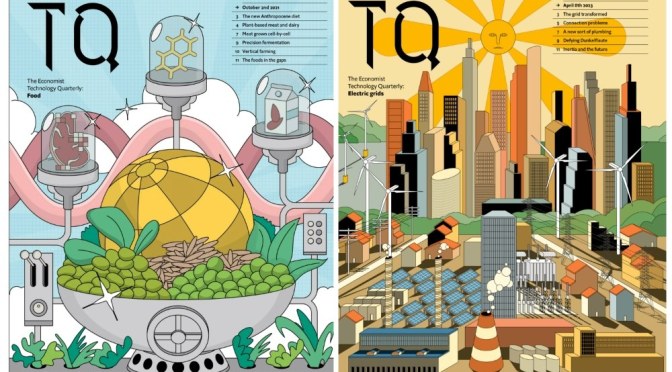
Technology Quarterly – The Economist (Oct 2023)

Image

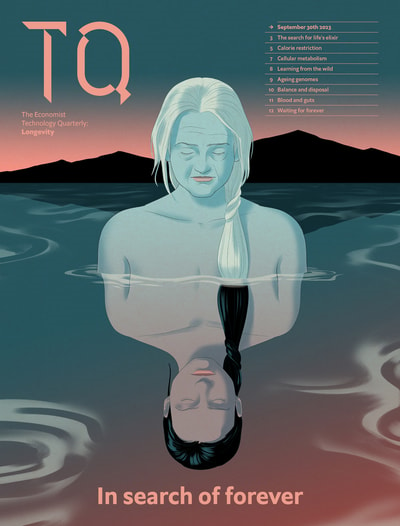
TECHNOLOGY QUARTERLY (SEPTEMBER 27, 2023) – The new issue features ‘In search of forever’ – Slowing, let alone reversing, the process of ageing was once alchemical fantasy. Now it is a subject of serious research and investment, Geoffrey Carr reports.

Slowing human ageing is now the subject of serious research

A horizontal sand timer with an elderly woman and a girl on each side looking at each other

And some of it is making progress, writes Geoffrey Carr

“All my possessions for a moment of time.” Those, supposedly, were the last words of Elizabeth I, who as queen of England had enough possessions to be one of the richest women of her era. Given her patronage of alchemists—who searched, among other things, for an elixir of life—she may have meant it literally. But to no avail. She had her last moment of time in March 1603, a few months short of the three score years and ten asserted by the Bible to be “the days of our years”.

Eating fewer calories can ward off ageing

A hand holding a fork with tiny vegetables on it

And various existing medicines may offer similar benefits

In 1991 eight volunteers sealed themselves into a huge greenhouse in the desert near Tucson, Arizona. They were part of an experiment seeking to discover whether a carefully curated selection of plants and animals could develop into a self-sustaining ecosystem: a “Biosphere 2” independent of “Biosphere 1”, aka the outside world.

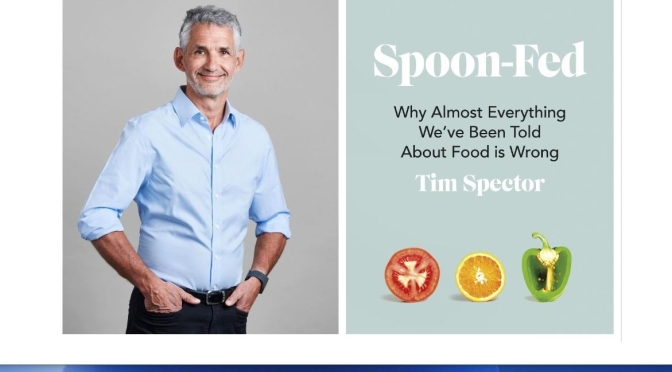
Healthy Diet Podcasts: “Spoon-Fed” Author & Professor Tim Spector

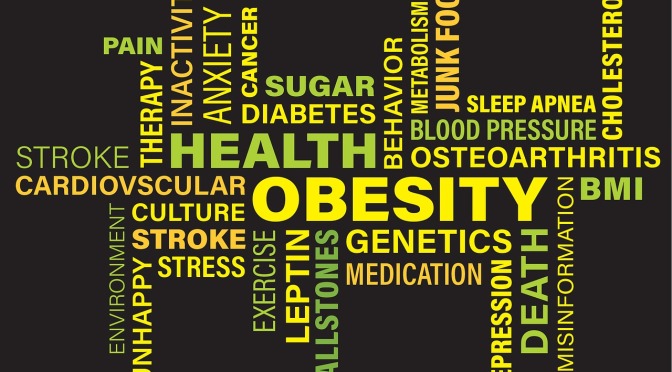
According to a recent study, obesity increases the risk of dying of Covid-19 by nearly 50%. Governments around the world are now hoping to encourage their citizens to lose weight. But with so much complex and often contradictory diet advice, as well as endless food fads, it can be hard to know what healthy eating actually looks like. 

How many pieces of fruit and vegetables should you eat a day? Will cutting out carbs help you lose weight? Is breakfast really the most important meal of the day? Speaking to Tim Spector, professor of genetic epidemiology at King’s College London about his new book Spoon-Fed, Madeleine Finlay asks why we’re still getting food science wrong, and explores the current scientific evidence on snacking, supplements and calorie labels. 

Tim Spector is a Professor of Genetic Epidemiology and Director of the TwinsUK Registry at Kings College, London and has recently been elected to the prestigious Fellowship of the Academy of Medical Sciences. He trained originally in rheumatology and epidemiology. In 1992 he moved into genetic epidemiology and founded the UK Twins Registry, of 13,000 twins, which is the richest collection of genotypic and phenotypic information worldwide. He is past President of the International Society of Twin Studies, directs the European Twin Registry Consortium (Discotwin) and collaborates with over 120 centres worldwide. He has demonstrated the genetic basis of a wide range of common complex traits, many previously thought to be mainly due to ageing and environment. Through genetic association studies (GWAS), his group have found over 500 novel gene loci in over 50 disease areas. He has published over 800 research articles and is ranked as being in the top 1% of the world’s most cited scientists by Thomson-Reuters. He held a prestigious European Research Council senior investigator award in epigenetics and is a NIHR Senior Investigator. His current work focuses on omics and the microbiome and directs the crowdfunded British Gut microbiome project. Together with an international team of leading scientists including researchers from King’s College London, Massachusetts General Hospital, Tufts University, Stanford University and nutritional science company ZOE he  is conducting the largest scientific nutrition research project, showing that individual responses to the same foods are unique, even between identical twins. You can find more on https://joinzoe.com/ He is a prolific writer with several popular science books and a regular blog, focusing on genetics, epigenetics and most recently microbiome and diet (The Diet Myth). He is in demand as a public speaker and features regularly in the media.

Website

Health News Video: FDA Launches (And Explains) New Nutrition Facts Label

What’s new about the new Nutrition Facts label? Watch this Q&A with Susan T. Mayne, Ph.D., Director of FDA’s Center for Food Safety and Applied Nutrition. 

New FDA Nutrition Facts Label March 2020

For more information

Studies: Disrupted Sleep Cycles & Dopamine Linked; Craving “High-Calorie Food” & Obesity Are Result

From a NeuroscienceNews.com online release article (01/02/20):

During the years 1976 through 1980, 15% of U.S. adults were obese. Today, about 40%of adults are obese. Another 33% are overweight.

“But, of course, food is now abundant, and our next meal is as close as the kitchen, or the nearest fast-food drive-through, or right here on our desk. Often, these foods are high in fats, sugars, and therefore calories, and that’s why they taste good. It’s easy to overconsume, and, over time, this takes a toll on our health.”

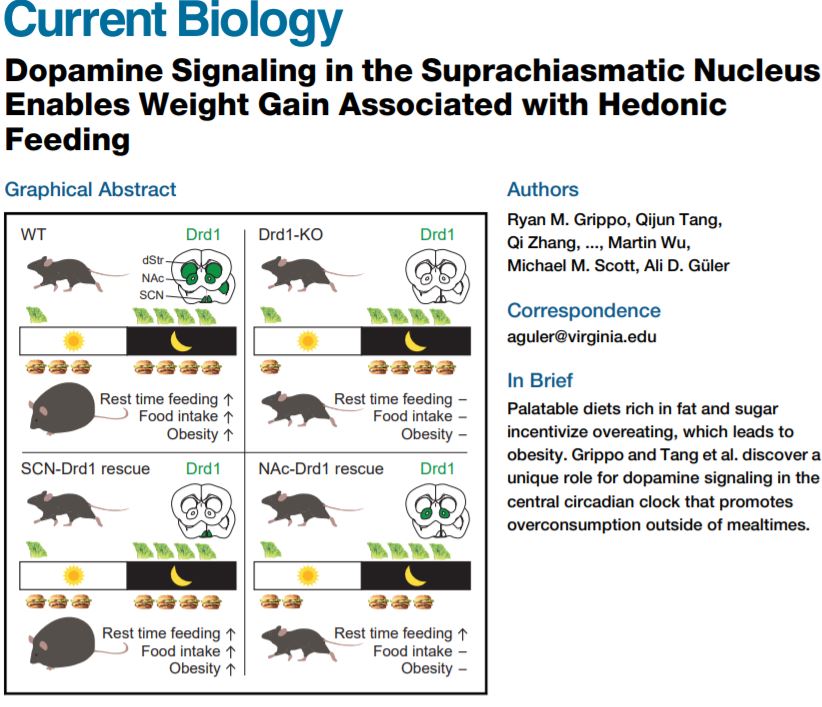
Current Biology Journal Dopamine Signaling and Weight Gain January 2 2020
Dopamine Signaling in the Suprachiasmatic Nucleus Enables Weight Gain Associated with Hedonic Feeding – Current Biology January 2, 2020

Read full study

In a study published Thursday in the journal Current Biology, Güler and his colleagues demonstrate that the pleasure center of the brain that produces the chemical dopamine, and the brain’s separate biological clock that regulates daily physiological rhythms, are linked, and that high-calorie foods – which bring pleasure – disrupt normal feeding schedules, resulting in overconsumption. Using mice as study models, the researchers mimicked the 24/7 availability of a high-fat diet, and showed that anytime snacking eventually results in obesity and related health problems.

Read more