Tag Archives: British Writers

Interviews: British Writer Ian McEwan – ‘Life Stories’


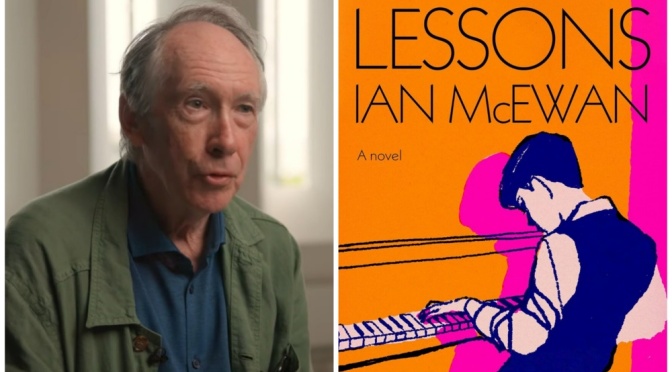
Louisiana Channel (December 8, 2023) – “If I didn’t write, I’d go nuts because I wouldn’t have a single reason to exist. The pleasure of bringing something together is so intense,” says British Ian McEwan, who would love to live forever and discover how we’re doing in 10,000 years.

Ian McEwan is considered one of the most important British novelists alive today. When he writes, characters and plot are difficult to separate because “often characters arise out of plots, often plots drive characters into existence”, he says. What is crucial to McEwan when writing is that “circumstances make the character and the characters generate possibilities. That sense of possibility is always so important. So characters can create their own waves.” The novel Lessons (2022) is McEwan’s most personal novel. It was written in lockdown when he was entering his 70s and beginning to take a look back at his existence. People who know him well can always connect what he is writing with things in his own life, he says.

In Lessons, McEwan wanted to create “the emotional truth of certain rather sad, tragic, disturbing things that happened in my family”, he says. “And the reflective element was also the movement towards trying to understand the circumstances, not only of my life but my generation’s life.” Ian McEwan enjoys reading biographies, but “if you want to know everything it’s possible to know about a great poet, you’ll need to read three or four biographies written over maybe a century or two centuries”, he says. He admits that fiction does not influence him like it did when he was younger.

“We have very little sense of how to generate on the page an open-ended character until the writing of Jane Austen” and he adds that it was the great Russian writers who taught us how to write characters as if they were real people. By the turn of the 19th to the 20th century, there was a great artistic revolution; McEwan points out and emphasizes that it was especially James Joyce who taught us “to understand characters from the flow of consciousness, right from the very inside”.
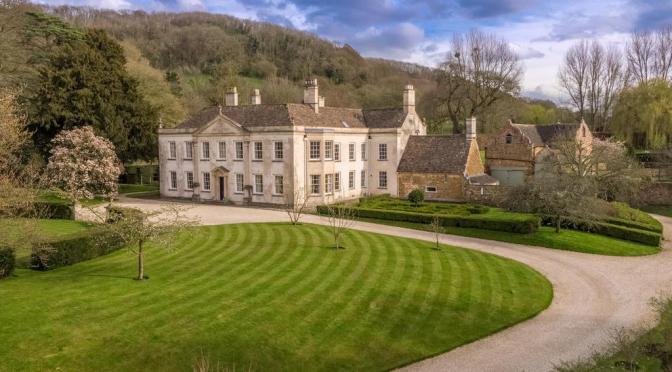

Historic English Homes: Writer Evelyn Waugh’s ‘Piers Court’, Gloucester

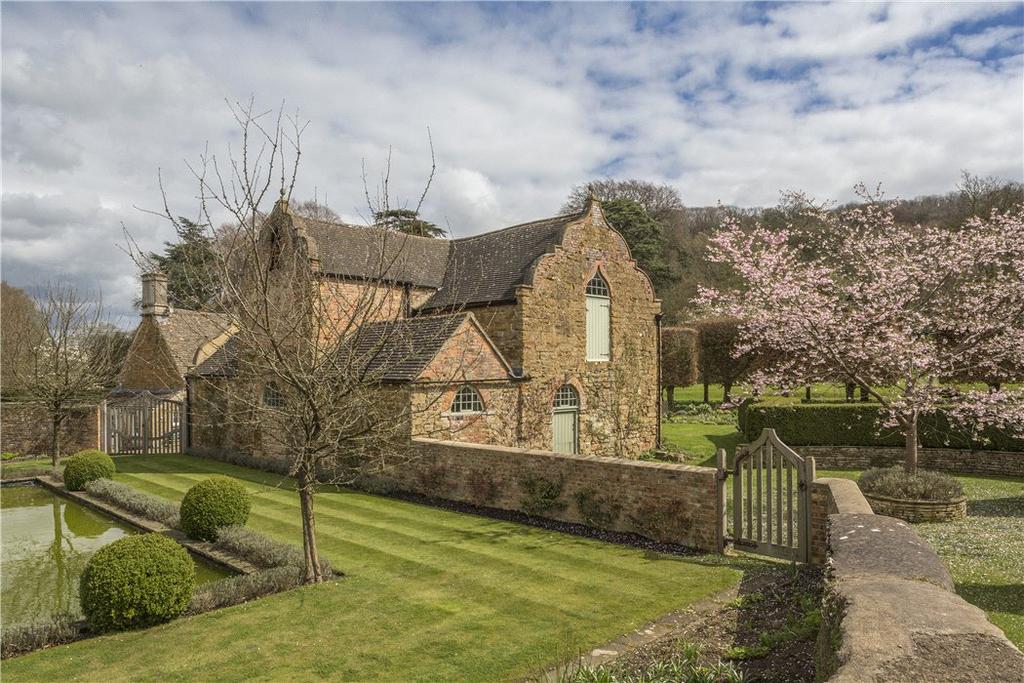
Piers Court, the house where Evelyn Waugh wrote his nostalgic masterpiece Brideshead Revisited, was used as a safe house for Royalists during the Civil War. He lived there from 1937 to 1956 – apart from during the war years when it was taken over by nuns.

December 16, 2022

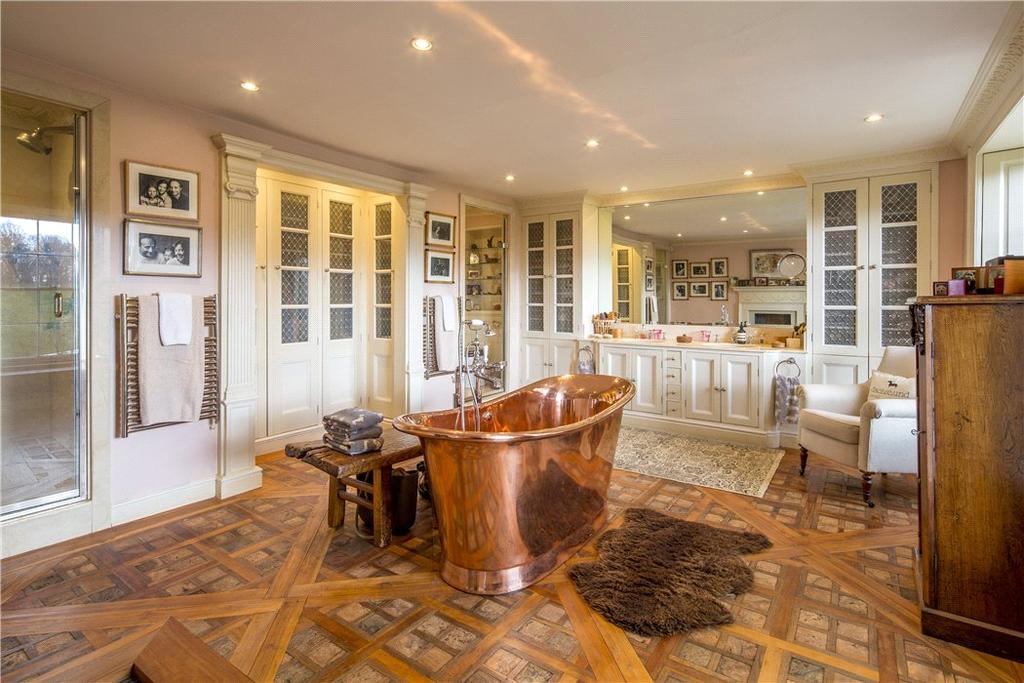
It seems a sad state of affairs for a famed house whose previous owners — who bought Piers Court in 2010 — had done much to enhance a place described by Pevsner as ‘dignified and elegant’, which, behind its classical 18th-century façade, caters for both formal entertaining and informal family living. The standard of fixtures and fittings is really something – as this picture of one of the bathrooms demonstrates.

READ MORE

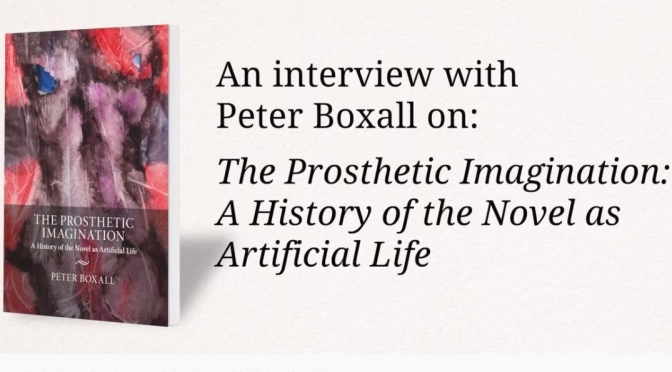
Interviews: Author Peter Boxall On His Book “The Prosthetic Imagination”

In this interview, Peter Boxall answers questions about his new title, The Prosthetic Imagination: A History of the Novel as Artificial Life. If the novel has helped to give our world a human shape, it also contains forms of life that elude our existing human architectures: new amalgams of the living and the non-living that are the hidden province of the novel imagination.
.
These latent conjunctions, Boxall argues, are preserved in the novel form, and offer us images of embodied being that can help us orient ourselves to our new prosthetic condition.
.
Discover more about this title at: https://www.cambridge.org/academic/su…

Fiction: “Hercule Poirot” Created 100 Years Ago In 1920 By Agatha Christie

From Open Magazine (May 29, 2020):

Hercule Poirot
Hercule Poirot

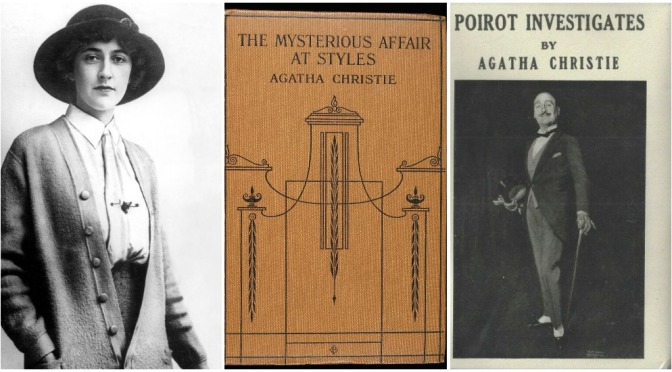
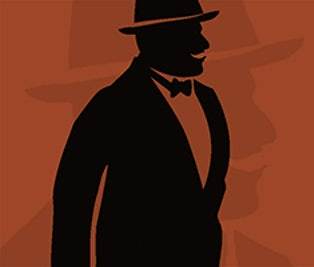
And with The Mysterious Affair at Styles (published a 100 years ago, in 1920) Christie would introduce readers to Monsieur Hercule Poirot, an old Belgian detective who resembled Holmes superficially (‘eccentric detective, stooge assistant’, as the author would admit in her autobiography later) but whose psychological insights and near-mystical idiosyncrasies would make him arguably the most successful and beloved literary sleuth of all time.

IN 1916, THE 26-year-old Agatha Christie finished writing her first detective novel at Dartmoor, a quiet upland in Devon, UK, known for its beautiful granite hilltops. Sir Arthur Conan Doyle had published The Hound of the Baskervilles, in 1902, which would become one of the most widely read Sherlock Holmes adventures—and the story was set in this same corner of the world, Dartmoor.

Books like Murder on the Orient Express (1934), The Murder of Roger Ackroyd (1926)  and Death on the Nile (1937) remain some of the bestselling murder mysteries in the world today, over eight decades after their original publication (Christie’s net sales for all of her books combined are over two billion now).

Read full article

Podcast Interviews: 56-Year Old British Writer Julia Hobsbawm – “The Simplicity Principle”

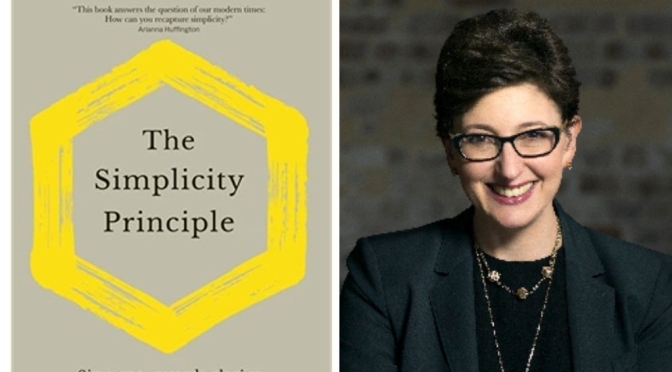
JMonocle 24 Meet The Writersulia Hobsbawm is a writer, speaker, social entrepreneur and strategist whose work focuses on finding solutions for humans in an ever-changing world. She speaks to Georgina Godwin about her latest book, ‘The Simplicity Principle: Six Steps Towards Clarity in a Complex World’.
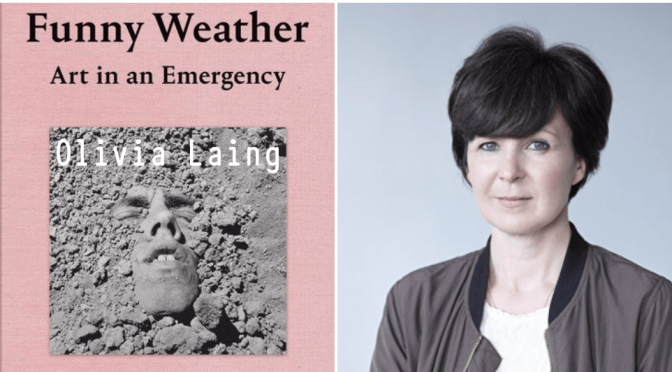
Interviews: Author Olivia Laing On Her New Book “Funny Weather – Art In An Emergency” (Podcast)

Monocle on Culture Monocle 24 podcastsNovelist and art writer Olivia Laing tells Robert Bound about ‘Funny Weather: Art in an Emergency’, her new collection of essays, columns and character studies from the past decade.

Funny Weather brings together a career’s worth of Laing’s writing about art and culture, and their role in our political and emotional lives. She profiles Jean-Michel Basquiat and Georgia O’Keeffe, interviews Hilary Mantel and Ali Smith, writes love letters to David Bowie and Wolfgang Tillmans, and explores loneliness and technology, women and alcohol, sex and the body. With characteristic originality and compassion, Funny Weather celebrates art as an antidote to a terrifying political moment.

Olivia Laing is a widely acclaimed writer and critic.  She’s a Fellow of the Royal Society of Literature and in 2018 was awarded the Windham-Campbell Prize for non-fiction. She’s the author of To the RiverThe Trip to Echo Spring and The Lonely City, which has been translated into 17 languages and sold over 100,000 copies worldwide.

 Her latest book is Crudo, a real-time novel about the turbulent summer of 2017. It was a Sunday Times top ten bestseller and a New York Times notable book of 2018 and was shortlisted for the Goldsmiths Prize and the Gordon Burn Prize. In 2019 it won the 100th James Tait Black Memorial Prize. 

Laing’s writing about art & culture appears in the GuardianFinancial Times and frieze, among many other publications.  

Her collected essays, Funny Weather: Art in an Emergency, will be published on 16 April 2020. She’s currently working on Everybody, a book about bodies & freedom.

Website