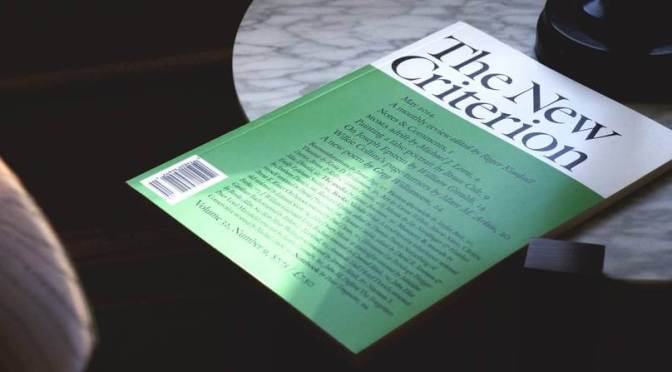

The New Criterion – March 2024 Preview

 The New Criterion – The March 2024 issue features:

THE NEW YORK TIMES BOOK REVIEW (February 16, 2024): The latest issue features ‘Philip Gefter’s sizzling, “unapologetically obsessive” new book, “Cocktails With George and Martha: Movies, Marriage and the Making of ‘Who’s Afraid of Virginia Woolf?’” Our critic Alexandra Jacobs calls it “a shot glass filled with one work that, alongside contemporaneous books like Richard Yates’s novel ‘Revolutionary Road’ and Betty Friedan’s polemic ‘The Feminine Mystique,’ showed how the ‘cartoon versions of marriage’ long served up by American popular culture always came with a secret side of bitters.”

With Burton and Taylor as stars and a writer and director feuding, adapting the scabrous play wasn’t easy. “Cocktails With George and Martha” pours out the details.

A story collection from Diane Oliver, who died at 22, locates the strength in Black families surviving their separate but equal surroundings.
In her powerful new memoir, the author examines a life composed of conflicting identities — and fierce, contradictory desires.
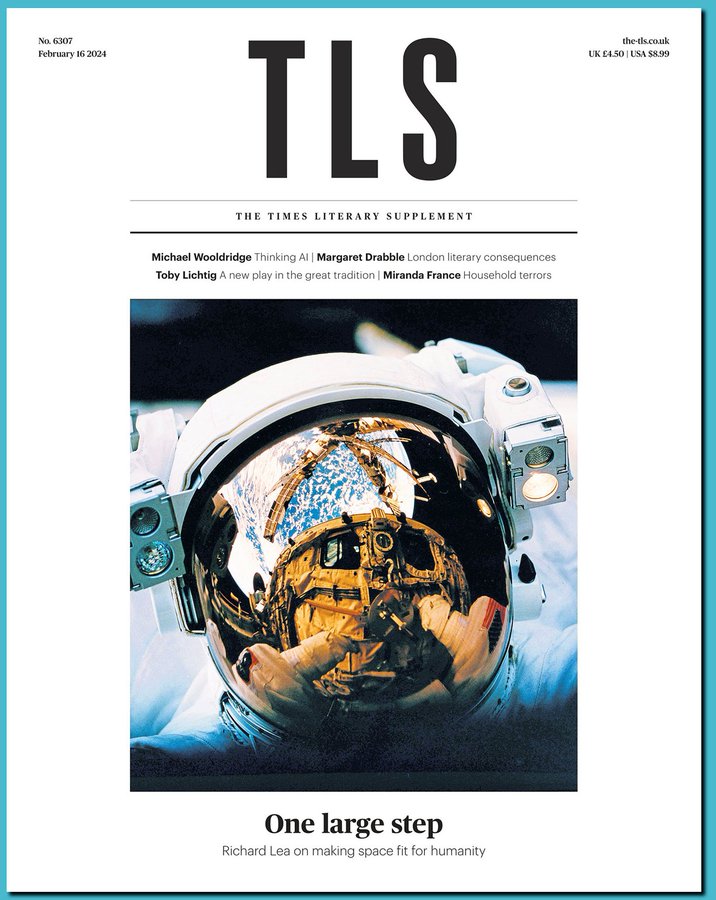

Times Literary Supplement (February 14, 2024): The latest issue features Thinking AI; London literary consequences, A new play in the great tradition, and Household terrors…

THE NEW YORK TIMES BOOK REVIEW (February 9, 2024): The latest issue features ‘Armed And Dangerous’ – Two new books – “One Nation Under Guns”, by Dominic Erdozain, and “What We’ve Become”, by Jonathan M. Metzl – examine America’s gun culture and its costs…

Two new books consider how the country’s obsession with firearms has become an existential threat.
By Rachel Louise Snyder
ONE NATION UNDER GUNS: How Gun Culture Distorts Our History and Threatens Our Democracy, by Dominic Erdozain
WHAT WE’VE BECOME: Living and Dying in a Country of Arms, by Jonathan M. Metzl
Last year, a friend from Brunei visited me in the United States. She is American but was raised in Sudan and has lived in Cambodia and Scotland, among other places. We were talking about the rise in anxiety among teenagers in America when another friend texted me; her daughter had just arrived home from school, where she’d spent the afternoon in lockdown. “Of course your kids have anxiety,” my Brunei friend said. “They’re being raised in a war zone.”

In Margot Livesey’s new novel, “The Road From Belhaven,” a 19th-century farm girl’s life and maturity are complicated by her uncontrollable visions of accident and disaster.
By Daisy Lafarge
Lizzie Craig has a gift: She sees “pictures” of events before they take place. It happens first when she’s 10, with a vision in which her grandfather’s scythe slips from a whetstone and injures his leg. It’s the tail end of the 19th century in Fife, rural Scotland, where Lizzie is brought up by her grandparents on Belhaven Farm. Her pictures, more often than not, are premonitions of accidents and disasters: a hurt leg, a wheel coming off a cart, a tree hit by lightning. They tend to arrive “a few weeks before the accident,” giving Lizzie time to prepare, and sometimes, intervene accordingly.
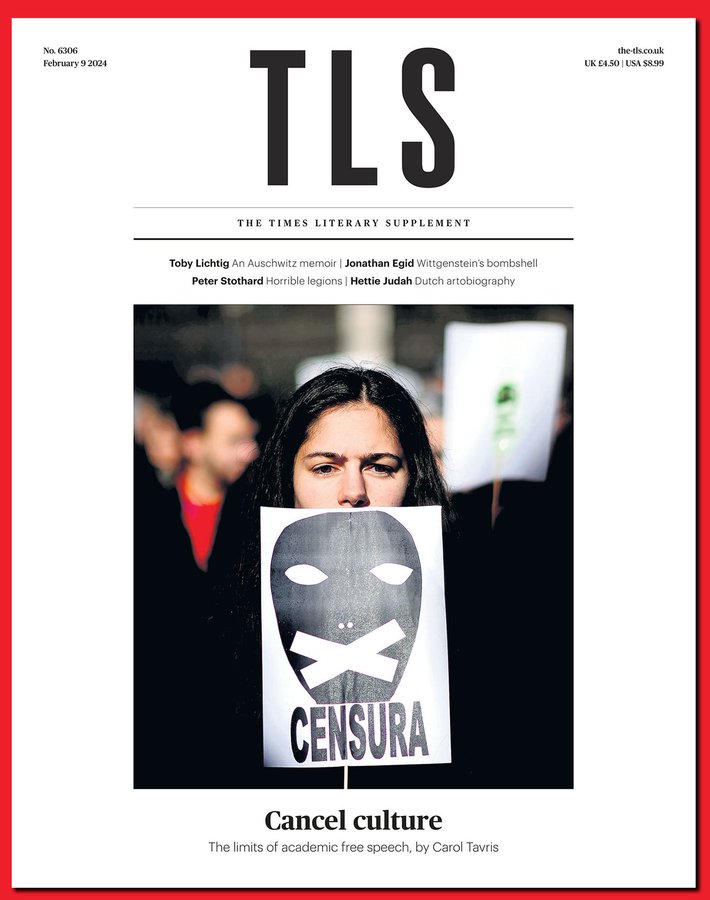
Times Literary Supplement (February 7, 2024): The latest issue features ‘Cancel Culture’ – The limits of academic free speech; An Auschwitz memoir; Wittgenstein’s bombshell; Horrible legions and Dutch artobiography…
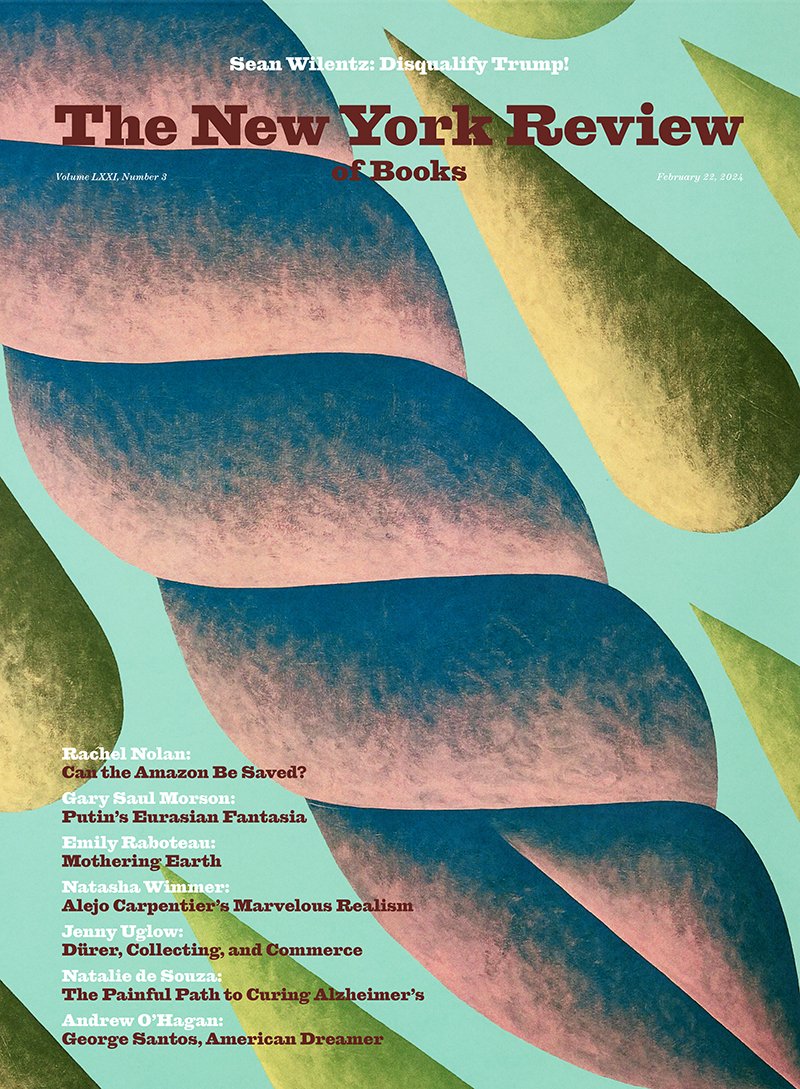

The Supreme Court must decide if it will honor the original meaning of the Fourteenth Amendment and bar Donald Trump from holding public office or trash the constitutional defense of democracy against insurrections.
In Dürer’s Lost Masterpiece, Ulinka Rublack traces the global connections of the merchants who were the creative agents of the European art market in the sixteenth and early seventeenth centuries.
Dürer’s Lost Masterpiece: Art and Society at the Dawn of a Global World by Ulinka Rublack
In 2017, the Brazilian journalist Eliane Brum moved from São Paulo to a small city in the Amazon. Her new book vividly uncovers how the rainforest is illegally seized and destroyed.
Banzeiro Òkòtó: The Amazon as the Center of the World by Eliane Brum, translated from the Portuguese by Diane Whitty


Literary Review of Canada -March 2024: The latest issue features:
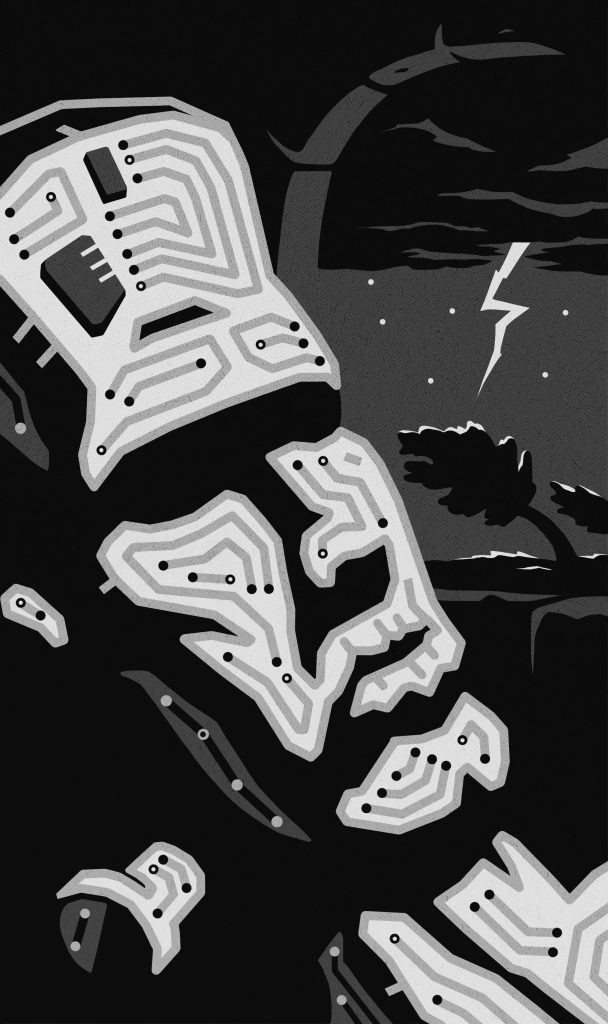
The Storm of Progress: Climate Change, AI, and the Roots of Our Dangerous Ethical Myopia by Wade Rowland
The Compassionate Imagination: How the Arts Are Central to a Functioning Democracy by Max Wyman
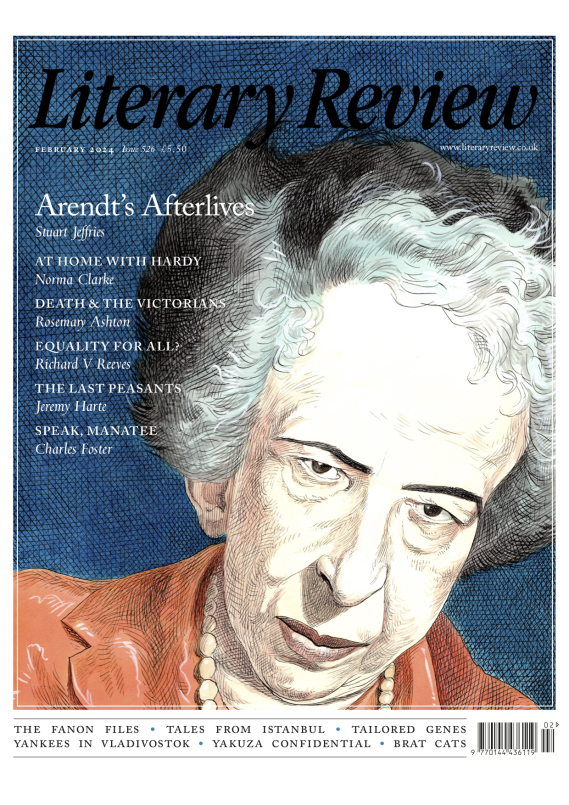

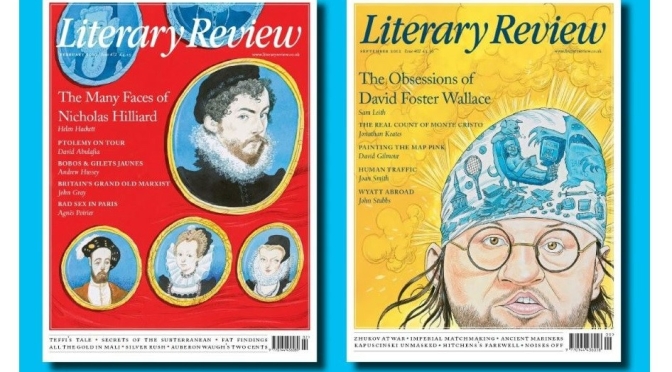
Literary Review – February 2, 2024: The latest issue features ‘We Are Free to Change the World: Hannah Arendt’s Lessons in Love and Disobedience’;
By STUART JEFFRIES
We Are Free to Change the World: Hannah Arendt’s Lessons in Love and Disobedience By Lyndsey Stonebridge
When Hannah Arendt looked at the man wearing an ill-fitting suit in the bulletproof dock inside a Jerusalem courtroom in 1961, she saw something different from everybody else. The prosecution, writes Lyndsey Stonebridge, ‘saw an ancient crime in modern garb, and portrayed Eichmann as the latest monster in the long history of anti-Semitism who had simply used novel methods to take hatred for Jews to a new level’. Arendt thought otherwise.
By Norma Clarke
Hardy Women: Mother, Sisters, Wives, Muses By Paula Byrne
The title of Paula Byrne’s Hardy Women is a pun on Thomas Hardy’s name and a gesture to the enthusiasm that greeted Hardy’s fictional women. Bathsheba Everdene in Far from the Madding Crowd, Tess Durbeyfield in Tess of the d’Urbervilles and Sue Bridehead in Jude the Obscure were new kinds of women, and Hardy’s fame, which was immense and began with the publication of Far from the Madding Crowd, rested to a large extent on the heroines he created. One young reader wrote to him of Tess, ‘I wonder at your complete understanding of a woman’s soul.’ Hardy’s discontented wife Emma wondered at it too. She observed, ‘He understands only the women he invents – the others not at all.’
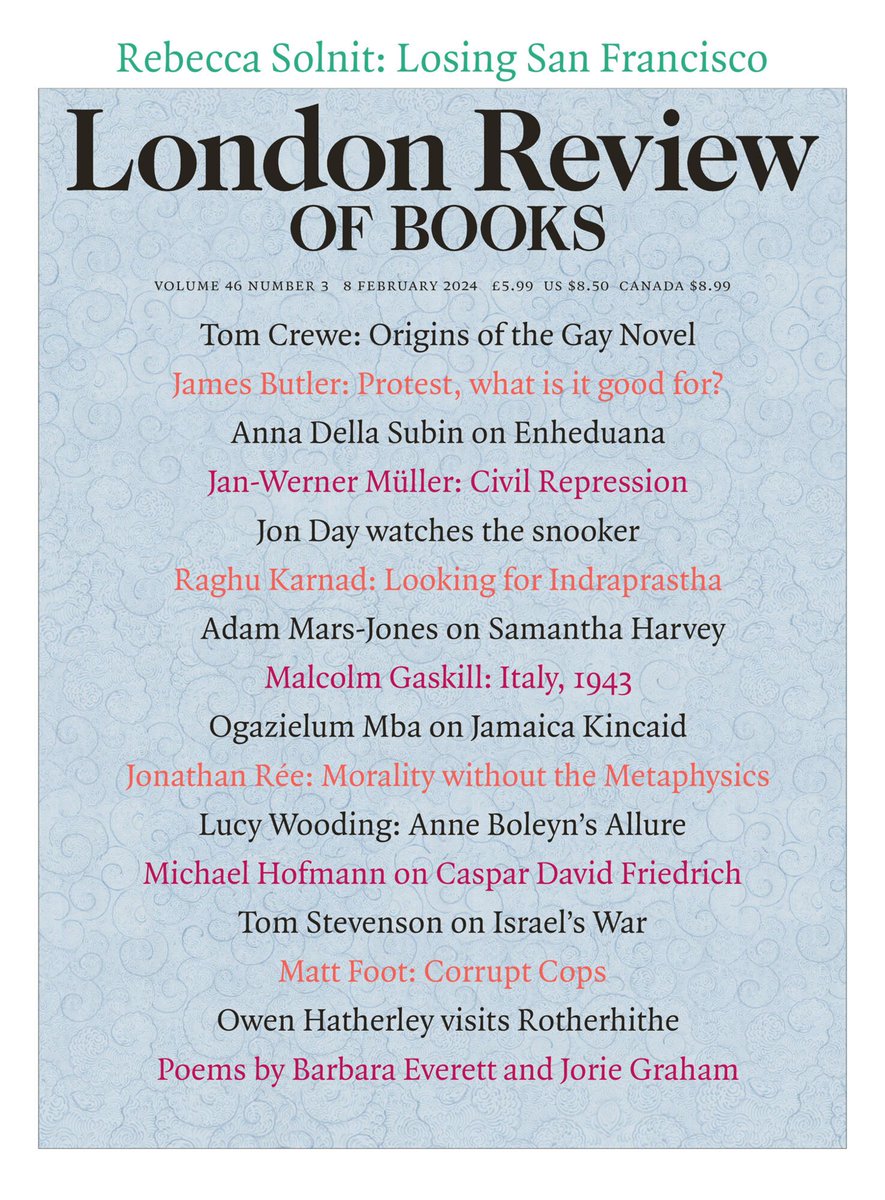

By James Butler
If We Burn: The Mass Protest Decade and the Missing Revolution
by Vincent Bevins.
The Populist Moment: The Left after the Great Recession
by Anton Jäger and Arthur Borriello.
Enheduana: The Complete Poems of the World’s First Author
by Sophus Helle.

Times Literary Supplement (January 31 2024): The latest issue features ‘Back to Nature’ – The counterculture begins with Thoreau; Enlightenment dimmed; The secret state and the IRA; Homosexuality in early modern Europe and A family haunting….




 Boomers Daily