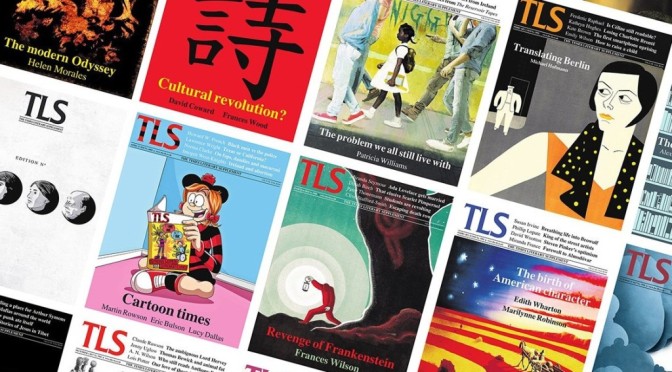
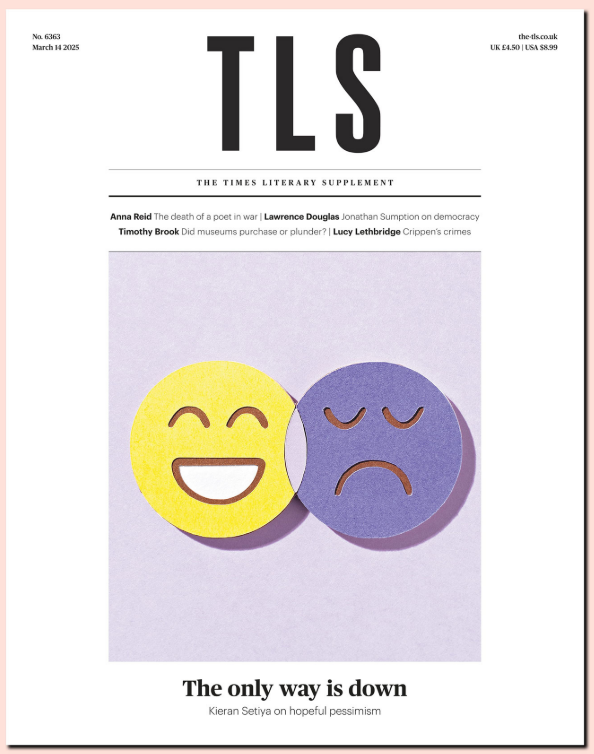
TIMES LITERARY SUPPLEMENT (February 13, 2025): The latest issue features ‘Real Ruins?’ = Mary Beard on what gets left behind; AI’s literary triumph; A Nobel laureate’s prose falls short; The price of woke and Kissinger’s boys…
The Peronist Pope
The Argentine pontiff who accepts his own fallibility By A. N. Wilson
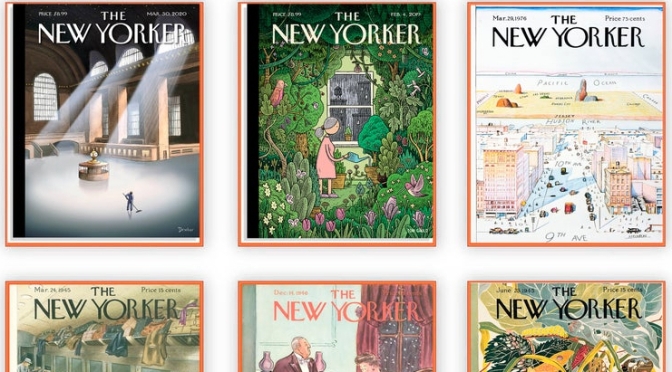
THE NEW YORKER MAGAZINE (February 10, 2025): The latest issue features Rea Irvin’s “Eustace Tilley” at One Hundred – The magazine celebrates its centenary.
The magazine has three golden rules: never write about writers, editors, or the magazine. On the occasion of our hundredth anniversary, we’re breaking them all. By Jill Lepore
Onward and Upward
Harold Ross founded The New Yorker as a comic weekly. A hundred years later, we’re doubling down on our commitment to the much richer publication it became. By David Remnick
The “Intactivists” Campaigning Against the Cut
New York’s biggest foreskin fans take their anti-circumcision message to the streets. By Diego Lasarte
The notes, taken after meetings with her psychiatrist, will be published in April as a book, “Notes to John.” They provide a raw account of her life, her work and her complex relationship with her daughter.
How Big Tech Mined Our Attention and Broke Our Politics
“Superbloom,” by Nicholas Carr, and “The Sirens’ Call,” by the MSNBC host Chris Hayes, argue that we are ill equipped to handle the infinite scroll of the information age.
A Century of Tomorrows: How Imagining the Future Shapes the Present by Glenn Adamson
There have always been oracles, prophets, soothsayers, utopians, seers, or futurologists to make predictions about what will pass, and no matter how often they are wrong or discredited, humanity’s need remains.
Paris in Ruins: Love, War, and the Birth of Impressionism by Sebastian Smee
Paris 1874: The Impressionist Moment – an exhibition at the Musée d’Orsay, Paris, March 26–July 14, 2024, and the National Gallery of Art, Washington, D.C., September 8, 2024–January 19, 2025
One hundred and fifty years after Impressionist paintings were first exhibited, it takes a certain effort to recover their original radicalism.
Unit X: How the Pentagon and Silicon Valley Are Transforming the Future of War by Raj M. Shah and Christopher Kirchhoff
Bringing Silicon Valley’s drive for innovation to defense contracting has been a slow process, but the war in Ukraine has led tech firms to plunge into the war business.
‘I don’t think character exists anymore’, Rachel Cusk declared in a 2018 interview. This was not the first time Cusk appeared to be announcing the atrophy of the traditional novel. In a 2014 interview with The Guardian, Cusk stated she was ‘certain autobiography’ was ‘increasingly the only form in all the arts’. Inversely, fiction and its conventional preoccupation with ‘making up John and Jane’, Cusk argued, was only becoming more ‘ridiculous’, ‘fake and embarrassing’. It is precisely this disregard for literary orthodoxy that runs through Cusk’s widely acclaimed trilogy of autofictional novels – Outline (2014), Transit (2016) and Kudos (2018).
My twin brother calls from the hospital. He’s finished his blood draw and wants to know the word in Portuguese for watermelon. I recite the word for him – melancia – though my brother’s mind isn’t likely to keep hold of it. Zach can no longer keep a hold of his house keys or his phone, which he left yesterday in the bathroom sink. Before we hang up, I ask him to please wait for me in the lounge area for outpatient services, not to wander outside the hospital.
Jacqueline Feldman’s Precarious Lease: The Paris Document – out from Fitzcarraldo Editions on 30 January – delivers captivating literary reportage on Parisian squats of the early 2010s. Feldman introduces us to people who transformed abandoned buildings into homes, shelters and hubs for artistic creation. With echoes of Agnès Varda’s work, Feldman’s prose is compassionate and honest, acknowledging her own role as an observer. She answered these questions by email about her fifteen-years-long project, begun in 2009.
Tom Stevenson: Hamas: The Quest for Power by Beverley Milton-Edwards and Stephen Farrell
Jessie Childs: The Forbidden Garden of Leningrad: A True Story of Science and Sacrifice in a City under Siege by Simon Parkin
Michael Wood: At the Movies: ‘The Brutalist’
Alex de Waal: How to Measure Famine
Michael Dobson:
White People in Shakespeare: Essays in Race, Culture and the Elite edited by Arthur LittleShakespeare’s White Others by David Sterling BrownThe Great White Bard: How to Love Shakespeare while Talking about Race by Farah Karim-Cooper
This exhibition will present, for the first time in the United States, the Bodleian Library’s extraordinary holdings of literary manuscripts, correspondence, diaries, and photographs related to Kafka, including the original manuscript of his novella The Metamorphosis.
Other highlights include the manuscripts of his novels Amerika and The Castle; letters and postcards addressed to his favorite sister, Ottla; his personal diaries, in which he also composed fiction, including his literary breakthrough, the 1912 story “The Judgment”; and unique items such as his drawings, the notebooks he used when studying Hebrew, and family photographs. In addition to presenting unique literary and biographical material, the exhibition examines Kafka’s afterlife, from the complex journeys of his manuscripts, to the posthumous creation of a literary icon whose very name has become an adjective, to his immense influence on the worlds of literature, theater, dance, film, and the visual arts.
Drawing on institutional holdings and private collections in the United States and Europe, the Morgan will show a selection of key works, among them Andy Warhol’s portrait of Kafka, part of his 1980 series Ten Portraits of Jews of the Twentieth Century.
“Franz Kafka” is open to the public November 22, 2024 through April 13, 2025.
The effect of the President’s executive orders was to convey an open season, in which virtually nothing—including who gets to be an American citizen—is guaranteed. By Benjamin Wallace-Wells
Inside the Fight Against a Los Angeles Inferno
A reporter embeds with wildland firefighters during one of the deadliest blazes in California history. By M. R. O’Connor
A Witness in Assad’s Dungeons
Mazen al-Hamada fled Syria to reveal the regime’s crimes. Then, mysteriously, he went back. By Jon Lee Anderson
News, Views and Reviews For The Intellectually Curious