
Tag Archives: Arctic

Travel: Arctic Territories Of Northwestern Canada

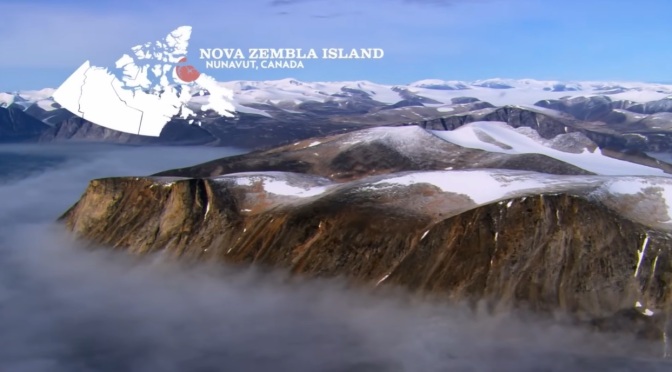
TRACKS – Travel Documentaries (October 28, 2023) – Explore Canada’s natural beauty in this beautiful documentary, from high above Baffin Island, in the northern Canadian territory of Nunavut, we get a glimpse at the incredible Arctic wonders.

From the towering ice fields lining the waters of Eclipse Sound in the Arctic Archipelago, to the natural wonders of Sirmilik National Park.

Covering 1.5 million square kilometres, or about one seventh of Canada, the Northern Arctic Ecozone extends over most of the nonmountainous areas of the arctic islands and parts of northeastern Keewatin, western Baffin Island, and northern Quebec. It is among the largest arctic ecosystems in the world.

Winters pass in near darkness with the polar night measured in weeks and months rather than hours. Snow may fall any month of the year and usually remains on the ground from September to June. Extremely low temperatures and an average precipitation of about 200 mm per year characterize the climate. When not covered in snow, much of the landscape is typified by barren plains covered in frost-patterned soils and the occasional rock outcrop.
Nature: Filming Birdlife In America’s Arctic Wetlands

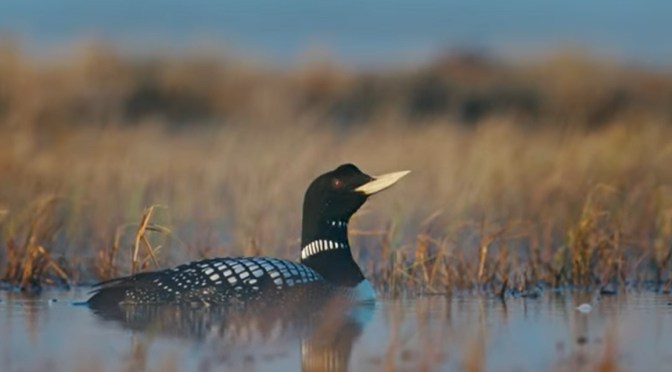
Cornell Lab of Ornithology (July 26, 2023) – The tundra wetlands in the heart of America’s Arctic, centered in the NPR-A around Teshekpuk Lake, are among the most extensive in the circumpolar Arctic and contain some of the highest recorded densities of breeding shorebirds in this vast area.

Millions of birds from all over the world flock to these wetlands every year to nest and raise their young. Come along with Cornell Lab’s Gerrit Vyn as he joins a team to capture image of the region’s birdlife.

America’s Arctic is one of North America’s last great wilderness areas, a critical habitat for migratory birds from around the world, and a treasure to be protected for future generations.

#AmericasArctic

Travel & History: National Geographic — August 2023

Image

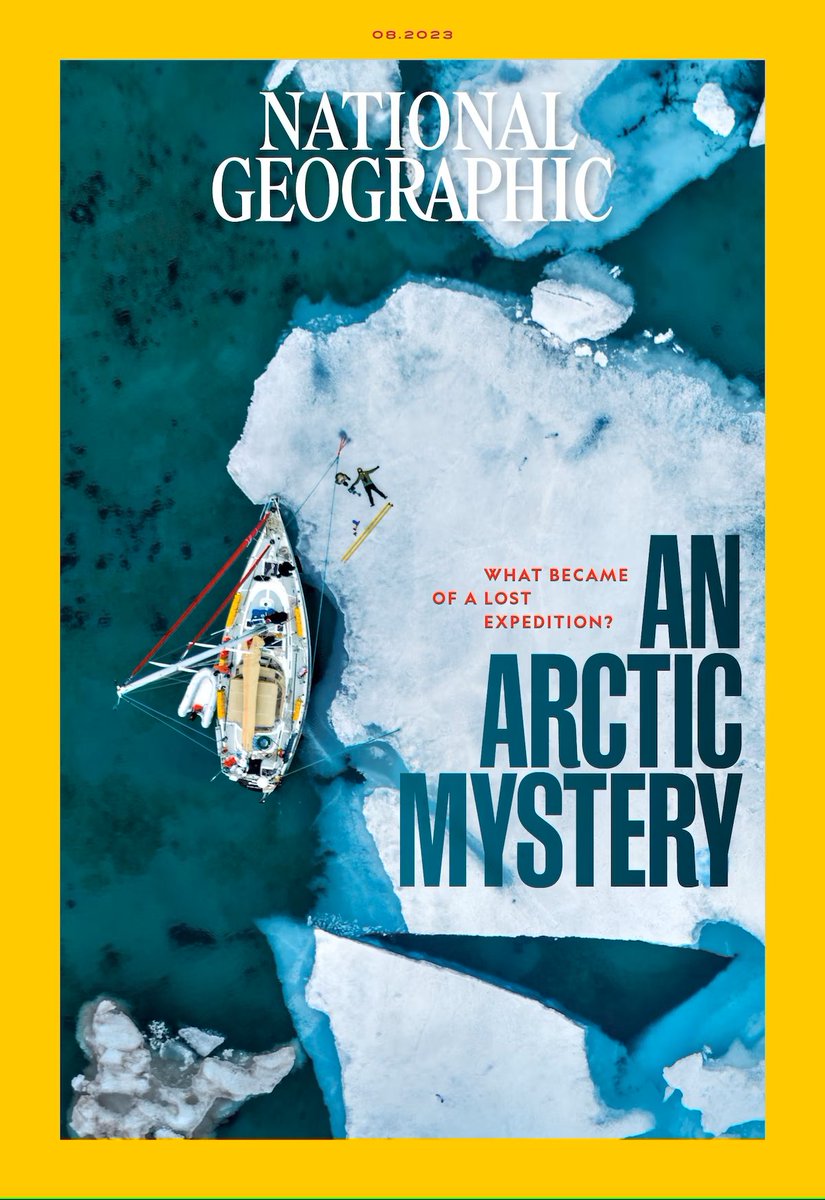
National Geographic Magazine (August 2023):

Seeking to solve the Arctic’s biggest mystery, they ended up trapped in ice at the top of the world

View down on ship deck from mast top.

In 1847, Sir John Franklin and a crew of 128 men disappeared while searching for the fabled Northwest Passage. A National Geographic team sought to find evidence of their fate—but the Arctic doesn’t give up its secrets easily.

BY MARK SYNNOTT

Jacob Keanik scanned his binoculars over the field of ice surrounding our sailboat. He was looking for the polar bear that had been stalking us for the past 24 hours, but all he could see was an undulating carpet of blue-green pack ice that stretched to the horizon. “Winter is coming,” he murmured. Jacob had never seen Game of Thrones and was unaware of the phrase’s reference to the show’s menacing hordes of ice zombies, but to us, the threat posed by this frozen horde was equally dire. Here in remote Pasley Bay, deep in the Canadian Arctic, winter would bring a relentless tide of boat-crushing ice. If we didn’t find a way out soon, it could trap us and destroy our vessel—and perhaps us too.

A MYSTERY LOCKED IN ICE

BY SOREN WALLJASPER,

In 1845, British explorer Sir John Franklin and his crew of 128 men set out in search of the Northwest Passage—a fabled sea route from the Atlantic to the Pacific that would hasten trade between Europe and Asia. None of Franklin’s crew survived. The Norwegian ship Gjøa in 1903-06 made the first successful passage. In 2022, a National Geographic team attempted to retrace Franklin’s expedition to find fresh evidence of its undoing.

Arctic Views: A Narwhal Expedition To Franz Josef Land Archipelago, Russia

Timelab Pro (April 15, 2023) – Our trip to Franz Josef Land was an unforgettable experience, and we were fortunate enough to be on board the mighty famous ship Mikhail Somov for a scientific mission to study the Narwhals in the Arctic.

Franz Josef Land is the northernmost territory of Russia, and one of the least filmed territory in the world. Our shots are truly unique, capturing the beauty of the Arctic landscape and the majestic Narwhals in their natural habitat.‌ As we took our drone to the skies, we searched for days to find these elusive creatures, and finally, we were lucky enough to spot them.

Did you know that Narwhals are the only known species of whale to have a single tusk? And that this tusk, which is actually a protruding tooth, can grow up to 3 meters long? The scientists on board the Mikhail Somov were conducting an important research expedition to prove that Narwhals dwell in the Russian Arctic.

They also took biopsies from the Narwhals to better understand the impact of global climatic changes on these amazing creatures. Our diesel-electric ship, the Mikhail Somov, is a historical ship with a rich history of Arctic exploration. In 1985 the Mikhail Somov became trapped in the ice for 133 days, but the crew was able to survive and eventually free the ship. Despite its modern upgrades, the ship still maintains the charm and spirit of its earlier expeditions.

Siberia Views: The Nomadic Nenets Reindeer Herders

BBC Earth – Arctic Siberia’s Nomadic Nenets herders have migrated with reindeer for generations. Reindeer were among the last animals domesticated by humans.

According to the Nenets legend, the humans promised the reindeer that they would protect them on their long migration from the mainland to the seashores as long as the reindeer provide humans with all their needs, including milk, fat, meat, bones, horns, and skins. The nomadic reindeer herders reside in the taiga forests of the Russian tundra and northern Mongolia. 

Climate: The Future Of Our Frozen Planet – Sir David Attenborough (BBC)

“We can do it. We must do it.”

Sir David Attenborough. This is life on thin ice.

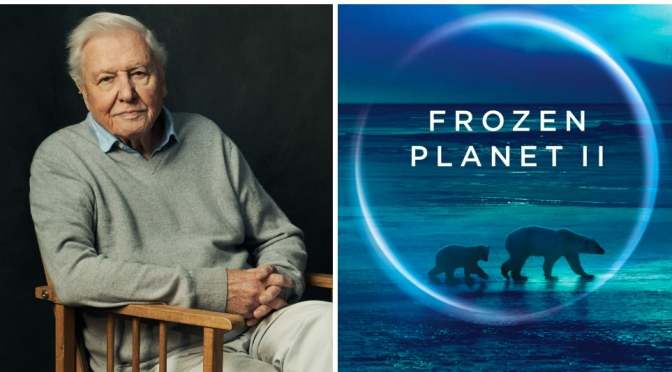
Frozen Planet II (2022): This six-part series – narrated by Sir David Attenborough – explores the wildlife found in the world’s coldest regions: the Arctic and Antarctic, high mountains, frozen deserts, snowbound forests, and ice-cold oceans. From polar bears to penguins, and from snow monkeys to Siberian tigers, each species must overcome a unique set of challenges to endure its extreme environment.

Views: American Arctic’s Disappearing Traditions

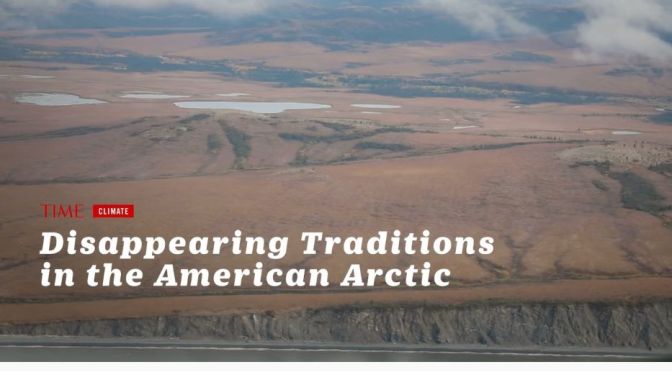
To Laureli Ivanoff, climate change is far from an abstract idea. As an Iñupiat writer living in the remote Alaskan town of Unalakleet, she’s seen firsthand the warming planet’s tangible impact on her culture’s food traditions, some of the only practices to survive colonization. “Ice fishing or hunting or just going out and enjoying ourselves, there’s no way to really do that if there isn’t any snow,” she says.

Animals that rely on snow and sea ice, such as the ugruk—or bearded seal—are harder to find as sea ice melts, leaving subsistence hunters concerned for their livelihoods. Although local native communities have weathered many historic hardships before, Ivanoff believes the challenges ahead are unprecedented. “Already every year, we’re wondering, ‘Is the ocean ice going to form?

Read more about climate change’s impact on the American Arctic : https://ti.me/3MqmwOe

Podcasts: ‘The Arctic Story Hunter’ (NatGeo)

What’s it like to grow up underneath the aurora borealis, on the shores of the Arctic Ocean? Photographer Evgenia Arbugaeva describes leaving—and returning to—Tiksi, a Siberian coastal village that during her childhood became a ghost town in the wake of the Soviet collapse. That experience taught her to find beauty in unexpected places—riding reindeer with nomadic herders, visiting isolated Arctic weather stations, and following mammoth ivory hunters.