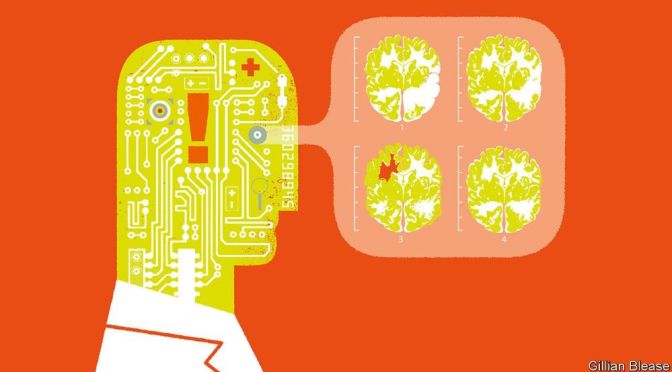
AI has the power to transform health care. From more efficient diagnoses to safer treatments, it could remedy some of the ills suffered by patients. Film supported by @Maersk
Timeline: 00:00 – Can AI help heal the world? 00:45 – How can AI spot blindness? 04:01 – Protecting patients’ privacy 05:10 – How to share medical data safely 06:11 – Medical AI is rapidly expanding 08:02 – What do the sceptics say? 08.36 – Using AI for new medical devices 11:08 – What does the future hold for medical AI?
AI algorithms can now churn out predictions for the 3D shapes of proteins with a precision matching that of painstaking laboratory techniques. The programs, and the blizzard of protein structures they have revealed, are Science’s 2021 #BOTY. https://t.co/zBZlWr0fispic.twitter.com/snrEsDbTH0
AI weather forecasters, mapping the human brain and the 2021 science Nobel prizes.
In this episode:
00:52 Improving the accuracy of weather forecasts with AI
Short-term rain predictions are a significant challenge for meteorologists. Now, a team of researchers have come up with an artificial-intelligence based system that weather forecasters preferred to other prediction methods.
A group of researchers are undertaking an enormous task: to make a cellular atlas of the entire brain. This week, they publish a suite of papers that has accomplished this feat for one part of the brain — the motor cortex.
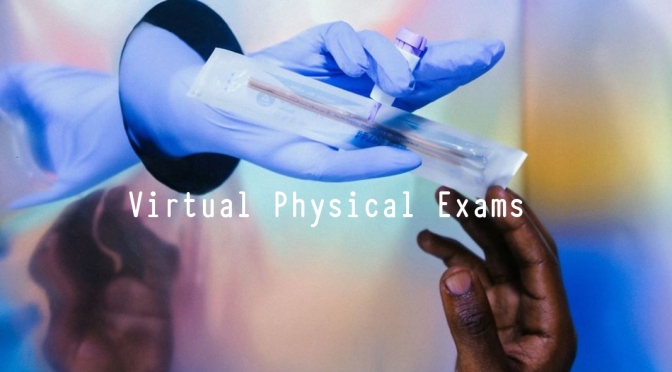
An explosion of advances in digital technology, imaging, gene sequencing and AI will likely transform the annual physical into an even more virtual experience https://t.co/nyuH8A6tWB
News Intern Rachel Fritts talks with host Sarah Crespi about a new way to think about endometriosis—a painful condition found in one in 10 women in which tissue that normally lines the uterus grows on the outside of the uterus and can bind to other organs.
Next, Raphael Townshend, founder and CEO of Atomic AI, talks about predicting RNA folding using deep learning—a machine learning approach that relies on very few examples and limited data.
Finally, in this month’s edition of our limited series on race and science, guest host and journalist Angela Saini is joined by author Lundy Braun, professor of pathology and laboratory medicine and Africana studies at Brown University, to discuss her book: Breathing Race into the Machine: The Surprising Career of the Spirometer from Plantation to Genetics.
The case for wildlife as the #COVID19 origin, how ocean temperature shapes marine biodiversity over geological time scales, and a new deep learning approach greatly improves RNA structure prediction.


 Boomers Daily