Tag Archives: 1810’s

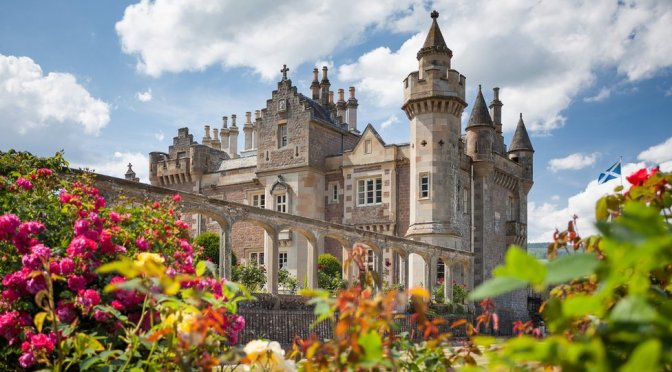
Scottish Baronial Estates: Abbotsford House – Built By Sir Walter Scott (1820’s)

Damian Barr explores Sir Walter Scott’s impressive home, Abbotsford, which is full of a fascinating mix of items owned by the famed Scottish novelist, poet, playwright, and historian.

Abbotsford House was built by Sir Walter Scott as his grand home in the Scottish Borders. The property, set on the banks of the River Tweed, was bought in 1811 and then modified to the tastes of Sir Walter Scott. The writer died here in 1832, and the house was opened to the public just five months after his death.

The rooms that you visit today have been left virtually untouched since his death and a visit to Abbotsford House gives you an intimate insight into the personality and interests of this great man. Some of the most interesting aspects of the house are the personal collections of Sir Walter Scott which include unusual items such as the weapons of Rob Roy, the case book of Napoleon, and even a bullet and piece of oatcake taken from the site of Culloden Battlefield.

Visitors can see Sir Walter Scott’s Study, Library, Drawing Room, Entrance Hall, small Armoury, and the Dining Room where he died on 21st September 1832. The dining room contains paintings of several generations of the Scott family. Unfortunately, the last of his bloodline died in 2004 and the care of the house has now been taken over by the Abbotsford Trust.
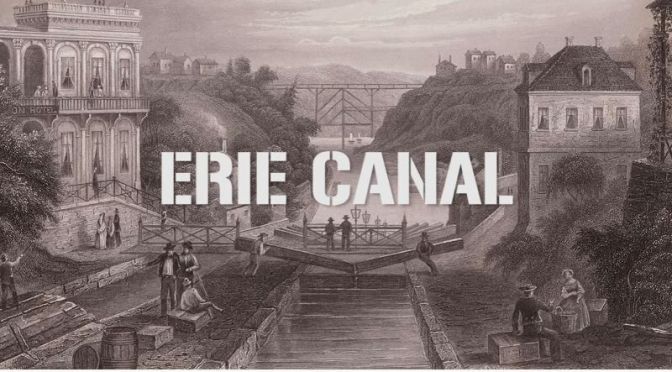
History: ‘The Building Of The Erie Canal’ (1817-1825)

The Erie Canal is a 363-mile waterway that connects the Great Lakes with the Atlantic Ocean via the Hudson River in upstate New York. The channel, which traverses New York state from Albany to Buffalo on Lake Erie, was considered an engineering marvel when it first opened in 1825.

The Erie Canal provided a direct water route from New York City to the Midwest, triggering large-scale commercial and agricultural development—as well as immigration—to the sparsely populated frontiers of western New York, Ohio, Indiana, Michigan and points farther west. The canal transformed New York City into the young nation’s economic powerhouse, and in 2000 the U.S. Congress designated the Erie Canal a National Heritage Corridor.

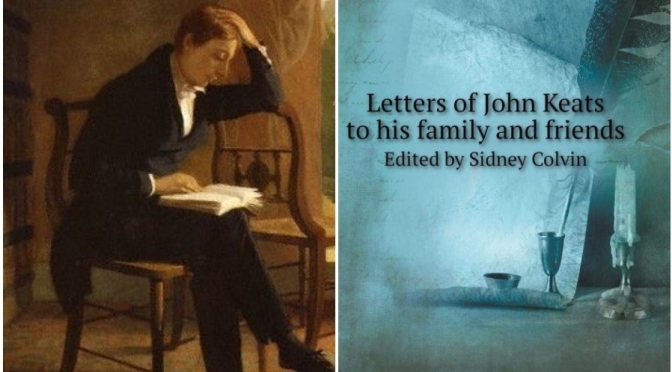
Literature: A Reading Of “Letters Of John Keats To His Family And Friends” – “Inside His Brilliant Mind”

Letters of John Keats to His Family and Friends by John KEATS (1795 – 1821) and Sidney COLVIN (1845 – 1927)

Read by: Nemo and Eva Davis

Chapters: 00:00:00  – 00 – Preface 00:21:11 – 01 – Letter 1 – to Charles Cowden Clarke 00:22:21 – 02 – Letter 2 – to Benjamin Robert Haydon 00:24:06 – 03 – Letter 3 – to Benjamin Robert Haydon 00:25:00 – 04 – Letter 4 – to Charles Cowden Clarke 00:26:57 – 05 – Letter 5 – to John Hamilton Reynolds 00:28:25 – 06 – Letter 6 – to John Hamilton Reynolds 00:29:52 – 07 – Letter 7 – to George and Thomas Keats 00:34:17 – 08 – Letter 8 – to John Hamilton Reynolds 00:42:14 – 09 – Letter 9 – to Leigh Hunt 00:50:13 – 10 – Letter 10 – to Benjamin Robert Haydon 01:00:31 – 11 – Letter 11 – to Messrs. Taylor and Hessey 01:03:50 – 12 – Letter 12 – to Messrs. Taylor and Hessey 01:06:07 – 13 – Letter 13 – to Mariane and Jane Reynolds 01:10:34 – 14 – Letter 14 – to Fanny Keats 01:18:27 – 15 – Letter 15 – to Jane Reynolds 01:26:44 – 16 – Letter 16 – to John Hamilton Reynolds 01:34:49 – 17 – Letter 17 – to Benjamin Robert Haydon 01:37:39 – 18 – Letter 18 – to Benjamin Bailey 01:43:58 – 19 – Letter 19 – to Benjamin Bailey 01:51:33 – 20 – Letter 20 – to Benjamin Bailey 01:54:19 – 21 – Letter 21 – to Charles Wentworth Dilke 01:55:20 – 22 – Letter 22 – to Benjamin Bailey 02:05:23 – 23 – Letter 23 – to John Hamilton Reynolds 02:11:23 – 24 – Letter 24 – to George and Thomas Keats 02:16:25 – 25 – Letter 25 – to George and Thomas Keats 02:26:06 – 26 – Letter 26 – to Benjamin Robert Haydon 02:28:19 – 27 – Letter 27 – to John Taylor 02:29:30 – 28 – Letter 28 – to George and Thomas Keats 02:35:45 – 29 – Letter 29 – to John Taylor 02:37:09 – 30 – Letter 30 – to George and Thomas Keats 02:45:42 – 31 – Letter 31 – to Benjamin Bailey 02:53:40 – 32 – Letter 32 – to John Taylor 02:55:38 – 33 – Letter 33 – to John Hamilton Reynolds 03:00:19 – 34 – Letter 34 – to John Hamilton Reynolds 03:09:32 – 35 – Letter 35 – to John Taylor 03:10:23 – 36 – Letter 36 – to George and Thomas Keats 03:14:06 – 37 – Letter 37 – to John Hamilton Reynolds 03:20:52 – 38 – Letter 38 – to George and Thomas Keats 03:25:16 – 39 – Letter 39 – to John Taylor 03:28:39 – 40 – Letter 40 – to Messrs. Taylor and Hessey 03:29:39 – 41 – Letter 41 – to Benjamin Bailey 03:39:27 – 42 – Letter 42 – to John Hamilton Reynolds 03:46:04 – 43 – Letter 43 – to Benjamin Robert Haydon 03:51:10 – 44 – Letter 44 – to Messrs. Taylor and Hessey 03:52:54 – 45 – Letter 45 – to James Rice 03:58:59 – 46 – Letter 46 – to John Hamilton Reynolds 04:06:50 – 47 – Letter 47 – to Benjamin Robert Haydon 04:12:07 – 48 – Letter 48 – to John Hamilton Reynolds 04:17:53 – 49 – Letter 49 – to John Hamilton Reynolds 04:20:39 – 50 – Letter 50 – to John Taylor 04:24:29 – 51 – Letter 51 – to John Hamilton Reynolds 04:29:41 – 52 – Letter 52 – to John Hamilton Reynolds 04:46:49 – 53 – Letter 53 – to Benjamin Bailey 04:52:06 – 54 – Letter 54 – to Benjamin Bailey 04:57:26 – 55 – Letter 55 – to John Taylor 04:59:14 – 56 – Letter 56 – to Thomas Keats 05:08:57 – 57 – Letter 57 – to Fanny Keats 05:18:23 – 58 – Letter 58 – to Thomas Keats 05:28:49 – 59 – Letter 59 – to Thomas Keats 05:39:49 – 60 – Letter 60 – to John Hamilton Reynolds 05:48:19 – 61 – Letter 61 – to Thomas Keats 06:01:55 – 62 – Letter 62 – to Benjamin Bailey 06:16:12 – 63 – Letter 63 – to Thomas Keats 06:30:05 – 64 – Letter 64 – to Thomas Keats 06:43:57 – 65 – Letter 65 – to Mrs. Wylie 06:50:42 – 66 – Letter 66 – to Fanny Keats 06:53:45 – 67 – Letter 67 – to Fanny Keats 06:55:12 – 68 – Letter 68 – to Jane Reynolds 06:56:23 – 69 – Letter 69 – to Charles Wentworth Dilke

These are the letters of John Keats, as written to family, close friends and others during his brief, eventful years as an artist. (However, the editor chose to exclude love letters to Fanny Brawne, respecting their private nature.) The celebrated Keats letters were written between 1816-1820, and include those colorful entries penned during his 44-day tour with Charles Brown as they rambled through England, Ireland and Scotland. Also included are the famous, lengthy ‘journal letters,’ written to his brother George and sister-in-law in America. Not only a poetic genius, Keats shines in epistolary form. His letters brim with the emotion, wit and intelligence he routinely shared with intimates. – Summary by NemoR