Padulella beach is one of the white-sands beaches to the north of Portoferraio, and thanks to its suggestive beauty is without a doubt one of the most popular beaches among both locals and tourists.
The beach is to the east of Punta di Capo Bianco that shelters it from winds from the west. To the right some cliffs separate it from Ghiaie beach and from Cala dei Frati beach.
The brilliant white of the tall cliffs all around the beach that seem to plunge right down into the water stand out against the crystal clear, turquoise colour of the sea. The beach faces north, so its beauty is even more enhanced when a southern wind is blowing because it makes the sea even clearer, and thanks to the white sea bed it goes from emerald green to turquoise and blue.
Can the aging process be reversed – or even halted, altogether? If we manage to decode this final mystery of our human biology, we might soon be able to eradicate age-related illnesses like cancer, dementia and heart problems. The race to invent the miracle pill is well underway.
Today, international researchers are getting astonishingly close to realizing humanity’s dream of immortality. The hunt for immortality gained traction with the discovery of Costa Rica’s so-called “Blue Zone,” by Luis Rosero-Bixby. In the “Blue Zone,” on the Nicoya Peninsular, he found a remarkable number of centenarians.
Here, male life expectancy is the highest in the world. Their healthy lifestyle is one factor, but the promise of longevity is probably also because their telomeres – sections of DNA found at the end of chromosomes – are longer than those of the average person. It’s a field of research currently being explored by Maria Blasco in Madrid.
But this is just one of many possible factors influencing the process of aging. Senescent cells may also play a key role. Also known as “zombie cells”, these attack our body in old age and flood it with alarm signals until, at some point, we collapse under their weight. That’s a theory proposed by another researcher in Spain, Manuel Serrano. A billion-dollar industry is already knocking impatiently at the lab doors.
The first to market the miracle pill is guaranteed incredible wealth. That’s why investors are sponsoring young bio-startups in Hong Kong. Keen not be left out, US Big Tech is vying for the world’s best scientists. Alex Zhavoronkov has secured a slice of that pie, with a cash injection of more than 250 million dollars for his company’s work on aging research. Whereas some pioneers’ visions burst like bubbles, others rush to get other, rather more dubious products onto the market. But their efficacy is now measurable.
The epigenetic clock devised by Steve Horvath can measure our biological age, regardless of our actual age in years. With his research on the thymus gland, California’s Greg Fahy managed to not only decelerate the aging process, but reverse it. His initial study on humans showed that a particular drug cocktail took an average two-and-a-half years off their age.
Young biohackers like Nina Khera from Boston want everyone to benefit from this research. Together with friends, she’s working on the “epigenetic clock for all”. But while we’re busy trying to counter the aging process and all the illnesses it entails, fundamental questions arise: Should we be messing with nature like this? Are we about to overwhelm the planet with more and more people? Criminal biologist Mark Benecke in Cologne says that these questions are coming far too late.
Plus: William Kent’s heavenly ceilings, New York’s terrible new skyscrapers, the market’s obsession with young painters, the artists who channel their inner child, and reviews of Walter Sickert, Raphael and Winslow Homer
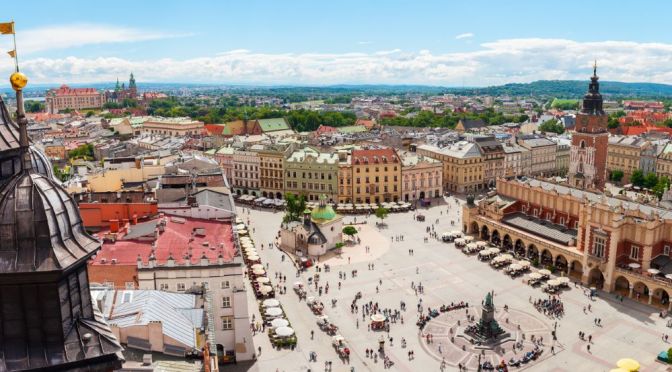
Kraków, a southern Poland city near the border of the Czech Republic, is known for its well-preserved medieval core and Jewish quarter. Its old town – ringed by Planty Park and remnants of the city’s medieval walls – is centered on the stately, expansive Rynek Glówny (market square). This plaza is the site of the Cloth Hall, a Renaissance-era trading outpost, and St. Mary’s Basilica, a 14th-century Gothic church.
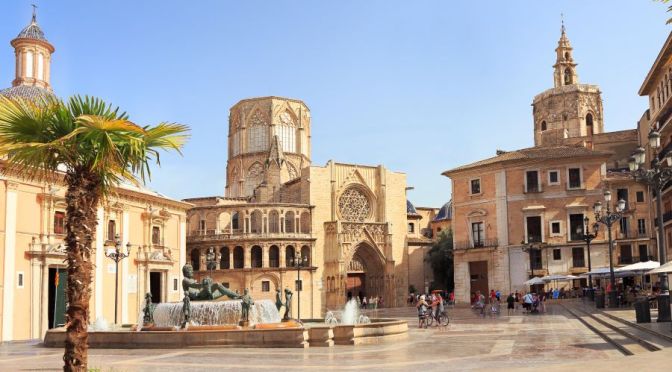
Valencia, a popular vacation destination on Spain’s Mediterranean coast. We asked some locals for their travel tips. What are Valencia’s must-sees? Here are five highlights! Would you like to visit Spain one day?
Timeline: 00:00 Intro 00:20 City of Arts and Sciences 00:52 Jardín del Turia 01T:49 Central Market 02:32 Valencia Cathedral 03:23 Eating Paella at Bar Cremaet
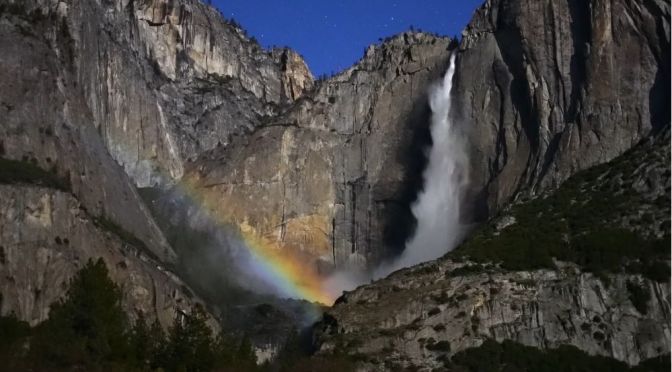
Ever see a rainbow at night? Moonbows (aka lunar rainbows) are a rare and mesmerizing phenomenon caused by light from a full moon shining on rain or the spray of a large waterfall. This first-of-its-kind video captures the famous moonbows of Yosemite National Park in a way that has never been seen before – by filming at real-time speed!
Until recently, the only way to film by moonlight was to use timelapse to gain more light through longer exposures. While timelapse is a useful filming technique, the fast motion doesn’t illustrate the immense scale of Yosemite’s waterfalls. I wanted to capture a true-to-life moonbow experience using a cinematic 24 frames-per-second frame rate. To meet this goal, I started experimenting with a new camera, fast lenses, and advanced noise-reduction software during the 2016 moonbow season. Every April, May, and June since then I would collect more footage and refine my low-light shooting skills while enjoying the incredible beauty of Yosemite in spring. In all, the footage in this video was filmed during 11 separate visits to Yosemite.
Filming at 24 frames-per-second allowed me to capture brief details that would easily be missed by timelapse. The shooting star (see if you can spot it!) was my favorite fleeting moment. I also enjoyed being able to film the fine textures of the falling water, the hypnotic ebb and flow of the wind-borne mist, and the excited reactions from people enjoying Yosemite at night. Filming at normal speed also accommodated live audio recording of Yosemite’s nocturnal soundscape.
In addition to the technical challenges of filming moonbows, I also needed to know when and where to see them. As with rainbows, moonbows require a precise alignment of the light source (the full moon, in this case), an area of rain or mist in the air, and the person observing. Using 3D-modeling software, I developed a method to visualize when moonbows could be seen for a given location. These calculations have helped me discover new compositions for photographing this striking phenomenon, and in 2018 I created the website YosemiteMoonbow.com so that I could share this information with others who want to see the moonbow from popular vantage points in the park.
Moonbows are just as common in nature as rainbows, but they often go unnoticed because human vision isn’t as sensitive to color in low light. When you first arrive at the base of the falls, you might see the bow as a gray arc in the mist, but as your eyes get acclimated to the dark, the moonbow will grow more vivid, especially when wind intensifies the spray. Compared to humans, cameras are much better at perceiving color in the dark, easily revealing the hidden beauty of moonlit nights.
Capturing the Yosemite moonbow with video hasn’t been easy. These dark scenes are a stretch for even the best low-light cameras, to say nothing of the challenges of trying to do quality photography while being sprayed with water in the cold dark of night. But that’s all part of the moonbow experience. There’s something a little wild about heading out into the forest at night to stand in the spray of a raging waterfall, but it’s always a good time!
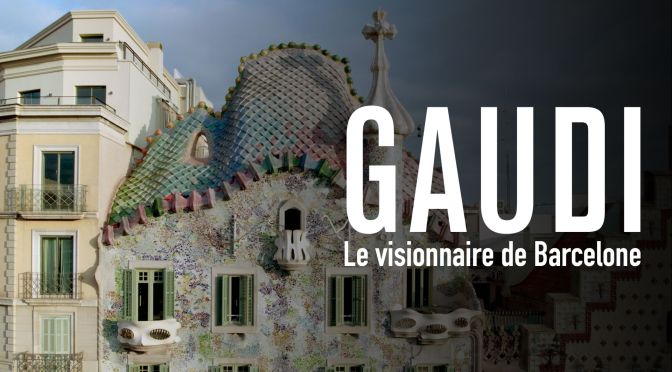
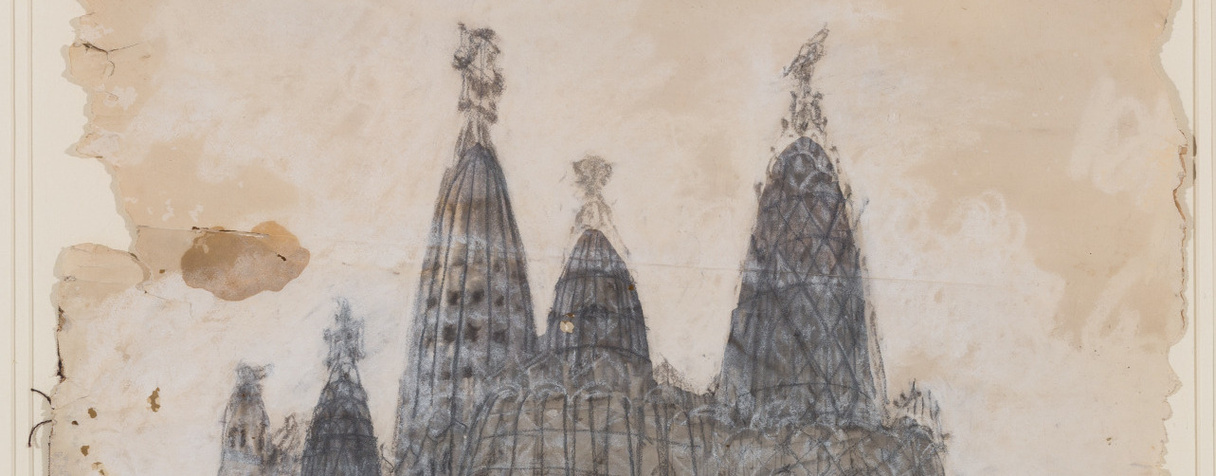
The Musée d’Orsay is hosting the first major exhibition devoted to Antoni Gaudí organized in France in Paris in fifty years. In an immersive museographic experience, it will show the spectacular creations of this unique artist, in particular, presenting sets of furniture never before exhibited in France. It will offer a new vision of the artist as a unique and singular figure, a non-isolated genius who practiced in a Catalonia in the midst of social, political and urbanistic upheaval.
The exhibition will focus on showing the architect’s creative process at a time of an exceptional local artistic profusion linked to “Modernism” or the Art Nouveau movement in Spain, supported by distinguished patrons, anxious to distinguish Catalonia, a land of Mediterranean identity. Gaudí’s workshop, his many collaborators, and his sophisticated working techniques will be the guiding line of the exhibition to make the public understand the extraordinary inventive capacity of the architect who defied all the creation of the moment.










 Boomers Daily