Howtown is a hamlet in Cumbria, England, situated at a small harbour on the east shore of Ullswater in the Lake District. It lies within the civil parish of Martindale.
Howtown is about three and a half miles from Pooley Bridge and is best reached by water. The Ullswater ‘Steamers’ regularly stop there on their way from Glenridding at the southern end of Ullswater to Pooley Bridge at the northern end of the lake.
The name Howtown means “farmstead on the hill”. The place name is from the Old Norse word haugr, meaning “hill” or “mound”, and the Old English word tün, meaning “town”. It contains the Howtown Hotel. Howtown was founded by the How (or Howe) family.
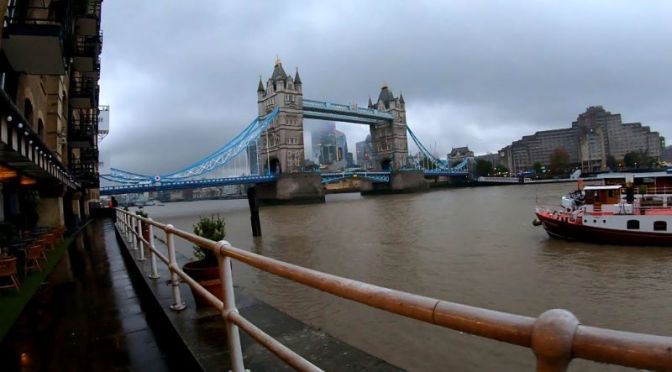
This walking tour was filmed on 10 October on a wet and rainy day in London. I decided to start filming on London tower bridge, go down on the Thames river and back again on the river. I really like this king of videos as are relaxing and quiet, specially when outside is raining
“Je Viens” is a Cinematic Poem Short Film In Tignes, France Directed by Franck Pinel.
Filmed, Edited and Directed by: Franck Pinel (FKY)
Music by: Steven Gutheinz Written by: Samuel Revol Narrated by: Siméon Revol & Laure Revol English Translation by: Madeleine Barter
“Between the desert peaks and the wild plains, Itinerary of the man alone; poisoned, in love, alive.”
I invite you on the trails of Tignes in Savoie, under the August sun, to breathe the fresh air! A little vastness, horizons blurred to forget for a few moments our confined lives.
A first FKY / Srevol collaboration, with a text written for the film, and read by a young Simeon with a rocky voice.
I Approach
Tightrope walking earthling Lying heavily on rock I look for your softness Your suspended caresses
In my solitude, I approach
My bones follow your tracks Along smoke-filled banks, Burns under your sun My masterful soul
In my solitude, I approach
My wings poisoned by oily molecules accept my sorrow my ghostly pardon
In my solitude, I approach
Tightrope walking earthling With smoky soul, I approach I burn in your softness Masterful earth
—————————————
Je viens
Funambule terrien, Aimanté à la roche, Je cherche tes douceurs, Tes caresses suspendues.
Dans ma solitude, je viens
Mes os suivent ta piste, Aux rivages enfumés Je brûle sous ton soleil Mon âme de capitaine
Dans ma solitude, je viens
mes ailes empoisonnées de molécules pétroliennes accepte mon désolé mon pardon fumigène
Dans ma solitude, je viens
Funambule terrien, A l’âme enfumée je viens Je brûle dans ta douceur, Terre capitaine
Tignes is a group of villages that form a high-altitude ski resort in the French Alps, near the Italian border. With nearby Val d’Isère, it’s part of the Espace Killy ski area, linked by a network of lifts. Val Claret and Tignes Le Lac villages are lively hubs, with restaurants and shops. In summer, the area offers trails, golf and a bike park, plus ski runs on the Grande Motte glacier.
From silent one-man midget subs to U-boats on secret missions, both sides used secret submersibles of all shapes and sizes to conduct clandestine warfare in the war. An examination of the murky world of underwater “sneak craft” in WWII.
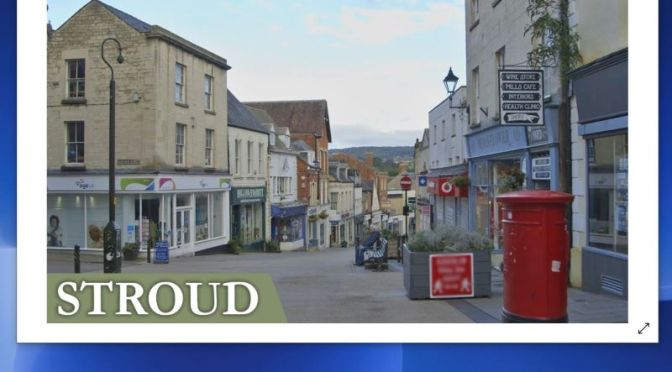
Stroud is a market town on the western side of the Cotswolds in Gloucestershire, England. It is the meeting point for the surrounding five valleys and is renowned both for its steep streets and highly political culture. It was heavily involved in the industrial revolution and produced cloth, powered by small rivers which flow through the five valleys. Although not often considered a classic Cotswold town, it is well worth a visit.
After seven decades in show business, and a 10-year break from acting, Sophia Loren returns to the screen with a standout performance in a new Netflix film, “The Life Ahead,” directed by her son, Edoardo Ponti. They talk with correspondent Seth Doane about her portrayal of a Holocaust survivor, and why the 86-year-old Academy Award-winner still approaches acting with the same spontaneity and anxiety as if it’s her first movie role.
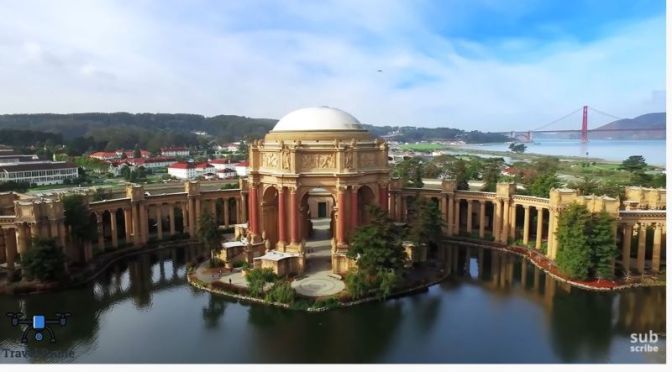
Silicon Valley – Silicon Valley is a region in the southern part of the San Francisco Bay Area in Northern California that serves as a global center for high technology, innovation, and social media.
Golden Gate Bridge – The Golden Gate Bridge is a suspension bridge spanning the Golden Gate, the one-mile-wide (1.6 km) strait connecting San Francisco Bay and the Pacific Ocean. The bridge is one of the most internationally recognized symbols of San Francisco and the United States. It has been declared one of the Wonders of the Modern World by the American Society of Civil Engineers.
Coit Tower – It is a 210-foot (64 m) tower in the Telegraph Hill, offering panoramic views over the city and the bay. It was added to the National Register of Historic Places in 2008.
Pamukkale – Imagine a glorious spectacle of white terraces made of sedimentary rocks. There are pools on the white terraces. That’s Pamukkale, a UNESCO World Heritage Site and a popular tourist attraction in Turkey. Pamukkale, Turkish for “cotton castle,” is a surreal natural landscape located in southwestern Turkey. The pools on the white terraces have high mineral content, and people have bathed in them for thousands of years. Also, expect to find hot springs and limestone walls in Pamukkale.
Blue Mosque – The Blue Mosque sports six minarets and majestic architecture. Situated in Istanbul and built in the 1600s, this historic Turkish attraction and place of worship entreats with an opulent interior lined with thousands and thousands of blue tiles that are adorned by various patterns. Find the mihrab, the central element in the mosque. It is a beautifully carved marble with a stalactite recess.
The Church of Saint-Sulpice is a Roman Catholic church in Paris, France, on the east side of Place Saint-Sulpice, in the Latin Quarter of the 6th arrondissement. It is only slightly smaller than Notre-Dame and thus the second largest church in the city. It is dedicated to Sulpitius the Pious.
Saint-Germain-des-Prés is one of the four administrative quarters of the 6th arrondissement of Paris, France, located around the church of the former Abbey of Saint-Germain-des-Prés.
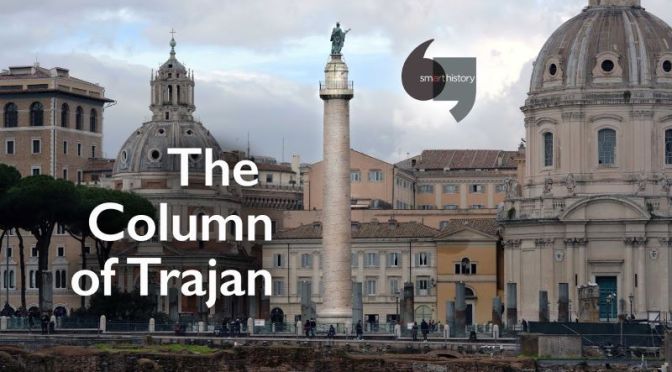
Trajan’s Column is a Roman triumphal column in Rome, Italy, that commemorates Roman emperor Trajan’s victory in the Dacian Wars. It was probably constructed under the supervision of the architect Apollodorus of Damascus at the order of the Roman Senate. It is located in Trajan’s Forum, built near the Quirinal Hill, north of the Roman Forum. Completed in AD 113, the freestanding column is most famous for its spiral bas relief, which artistically represents the wars between the Romans and Dacians (101–102 and 105–106). Its design has inspired numerous victory columns, both ancient and modern.
News, Views and Reviews For The Intellectually Curious





 Boomers Daily