Category Archives: Videos

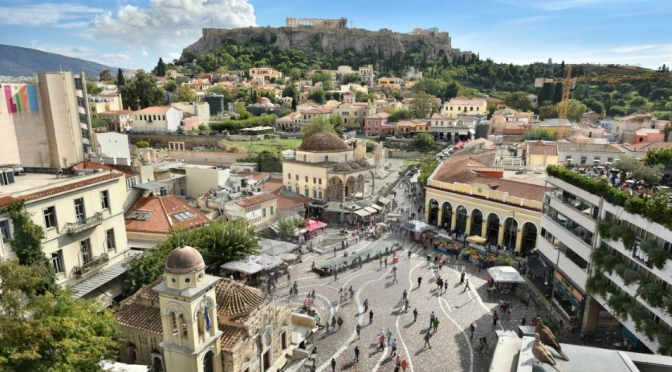
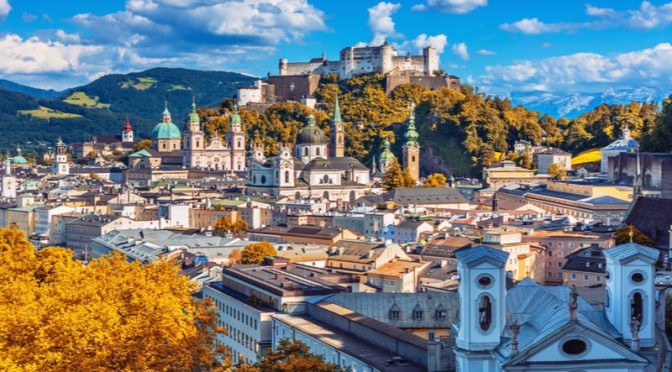
Travel Guide: 15 Things To Do In Salzburg, Austria

Salzburg is an Austrian city on the border of Germany, with views of the Eastern Alps. The city is divided by the Salzach River, with medieval and baroque buildings of the pedestrian Altstadt (Old City) on its left bank, facing the 19th-century Neustadt (New City) on its right. The Altstadt birthplace of famed composer Mozart is preserved as a museum displaying his childhood instruments.

In this video, we’ll be showing you some of the things you can do in Salzburg during your visit. We’ll tour the cliff top fortress and all the museums it holds within, we’ll explore cemeteries and early Christian catacombs carved into the rock, we’ll enjoy views of the old town with its Baroque architecture, domes and spires. Plus we’ll also give you a few ideas of some Austrian foods to try and some easy day trips you can go on.

00:53 – Ride the funicular 01:06 – Hohensalzburg Fortress 04:42 – Petersfriedhof and Catacombs 06:49 – Salzburg Cathedral 07:54 – Sphaera Sculpture 08:48 – Mönchsberg 09:47 – Austrian foods to try 12:13 – Mozart’s Home 12:35 – Mozart Square 12:45 – Kollegienkirche 13:25 – Stroll along Salzach River 13:57 – Mirabell Palace and Gardens 15:57 – Salzach Island Bar 16:35 – Werfen Day Trip 17:28 – Gaisberg Hiking Day Trip 18:08 – Transportation in Salzburg

Views: The Gondolas And Canals Of Venice, Italy

The gondola is a traditional venetian boat used to move around the city of Venice Italy. In the absence of roads, the inhabitants couldn’t use horses, and the size of the canals required a thin and flat bottomed embarcation. The venitian gondola surely answers all those problems.

The construction of a gondola requires a lot of time ( about a year ) and some well selected pieces of wood (8 different types). The craftsman starts by building the skeleton, then adds the sides and keeps building on top of the structure.

Winter Walks: Södermalm In Stockholm, Sweden (4K)

Södermalm [sødərˈmalm] (or just Söder) is the southern borough of central Stockholm, consisting of the island of Södermalm proper, two smaller islands connected to it from the west (Långholmen [ˈlɔŋˈhɔlmən] and Reimersholme [rejməʂˈhɔlmə]), as well as the neighbourhood of Hammarby Sjöstad on the opposite bank of the Hammarby Sjö in the east, which is a redeveloped former industrial area that was transformed into a model sustainable residential community.

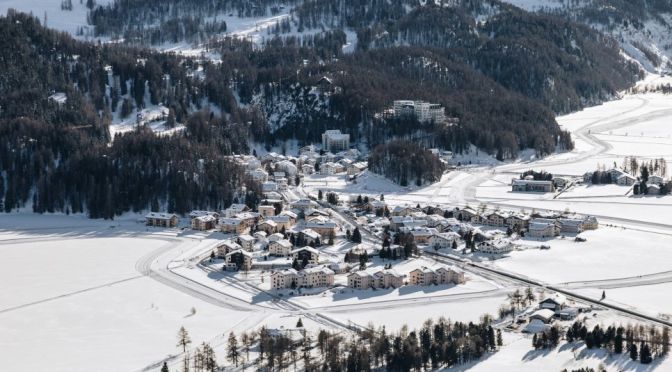
Winter Walks: Sils Im Engadin, Switzerland (4K)

Sils is “the loveliest corner of the whole earth”. These are the words of Friedrich Nietzsche, who wrote his “Zarathustra” while staying in this picturesque village located between the lakes of Sils and Silvaplana. Sils is also a place in which to escape the madding crowd, whichever of the two parts of the village – Sils-Maria or Sils-Baselgia – you decide to stay in.

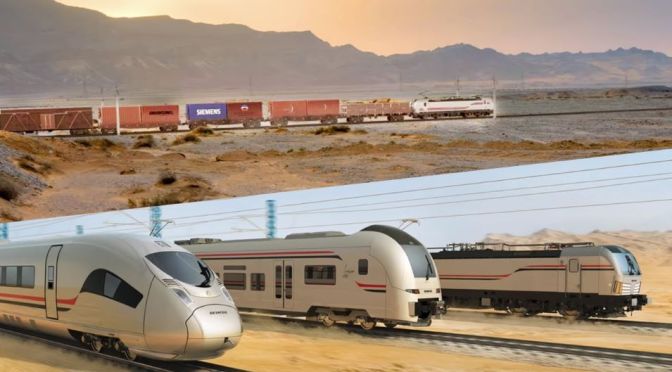
Public Transit: Seattle’s $54 Billion Railway (Video)

This could be the most ambitious public transit project in America.

SEATTLE has become one of the most attractive cities in the United States.

The tech boom has helped bring in some 1,000 new residents every week. Of course, all those new Seattleites need a way to get around, and things are getting crowded.

In response, the city has been expanding its rail system, and fast. The latest project, Sound Transit 3, will invest $54BN over the next 25 years to expand the network five-fold.

With the passage of the $1.2 trillion Bipartisan Infrastructure Bill, American cities are getting a chance to rethink their public transit systems with fresh infrastructure funding.

And Seattle’s expansion might be the country’s most ambitious project yet.

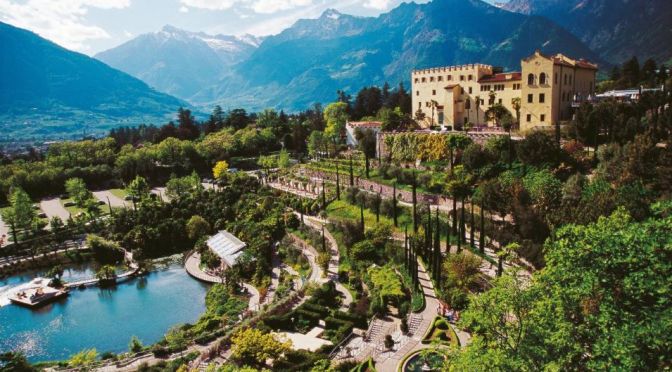
Views: Merano In South Tyrol, Northern Italy (4K)

Meran or Merano is a city and comune in South Tyrol, northern Italy. Generally best known for its spa resorts, it is located within a basin, surrounded by mountains standing up to 3,335 metres (10,942 feet) above sea level, at the entrance to the Passeier Valley and the Vinschgau.

In the past, the city has been a popular place of residence for several scientists, literary people, and artists, including Franz Kafka, Ezra Pound, Paul Lazarsfeld, and also Empress Elisabeth of Austria, who appreciated its mild climate. Meran is on the borderline between several climates. Officially, it has an oceanic climate. However, it is close to being humid subtropical due to the mean temperature in July being just under 22 °C; even on those terms, the overnight lows in the winter bring the mean temperatures low enough for the city as a whole to have continental influences with more distinct seasons.

The area is well known for its wines, both white and red, and vineyards extend right into the city. The local wine, Meraner Leiten (Meranese di collina), is a light red wine, best drunk young. There are also extensive orchards, and apples are exported throughout Europe. The Forst Brewery on the edge of the city produces a popular range of beers, sold throughout northern Italy.

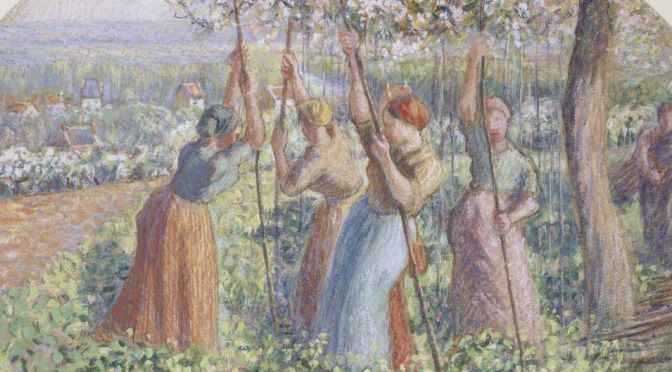
2022 Exhibitions: ‘Pissarro – Father Of Impressionism’

This major exhibition, of works drawn from the Ashmolean’s collections as well as international loans, will span Pissarro’s entire career.

Camille Pissarro (1830–1903) is one of the most celebrated artists of nineteenth-century France and a central figure in Impressionism. Considered a father-figure to many in the movement, his work was enormously influential for many artists, including Claude Monet and Paul Cézanne. It opens in spring 2022.

See more

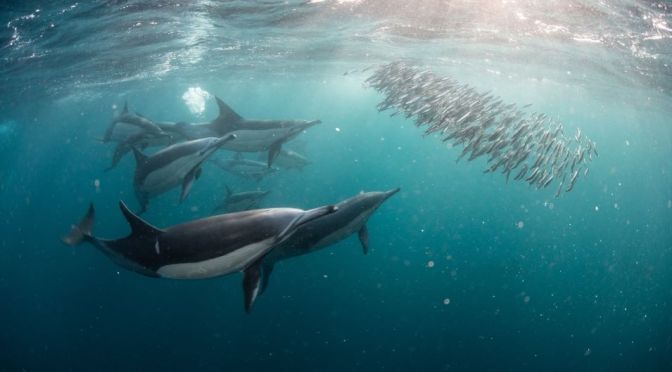
Oceans: Long-Distance Marine Migrations (Video)

Migrations are a key to survival in the marine ecosystem. From whales and turtles to sardines, by travelling to different locations, nektonic animals stand better chances of finding food or a suitable place to breed and raise their young. In this video, we’ll take a look at the migrations of nektonic organisms – animals that are able to actively swim and can undertake large-scale journeys around the world, covering larger distances than plankton and their predators.

Video timeline: 00:00 – Introduction 01:10 – Chapter 1: Nektonic Adaptations – Why Animals Migrate 02:05 – Chapter 1: Nektonic Adaptations – Marine Mammals 02:35 – Chapter 1: Nektonic Adaptations – Migratory Fish 03:00 – Chapter 2: In Search of Sanctuary – The Sea Turtle Migration 04:04 – Chapter 2: In Search of Sanctuary – The Whale Migration 04:56 – Chapter 2: In Search of Sanctuary – The Whale Nursing Period 05:40 – Chapter 3: The Sardine Run – A Plentiful Feast 06:45 – Chapter 3: The Sardine Run – Nektonic Invertebrates 07:13 – Conclusion

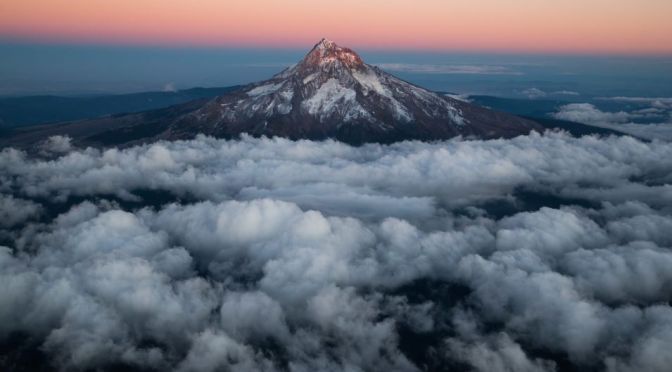
Views: Mount Hood In Northwest Oregon (4K)

Cinematic aerial footage of Mount Hood rising high above the clouds during a beautiful summer sunrise in Oregon’s Cascade Mountain Range.

Mount Hood is a potentially active stratovolcano in the Cascade Volcanic Arc. It was formed by a subduction zone on the Pacific coast and rests in the Pacific Northwest region of the United States. It is located about 50 miles east-southeast of Portland, on the border between Clackamas and Hood River counties.