The charismatic otter, a member of the weasel family, is found on every continent except Australia and Antarctica. Most are small, with short ears and noses, elongated bodies, long tails, and soft, dense fur.
There are 13 species in total, ranging from the small-clawed otter to the giant otter. Though most live in freshwater rivers, lakes, and wetlands, the sea otter and the smaller marine otter are found in the Pacific Ocean.
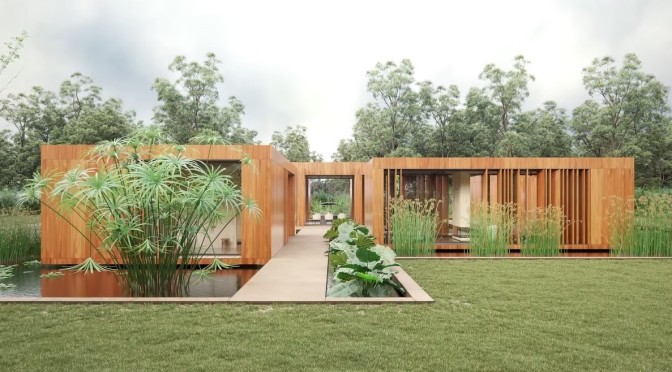
Queens Park House is an architect’s own minimalist oasis. Designed by Kyra Thomas Architects, the calming suburban home strongly contrasts its previous iteration as a storage warehouse.
Video timeline: 00:00 – The Local Project’s Print Publication 00:10 – Introduction to the Architect’s Own Home 00:49 – Warehouse Conversion 01:23 – The Brief 02:41 – Green Spaces 03:05 – Lighting 03:31 – Materiality 04:15 – The Architect’s Favourite Room 04:43 – The Finished Project 05:06 – Subscribe to The Local Project’s Print Publication
Located in Sydney, Queens Park House was originally a storage warehouse with brick walls built to the boundary of its site. Converting the commercial property into an architect’s own minimalist oasis required opening up the building and rewriting its internal character.
Structurally, turning the warehouse into an architect’s own minimalist oasis involved removing the pre-existing roof and inserting walls into the interior of the building. The brick boundary walls are retained, enabling a sense of privacy within the suburban setting and paying homage to the history of the building. As an architect’s own minimalist oasis, Queens Park House embraces natural light and fresh air.
Four courtyards punctate the spatial plan, creating green space for different aspects of the house to relate to, as well as facilitating internal lighting and ventilation. Responding to the residential needs of the client, Queens Park House stands as an architect’s own minimalist oasis. Custom and considered, the home testifies to the skill of Kyra Thomas Architects in transforming a commercial space.
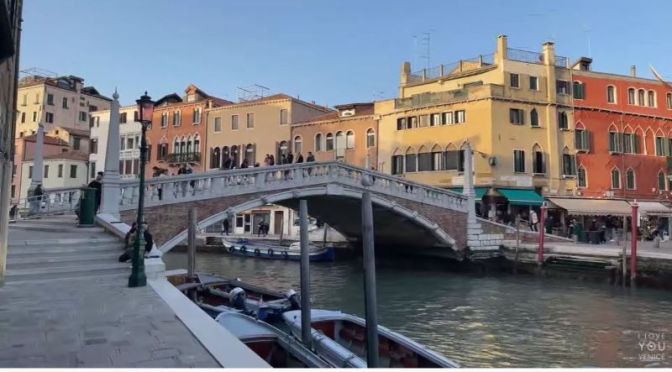
Santa Croce is a laid-back, slightly off-the-beaten-track area with a local vibe. After school, kids play in Campo San Giacomo dall’Orio, and this square and nearby streets are home to casual eateries serving global cuisine. On the Grand Canal, the imposing Fondaco dei Turchi features exhibits on natural history while the nearby Ca’ Pesaro palace showcases contemporary art and Asian decorative arts.
Lively Cannaregio is known for the 16th-century Jewish Ghetto. The Strada Nova is a popular local shopping thoroughfare, and the backstreets are a destination for crafts and vintage goods. Casual canalside restaurants and bars line nearby Fondamenta della Misericordia and Fondamenta dei Ormesini. The stately Ca’ d’Oro palace displays a Renaissance art collection.
Attirement of the Bride is an example of Max Ernst’s veristic or illusionistic Surrealism, in which a traditional technique is applied to an incongruous or unsettling subject. The theatrical, evocative scene has roots in late nineteenth-century Symbolist painting, especially that of Gustave Moreau. It also echoes the settings and motifs of sixteenth-century German art. The willowy, swollen-bellied figure types recall those of Lucas Cranach the Elder in particular. The architectural backdrop with its strong contrast of light and shadow and its inconsistent perspective shows the additional influence of Giorgio de Chirico, whose work had overwhelmed Ernst when he first saw it in 1919.
Providence is the capital city of the U.S. state of Rhode Island. It’s home to Brown University and the Rhode Island School of Design, whose RISD Museum displays American art and silver. Nearby, 18th- and 19th-century homes line the streets of College Hill. Waterplace Park is the backdrop for the WaterFire art installation, which lights up the surrounding tidal basin most nights in the summer and for special events.
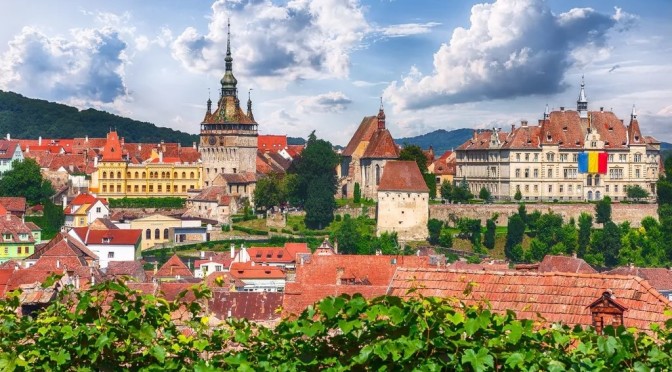
Sighișoara is a city on the Târnava Mare River in Mureș County, Romania. Located in the historic region of Transylvania, Sighișoara has a population of 28,102 according to the 2011 census. It is a popular tourist destination for its well-preserved walled old town, which is listed by UNESCO as a World Heritage Site.
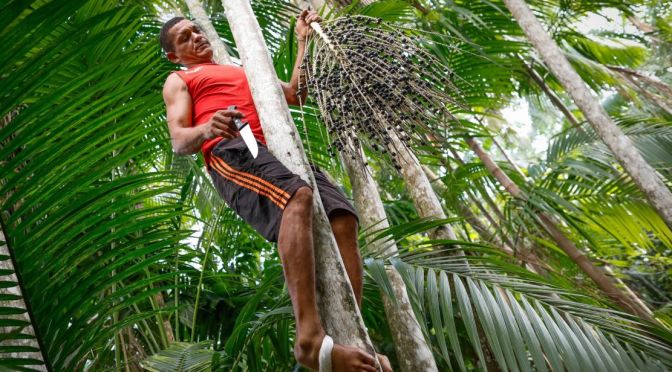
Most of the world’s açaí comes from the Amazon rainforest. People risk their lives to harvest the fruit, climbing palm trees that can grow taller than 50 feet. And while açaí has become one of the trendiest superfoods in recent decades, small farmers aren’t seeing a lot of the profits. The açaí industry has also taken heat over reports of child labor. We went to Brazil to find out how the world’s açaí gets from the Amazon to smoothie shops around the world.
The açaí palm, Euterpe oleracea, is a species of palm tree cultivated for its fruit, hearts of palm, leaves, and trunk wood. Global demand for the fruit has expanded rapidly in the 21st century, and the tree is cultivated for that purpose primarily
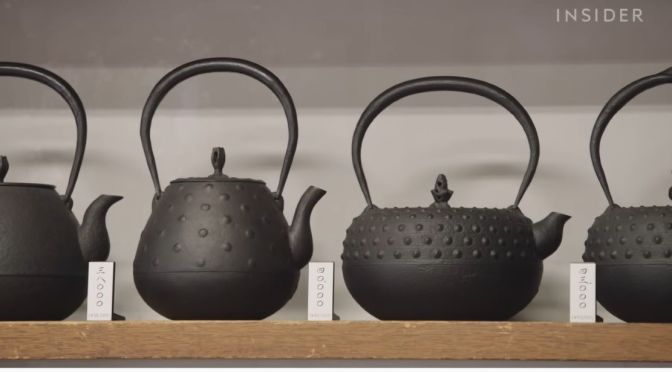
A handmade Japanese iron kettle can cost over $300. For centuries, artisans have made kettles by pouring molten iron into molds and hammering them out once they’ve cooled. These kettles often have beautiful designs but they’re only used for boiling water. You can buy a mass produced stovetop kettle for $20, so what makes these kettles unique? And why are they so expensive?
News, Views and Reviews For The Intellectually Curious






 Boomers Daily