
Category Archives: Science
Science Podcast: Radar Satellites Measuring The Earth, Random Numbers
First up, science journalist Julia Rosen talks with host Sarah Crespi about a growing fleet of radar satellites that will soon be able to detect minute rises and drops of Earth’s surface—from a gently deflating volcano to a water-swollen field—on a daily basis.
Sarah also talks with Hui Cao, a professor of applied physics at Yale University, about a new way to generate enormous streams of random numbers faster than ever before, using a tiny laser that can fit on a computer chip.
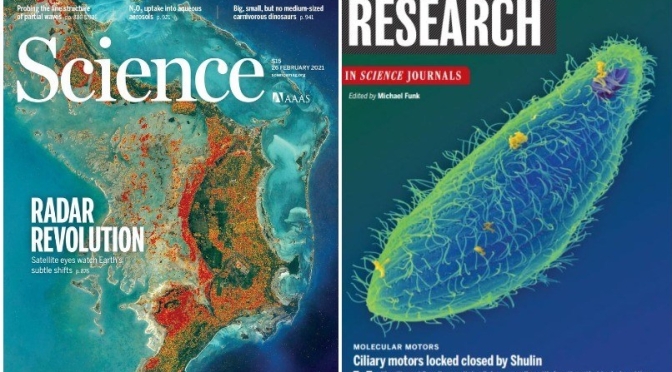
TOP JOURNALS: RESEARCH HIGHLIGHTS FROM SCIENCE MAGAZINE (FEB 26, 2021)


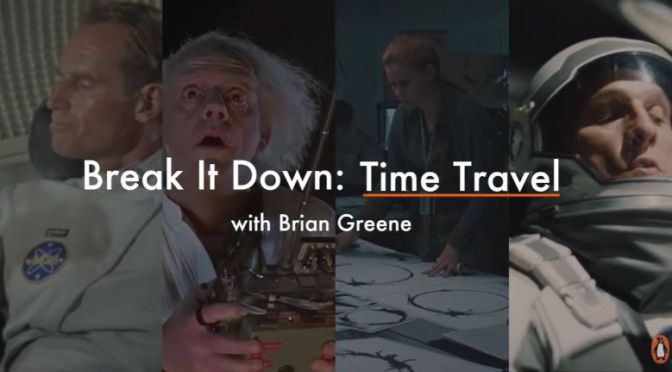
Science & Film: Physicist Brian Greene Reviews ‘Time Travel Movies’ (Video)
Theoretical Physicist, String Theorist and Professor, Brian Greene looks at how time travel is portrayed in popular films. You can get his new book, Until the End of Time, here: https://amzn.to/3pTGyVx
Until the End of Time is Brian Greene’s breathtaking new exploration of the cosmos and our quest to understand it. Greene takes us on a journey across time, from our most refined understanding of the universe’s beginning, to the closest science can take us to the very end. He explores how life and mind emerged from the initial chaos, and how our minds, in coming to understand their own impermanence, seek in different ways to give meaning to experience: in story, myth, religion, creative expression, science, the quest for truth, and our longing for the timeless, or eternal.
Through a series of nested stories that explain distinct but interwoven layers of reality-from the quantum mechanics to consciousness to black holes-Greene provides us with a clearer sense of how we came to be, a finer picture of where we are now, and a firmer understanding of where we are headed. Yet all this understanding, which arose with the emergence of life, will dissolve with its conclusion. Which leaves us with one realisation: during our brief moment in the sun, we are tasked with the charge of finding our own meaning. Let us embark.
Science Podcast: Inside A Proton, Cold Genes & Growing Small Intestines
The surprising structure of protons, and a method for growing small intestines for transplantation.
In this episode:
00:45 Probing the proton’s interior
Although studied for decades, the internal structure of the proton is still throwing up surprises for physicists. This week, a team of researchers report an unexpected imbalance in the antimatter particles that make up the proton.
Research Article: Dove et al.
News and Views: Antimatter in the proton is more down than up
07:08 Research Highlights
How an inactive gene may help keep off the chill, and Cuba’s isolation may have prevented invasive species taking root on the island.
Research Highlight: Impervious to cold? A gene helps people to ward off the chills
Research Highlight: Marauding plants steer clear of a communist-ruled island
09:48 A new way to grow a small intestine
Short Bowel Syndrome is an often fatal condition that results from the removal of the small intestine. Treatment options are limited to transplantation, but donor intestines are hard to come by and can be rejected by the body. Now researchers may have developed a method to grow a replacement small intestine using stem cells and a small section of colon.
Research Article: Sugimoto et al.
15:50 Briefing Chat
We discuss some highlights from the Nature Briefing. This time, the landing of Perseverance on Mars, and the researchers speaking with lucid dreamers.
Nature News: Mars video reveals Perseverance rover’s daring touchdown
Nature News: Touch down! NASA’s Mars landing sparks new era of exploration
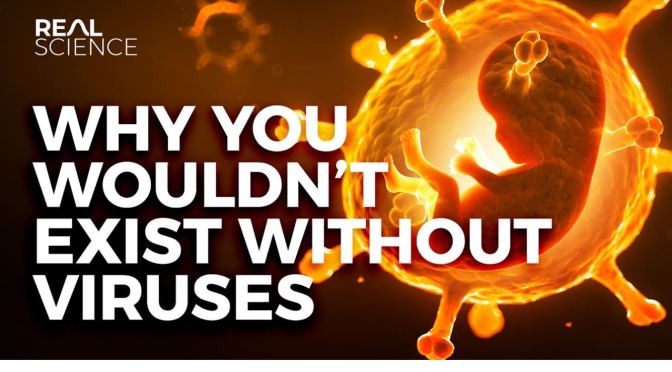
Science: ‘Why Viruses Are Necessary For Life’ (Video)
A virus is a submicroscopic infectious agent that replicates only inside the living cells of an organism. Viruses infect all types of life forms, from animals and plants to microorganisms, including bacteria and archaea.

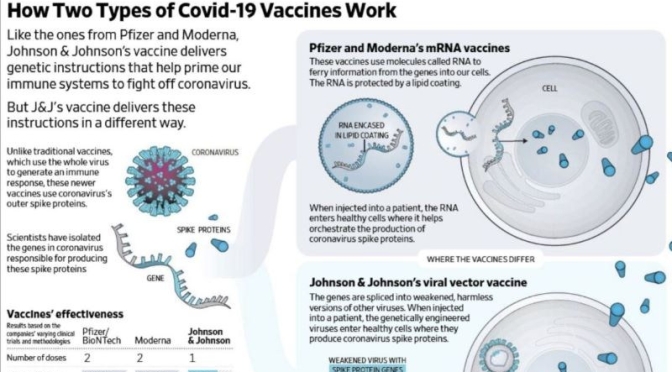
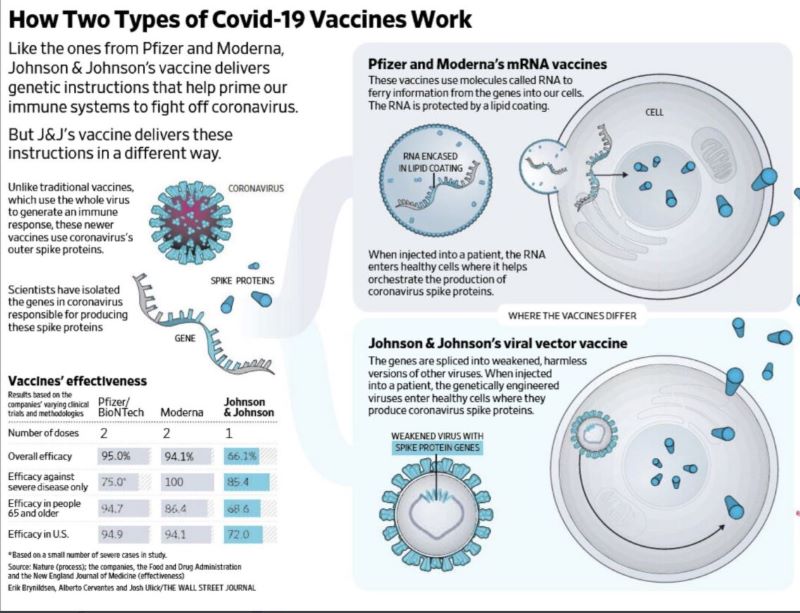
Covid-19: ‘Why Variants Are Spreading Faster’
As highly transmissible coronavirus variants sweep across the world, scientists are racing to understand why these new versions of the virus are spreading faster, and what this could mean for vaccine efforts. New research says the key may be the spike protein, which gives the coronavirus its unmistakable shape. Illustration: Nick Collingwood/WSJ
Medicine: Scientists Grow ‘Mini-Organs’ To Repair Damaged Human Livers
Scientists have used a technique to grow bile duct organoids – often referred to as ‘mini-organs’ – in the lab and shown that these can be used to repair damaged human livers. This is the first time that the technique has been used on human organs. Funding provided by European Research Council, the National Institute for Health Research and the Academy of Medical Sciences
Science Podcast: Covid Questions Answered, Rocky Planet Formation
Science Staff Writer Jon Cohen joins host Sarah Crespi to take on some of big questions about the COVID-19 vaccines, such as: Do they stop transmission? Will we need boosters? When will life get back to “normal.”
Sarah also talks with Anders Johansen, professor of planetary sciences and planet formation at the University of Copenhagen, about his Science Advances paper on a new theory for the formation of rocky planets in our Solar System. Instead of emerging out of ever-larger collisions of protoplanets, the new idea is that terrestrial planets like Earth and Mars formed from the buildup of many small pebbles.


 Boomers Daily