
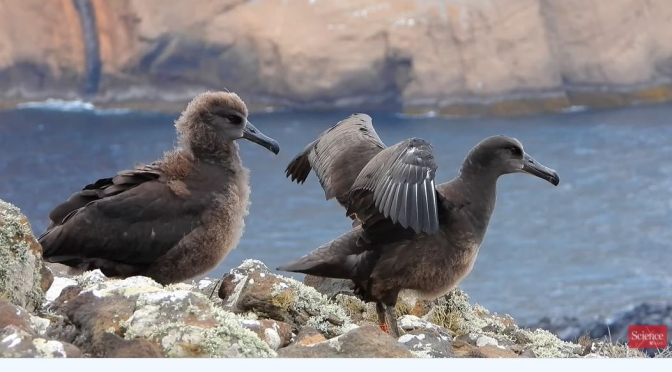
Most black-footed albatross nest on sandy beaches in Hawaii—but rising sea levels threaten their eggs and chicks. Researchers in Mexico and the United States came up with a way to save these birds: having young albatross hatch and imprint on an island 6000 kilometers away with higher ground. Watch to see the journey of these black-footed albatross. Read the story: https://www.sciencemag.org/news/2021/…
Category Archives: Science
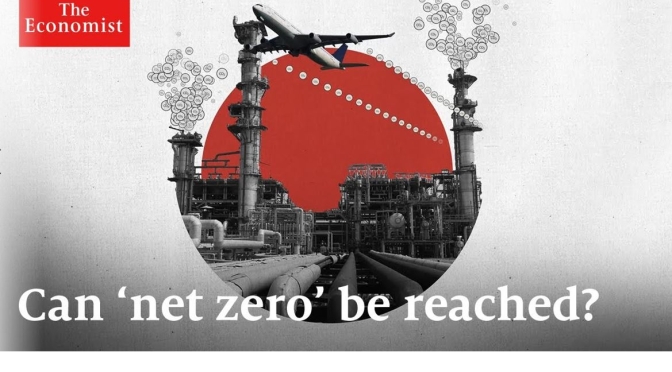
Climate: What Is ‘Net Zero’?
More than 50 countries around the world have pledged to become net zero. But what does net zero actually mean—and is it achievable?
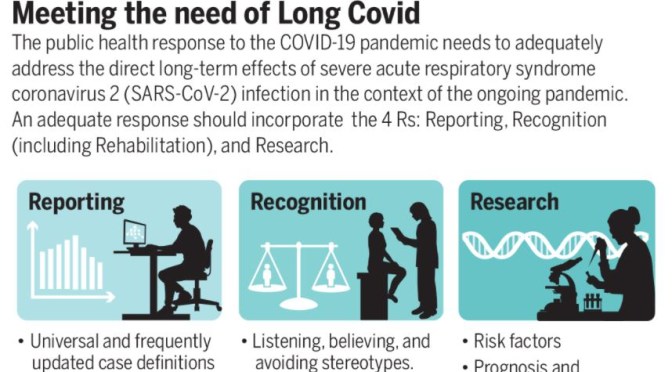
Medicine: Understanding ‘Long Covid’ Syndrome
Neuroscience: Ardem Patapoutian On Human Sense Of Touch (Podcast)
Science: Metabolic Health Markers & Obesity, Type 1 Diabetes, “Bone Rooms”
First this week, Staff Writer Jennifer Couzin-Frankel joins host Sarah Crespi to discuss the paradox of metabolically healthy obesity. They chat about the latest research into the relationships between markers of metabolic health—such as glucose or cholesterol levels in the blood—and obesity. They aren’t as tied as you might think.
Next, Colin Dayan, professor of clinical diabetes and metabolism at Cardiff University and senior clinical researcher at the Wellcome Centre for Human Genetics at the University of Oxford, joins Sarah to discuss his contribution to a special issue on type 1 diabetes. In his review, Colin and colleagues lay out research into how type 1 diabetes can be detected early, delayed, and maybe even one day prevented. Finally, in the first of a six-patrt series of book interviews on race and science, guest host Angela Saini talks with author and professor of history at the University of Massachusetts, Amherst, Samuel Redman, about his book Bone Rooms: From Scientific Racism to Human Prehistory in Museums. The two discuss the legacy of human bone collecting and racism in museums today.
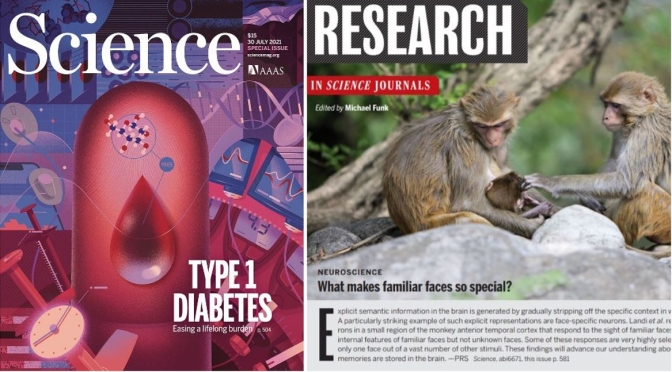
Top Journals: Science Magazine – July 30, 2021
Science: 890 Million-Year-Old Sponge, Caffeinated Bees, Greenland Glaciers
Researchers debate whether an ancient fossil is the oldest animal yet discovered, and a new way to eavesdrop on glaciers.
In this episode:
01:04 Early sponge
This week in Nature, a researcher claims to have found a fossil sponge from 890-million-years-ago. If confirmed, this would be more than 300-million-years older than the earliest uncontested animal fossils but not all palaeontologists are convinced.
Research Article: Turner
10:13 Research Highlights
A caffeine buzz appears to improve bees’ memory, and reconstructing an Iron Age man’s final meal.
Research Highlight: A caffeine buzz gives bees flower power
Research Highlight: The guts of a ‘bog body’ reveal sacrificed man’s final meal
12:34 Eavesdropping on a glacier’s base
We hear about one researcher’s unorthodox attempt to listen in to the seismic-whisper at the foot of a Greenland glacier – a method that might reveal more about conditions under these enormous blocks of ice.
Research Article: Podolskiy et al.

Science: What A ‘Mega’ Earthquake In The Pacific Northwest Will Look Like

Western Drought: Expect More Fires & Water Wars
As of mid-June, nearly three-quarters of the US’s West has been experiencing “severe,” “extreme,” or “exceptional” drought conditions. In addition to the states above, it also includes northern states like North Dakota and Montana.
Overall, climate change is playing a role. But there are smaller factors at play that are tied to climate change as well. Including…
- Not enough rain. The National Oceanic and Atmospheric Association (NOAA) said the Southwest’s 2020 monsoon season (read: ‘nonsoon’) was “the hottest and driest summer/monsoon season on record.” And the decrease in rainfall is having an impact on today’s drought (think: not enough water for crops, lakes, or reservoirs). And for the little rain that has fallen, it could dry up faster because of…
- Warmer temps. The NOAA dubbed 2020 the second-hottest year on record. And in late June, a record-breaking heat wave hit the Pacific Northwest, with the temperature reaching up to 112 degrees Fahrenheit in places like Portland, OR. (Psst…if you’re dealing with hot weather, here are some tips to stay safe.) Hotter, drier weather creates a thirsty environment, which speeds up evaporation. Rising temps are also causing snowpacks to melt faster, and they’re reportedly producing less runoff – a vital water resource. All of which means there’s less water available for communities and ecosystems.
Experts are also worried that the current dry and hot conditions will have a ripple effect, which brings us to wildfires. Last year’s West Coast wildfire season was the worst ever. Fires in California killed 31 people, burned more than 4 million acres, and destroyed thousands of buildings and structures. And this year, states like Arizona have seen an early start to their wildfire season. But the effects of the drought stretch even further.

Covid-19: How The Delta Variant Spread Globally
Covid-19’s Delta variant is proliferating world-wide threatening unvaccinated populations and economic recovery. WSJ breaks down events in key countries to explain why Delta spreads faster than previously detected strains. Composite: Sharon Shi
 Boomers Daily