Category Archives: Science

Research Preview: Science Magazine – August 4, 2023

Image

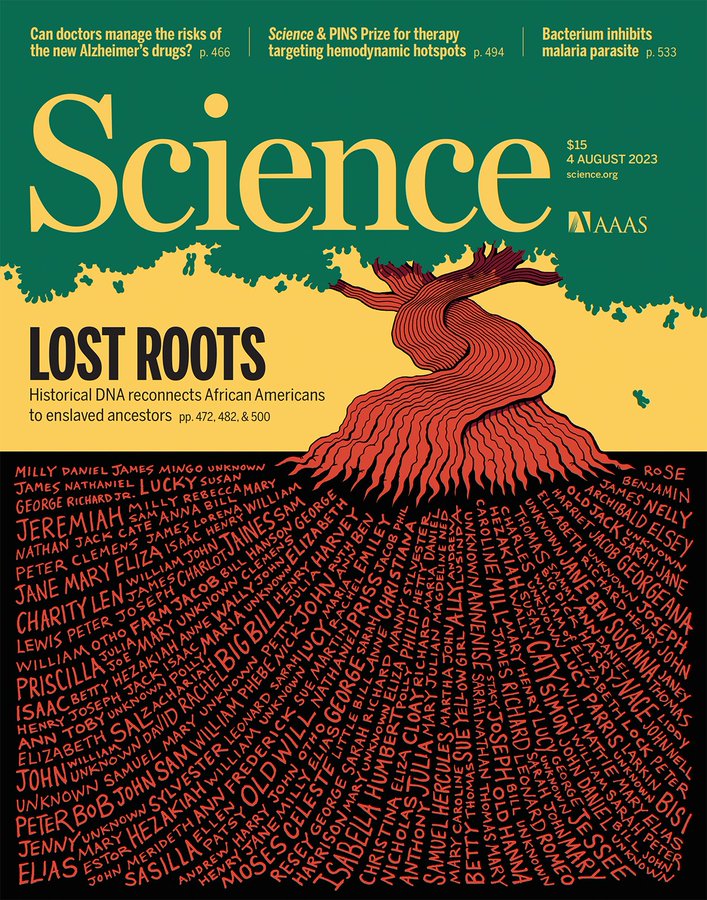
Science Magazine – August 4, 2023 issue: DNA was sequenced from 27 African Americans buried at Catoctin Furnace, Maryland, where enslaved people labored between 1774 and 1850. The tree trunk forms a double helix comprising 27 segments representing each sequenced individual.

‘We’re changing the clouds.’ An unforeseen test of geoengineering is fueling record ocean warmth

Pollution cuts have diminished “ship track” clouds, adding to global warming

Tropical trees deter similar neighbors

Tropical forests host an unusually high diversity of tree species. Strong interactions between individuals are hypothesized to create these patterns. A tree is more likely to survive when surrounded by different tree species with different resource needs, diseases, and herbivores. Kalyuzhny et al. found patterns consistent with this mechanism in a long-term forest plot in Panama. Adult trees in this site are more distant from members of their own species than from other species and more distant than would be expected by chance or by the limits of seed dispersal. This study shows that distances between conspecifics are maintained in adult trees, helping to explain the high diversity of tropical forests.

Research Preview: Nature Magazine – August 3, 2023

Volume 620 Issue 7972

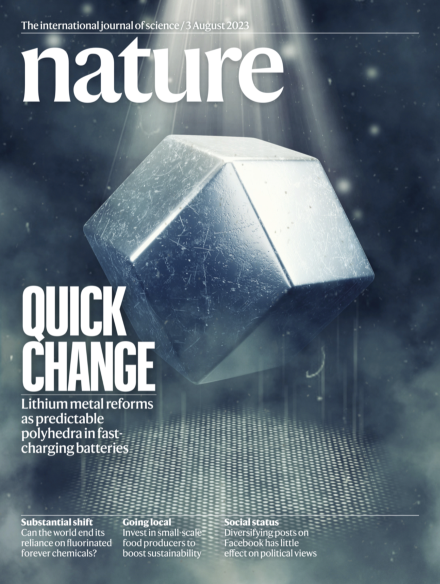
nature Magazine – August 3, 2023 issue: Lithium-metal batteries promise to charge rapidly and to hold more energy than batteries based on lithium ions. Recharging these batteries requires lithium metal to be reformed at the anode, but this process is affected by the battery’s electrolyte and current collector, which causes the shape of the lithium deposits to vary unpredictably, impairing the battery’s performance.

Water crisis: how local technologies can help solve a global problem

Climate change is making water stress worse for billions worldwide. Scaling up both new and traditional solutions must be a priority.

Why heart trouble can lead to sleep trouble

An immune response triggered by cardiac disease affects the function of a gland with a key role in the sleep–wake cycle.

Research Preview: Science Magazine – July 28, 2023

Image

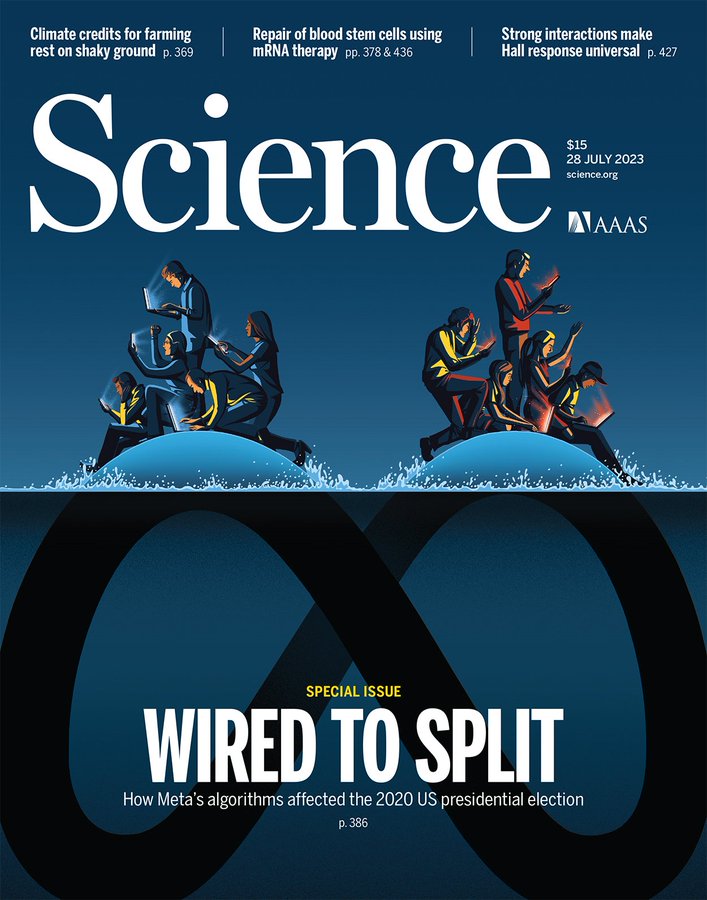
Science Magazine – July 28, 2023 issue: This artwork depicts social media users that are engaged (and often enraged) from the “left” (liberals, blue) and the “right” (conservatives, red) perched on Meta’s logo. Social media algorithms personalize users’ online experiences, recommending engaging content that will interest them and possibly spark outrage.

Social media and elections

The advent of social media forever changed how we consume news. At least half of Americans rely on it for news, and Facebook (owned by parent company Meta) is the most popular. Meta’s Facebook and Instagram platforms are funded through advertisements and generate more revenue when users spend more time on their platforms. To make platforms alluring and increase screen time, tech companies operate on business models that incentivize algorithms that are designed to elevate eye-catching content to the top of users’ feeds—content that captures attention and may go “viral” by stimulating “engagement” through comments, likes, and resharing.

Origin of diamond-bearing eruptions revealed

Deep mantle waves from continental rifting trigger mysterious kimberlite volcanoes

‘I should have done better.’ Stanford head steps down

Probe clears Marc Tessier-Lavigne of misconduct but criticizes lab culture and lack of “appetite” for corrections

Research Preview: Nature Magazine – July 27, 2023

Volume 619 Issue 7971

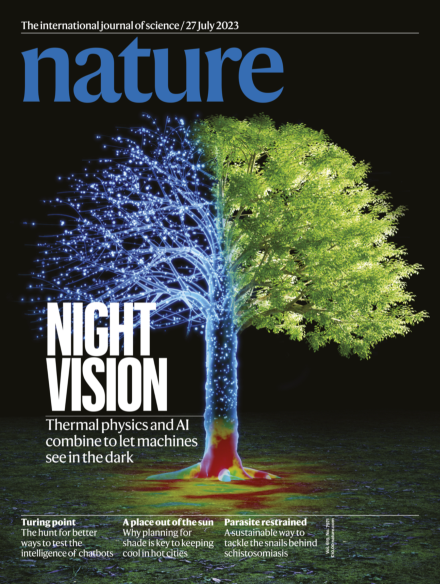
nature Magazine -July 27, 2023 issue: HADAR (heat-assisted detection and ranging) combines thermal physics and infrared imaging with machine learning to discern an object in pitch darkness as though it  is illuminated by broad daylight.

ChatGPT is a black box: how AI research can break it open

Despite their wide use, large language models are still mysterious. Revealing their true nature is urgent and important.

A lethal fungal infection gets a hand from the body’s own defences

Bloodstream infections by a common fungus are less deadly in mice engineered to have lower levels of a protein secreted by immune cells.

Nature: Filming Birdlife In America’s Arctic Wetlands

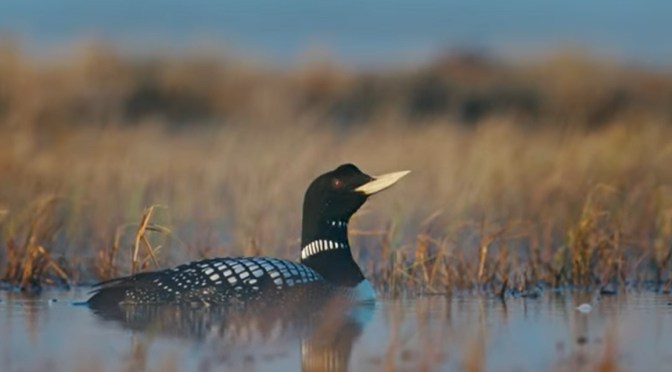
Cornell Lab of Ornithology (July 26, 2023) – The tundra wetlands in the heart of America’s Arctic, centered in the NPR-A around Teshekpuk Lake, are among the most extensive in the circumpolar Arctic and contain some of the highest recorded densities of breeding shorebirds in this vast area.

Millions of birds from all over the world flock to these wetlands every year to nest and raise their young. Come along with Cornell Lab’s Gerrit Vyn as he joins a team to capture image of the region’s birdlife.

America’s Arctic is one of North America’s last great wilderness areas, a critical habitat for migratory birds from around the world, and a treasure to be protected for future generations.

#AmericasArctic

Research Preview: Science Magazine – July 21, 2023

Image

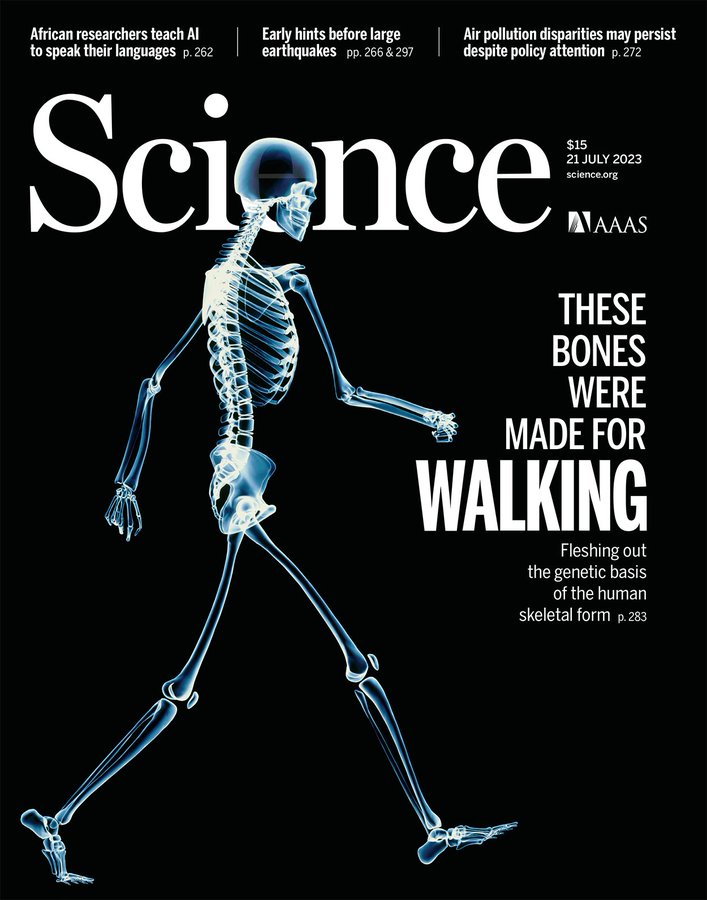
Science Magazine – July 21, 2023 issue: The cover depicts an x-ray of a human skeleton walking. Researchers extracted 23 skeletal proportions from 30,000 individuals using deep learning. Coupled with genetic and biobank data, more than 100 genetic variants associated with these proportions were identified. These analyses shed light on the evolution of the skeletal form, which facilitates bipedalism, and reveal connections to musculoskeletal disorders.

Hollywood movie aside, just how good a physicist was Oppenheimer?

A-bomb architect “was no Einstein,” historian says, but he did Nobel-level work on black holes

Deglaciation of northwestern Greenland during Marine Isotope Stage 11

Research Preview: Nature Magazine – July 20, 2023

Volume 619 Issue 7970

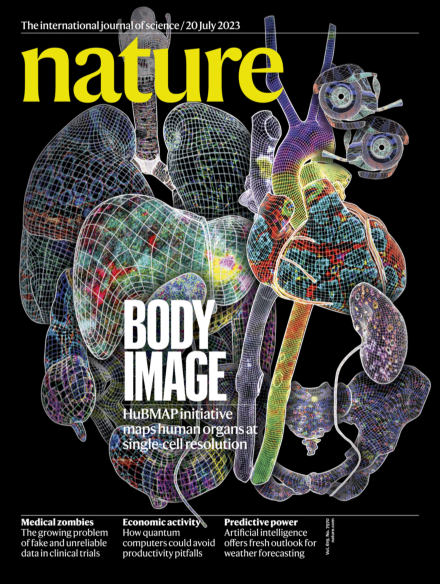
nature Magazine -July 20, 2023 issue: Launched in 2018, the Human Biomolecular Atlas Program (HuBMAP) aims to map how cell types are arranged in the human body. The initiative is both developing and then deploying the necessary technology to create maps of organs at single-cell resolution.

This quiet lake could mark the start of a new Anthropocene epoch

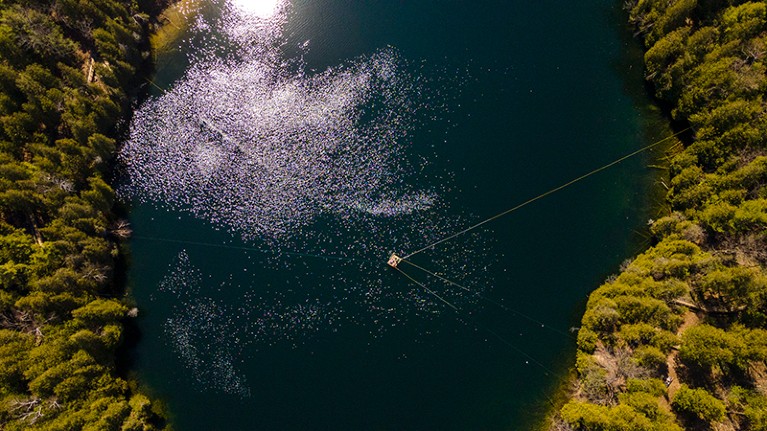
An aerial view of Crawford Lake.

The dawn of a new geological epoch is recorded in the contaminated sediment at the bottom of Crawford Lake in Canada.

The official marker for the start of a new Anthropocene epoch should be a small Canadian lake whose sediments capture chemical traces of the fallout from nuclear bombs and other forms of environmental degradation. That’s a proposal out today from researchers who have spent 14 years debating when and how humanity began altering the planet.

How to introduce quantum computers without slowing economic growth

To smooth the path of the quantum revolution, researchers and governments must predict and prepare for the traps ahead.

Technology Quarterly – The Economist (July 2023)

Image

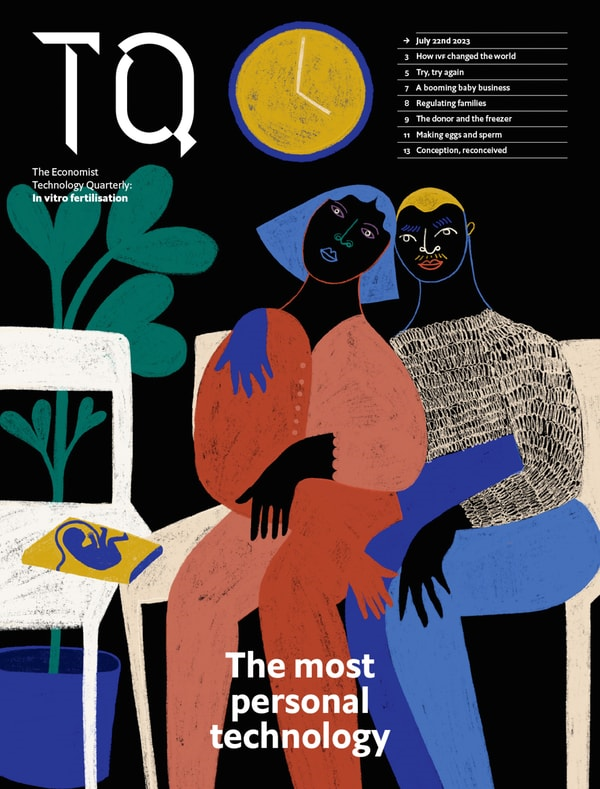
TECHNOLOGY QUARTERLY (JULY 22ND 2023) The most personal technology. Demand for, and expectations of, in vitro fertilisation are growing. The technology is struggling to keep up, write Catherine Brahic and Sacha Nauta.

In vitro fertilisation is struggling to keep up with demand

Developing the technology to change that is proving a difficult task

With the possible exception of Adam and Eve, all human beings born before 1978 were conceived inside a woman’s body. Today the world contains at least 12m people who started off in laboratory glassware. On average, four more are born every three minutes. That is a worldwide rate of roughly one newborn in 175.

IVF remains largely a numbers game

And plenty of clinics are taking advantage: the second of seven articles on the technology of fertility

Most healthy young couples seeking to get pregnant will try for a few months before they are successful. Those who are not will try for months more, or years, before concluding they need help and stepping into the waiting room of an ivf clinic. They often arrive in a state of acute emotional vulnerability, clutching at the hope that doctors will help.

Research Preview: Science Magazine – July 14, 2023

Image

Science Magazine – July 14, 2023 issue: There have been huge strides in the development and application of artificial intelligence (AI) to science and society. But will AI eclipse humans, or will we find a way to safely and fairly collaborate, allowing us to reach further? 

A machine-intelligent world

Huge strides have been made in the development of machine-learning algorithms to generate what is commonly called artifi cial intelligence (AI). Looking to the forefront of how AI is being used in science and society reveals many benefi ts, as well as grand challenges, that must be addressed.

Leveraging artificial intelligence in the fight against infectious diseases

Despite advances in molecular biology, genetics, computation, and medicinal chemistry, infectious disease remains an ominous threat to public health. Addressing the challenges posed by pathogen outbreaks, pandemics, and antimicrobial resistance will require concerted interdisciplinary efforts.

Research Preview: Nature Magazine – July 13, 2023

Volume 619 Issue 7969

nature Magazine -July 13, 2023 issue: Usually, sea urchins procure blades of seagrass or small pieces of rubble to help them blend in with the sea floor, but the fire urchin (Asthenosoma varium) on the cover has instead appropriated the remnants of a blue plastic bag and is entangled in a discarded fishing line stuck on a reef.

How ancient monkeys rode the waves to the Americas — and survived

Artist’s reconstruction of the primate Ashaninkacebus.

Analysis suggests that three types of primate made the transoceanic journey to South America from Africa millions of years ago.

Some of the first primates to reach South America might have been tiny, insect-loving monkeys that had been swept out to sea.

Great bolts of lightning foretell Earth-warming clouds

Trieste Lightning.

Coverage of wispy cirrus clouds is linked to episodes of electrical activity.

Lightning is typically seen when imposing cumulonimbus clouds fill the sky. But new research shows that these bolts of electricity can also be used to forecast thin and wispy clouds that warm the world by reflecting heat back to the surface.