
 On this week’s show, Staff Writer Robert Service talks with host Sarah Crespi about a new National Academy of Sciences report that suggests the novel coronavirus can go airborne, the evidence for this idea, and what this means for the mask-wearing debate.
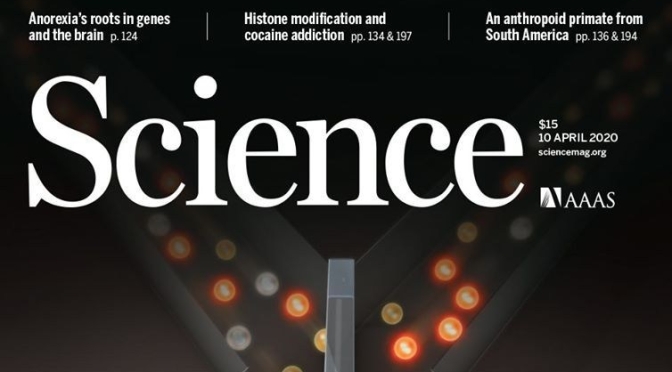
Also this week, Staff Writer Jennifer Couzin-Frankel joins Sarah to talk about a burgeoning understanding of the biological roots of anorexia nervosa—an eating disorder that affects about 1% of people in the United States. From genetic links to brain scans, scientists are finding a lot more biology behind what was once thought of as a culturally driven disorder.
Neil deGrasse Tyson details how and why Bees communicate through math and coordinates.
 This week, a new enzyme speeds up the breakdown of plastic bottles, and a method to cool molecules to a fraction above absolute zero.
In this episode:
01:18 A PET recycling enzyme
Researchers have engineered an enzyme that effectively breaks down the plastic PET into its constituent monomers. This could allow for more complete recycling of bottles and clothes. Research Article: Tournier et al.
06:41 Research Highlights
The shocking lengths humans will go to to satisfy their curiosity, and the reasons for elevated methane emissions at Oktoberfest. Research Highlight: Humans opt to brave electric shock to satisfy their curiosity; Research Highlight: Munich’s Oktoberfest is a real gas
09:15 Supercool molecules
Researchers have used a technique called ‘collision cooling’ to chill molecules to a few millionths of a degree above absolute zero, which could allow observations of difficult-to-study quantum mechanics. Research Article: Son et al.
14:46 Research Highlights
Neither supermassive, nor super small, the mystery of the elusive intermediate sized black-hole has been solved. Research Highlight: Elusive middle-weight black hole is caught shredding a star
 Rupert Beale talks again to Thomas Jones about his work at the Francis Crick Institute, where he’s helping to set up a testing lab for Covid-19.
He talks about the challenges of creating a scalable process, explains why a successful antibody test could be hard to achieve, and finds some reasons to be hopeful.
You can find a full transcript of this episode HERE.
 On this week’s show, Contributing Correspondent Kai Kupferschmidt talks with host Sarah Crespi about modeling coronavirus spread and the role of forecasts in national lockdowns and other pandemic policies. They also talk about the launch of a global trial of promising treatments.
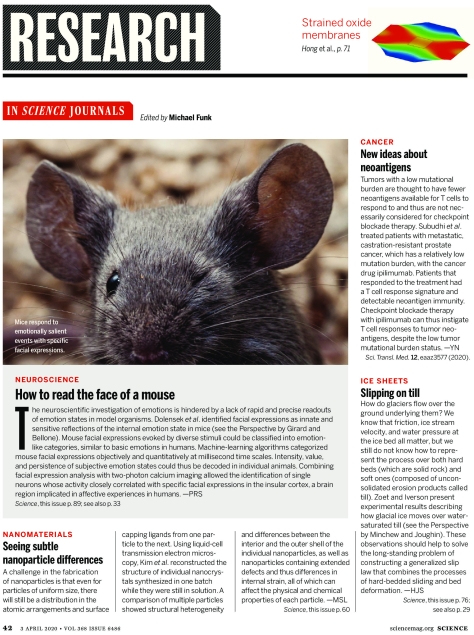
Also this week, Nadine Gogolla, research group leader at the Max Planck Institute of Neurobiology, talks with Sarah about linking the facial expressions of mice to their emotional states using machine learning.
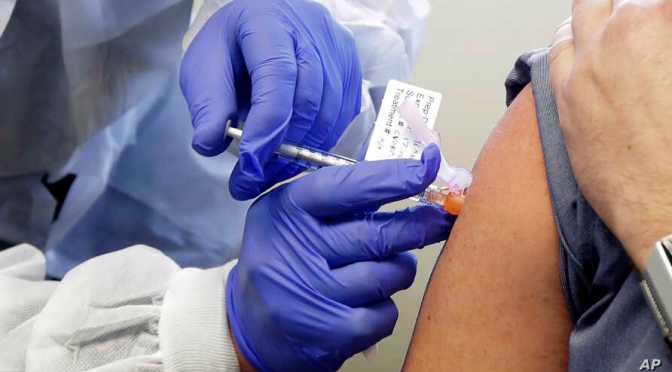
 Scientists around the world are racing to develop a vaccine for COVID-19. But experts have said it could take a year to 18 months for one to hit the market. The process for testing and approving a vaccine is long and complicated.
That can be frustrating when the coronavirus is taking more and more lives every day. But cutting corners to push a vaccine through faster can lead to devastating consequences. We know that, because it’s happened before.
This week, reassessing the age of the ‘Broken Hill skull’, and unearthing evidence of an ancient forest near the South Pole.In this episode:
01:25 A skull’s place in history
After nearly a century scientists believe they’ve finally pinned down an age for the ‘Broken Hill skull’ hominid specimen. Research Article: Grun et al.
07:44 Research Highlights
A simple way to detect early signs of cancer, and 3D printed soft brain implants. Research Highlight: A blood test finds deadly cancers before symptoms start; Research Article: Yuk et al.
09:51 Ancient Antarctic rain forest
Digging deep below the sea-floor, researchers have uncovered evidence of a verdant forest that existed on Antarctica around 90 million years ago. Research Article: Klages et al.
15:47 Research Highlights
Walking more, regardless of the intensity, may improve health. Research Highlight: More steps a day might keep the doctor away
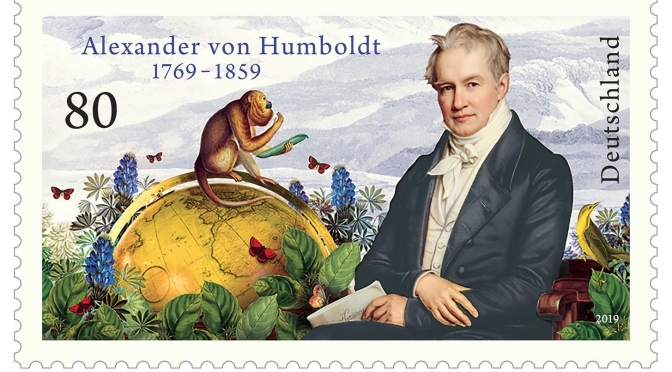
 Alexander von Humboldt might not be a name you know, but you can bet you know his ideas. Back when the United States were a wee collection of colonies huddled on the eastern seaboard, colonists found the wilderness surrounding them scary.
 It took a zealous Prussian explorer with a thing for barometers to show the colonists what they couldn’t see: a global ecosystem, and their own place in nature. In this 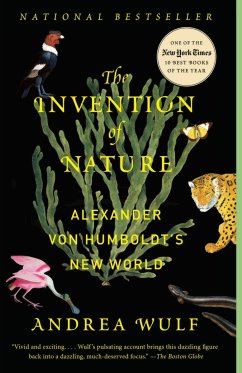 episode, we learn how Humboldt—through science and art—inspired a key part of America’s national identity.
More fascinating Humboldt facts:
If you’re interested in learning more about the life and times of Alexander von Humboldt, I’d recommend reading Andrea Wulf’s book The Invention of Nature: Alexander von Humboldt’s New World.


 Boomers Daily