On this week’s show: Climate change is killing critical soil organisms in arid regions, and early evidence for the Maya calendar from a site in Guatemala.
Staff Writer Elizabeth Pennisi joins host Sarah Crespi to discuss how climate change is affecting “biocrust,” a thin layer of fungi, lichens, and other microbes that sits on top of desert soil, helping retain water and create nutrients for rest of the ecosystem. Recent measurements in Utah suggest the warming climate is causing a decline in the lichen component of biocrust, which is important for adding nitrogen into soils.
Next, Sarah talks with Skidmore College anthropologist Heather Hurst, who directs Guatemala’s San Bartolo-Xultun Regional Archaeological Project, and David Stuart, a professor of art history and director of the Mesoamerica Center at the University of Texas, Austin, about their new Science Advances paper. The study used radiocarbon dating to pin down the age of one of the earliest pieces of the Maya calendar. Found in an archaeological dig in San Bartolo, Guatemala, the character known as “seven deer” (which represents a day in the Maya calendar), was dated to 300 B.C.E. That early appearance challenges what researchers know about the age and origins of the Maya dating system.
This week: Tom Seymour talks to the photographer Edward Burtynsky as he is recognised for his Outstanding Contribution to his medium in the Sony World Photography Awards. He discusses the Russian invasion and his Ukrainian heritage.
In this episode’s Work of the Week, we look at Winslow Homer’s most famous work, The Gulf Stream (1899, reworked by 1906), which is at the heart of a new show at the Metropolitan Museum of Art in New York. Sylvia Yount and Stephanie Herdrich, the curators of the exhibition, discuss the making, reception and legacy of the painting. And we talk to Lisa Movius about the decision by the Nord regional government in France to suspend plans for the exhibition Matisse by Matisse—a collaboration between Musée Matisse le Cateau-Cambrésis and the private Beijing museum UCCA—over China’s supposedly neutral position on Russia’s invasion. Will other Western authorities or arts organisations follow suit?
Sony World Photography Awards Exhibition 2022, Somerset House, London, until 2 May. Edward Burtynsky’s multimedia project In the Wake of Progress is at the Luminato Festival, Toronto, 11-12 June.
Winslow Homer: Crosscurrents, Metropolitan Museum of Art, New York, until 31 July. Winslow Homer: Force of Nature, National Gallery, London, 10 September-8 January 2023.
A new study used a light-based tomographic #3Dprinting approach to synthesize fine glass parts. The method should be flexible enough to provide a variety of high-quality glass parts for various applications.
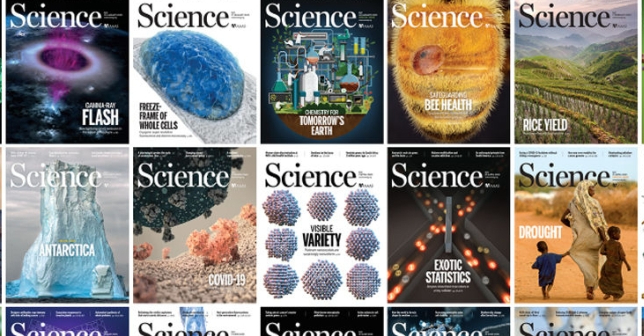
COVER – A glass structure about 4.5 mm tall with features as small as 0.25 mm is 3D printed with microscale computed axial lithography followed by high-temperature sintering. The process enables the synthesis of highly transparent and inert glass parts with fine details, which are useful for a variety of applications.
For biologists, a long-standing question has been why some animals live longer than others. This week a team have attempted to answer this, by measuring the rates that different animal species accumulate mutations. They show that longer-lived animals acquire mutations at a slower rate, which helps to explain why cancer risk does not scale with lifespan.
07:56 Research Highlights
A clinical trial suggests a change to the treatment of a pregnancy ailment, and astronomers identify the largest known structure produced by a single galaxy.
10:43 The war in Ukraine’s effects on global energy
Many European countries are dependent on Russian fossil fuels for energy production. Following Russia’s unprovoked invasion of Ukraine, these countries are looking to wean themselves off these fuels, which could have short- and long-term impacts on emissions and food production.
19:58 A new measurement of a particle’s mass hints at new physics
Last week, a new estimate of the W boson’s mass caused much excitement among physicists. The result suggests that this particle is heavier than theory predicts, a finding that could be the first major breach in the standard model of particle physics. However, measuring W bosons is notoriously tricky, and further work will be needed to confirm the finding.
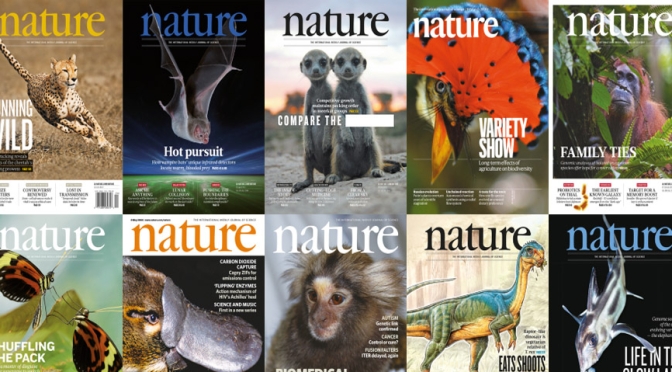
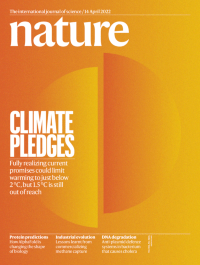
In Nature this week: Climate pledges – fully realizing current promises could limit warming to just below 2 °C , but 1.5 °C is still out of reach. Browse the full issue here: https://t.co/eEMf9XL8lBpic.twitter.com/GuaC5pdolG
We have made our 21 April issue free to download as a PDF – if you like what you read, be sure to take advantage of our subscription offer and get 12 issues for just £12!
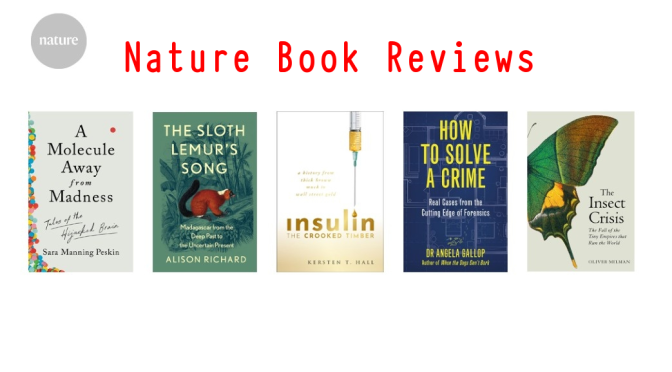
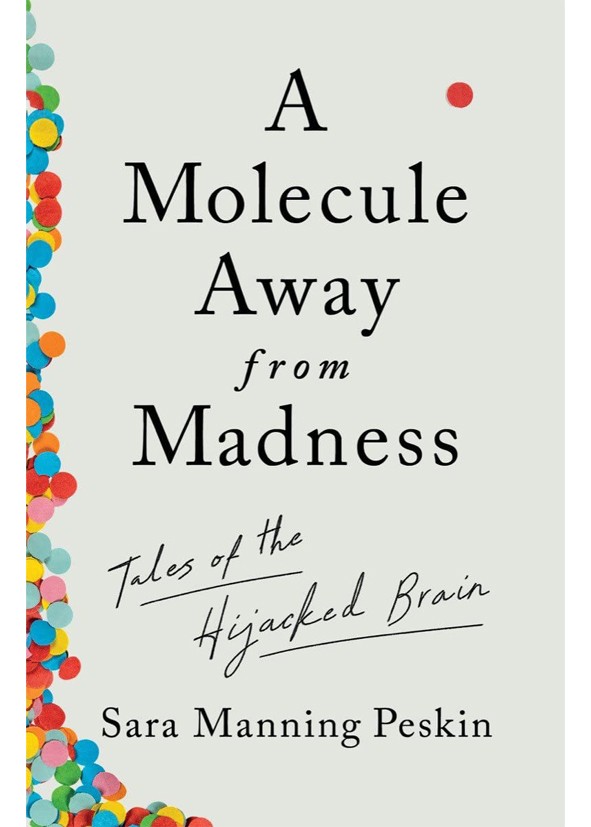
Even before COVID-19 increased the risks of cognitive impairments, it had been estimated that 152.8 million people globally would be living with dementia by 2050. Yet treatment for Alzheimer’s disease has hardly improved since it was discovered in 1901, notes neurologist and dementia specialist Sara Manning Peskin. Now, most clinical trials tackling dementia are “deeply rooted in molecular data”. Peskin’s powerful study — immersed in her patients’ stories — analyses neurology’s attempt to reach oncology’s molecular understanding.
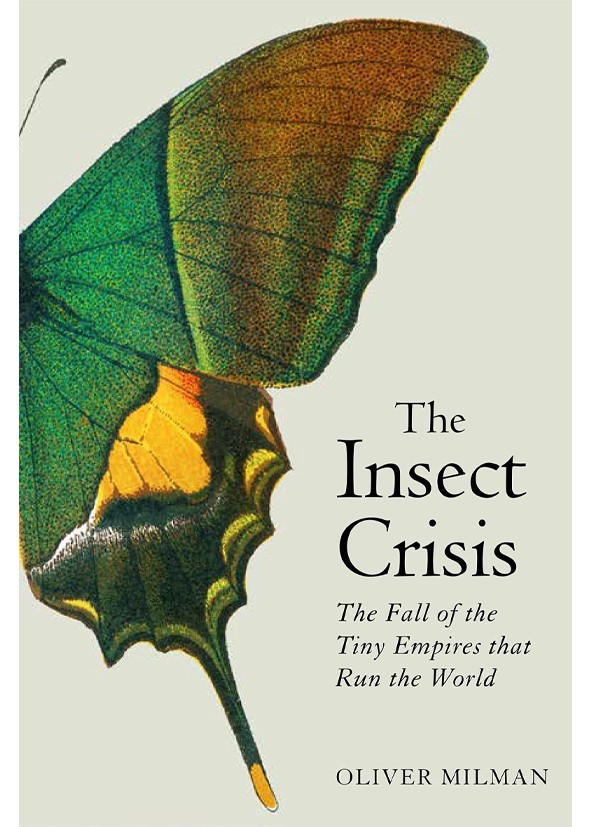
The Insect Crisis
Oliver Milman Atlantic (2022)
Insect decline is obvious — but hard to quantify. Environmental journalist Oliver Milman suggests a drop of more than 90% in some places, in his vivid alarm call. The causes are unclear, but include habitat destruction by intensive farming, pesticide use and climate change. Insects’ “intricate dance” with Earth’s environment makes them crucial to human food supplies. We should learn to eat them, not meat, suggests Milman: that will help to save them by freeing farmland from crops needed to feed livestock.
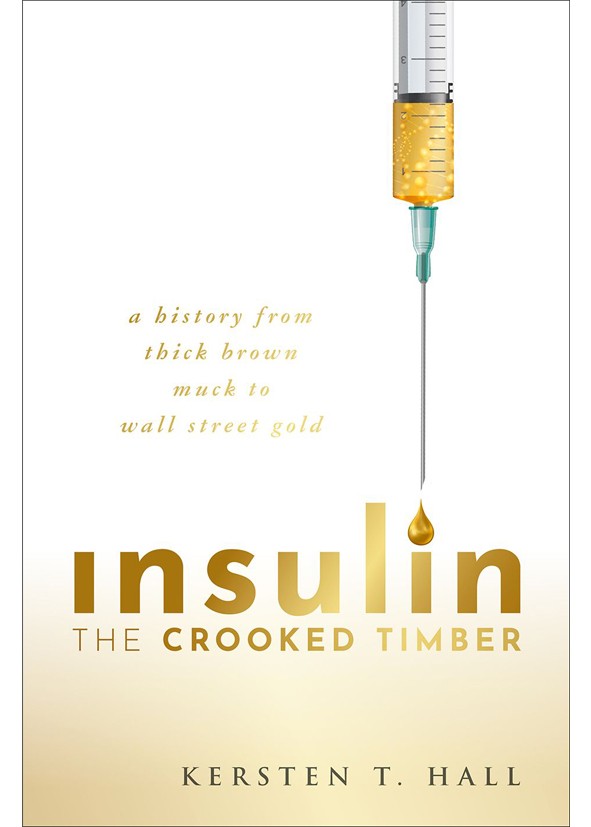
Insulin — The Crooked Timber
Kersten T. Hall Oxford Univ. Press (2022)
Insulin was first used to treat human diabetes 100 years ago, after it was isolated by two medical scientists in 1921. Historian of science Kersten Hall describes this transformative event, together with insulin’s development as the first drug produced by genetic engineering and its lucrative exploitation — using a blend of profound research, lively writing and personal knowledge of diabetes. He argues that the history is a tale not of geniuses or saints, but rather one of “monstrous egos, toxic insecurities and bitter career rivalry”.
How to Solve a Crime
Angela Gallop Hodder & Stoughton (2022)
More than a century ago, criminologist Edmond Locard established forensic science on the principle that “every contact leaves a trace”. The field’s current sophistication and contribution to justice would be beyond his “wildest imaginings”, writes forensic scientist Angela Gallop. She tells gripping stories from her own and others’ experience, beginning with thirteenth-century Chinese investigator Sung Tz’u. He identified a farmer’s killer by asking fellow villagers to put their sickles on the ground; flies alighted on one blade bearing traces of blood.
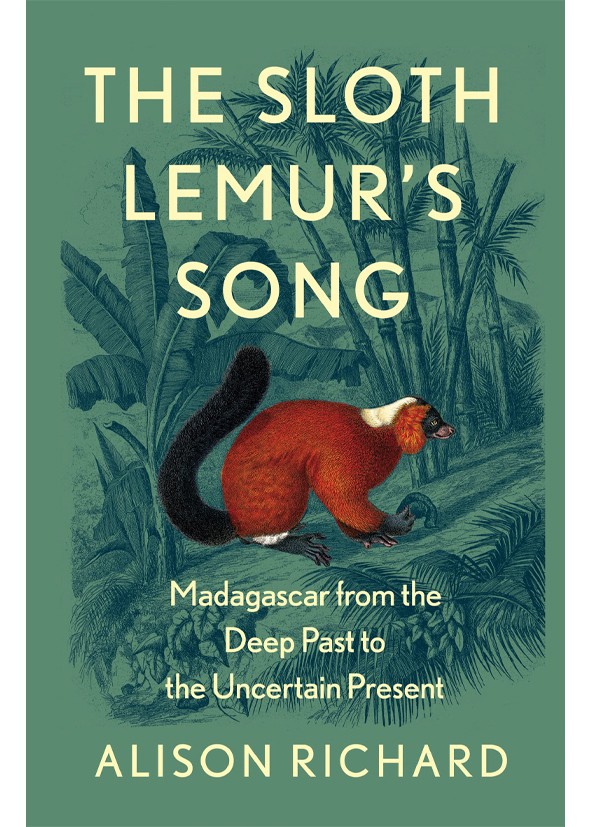
The Sloth Lemur’s Song
Alison Richard William Collins (2022)
Anthropologist and conservationist Alison Richard has been absorbed by Madagascar for half a century. She writes that the country’s “animals and plants offer a wonderful array of rabbit holes down which a person fascinated by the natural world could disappear for a lifetime”. Why, for example, does its largest lemur sing spellbindingly across the treetops with its mate for many minutes? And what environmental conditions created the island’s unique — now disastrously threatened —






 Boomers Daily