Category Archives: Neuroscience

2023: Top Discoveries In Biology & Neuroscience

Quanta Magazine (December 21, 2023): 2023’s Biggest Breakthroughs in Biology and Neuroscience.

Video timeline: 00:05 The Investigation of Consciousness – Our minds are constantly taking in new external information while also creating their own internal imagery and narratives. How do we distinguish reality from fantasy? This year, researchers discovered that the brain has a “reality threshold” against which it constantly evaluates processed signals. Original paper: “Subjective signal strength distinguishes reality from imagination”

04:30 Microbiomes Evolve With Us – This year, scientists provided clear evidence that the organisms in our microbiome —the collection of bacteria and other cells that live in our guts and elsewhere on our body — spread between people, especially those with whom we spend the most time. This raises the intriguing possibility that some illnesses that aren’t usually considered communicable might be.

08:43 How Life Keeps Time – The rate at which an embryo develops and the timing of when its tissues mature vary dramatically between species. What controls the ticking of this developmental clock that determines an animal’s final form? This year, a series of careful experiments suggest that mitochondria may very well serve dual roles as both the timekeeper and power source for complex cells.

Documentary: ‘Your Brain – Who’s In Control’ (NOVA)

NOVA PBS Official (May 31, 2023) – Are you in control, or is your brain controlling you? Dive into the latest research on the subconscious with neuroscientist Heather Berlin. Sleepwalking, anesthesia, game theory, and more reveal surprising insights in this eye-opening journey to discover what’s really driving the decisions you make.

Chapters: 00:00 Introduction 03:22 Sleepwalking and the Brain 08:36 Anesthesia and the Brain 14:18 Results of Split Brain Surgery 22:23 Emotions and the Brain 30:01 How Does Trauma Affect the Brain? 35:39 How Much Control Do We Have of Our Brain? 45:44 Creativity and the Brain 50:17 Conclusion

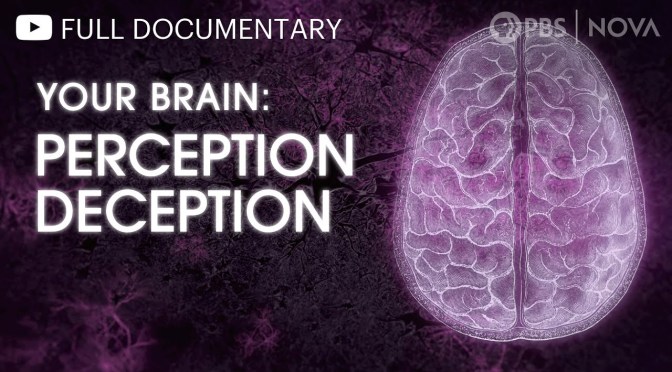
Documentary: ‘Your Brain – Perception Deception’

NOVA PBS Official (May 17, 2023) – Neuroscientists discover the tricks and shortcuts the brain takes to help us survive. Is what you see real?

Chapters: 00:00 Introduction 03:59 The Science of Optical Illusions and Blind Spots 13:48 Is the Dress Blue and Black or White and Gold? 21:06 Yanny or Laurel? Auditory Illusions 24:46 Is Pain an Illusion? 30:28 What is Consciousness? Blind Spots and Babies 41:35 How is Consciousness Measured? 45:32 How the Brain Affects Memories 50:14 Conclusion

Join neuroscientist Heather Berlin on a quest to understand how your brain shapes your reality, and why you can’t always trust what you perceive. In the first hour of this two-part series, learn what the latest research shows about how your brain processes and shapes the world around you, and discover the surprising tricks and shortcuts your brain takes to help you survive.

Official Website: https://to.pbs.org/3Ic9dRS | #novapbs

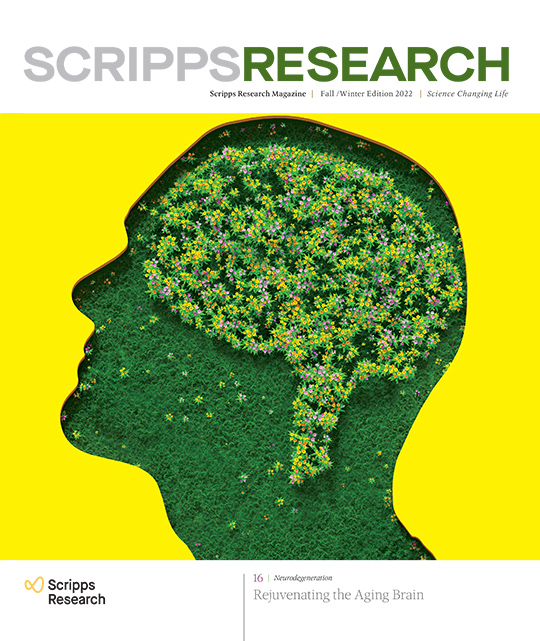
Fall 2022: ‘Rejuvenating The Aging Brain’ – Scripps Research Magazine Cover

REJUVENATING THE AGING BRAIN

As humans live longer, they’re at increased risk of developing devastating NEURODEGENERATIVE diseases, such as Alzheimer’s—in a treatment landscape with few options and little hope. At Scripps Research, scientists are closer than ever to understanding how these diseases harm the brain and identifying possible drugs to stop them.

“This early preclinical work may identify proteins that protect against cognitive loss. We know it’s a long path to get to a drug, but we’re creating the foundation. We know there’s an entire landscape of potential molecular interactions that maintain healthy synapses, and any of these proteins could be a drug target.”— Hollis Cline, PhD

Website

Depression: How Ketamine Can Help (Yale Medicine)

Depression is one of the most common and most debilitating mental health disorders, affecting some 17 million adults in the US. It also continues to be a misunderstood, often hard-to-treat illness. Researchers have worked for decades to better understand the neurobiology underpinning depression.

For patients with severe, treatment-resistant depression, spending months or even years searching for good treatments can be totally disabling. The prevailing hypothesis for years was that depression was regulated by the neurotransmitter’s serotonin and norepinephrine.

Eventually, data began to suggest that maybe something much larger and more global was involved in the brain to account for depression, which led researchers to begin working with glutamate and GABA, the most abundant neurotransmitters in the brain. These chemicals are involved in neuroplasticity – the brain’s ability to adapt to change and protect itself against stressful events.

Neuroplasticity is a physical thing, too: it manifests itself “in terms of synapses, how these neurons are actually touching each other and communicating with each other,” explains Gerard Sanacora, PhD, MD, Director of the Yale Depression Research Program. “And we know that in depression, the number and strength of these interconnections decreases,” says Rachel Katz, MD, a professor of Clinical Psychiatry at Yale.

Ketamine – originally developed and still used as an anesthetic – works on those two neurotransmitters and was discovered to have rapid antidepressant effects. Some experience an improvement in symptoms in 24 hours or less. “We think that one of the things that Ketamine does, that helps to explain its antidepressant effects, is help the brain to regrow the synapses, the connections between nerve cells,” says John Krystal, MD, Chair of the Department of Psychiatry at Yale.

Read more

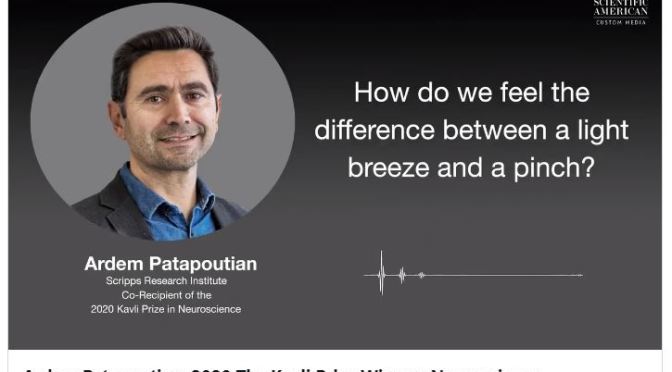
Neuroscience: Ardem Patapoutian On Human Sense Of Touch (Podcast)

Health: How Depression Affects The Brain (Yale)

For many people, depression turns out to be one of the most disabling illnesses that we have in society. Despite the treatments that we have available, many people are not responding that well. It’s a disorder that can be very disabling in society. It’s also a disorder that has medical consequences. By understand the neurobiology of depression we hope to be able more to find the right treatment for the patient suffering from this disease. The current standard of care for the treatment of depression is based on what we call the monoamine deficiency hypothesis. Essentially, presuming that one of three neurotransmitters in the brain is deficient or underactive. But the reality is, there are more than 100 neurotransmitters in the brain. And billions of connections between neurons. So we know that that’s a limited hypothesis. Neurotransmitters can be thought of as the chemical messengers within the brain, it’s what helps one cell in the brain communicate with another, to pass that message along from one brain region to another. For decades, we thought that the primary pathology, the primary cause of depression was some abnormality in these neurotransmitters, specifically serotonin or norepinephrine. However, norepinephrine and serotonin did not seem to be able to account for this cause, or to cause the symptoms of depression in people who had major depression. Instead, the chemical messengers between the nerve cells in the higher centers of the brain, which include glutamate and GABA, were possibilities as alternative causes for the symptoms of depression. When you’re exposed to severe and chronic stress like people experience when they have depression, you lose some of the connections between the nerve cells. The communication in these circuits becomes inefficient and noisy, we think that the loss of these synaptic connections contributes to the biology of depression. There are clear differences between a healthy brain and a depressed brain. And the exciting thing is, when you treat that depression effectively, the brain goes back to looking like a healthy brain, both at the cellular level and at a global scale. It’s critical to understand the neurobiology of depression and how the brain plays a role in that for two main reasons. One, it helps us understand how the disease develops and progresses, and we can start to target treatments based on that. We are in a new era of psychiatry. This is a paradigm shift, away from a model of monoaminergic deficiency to a fuller understanding of the brain as a complex neurochemical organ. All of the research is driven by the imperative to alleviate human suffering. Depression is one of the most substantial contributors to human suffering. The opportunity to make even a tiny dent in that is an incredible opportunity.SHOW LESS

Book Reviews: ‘The Self-Assembling Brain’ – The Future Benefits For AI

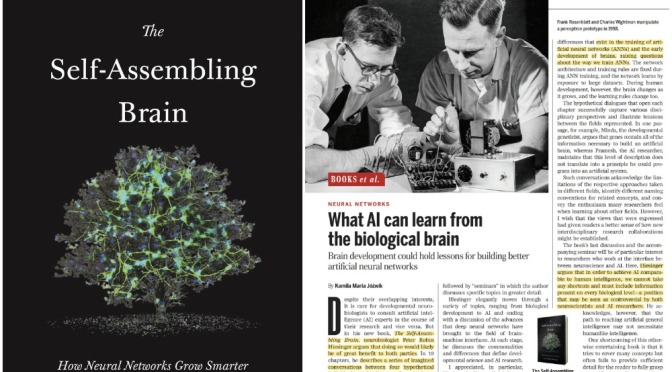
As Peter Robin Hiesinger argues, “the information problem” underlies both fields, motivating the questions driving forward the frontiers of research. How does genetic information unfold during the years-long process of human brain development―and is there a quicker path to creating human-level artificial intelligence? Is the biological brain just messy hardware, which scientists can improve upon by running learning algorithms on computers? Can AI bypass the evolutionary programming of “grown” networks? Through a series of fictional discussions between researchers across disciplines, complemented by in-depth seminars, Hiesinger explores these tightly linked questions, highlighting the challenges facing scientists, their different disciplinary perspectives and approaches, as well as the common ground shared by those interested in the development of biological brains and AI systems. In the end, Hiesinger contends that the information content of biological and artificial neural networks must unfold in an algorithmic process requiring time and energy. There is no genome and no blueprint that depicts the final product. The self-assembling brain knows no shortcuts.

Read book review here

Brain Research: 40% Of Dementia Cases Prevented With Lifestyle Changes

Dementia Risk Reduced by Lifestyle factors - USC Keck Medicine Infographic

“We are learning that tactics to avoid dementia begin early and continue throughout life, so it’s never too early or too late to take action,” says commission member and AAIC presenter Lon Schneider, MD, co-director of the USC Alzheimer Disease Research Center‘s clinical core and professor of psychiatry and the behavioral sciences and neurology at the Keck School of Medicine of USC.

LOS ANGELES — Modifying 12 risk factors over a lifetime could delay or prevent 40% of dementia cases, according to an updated report by the Lancet Commission on dementia prevention, intervention and care presented at the Alzheimer’s Association International Conference (AAIC 2020).

Twenty-eight world-leading dementia experts added three new risk factors in the new report — excessive alcohol intake and head injury in mid-life and air pollution in later life. These are in addition to nine factors previously identified by the commission in 2017: less education early in life; mid-life hearing loss, hypertension and obesity; and smoking, depression, social isolation, physical inactivity and diabetes later in life (65 and up).

Schneider and commission members recommend that policymakers and individuals adopt the following interventions:

  • Aim to maintain systolic blood pressure of 130 mm Hg or less from the age of 40.
  • Encourage use of hearing aids for hearing loss and reduce hearing loss by protecting ears from high noise levels.
  • Reduce exposure to air pollution and second-hand tobacco smoke.
  • Prevent head injury (particularly by targeting high-risk occupations).
  • Limit alcohol intake to no more than 21 units per week (one unit of alcohol equals 10 ml or 8 g pure alcohol).
  • Stop smoking and support others to stop smoking.
  • Provide all children with primary and secondary education.
  • Lead an active life into mid-life and possibly later life.
  • Reduce obesity and the linked condition of diabetes.

Website

Neuroscience: High-Sugar Diets Suppress Dopamine, Leading To Overeating

From Phys.org/Univ. of Michigan (June 9, 2020):

High-Sugar Diet Dampens Release of Dopamine Causing Overeating - Univ of Michigan - Credit Christina May and Monica Dus“On a high-sugar diet, we find that the fruit flies’ dopaminergic neurons are less active, because the high sugar intake decreases the intensity of the sweetness signal that comes from the mouth,” Dus said. “Animals use this feedback from dopamine to make predictions about how rewarding or filling a food will be. In the high-sugar diet flies, this process is broken—they get less dopamine neuron activation and so end up eating more than they need, which over time makes them gain weight.”

It is well known that consuming food and drink high in sugar is not great for us, but scientists are continuing to unravel the intricacies of how the sweet stuff drives negative health outcomes. The latest finding comes from researchers at the University of Michigan, who through studies in fruit flies have found that excess amounts of sugar can shut down crucial neural circuits linked to regulating satiety, possibly leading to overeating in humans.

Read entire article