
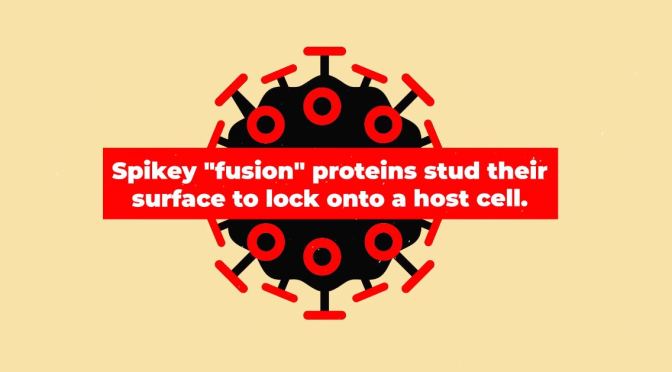
It’s one of the tiniest machines on the planet — about a hundred times smaller than the average cell. It’s so small that no scientist can spot it through a typical light microscope. Only with an electron microscope can we see its spiky surface. It’s not alive, and it’s not what most of us would think of as “dead.” This teensy machine seems to survive in a kind of purgatory state, yet it has traveled across continents and oceans from host to host, and brought hundreds of nations to a standstill. Despite its diminutive size, the novel coronavirus, dubbed SARS-CoV-2, has seemingly taken the world by surprise with its virulence.






 Chest pain is a common chief complaint. It may be caused by either benign or life-threatening aetiologies and is usually divided into cardiac and non-cardiac causes. James E. Brown, Professor and Chair, Wright State University Boonshoft School of Medicine, Kettering, Ohio, gives us an overview of assessing chest pain in the emergency setting.
 Researchers have run numerous military-style simulations to predict the consequences of fictitious viral outbreaks. We discuss how these simulations work, what recommendations come out of them and if any of these warnings have been heeded.

 Boomers Daily