
Category Archives: Medicine

Retirement: Medicare, Medigap & Part D – Seniors Find Choices “Dizzying”

If you’re enrolled only in original Medicare with a Medigap supplemental plan, and don’t use a drug plan, there’s no need to re-evaluate your coverage, experts say. But Part D drug plans should be reviewed annually. The same applies to Advantage plans, which often wrap in prescription coverage and can make changes to their rosters of in-network health care providers.

“The amount of information that consumers need to grasp is dizzying, and it turns them off from doing a search,” Mr. Riccardi said. “They feel paralyzed about making a choice, and some just don’t think there is a more affordable plan out there for them.”

November 13, 2020

When creation of the prescription drug benefit was being debated, progressive Medicare advocates fought to expand the existing program to include drug coverage, funded by a standard premium, similar to the structure of Part B. The standard Part B premium this year is $144.60; the only exceptions to that are high-income enrollees, who pay special income-related surcharges, and very low-income enrollees, who are eligible for special subsidies to help them meet Medicare costs.

“Given the enormous Medicare population that could be negotiated for, I think most drugs could be offered through a standard Medicare plan,” said Judith A. Stein, executive director of the Center for Medicare Advocacy.

“Instead, we have this very fragmented system that assumes very savvy, active consumers will somehow shop among dozens of plan options to see what drugs are available and at what cost with all the myriad co-pays and cost-sharing options,” she added.

Advocates like Ms. Stein also urged controlling program costs by allowing Medicare to negotiate drug prices with pharmaceutical companies — something the legislation that created Part D forbids.


Read full article in NY Times

Health: ‘Risks & Benefits Of AI Revolution In Medicine’

It has taken time — some say far too long — but medicine stands on the brink of an AI revolution. In a recent article in the New England Journal of Medicine, Isaac Kohane, head of Harvard Medical School’s Department of Biomedical Informatics, and his co-authors say that AI will indeed make it possible to bring all medical knowledge to bear in service of any case.

Properly designed AI also has the potential to make our health care system more efficient and less expensive, ease the paperwork burden that has more and more doctors considering new careers, fill the gaping holes in access to quality care in the world’s poorest places, and, among many other things, serve as an unblinking watchdog on the lookout for the medical errors that kill an estimated 200,000 people and cost $1.9 billion annually.

“I’m convinced that the implementation of AI in medicine will be one of the things that change the way care is delivered going forward,” said David Bates, chief of internal medicine at Harvard-affiliated Brigham and Women’s Hospital, professor of medicine at Harvard Medical School and of health policy and management at the Harvard T.H. Chan School of Public Health. “It’s clear that clinicians don’t make as good decisions as they could. If they had support to make better decisions, they could do a better job.”

Read more

Health & Technology: New MIT AI Model Detects Asymptomatic Covid-19

A team of MIT researchers have developed an AI model that can distinguish asymptomatic people with Covid-19 from healthy individuals without the disease through forced-cough recordings. (Learn more: http://news.mit.edu/2020/covid-19-cou…

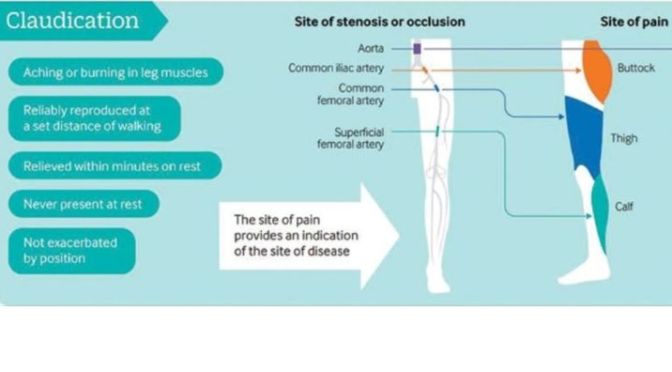
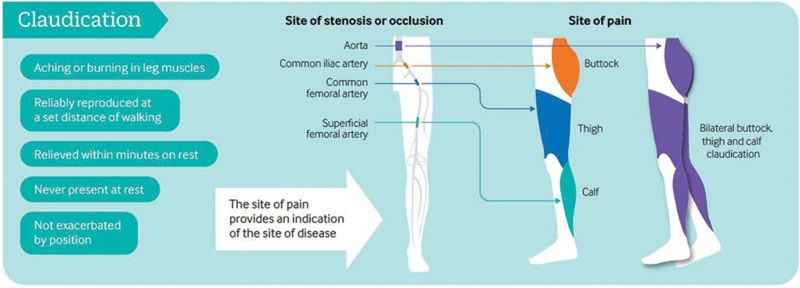
Infographic: Exercise For ‘Claudication’ (BMJ Study)

Exercise training is a safe, effective and low-cost intervention for improving walking ability in patients with IC. Additional benefits may include improvements in QoL, muscle strength and cardiorespiratory fitness. Clinical guidelines advocate supervised exercise training as a primary therapy for IC, with walking as the primary modality.

However, evidence is emerging for the role of various other modes of exercise including cycling and progressive resistance training to supplement walking training. In addition, there is emerging evidence for home-based exercise programmes. Revascularisation or drug treatment options should only be considered in patients if exercise training provides insufficient symptomatic relief.

Abstract

Peripheral artery disease (PAD) is caused by atherosclerotic narrowing of the arteries supplying the lower limbs often resulting in intermittent claudication, evident as pain or cramping while walking. Supervised exercise training elicits clinically meaningful benefits in walking ability and quality of life. Walking is the modality of exercise with the strongest evidence and is recommended in several national and international guidelines. Alternate forms of exercise such as upper- or lower-body cycling may be used, if required by certain patients, although there is less evidence for these types of programmes. The evidence for progressive resistance training is growing and patients can also engage in strength-based training alongside a walking programme. For those unable to attend a supervised class (strongest evidence), home-based or ‘self-facilitated’ exercise programmes are known to improve walking distance when compared to simple advice. All exercise programmes, independent of the mode of delivery, should be progressive and individually prescribed where possible, considering disease severity, comorbidities and initial exercise capacity. All patients should aim to accumulate at least 30 min of aerobic activity, at least three times a week, for at least 3 months, ideally in the form of walking exercise to near-maximal claudication pain.

Read full study

Covid-19 Video: ‘Critical Coronavirus-Busting Therapies Explained’

Health experts say having a vaccine is just one front in a two-front battle against COVID-19. The other is effective treatments for those who are already sick with the disease. WSJ breaks down the three most promising types in development.

Photo Illustration: Jacob Reynolds/WSJ.

Aging Adults: ‘Learning About “End-Of-Life Care” From Grandpa’ (NEJM)

I described another option to Grandpa: he could voluntarily stop eating and drinking. He’d never considered this possibility (which reminded me again how one’s family members and clinicians contribute to inequities in end-of-life care). The option intrigued Grandpa, and during subsequent visits he reinforced his plan to pursue it. I insisted that he first move into my home. I wanted to ensure the quality of his care, knowing that I could enroll him in my health system’s hospice program. But I also wished to test his resolve, reasoning that his mind might change once his isolation ended.

For a month after he entered our home, his spirits were brighter, his gait steadier, and his appetite heartier. He joined my wife, two daughters, and me for dinner each night, typically preceded by a vodka martini that I had stirred for him — a daily pleasure he’d allowed himself for 80 years and had missed as a facility resident. He’d tell stories of the Navy, his career, and his family history and would regularly quip, “If you keep treating me this well, I might just stick around a while longer!”

But eventually he returned to his goal of hastening death. One night, he said he was ready to stop eating and drinking the next morning, but when morning came, he asked for his usual coffee and bagel. He confided that he was scared. When I asked of what, he replied, “It’s like trying to roller skate. I’m scared of starting. Though I know that once I do, I’ll probably roll.”

Read full article

Future Of Hospitals: ‘The New Pavilion At Penn Medicine – 2021’ (Video)

The new Pavilion at Penn Medicine will be one of the most state-of-the-art patient care facilities in the world when it opens in 2021.