



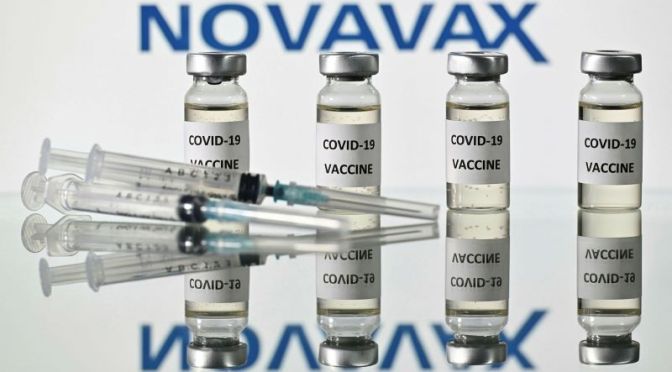
Just two months ago, the incredible performance of new vaccines from Moderna and Pfizer had people cheering for an imminent end to the pandemic. But an onslaught of fast-spreading and potentially dangerous mutations of the virus changed that.
So now, even as pharma companies ramp up production in the early stages of a massive rollout, they are racing to retool their vaccine strategies. Robert Langreth reports that booster shots could give drugmakers a lucrative new revenue stream.
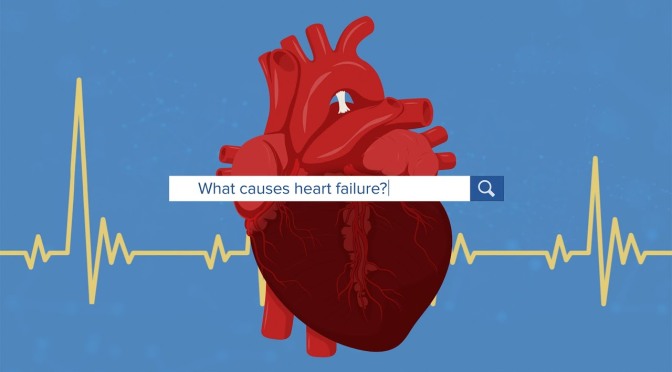
The heart is a hero. It works relentlessly to deliver oxygen and nutrients to the body. But just like all heroes, sometimes it gets tired, and can’t do its job as well. This is called heart failure – the inability for the heart to pump enough blood and oxygen to the lungs and rest of the body. In this video, Northwestern Medicine cardiologists Clyde W. Yancy, MD, MSc and Jane E. Wilcox, MD, MSc explain what heart failure is and the integrated and collaborative approach used to diagnose, stage and treat heart failure at Northwestern Medicine. For more information, visit http://heart.nm.org
The U.S. coronavirus rollout has been anything but smooth. States are reporting limited supply of vaccines, leading them to delay appointments and close clinics to the public. Some states lack staff and essential resources to get the job done. With little guidance from the previous White House administration on how to effectively administer vaccines, it’s up to states and local health officials to get the job done. President Joe Biden announced the administration will buy 200 million more vaccines and institute a national vaccine program to vaccinate 100 million doses in his first 100 days. But can it be done? Here’s what went wrong with the U.S. coronavirus vaccine rollout and how a new White House plans to turn things around.
Researchers are scrambling to understand the biology of new coronavirus variants and the impact they might have on vaccine efficacy.
Around the world, concern is growing about the impact that new, faster-spreading variants of the SARS-CoV-2 virus will have on the pandemic.
In this episode of Coronapod, we discuss what these variants are, and the best way to respond to them, in the face of increasing evidence that some can evade the immunity produced by vaccination or previous infection.
News: ‘A bloody mess’: Confusion reigns over naming of new COVID variants
News: Fast-spreading COVID variant can elude immune responses
News: Could new COVID variants undermine vaccines? Labs scramble to find out
News: How to redesign COVID vaccines so they protect against variants
News: J&J’s one-shot COVID vaccine offers hope for faster protection
The heart is a muscle and it’s main job is to pump blood but certain things can cause that muscle to fail. There are genetic reasons, there are reasons related to valve disease, and there’s a viral infection that affects the heart called myocarditis.
The most common cause of heart failure is a heart attack. Fatty plaque builds up in the blood vessel that supplies the heart itself and unless that blood vessel is opened up immediately that muscle will die. The rest of the muscle that’s not dead anymore has to do extra to keep on pumping the blood and overtime it cannot keep and that’s when heart failure develops.
Factual and reliable information is vital to creating trust in vaccines and to overcoming the pandemic. Ed Carr, The Economist’s deputy editor, and Natasha Loder, our health policy editor, answer some of the big questions about the global vaccination drive.
Chapters 00:00 – Challenges in vaccinating the world 00:45 – Trust in vaccines 02:30 – mRNA vaccines 03:23 – Impact of variants on vaccination 04:29 – Time between vaccine doses 06:09 – Mandatory vaccines for travel?
As the rollout of #Covid-19 vaccinations gathers pace, the mammoth task of inoculating billions of people across the globe has seen a number of unusual sites and buildings converted into #vaccination centres, from Disneyland in California, to an ancient UK cathedral and a bus converted into a mobile vaccination unit.
Antimicrobial resistance is one of the greatest medical challenges of our time. Among the causes are industrial livestock farming, poor hygiene in hospitals, and the misuse of antibiotics. This documentary looks at approaches to fighting multiresistant strains of bacteria.
Each year 33,000 people in Europe die after becoming infected with bacteria that are resistant to antibiotics. Hygiene specialist Dr. Ron Hendrix has been working for years to prevent outbreaks of infectious disease in hospitals. Dr. Hendrix says that he and other experts in the Netherlands recognized early on that they’d have to fight the spread of bacteria just as actively as they would the actual infection.
Hendrix has convinced a number of German hospitals to re-open their diagnostic laboratories, as well. In the early 2000s, many of these labs had been shut down as a cost-cutting measure. And farmers in Denmark voluntarily chose to sharply reduce their use of antibiotics, after evidence showed that intensive livestock farming caused multiresistant bacteria to multiply.
Infectious disease specialist Dr. Patrick Soentjens was able to convince Belgium’s health ministry to allow the use of “phages” to treat stubborn antimicrobial resistant pathogens. Phages are special viruses that kill bacteria. Dr. Soentjens is certain that this well-known, but largely forgotten option could save many lives. Belgium has become the first western European country where phages have been officially recognized as a legitimate medical treatment.







 Boomers Daily