
From Classic Driver Magazine (April 18, 2020):
“Astonishing” is the word we are looking to describe this BMW 507. A word we use a lot if it comes to selling classic cars, but only a little few deserve this ‘title’ like this 507 does. When an exceptional model, with an unique story, from what the historical documents are well archieved, it just makes us going crazy. Add matching numbers and -colors tot his list and we are losing it totally. That’s no different with this 507.
Max Hoffman convinced BMW that if they built a competitor to the Mercedes-Benz 300SL, he would sell it profitable in the United States. The BMW was intended to fill the gap between the affordable sports cars like the triumph and MG and the exclusive cars like the Mercedes-Benz 300SL and Ferrari 250 GT California. Though, BMW couldn’t achieve their target price, for what the BMW 507 was even more expensive than the 300SL. BMW found itself in a financial difficult situation and almost went bankrupt. At the end of the day, BMW recovered from this “failure” and the 507 even became a true flagship in the whole history of automotive.
In the ‘50s BMW disposed over all fundamental ingredients which would make the 507 complete. An all-aluminium 3.2-litre V8 engine was placed in a shortened chassis of the 502. This ingenious masterpiece produced no less than 150hp and sounds like a guitar solo in your ears. To save weigt, the body was made of aluminium, which results in a 1280kg’s for a fully finished 507. Besides the phenomenal results, BMW wanted to offer luxury as well. Both aspects are just spot on.
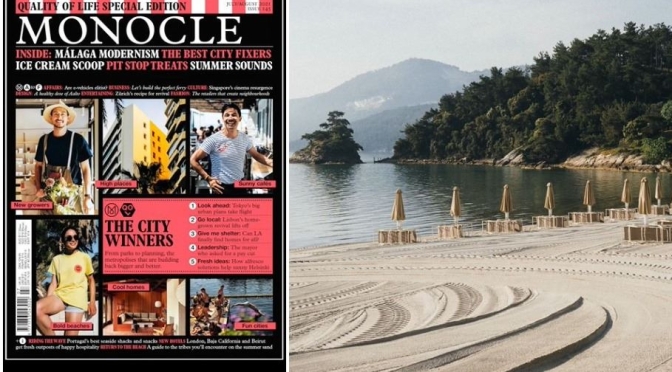
Monocle’s home-focused May issue goes beyond the dramatic headlines to look at how to create spaces that are apt to linger in.
We launch a manifesto for building better, look at the firms eyeing up the domestic market and profile a few elegant residences. Elsewhere, we examine the importance of keeping manufacturing onshore, decode the US political advertising industry and recommend the best media to hunker down with.
Monocle 24’s “The Stack” chats with Randy Kennedy, editor of ‘Ursula’, the beautiful print quarterly from Hauser & Wirth.‘Ursula’ is the quarterly art magazine featuring essays, profiles, interviews, original portfolios, and photography by some of the most thought-provoking writers and artists in the world, as reported by Artnet. ‘Ursula’ takes its name from the internationally admired co-founder of the gallery: patron, collector, mentor, and art world mater familias Ursula Hauser. Reflecting the inclusive values and broad perspective of the gallery she helped to establish in Zurich in 1992, ‘Ursula’ will showcase not only the work of artists and estates represented by Hauser & Wirth, but also a wide, adventurous swath of the international art world of the 20th and 21st centuries.

MAD Magazine and DC Comics mourn the loss of Mort Drucker, whose artwork proved that parody is the sincerest form of flattery. “Mort was one of the best—maybe the best—caricature artists in the world,” said DC Chief Creative Officer and Publisher Jim Lee. “His work will continue to entertain for generations.”
Mort entered the comics field when he was 18, working as a production artist for DC. His first original piece of art was a one-pager titled “Tinker Tom Shows You How to Make Fancy Western Duds,” published in All-American Western #117 in December 1950. In 1956, Mort met with MAD publisher Bill Gaines during a Dodgers vs. Yankees World Series game. “If the Dodgers win, you’re hired,” said Gaines. They did win, and Mort began a career at MAD that would span the next five decades, and most notably brought to life the magazine’s infamous parodies of TV shows and films.
Mort won numerous awards and honors for his work, including the Reuben Award for Outstanding Cartoonist of the Year in 1987. He was inducted into the Will Eisner Hall of Fame in 2011, and in 2015 became the inaugural recipient of the National Cartoonists Society’s Medal of Honor. He received an honorary Doctorate in Fine Arts from the Art Institute of Boston, and his TIME Magazine covers hang in the National Portrait Gallery.


In this special Covid-19 edition of The Florentine, rejoice in a renewed humanism from Florence, of learning, words, thoughts and creativity, with articles, poems and short stories penned by the city’s international community, plus ideas and considerations for the future from Tuscany’s leaders and institutional figures, all interspersed with iconic photography of Florence at its most restful.