
‘Editor’s Picks’ Podcast (March 25, 2024): A selection of three essential articles read aloud from the latest issue of The Economist. This week, as the death toll climbs in Israel’s war on Gaza, we argue that the country looks deeply vulnerable. Plus, we consider Britain as an unexpected beacon of immigration. And finally, as Elon Musk’s Starship reaches space, we examine SpaceX’s approach to rocket development.
Category Archives: Economics
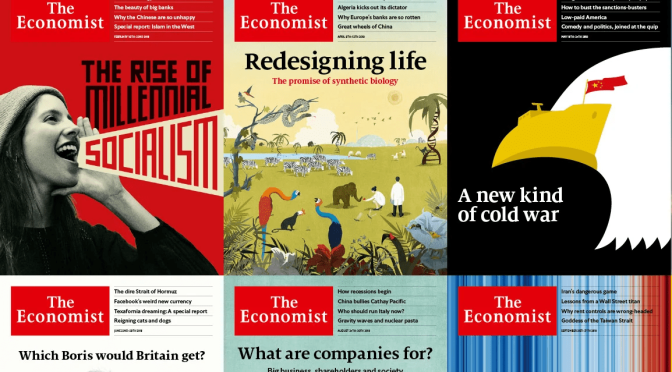
The Economist Magazine – March 23, 2024 Preview


At a moment of military might, Israel looks deeply vulnerable

America should help it find a better strategy
There is still a narrow path out of the hellscape of Gaza. A temporary ceasefire and hostage release could cause a change of Israel’s government; the rump of Hamas fighters in south Gaza could be contained or fade away; and from the rubble, talks on a two-state solution could begin, underwritten by America and its Gulf allies. It is just as likely, however, that ceasefire talks will fail. That could leave Israel locked in the bleakest trajectory of its 75-year existence, featuring endless occupation, hard-right politics and isolation. Today many Israelis are in denial about this, but a political reckoning will come eventually. It will determine not only the fate of Palestinians, but also whether Israel thrives in the next 75 years.
How to trade an election
It is becoming harder for investors to ignore politics

Investors differ in their approach to elections. Some see politics as an edge to exploit; others as noise to block out. Even for those without a financial interest, markets offer a brutally frank perspective on the economic stakes. As elections approach in America and Britain, as well as plenty of other countries, that is especially valuable.
The Economist Magazine – March 9, 2024 Preview

And they’re off. What could upend America’s election?
- Folly and the Ivies – America’s elite universities are bloated, complacent and illiberal
- The Oscars go global – Hollywood’s growing love of foreign films says a lot about the insular industry
- Slimming drugs, fat profits – Novo Nordisk and Eli Lilly are making blockbuster drugs. Can they maintain their lead?
- China’s fantasy growth plan – China’s parliament is being used to highlight Xi Jinping’s power
The Economist Magazine – March 2, 2024 Preview

How high can markets go?
- How high can markets go? – Stocks are booming. But their golden age is drawing to a close
- Le Pen prepares for power – France’s National Rally has its eyes not on protest but on the presidency
- India’s north-south divide – India could be ruined by its political and economic divisions
- A plan for Russia’s frozen assets – Exploit them to the full, but legally
The Economist Magazine – February 24, 2024 Preview

Is Europe ready to defend itself?
Russian aggression and American wavering reveal just how ill-equipped the continent is
Russia is becoming more dangerous, America is less reliable and Europe remains unprepared. The problem is simply put, but the scale of its solution is hard to comprehend. The security arrangements based on nato that emerged from the second world war—and have prevented a third—are so much part of Europe’s fabric that remaking them will be an immense task. European leaders urgently need to jettison their post-Soviet complacency. That means raising defence spending to a level not seen in decades, restoring Europe’s neglected military traditions, restructuring its arms industries and preparing for a possible war. The work has barely begun.
A memo to the chancellor
Pre-budget thoughts for Jeremy Hunt from a fictitious Treasury adviser
The Trump trials explained
The flimsiest of the cases is set to go first, and all face delays
Why sanctions disappoint
There is no substitute for military aid to Ukraine
Middle ages, misunderstood
There was more to the period than violence, superstition and ignorance, argues a new book
The growing peril of national conservatism
It’s dangerous and it’s spreading. Liberals need to find a way to stop it
Europe must hurry to defend itself against Russia—and Donald Trump
The ex-president’s invitation to Vladimir Putin to attack American allies is an assault on NATO. Ultimately, that is bad for America
The Economist Magazine – February 17, 2024 Preview

The growing peril of national conservatism
It’s dangerous and it’s spreading. Liberals need to find a way to stop it
Europe must hurry to defend itself against Russia—and Donald Trump
The ex-president’s invitation to Vladimir Putin to attack American allies is an assault on NATO. Ultimately, that is bad for America
The Economist Magazine – February 10, 2024 Preview

Killer drones pioneered in Ukraine are the weapons of the future

They are reshaping the balance between humans and technology in war
Can Xi Jinping win back the markets?

Investors at home and abroad no longer trust China’s policymakers
The arsenal of hypocrisy
House Republicans are helping Vladimir Putin

Their cynicism over Ukraine weakens America and makes the world less safe
The Economist Magazine – February 3, 2024 Preview

The end of the social network
As Facebook turns 20, politics is out; impersonal video feeds are in
Britain’s armed forces: losing muscle
Britain’s armed forces are stretched perilously thin
Bidenomics in a second term
What four more years of Joe Biden would mean for America’s economy
Inside the Zelensky v Zaluzhny feud
The feud between Ukraine’s president and army chief boils over

Previews: Top Upcoming Bestseller Books In 2024


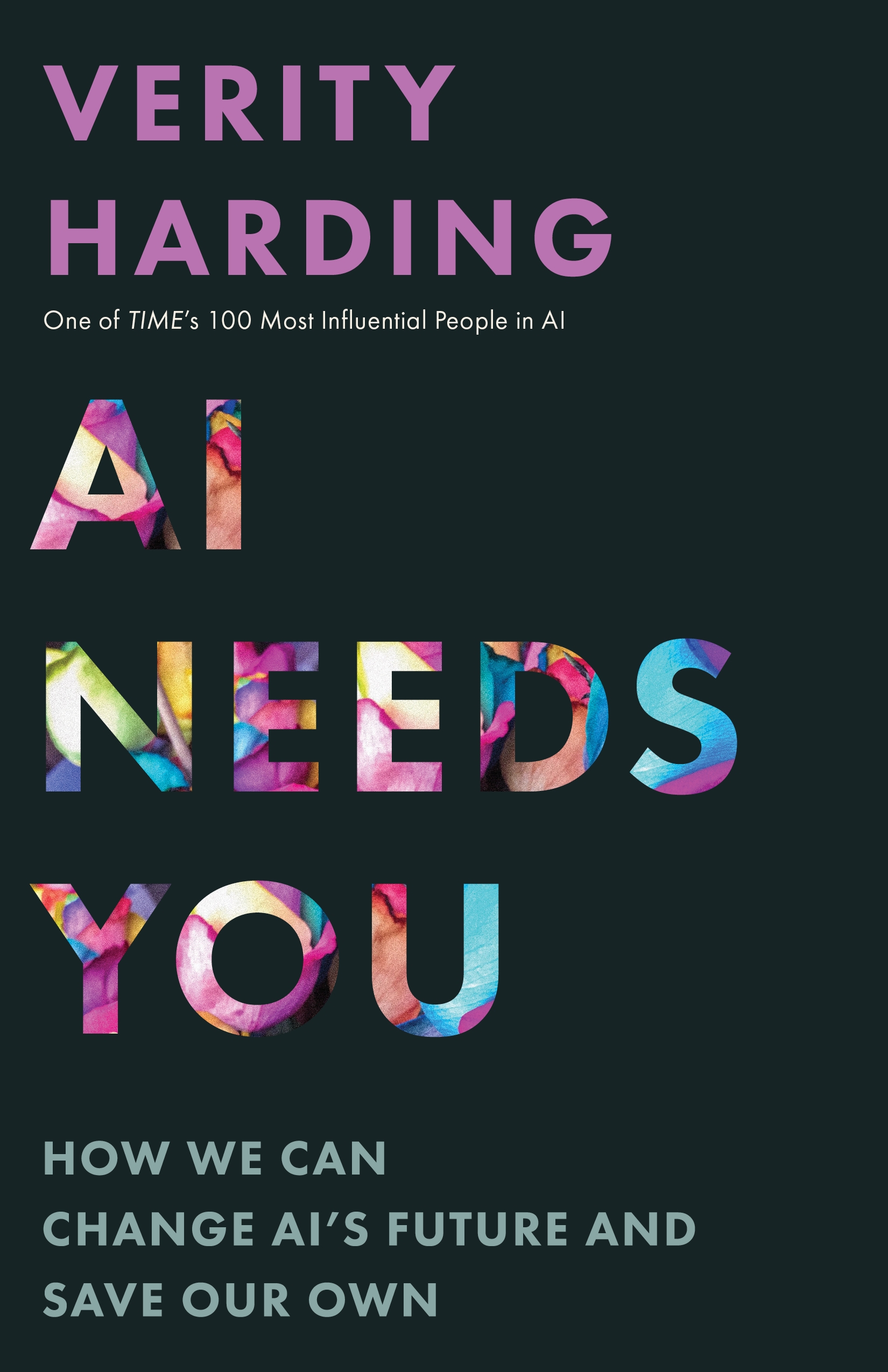
Artificial intelligence (ai) is one of them. Several books will look at how it might reshape the world: “ai Needs You”, a “humanist manifesto for the age of ai” by Verity Harding, formerly of Google DeepMind; “The Heart and the Chip: Our Bright Future with Robots” by Daniela Rus, director of the ai laboratory at mit; and “Literary Theory for Robots”, an examination of how machine intelligence will influence the way we read, write and think, by Dennis Yi Tenen, a professor of English at Columbia University.

Geopolitics will also dominate publishers’ frontlists. Dale Copeland, a professor of international relations, will chronicle how commerce has shaped America’s foreign policy; Jim Sciutto of cnn will explore “The Return of Great Powers: Russia, China and the Next World War”. Several authors will focus on the war in Europe. Eugene Finkel, who was born in Ukraine, will offer a “deeper history of Russian violence against civilians” in the country; in “Putin and the Return of History” Martin Sixsmith will look back over a thousand years to put the Russian president’s aggression in context. Peter Pomerantsev’s “How to Win an Information War” will apply the perspective of a propagandist during the second world war to the conflict.
For those hoping for a few hours of diversion, there will be plenty of novels to look forward to. Bestselling authors including Percival Everett, Yann Martel, David Nicholls, Kiley Reid, Colm Toibin and Amor Towles will return with new stories in 2024. James Patterson will be completing an unfinished manuscript left behind by Michael Crichton, the author of “Jurassic Park”.
An unseen work by Gabriel Garcia Marquez, who died in 2014, will also be released. In “En Agosto Nos Vemos” (“Until August”), a novella of fewer than 150 pages, the late Nobel laureate told the tale of a middle-aged woman’s affair. His children opposed its publication but now say it has the author’s trademark “capacity for invention, his poetic language [and] his captivating storytelling”. True or not, García Marquez will probably enjoy a resurgence, as an adaptation of his most celebrated work, “One Hundred Years of Solitude”, is also in production at Netflix. If you want a fantastical tale, who better to turn to than the Colombian master of magical realism?
The Economist Magazine – January 27, 2024 Preview

How the border could cost Biden the election
Could AI transform the emerging world?
AI holds tantalising promise for the emerging world
Saving coffee from climate change
A warming planet threatens the world’s favourite drug
Britain’s nuclear plans
The government has yet another plan for a nuclear renaissance
Why you shouldn’t retire
Pleasure cruises, golf and tracing the family tree are not that fulfilling
 Boomers Daily