Category Archives: Design

Architect’s Tour: Casa Mia In City Beach, Australia

Offering a playful rendition of the familiar sustainable narrative, Casa Mia enables residents to experience life inside a dream house. Crafted by Iredale Pedersen Hook Architects in collaboration with Caroline Di Costa Architect, the residence uses brickwork to convey a liberating message.

Video timeline: 00:00 – Introduction to Casa Mia 00:28 – High-Density Living 01:11 – A Playful Space 01:53 – Providing a Presence and Privacy 02:13 – Sustainable Brickwork 03:08 – Love and Appreciation for Brickworks 03:39 – Historic and Ancient Japanese Architecture 04:25 – Utilising Unfinished Materials 05:00 – Sustainable Design 05:47 – The Architect’s Favourite Aspects of the House

Located on the Ocean Mia Estate in City Beach, Casa Mia is an architect’s own home, sitting in contrast to the built context. Constructed from carefully positioned brickwork with spaces between bricks at its edge, the dream house juxtaposes the rectilinear forms of the surrounding buildings, presenting a dynamic profile of surprising lightness.

Liaising with Brickworks, Iredale Pedersen Hook Architects both inheres the project with a sense of sustainability and makes the concept legible as a prominent feature of the architect’s own home. Brickworks enables its products to be applied to the dream house in their uncut state – an atypical usage – in order to minimise waste. Every brick of the dream house is locally sourced and exhibits colours reminiscent of the earthy natural landscape. Inspired by Japanese architecture, Iredale Pedersen Hook Architects employs fully-glazed bricks around particular openings.

The bricks bounce sunlight into the depths of the home, allowing the residents to save energy where possible. Although Casa Mia represents the weight of responsibility architects have towards the environment, it also presents this responsibility as beneficial. Iredale Pederson Hook Architects and Caroline Di Costa Architect craft a dream house that rejoices in its sustainability, utilising the colour and texture of brick to suggest a playful variation of an architect’s own home.

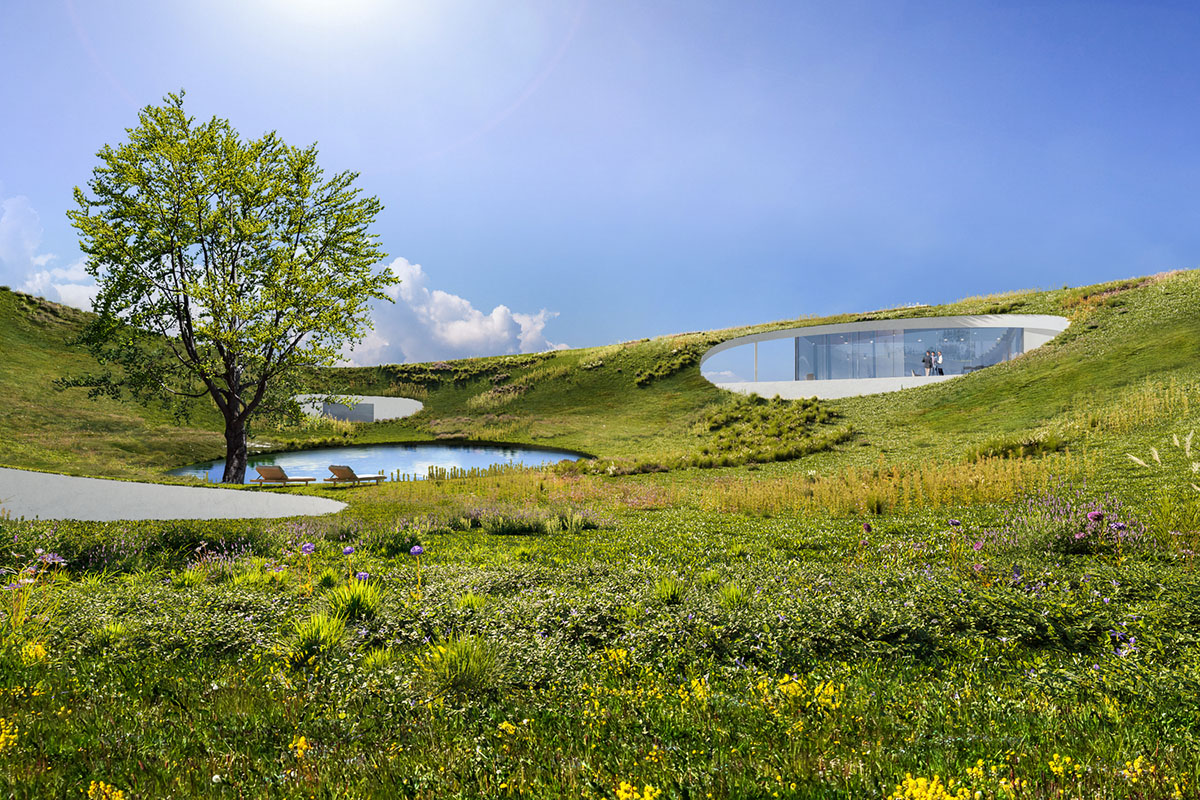
Green Design: Villa Hotel On Ishigaki Island, Japan

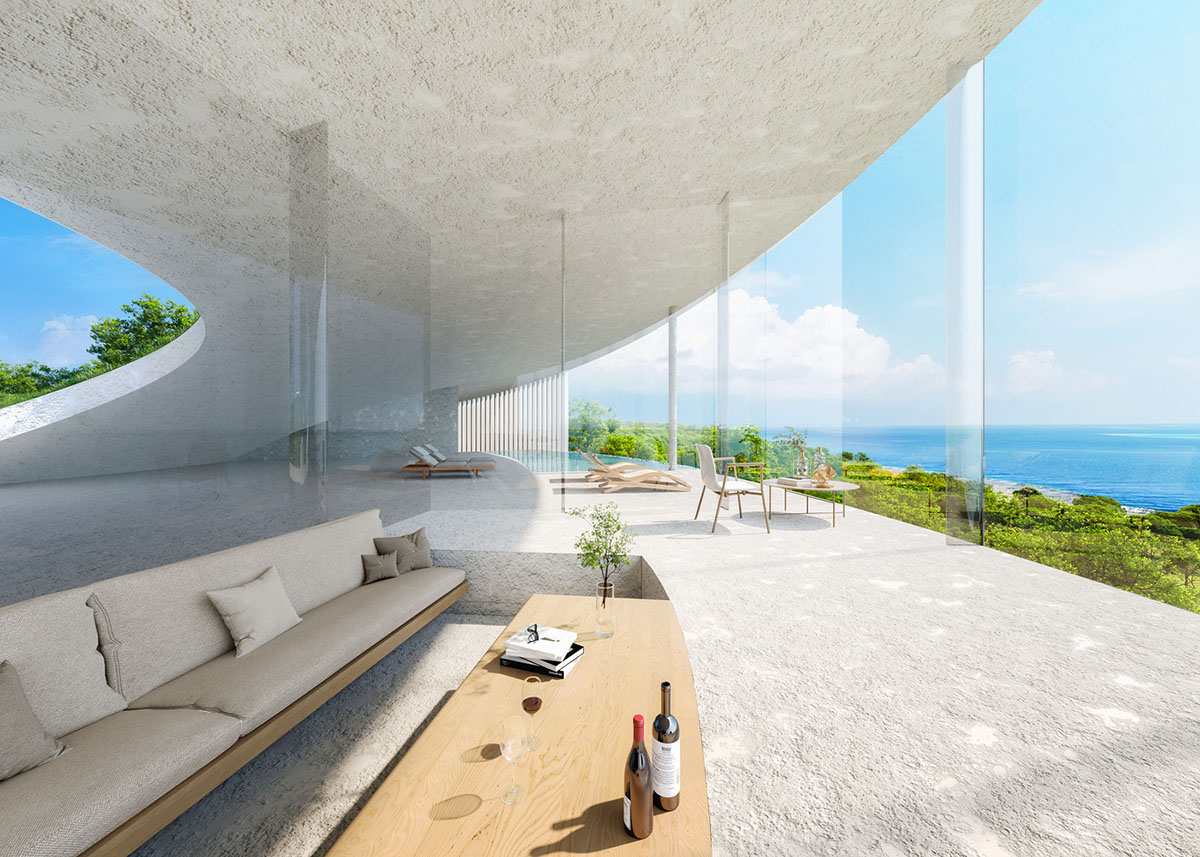
Japanese architecture practice Sou Fujimoto Architects has revealed design for a villa hotel that features an undulating green roof, offering sweeping views on Japan’s Ishigaki Island.

Designed for a Japanese hospitality brand Not A Hotel, the brand’s new vacation homes are set to be built to offer various rentable holiday homes in multiple locations across Japan. 

Fujimoto’s holiday home is located on a tranquil Ishigaki Island, which is 11 minutes by car from New Ishigaki Airport. The vacation home, which gently connects to the earth, is offered visitors who want to spend a quiet time on the island.

Sou Fujimoto reveals villa hotel with undulating roof offering sweeping views on Ishigaki Island

Sou Fujimoto Architects‘ design, made of a circular-shaped structure and a bowl-shaped hilly courtyard, is envisioned like “a small paradise, offering a revelatory experience of earth.”

The circular holiday home on the vast grounds was designed without a front and back façade to be able to offer an uninterrupted views towards its surrounding. 

Sou Fujimoto reveals villa hotel with undulating roof offering sweeping views on Ishigaki Island

“The architecture, which has a vague boundary between the inside and outside and is connected to the earth, is equipped with a living-dining room overlooking the sea and four separate bedrooms that can accommodate up to 10 people,” stated the project’s website. 

Read more

Views: Taipei Performing Arts Center In Taiwan

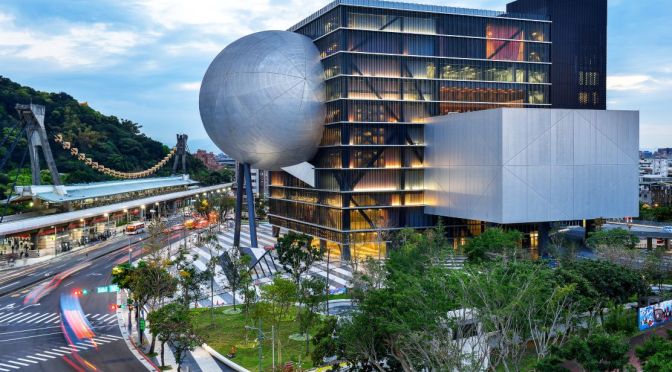
Viewers can explore the interiors of the newly-opened Taipei Performing Arts Center by Dutch studio OMA in this drone video, produced by Shephotoerd Co. Photography.

Opened to the public on 7 August, the Taipei Performing Arts Center is a 59,000-square-metre cultural venue in Taiwan that incorporates three unique theatres.

Read more on Dezeen: https://www.dezeen.com/?p=1829625

Design Tour: Crown Jewel Penthouse In Canberra

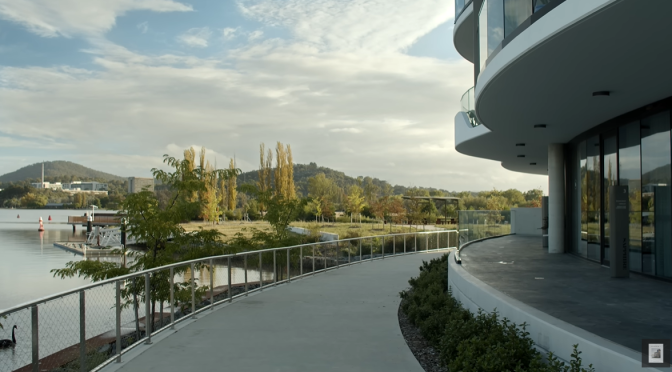
Named in relation to its amazing city views, Crown Jewel is a luxury penthouse capturing some of Canberra’s most striking vistas. Inside a penthouse crafted by Parallel Workshop Architects, residents are immediately met with a strong sense of natural connection.

Video timeline: 00:00 – Introduction to the Penthouse 00:30 – Creating the Clients Dream Home 01:01 – Incorporation of the Natural Landscape 01:15 – Catering for Different Occasions 01:44 – Referencing the Structural Architecture 02:05 – Creating a Kingdom from the Penthouse 03:10 – The Design Strategy 03:29 – Favourable Aspects of the Penthouse 03:52 – The Freedom of Design

Situated on the southern shore of Lake Burley Griffin in Canberra, Crown Jewel is one of six penthouses in the lavish Sapphire development. From inside a penthouse, occupants can enjoy amazing city views including those of Lake Burley Griffin, Kingston Harbour and the lush wetlands. A tranquil experience inside a penthouse often begins with the occupant feeling settled in place.

Parallel Workshop Architects connects residents to the character of Canberra by reflecting elements of the natural landscape in the architecture and interior design of the home. While joining the apartment to its natural context, Parallel Workshop Architects pays homage to the clients’ request for luxury inside a penthouse. The deep, rich colours of the Australian landscape are featured in the immersive architecture and interior design, including the navy furnishings, muted green finishes and consistent interplays of light and dark grey.

Translating both the surrounds and design brief into a cohesive architectural outcome, Parallel Workshop Architects establishes a family life in place. Functional and aesthetically generous, Crown Jewel is equipped to provide for multiple generations, fostering an authentic love for living inside a penthouse in Canberra.

Tours: 1961 Gentleman’s Yacht ‘CAMARA C’ (105 Feet)

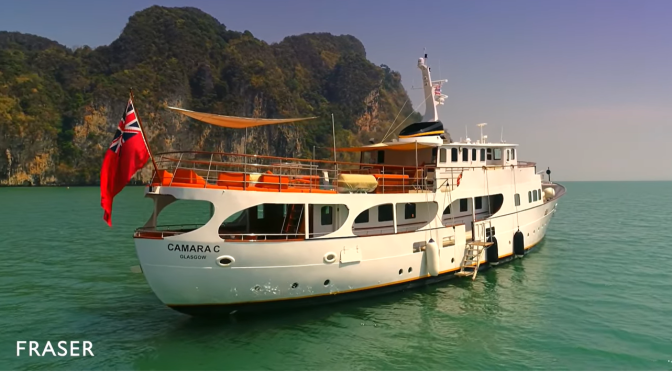
CAMARA C is a stunning gentleman’s yacht for charter that opens cruising grounds other boats can only dream of. She recently completed an extensive refit in 2021 giving back her former glory from 1961. The yacht now calls Phuket home.

At 32M/105’ in length, CAMARA C offers accommodation for up to 12 guests in 6 suites. The bed configuration includes 1 king, 3 queen, 1 double, and 2 singles. Thanks to her unique floor plan allowing separation between the guests and the crew areas, you will benefit from great privacy during your charter journey. Find out more info here: https://www.fraseryachts.com/en/yacht

Greek Architecture: ‘O Lofos’ Residence On Crete

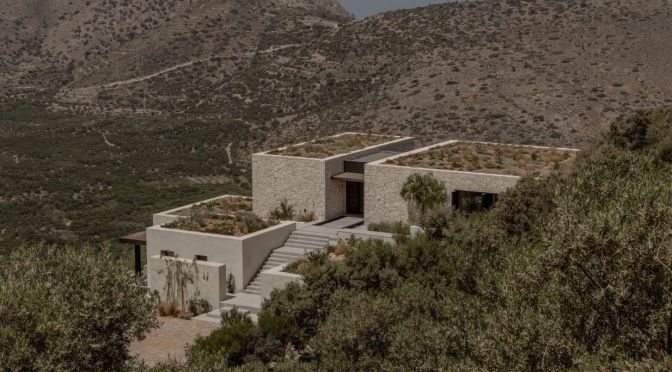
O Lofos*: The green, wild Cretan landscape and the richness and heritage of traditional crafts define this new, thoroughly contemporary residential design by Block722. Sat on the northern foothills of Thrypti mountain within the Greek island’s eastern side, the project is a commission by a private client.

The main home is divided into two low buildings linked by a semi-enclosed area with an envy-inducing water feature | O Lofos by Block722 | STIRworld
The main home is divided into two low buildings linked by a semi-enclosed area with an envy-inducing water featureImage: Ana Santl

It called for a 280 sq m home on a slope, including two guestrooms and generous outdoors areas. Balancing the needs of the brief with the natural setting that combines vistas of mountains, plains, and the Mediterranean Sea, was critical in the architects’ design solution. The architecture was driven by desire to create a modern house that is discreet and respectful to its surroundings.

The built is in harmonious continuation of the Cretan context | O Lofos by Block722 | STIRworld
The built is in harmonious continuation of the Cretan context

Negotiating the site’s angle through levels instead of steps was also critical in moulding a relaxing environment that embraces its setting.
A path down a slope from the main road leads visitors to the residence’s entrance. The complex’s size is cleverly broken down into smaller volumes, which are interconnected through circulation routes and in-between spaces – some indoors and some open-air. The main home is divided into two low buildings linked by a semi-enclosed area with a water feature.

The design merges natural materials that are often used in the local vernacular, such as wood and stone. At the same time, the atmosphere is distinctly contemporary, blending Block722’s inherent Scandinavian sensibility and organic minimalism with Japanese architecture influences. This nod to Japan unfolds through the design’s refreshing simplicity of clean, almost austere lines that balance the materials’ natural, tactile nature and the overall craft-rich approach. The powerful Greek sunlight helps define shapes and surfaces,

Read more

Australian Architecture: ‘Fitzroy Bridge House’

A modern house, Fitzroy Bridge House is a work of collaboration led by Matt Gibson Architecture + Design. Featuring a glass bridge – from which the project receives its name – the home emerges as a considered and personal dwelling that celebrates its older architectural elements.

Video timeline: 00:00 – The Local Project’s Print Publication 00:20 – The Name Behind Fitzroy Bridge House 00:57 – South Fitzroy Heritage Precinct 01:36 – Moving Through the Home 01:53 – Dissolution of Interior and Exterior 02:16 – The Bridge 02:40 – The Rear Retreat 03:14 – Involvement of the Clients and Their Non-Negotiables 03:57 – Key Sustainable Moves 04:51 – The Cellar

Located in the southern Fitzroy heritage precinct, Fitzroy Bridge House sits an enviable two kilometres from the Melbourne CBD. The residence occupies a long, thin site and is comprised of distinct pavilions, encapsulating both the pre-existing architecture and the work of the modern house.

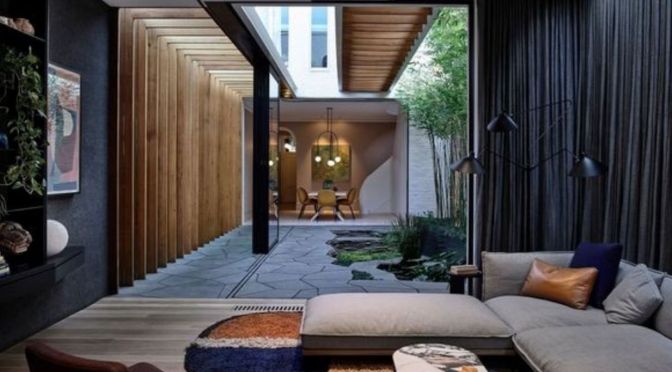
As Fitzroy Bridge House is situated in a heritage overlay, the exterior of the home could not be altered in relation to the front two rooms. Entering the home, residents move through the Victorian-style environments before reaching the rear architecture of the modern house that features a refined internal courtyard settled into the dining room interior design.

Connecting two pavilions, the glass bridge forms the focal point of the modern house. The bold feature provides a view down to the manicured garden in the Japanese-inspired courtyard – a fine work of landscape architecture requested by the client and executed by Robyn Barlow. A product of collaboration, Fitzroy Bridge House is closely connected to the client. Warm, inviting and personal, the modern house expresses its own built narrative, enabling the client to retell the story of its creation for years to come.

Australian Architecture: A Tiny Home In Adelaide

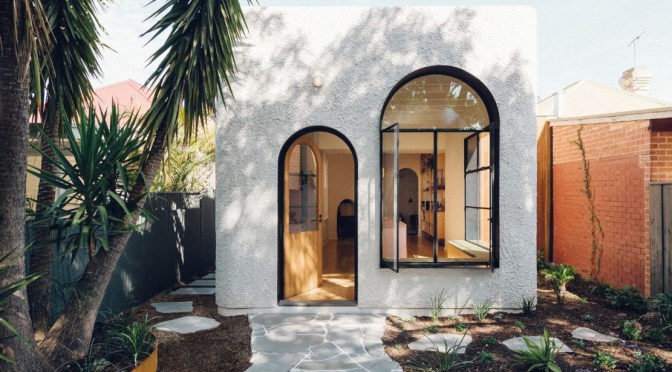
A sculptural tiny house enveloped by the garden, Plaster Fun House represents a light-hearted shift from the residential norm. Designed by Sans-Arc Studio, the extension of the tiny house sees the old and new united in a home defined by curves. Located in Torrensville, a western suburb of Adelaide, Plaster Fun House takes inspiration from its cultural surroundings.

Video timeline: 00:00 – The Local Project’s Print Publication 00:14 – Introduction to Plaster Fun House 00:50 – An Interesting Brief 01:15 – Integrating Old and New 01:41 – A Backyard Oasis 02:00 – Curves in all the Right Places 02:28 – Taking Inspiration from Migrant Housing 03:00 – Colour Splashing Throughout 03:50 – A Display of the Clients Personalities 04:32 – Interacting with the Surrounding Environment 05:45 – Subscribe to The Local Project’s Print Publication

Though, a house tour reveals that the primary architectural aspects of the tiny house contrast the immediate built landscape, testifying instead to an art deco style. Sans-Arc Studio introduces curves into the architecture, interior design and particularly the custom joinery of the tiny house.

As well as injecting a playful character into the home, the curves enable effortless movement through the compact space. Responding to the clients’ request for terrazzo to be used wherever possible, Sans-Arc Studio employs terrazzo benchtops. Stepping down into the extension of the home, the terrazzo material of the kitchen island benchtop unites the old and new aspects of the dwelling, a staggering from kitchen bench to dining surface marks the threshold between new and existing.

Across the façade of the tiny house, natural light plays across the stucco wall treatment; a crafted ode to the Mediterranean-inspired housing of the surrounds. The resulting home is peaceful, artistic and unique, providing the clients with a new and inviting extension.

Previews: Architectural Record – August 2022

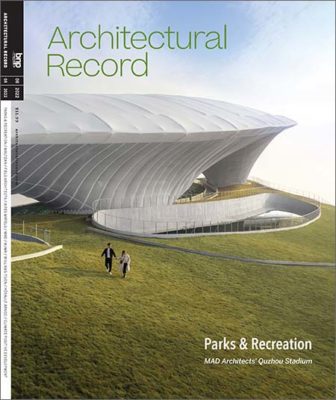
Architectural Record - August 2022

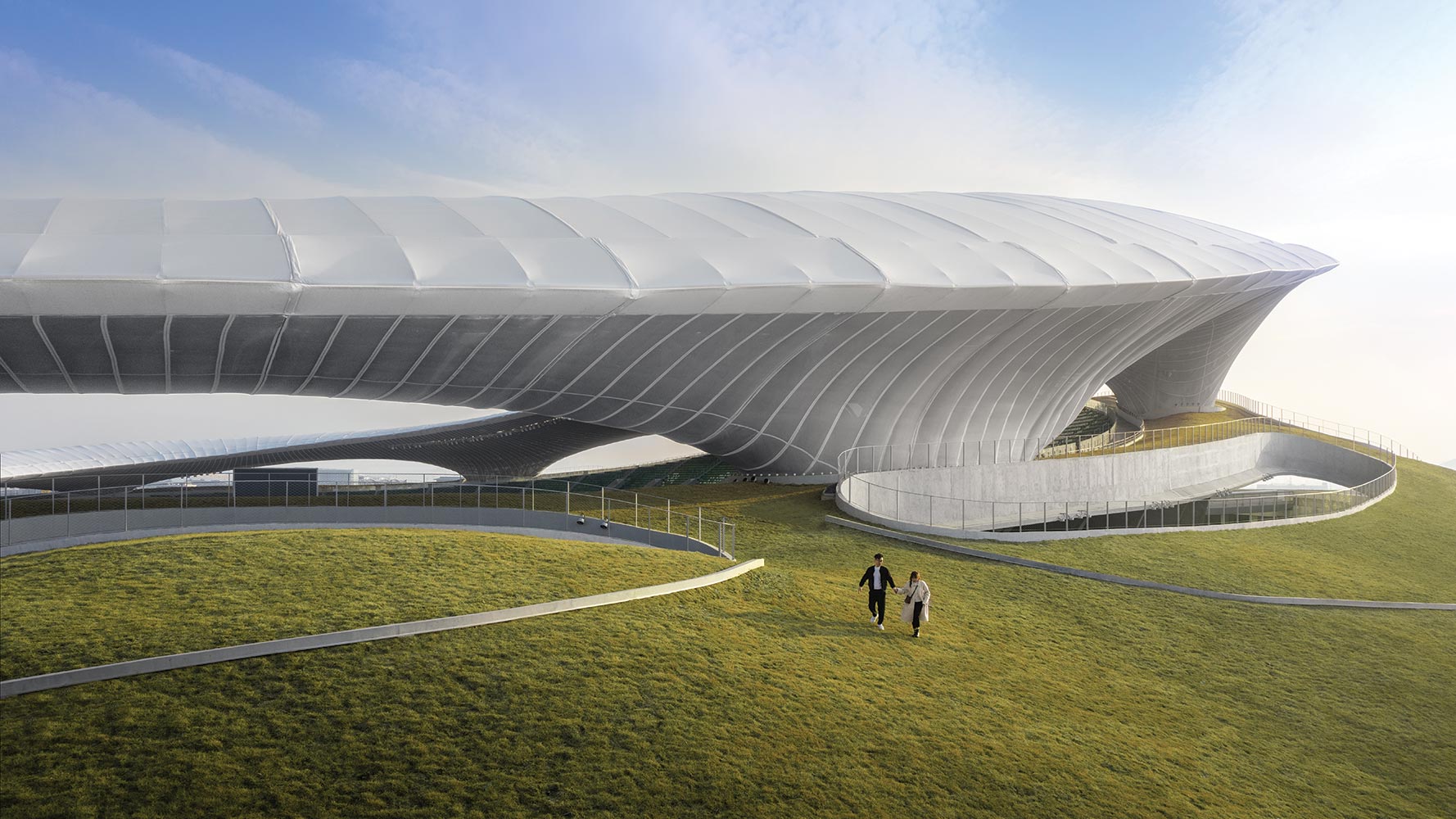
MAD Architects Creates a Volcano-Inspired Stadium in China

Quzhou-Stadium-01.jpg
Quzhou Stadium. Image © CreatAR Images

For the past three decades, China has been furiously turning farmland into instant cities, transforming a heavily agrarian society into one with nearly 64 percent of its population now urbanized. In recent years, though, affluent Chinese have started to rediscover their culture’s deep roots in the countryside and the lure of the nation’s often dramatic landscapes. Architects like Ma Yansong, who founded MAD Architects in Beijing in 2004, are now busy exploring new ways of connecting the constructed environment to the natural one. Ma often talks of his notions of shanshui culture, referring to the Chinese words for “mountain” and “water” and to design inspired by a reverence for earth and sky. Yet his approach is anything but traditional. Instead, it aims to reinvent nature—for example, crafting an opera house in Harbin to look as if it were sculpted by wind and water and calling a 5 million-square-foot residential complex in Beihai with rolling roofs Fake Hills.

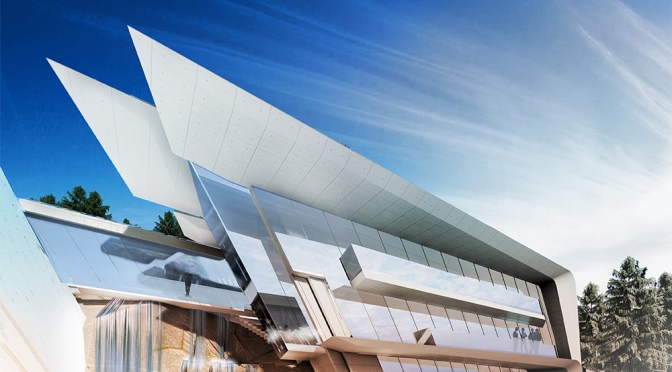
Architectural Design: ‘Yacht House’ By ARNO MATIS ARCHITECTURE (2022)

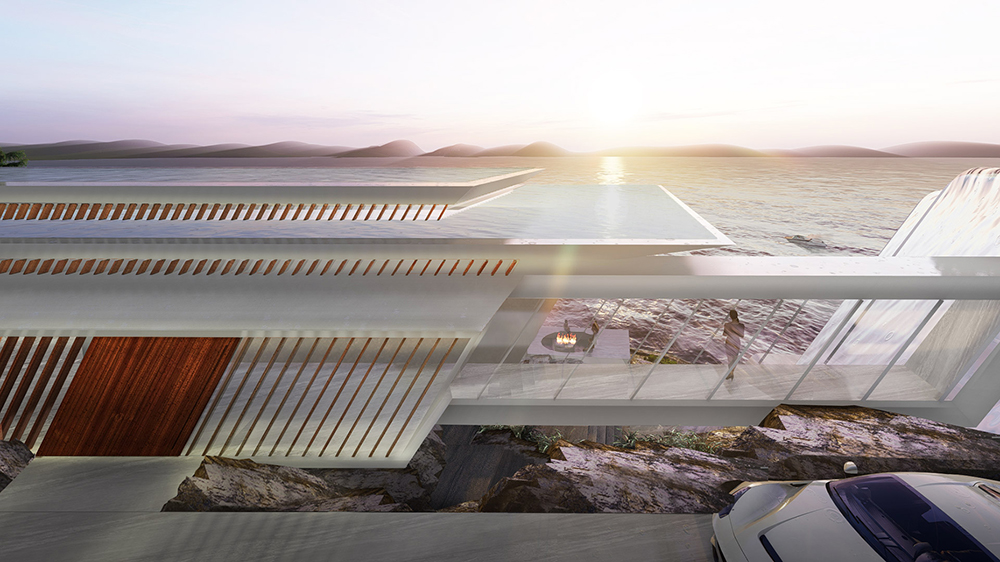
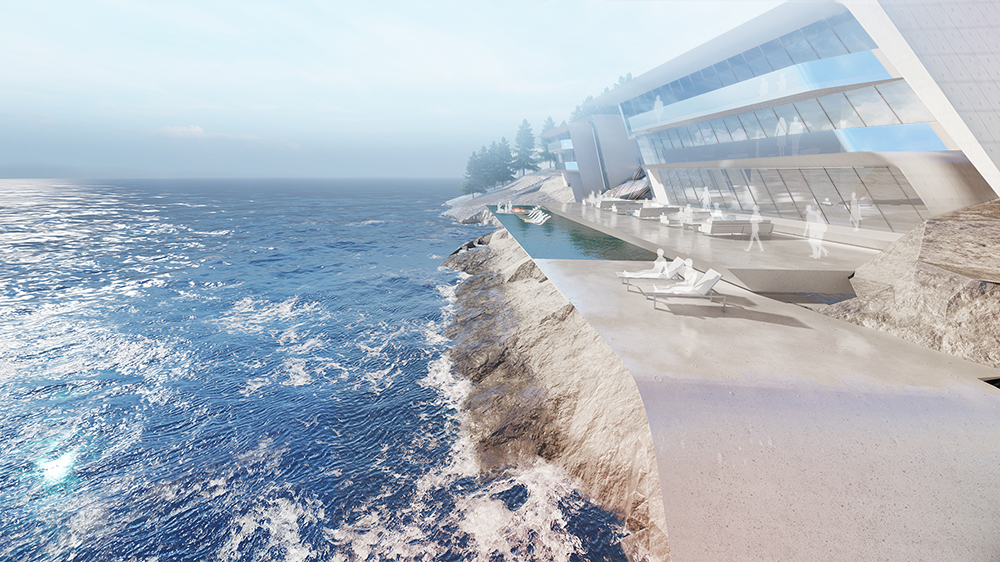
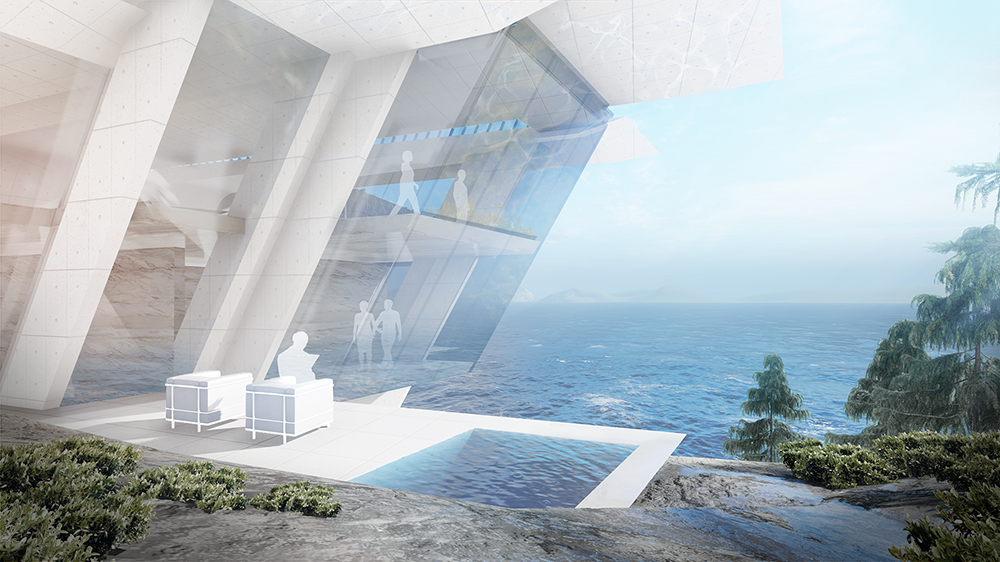
This concrete waterfront residence explores the lines between landscape and architecture; blurring nature and building. In a postmodern world of dislocation, the use of landscape and topography as form-generator is a particularly cogent means to establish a sense of “poetic belonging”.

Yacht House west vancouver modern house waterfront luxury architect contemporary design california, Modern Architecture Design, Vancouver, Canada, Arno Matis Architecture

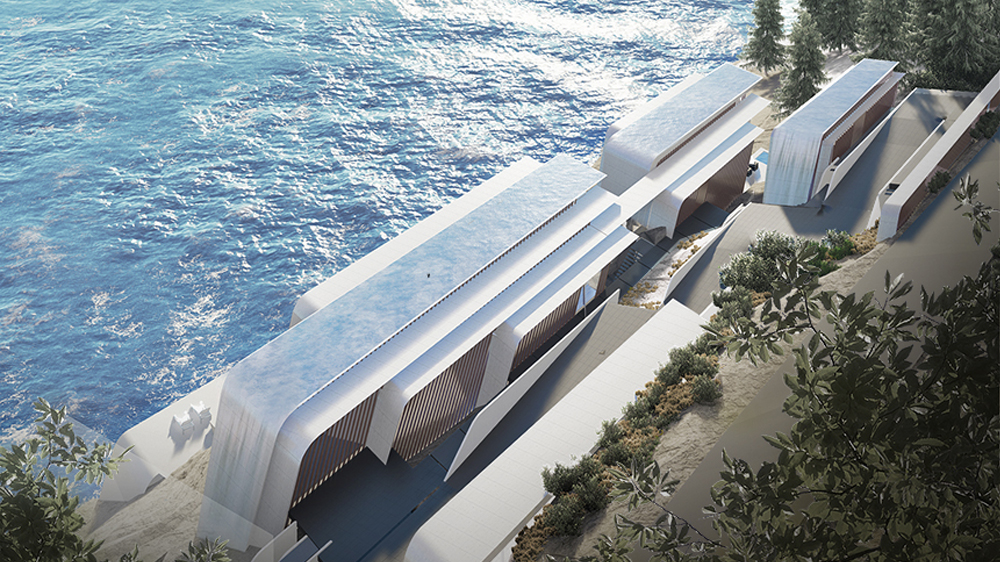
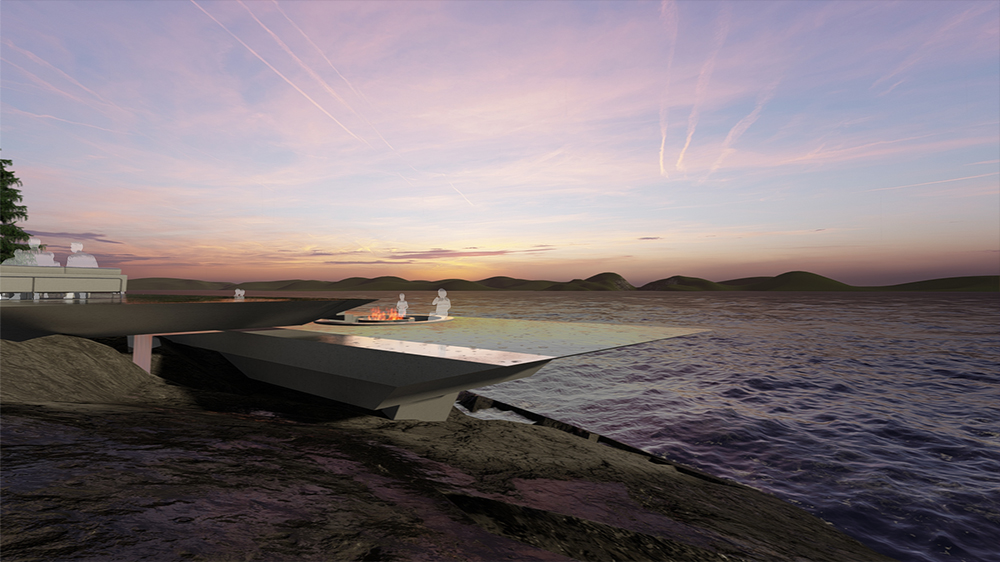
This rocky, steeply sloping waterfront site was an ideal source of inspiration to create a residence which explores this dialectical tension. The residence is massed in two forms that cascade to the waterfront.

Yacht House west vancouver modern house waterfront luxury architect contemporary design california, Modern Architecture Design, Vancouver, Canada, Arno Matis Architecture

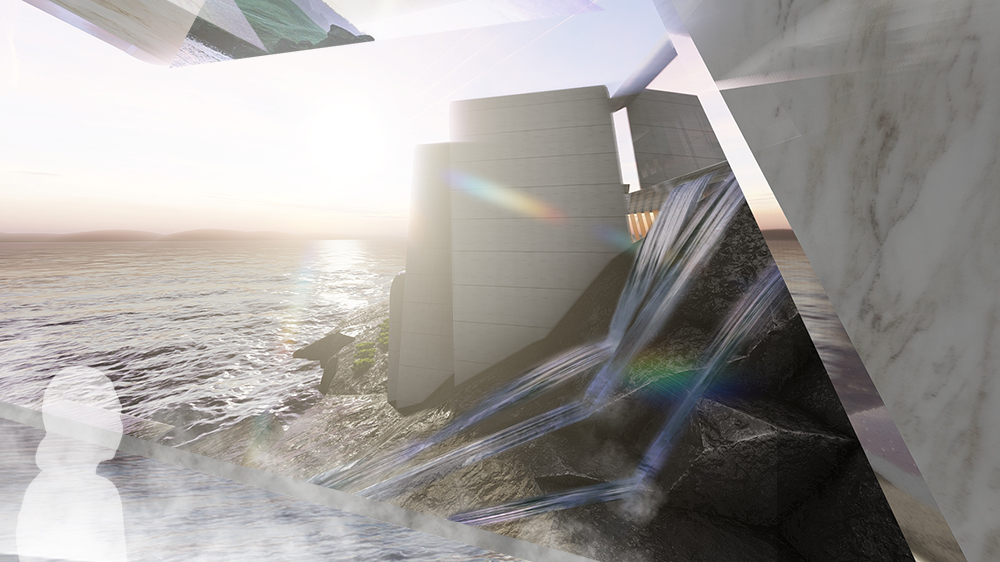
The spaces between the forms, expressed as slip-planes, undulate like the rock formations on the Burrard Inlet shoreline. The juxtaposition of forms are loose and geometries are non-orthogonal and sympathetic to the site contours.

Website