‘Displacement City: Fighting for Health and Homes in a Pandemic‘ Edited by Greg Cook and Cathy Crowe
Canada’s major cities have faced the humanitarian disaster of homelessness for decades, but the COVID-19 pandemic laid bare a massive deficit in social programs and widespread inattention to human rights. Are municipal public services designed to essentially produce displacement? Or can we do something to end the growing problem of urban homelessness in Canada?
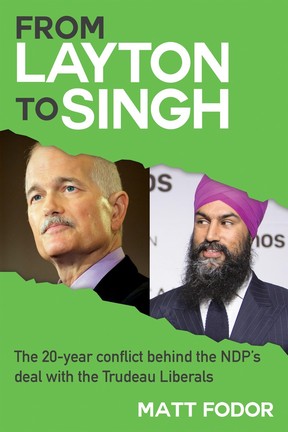
‘From Layton to Singh: The 20-Year Conflict behind the NDP’s Deal with the Trudeau Liberals’ by Matt Fodor
“As it entered the twenty-first century, the New Democratic Party of Canada ( NDP) faced its greatest identity crisis since its founding four decades earlier,” writes Toronto-based author and political scientist Matt Fodor, in his recent book From Layton to Singh.
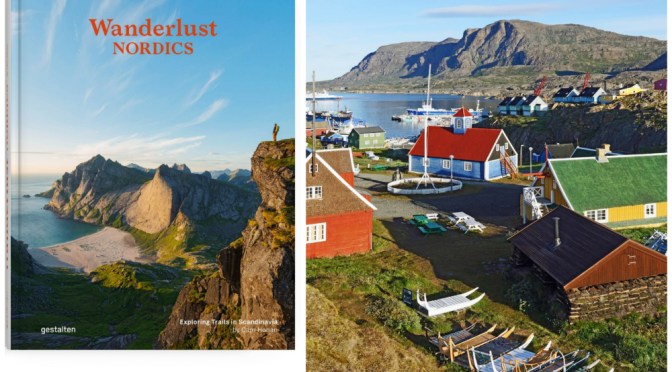
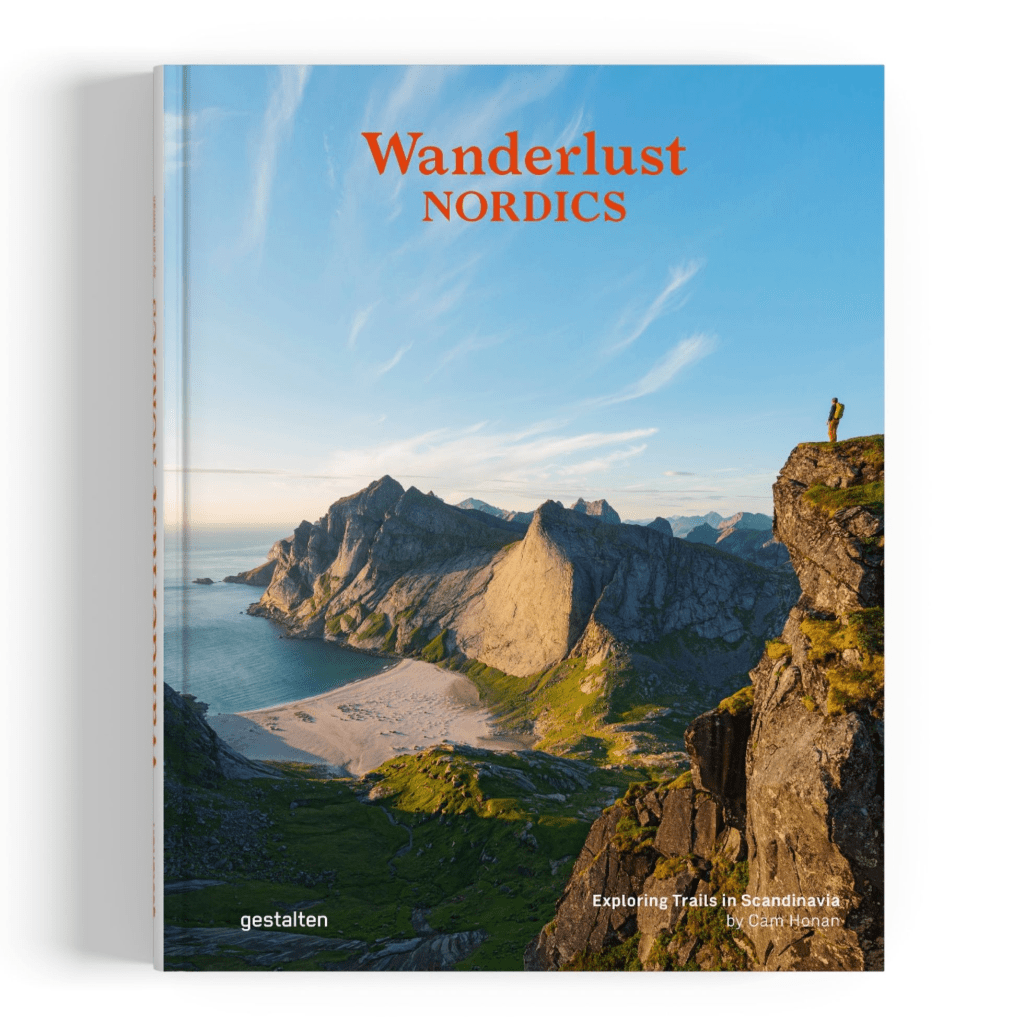
Gestalten Publishing (May 2023) – From spectacular fjords in Norway, the arctic tundra and serene forests in Sweden, to a plethora of enchanting lakes in Finland and the Ice Sheet of Greenland —the Nordics offer a breathtaking variety of landscapes and endless options to hike.
Wanderlust Nordics invites you to boast into this distinctive wilderness with a wide range and appealing mix of trails. This is a book that will have you heading north.
Cam Honan has trekked across 61 countries and six continents, logging over 60,000 mi (96,500 km) in three decades. He has authored four bestselling titles for gestalten—Wanderlust, Wanderlust USA, Wanderlust Himalaya, and The Hidden Tracks. Cam has been described by Backpacker Magazine as “the most travelled hiker on Earth”.
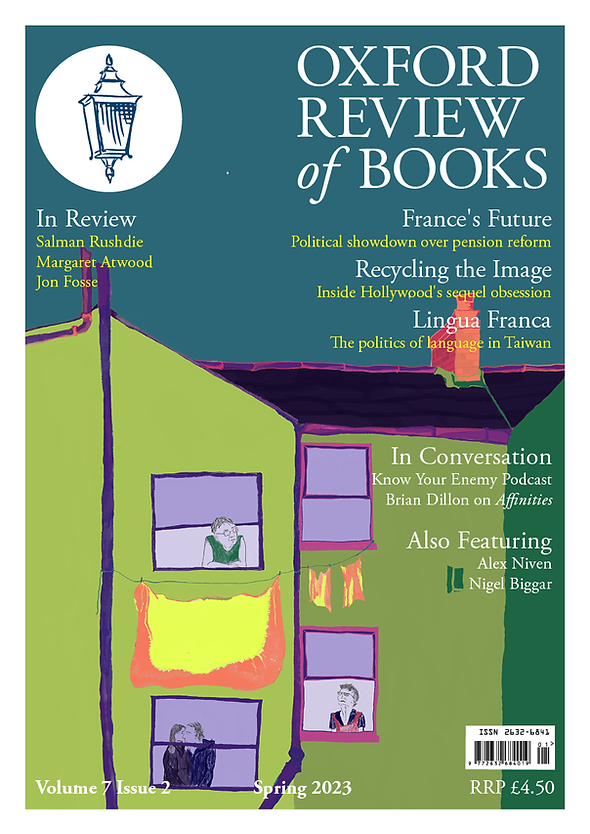
Oxford Review of Books (Spring 2023) – This issue includes reviews of the latest releases from Margaret Atwood, Salman Rushdie, and Jon Fosse, interviews with Brian Dillon and the Know Your Enemy Podcast. Our writers explore the politics of pension reform in France, Hollywood’s obsession with sequels, and the shifting linguistic landscape of Taiwan (among countless great articles!) as well as a Q+A with writer Alex Niven and Academic Nigel Biggar.
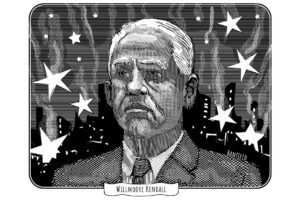
NOBODY HAS EVER seen the economy. We can see specific markets, but my local farmers’ market looks very different from the Diamond District in Manhattan and even the street stalls I frequented in East London.
Markets are institutions with more or less physical infrastructures, but “the market” (like “the economy”) is an abstraction, no more fixed or certain than “the Left” or “nature.” If “the economy” and “the market” are often described as though they were things out there in the world to be measured and monitored while other abstractions (such as “beauty” and “joy”) are not, that tells us as much about ways of thinking as it does about the workings of the world.
Powered by this insight, the history of economic thought (and related “new histories of capitalism”) has grown over the past 20 years to become one of the most lively and popular historical subfields.
The recent controversy over Jacob Soll’s new book Free Market: The History of an Idea (2022) reveals just how attached some people are to their economic ideologies (no surprise there) and to their ideas about who gets to have “economic thoughts.”
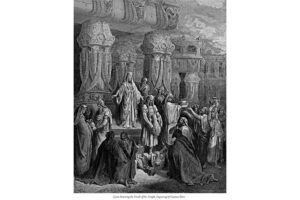
In a sweeping text that ranges across 2,500 years in barely 250 pages, Soll argues that, for centuries, “free” markets were understood as existing only where strong, moral governments liberated trade from domination by selfish, moneyed merchants. Markets had to be set free—they were not born that way—and the danger has always lurked of commerce being recaptured to enrich the few rather than benefit the many.
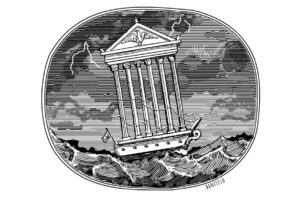
This is a loosely “antitrust” way of describing market freedom, and it might have barely registered at all had Soll attributed it chiefly to Louis Brandeis, Frances Perkins (secretary of labor under FDR), or even Machiavelli. But by invoking the name “Adam Smith,” Soll seems to have violated the holy of holies.
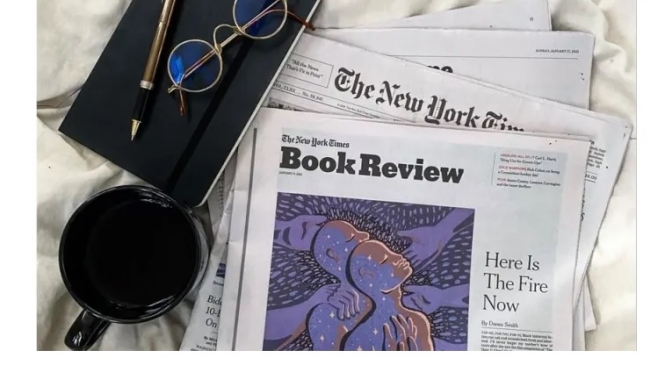
Watch for reality-bending explorations of time and space, a Western horror novel from Victor LaValle and new fiction from Han Kang. Plus: Tom Hanks (yes, that Tom Hanks) releases his debut novel.
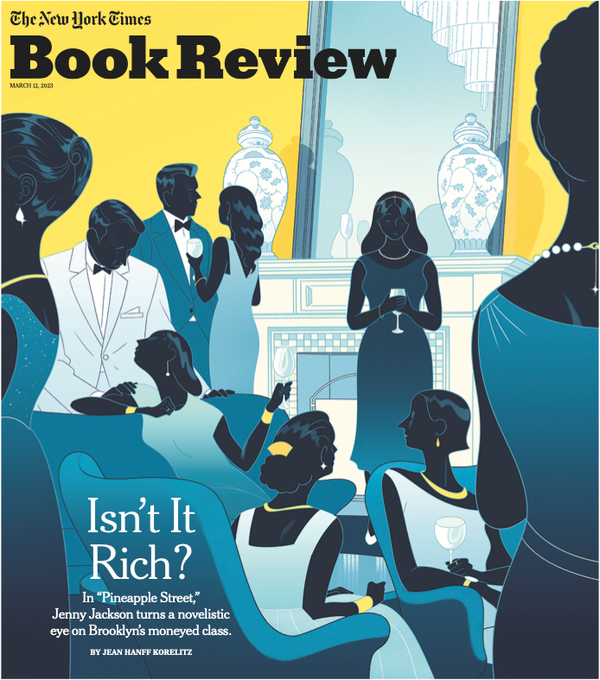
A new book by Joel Warner traces the fate of the parchment on which the infamous author wrote “120 Days of Sodom,” a trail involving scholars, aristocrats and thieves — and lots of money.
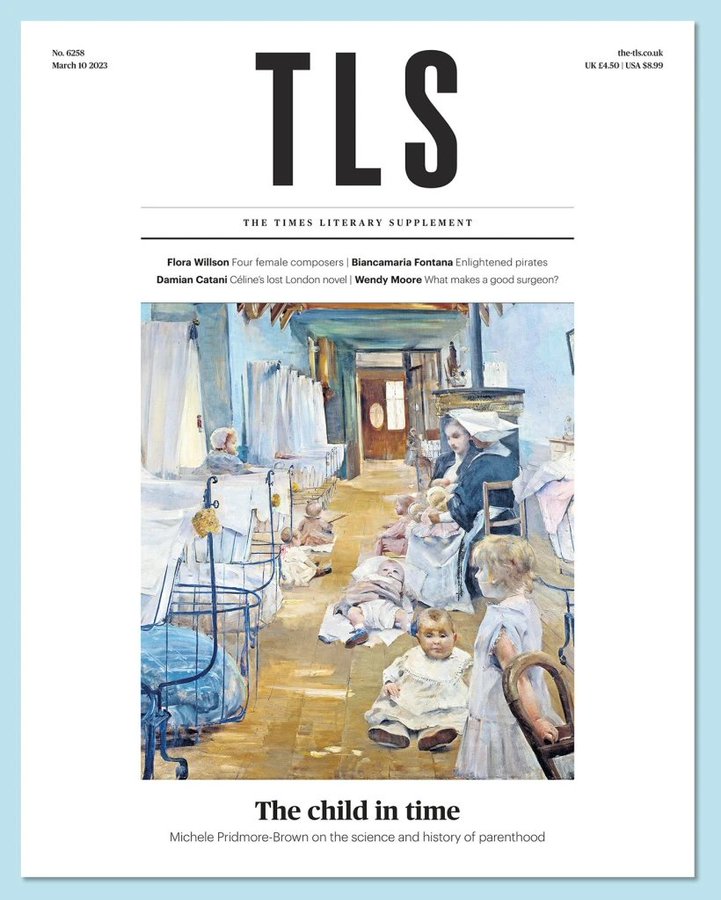
This week’s @TheTLS, features Michele Pridmore-Brown on parenthood; @noosarowiwa on paradise; @TobyLichtig on documentaries; Carlos Fonseca on Pilar Quintana; @wendymoore99 on surgery; new poems by Karen Solie, @RomalynAnte and Steve Ely – and more.
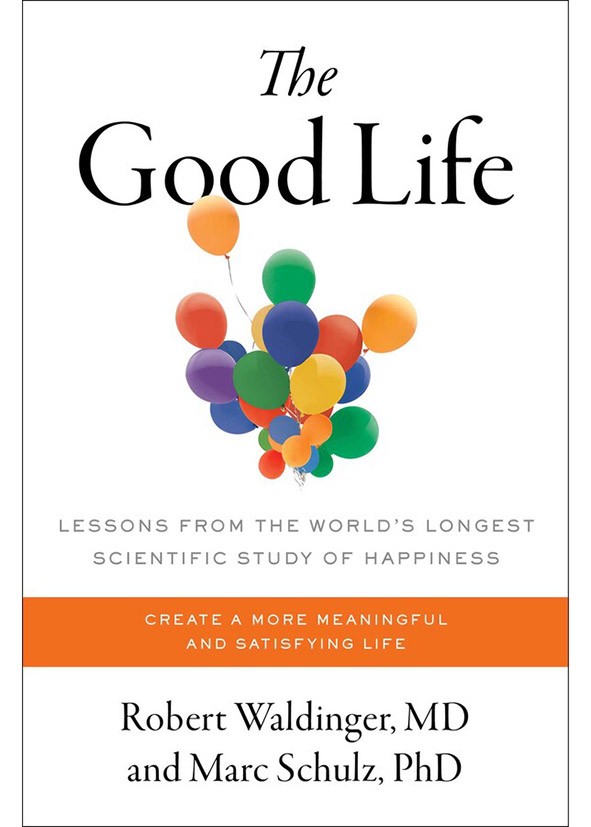
Robert Waldinger & Marc Schulz Simon & Schuster (2023)
Isolation during the COVID-19 pandemic highlighted the link between happiness and good relationships. Scientific evidence for the importance of relationships motivates this always engrossing, sometimes moving, study of happiness, grounded in the Harvard Study of Adult Development. Beginning in 1938, the project has followed two generations of the same families. Current director Robert Waldinger and associate director Marc Schulz show in detail how “the good life is a complicated life. For everybody.”
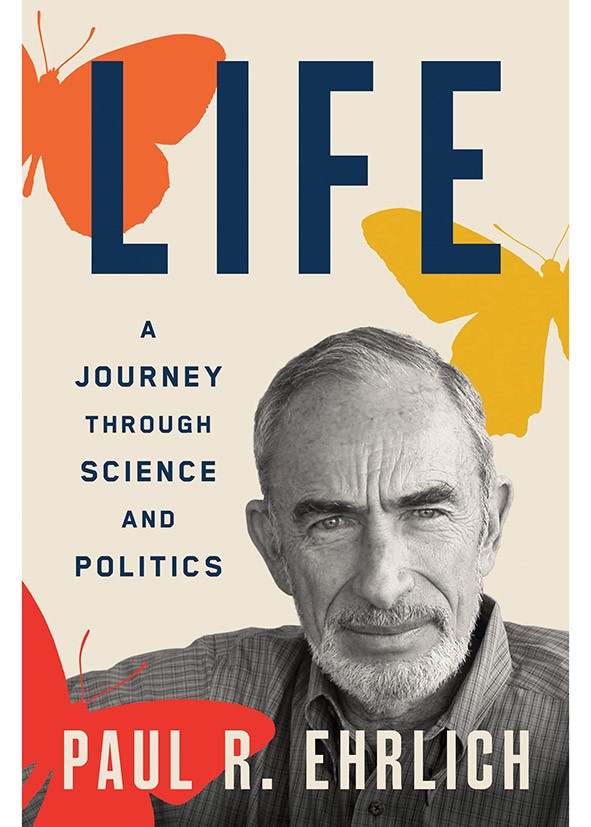
Life
Paul R. Ehrlich Yale Univ. Press (2023)
Biologist Paul Ehrlich is best known for writing — with his wife, conservation biologist Anne Ehrlich — the 1968 book The Population Bomb, which sold two million copies and was widely translated. Its controversial warning of a crisis of overpopulation gave him global exposure. He became a public scholar working with people from many disciplines: economics, political science, history, law, aviation, military intelligence and dentistry “to name a few”, he remarks in his frank, polyphonic autobiography, dedicated “For Anne: Sine Qua Non”.
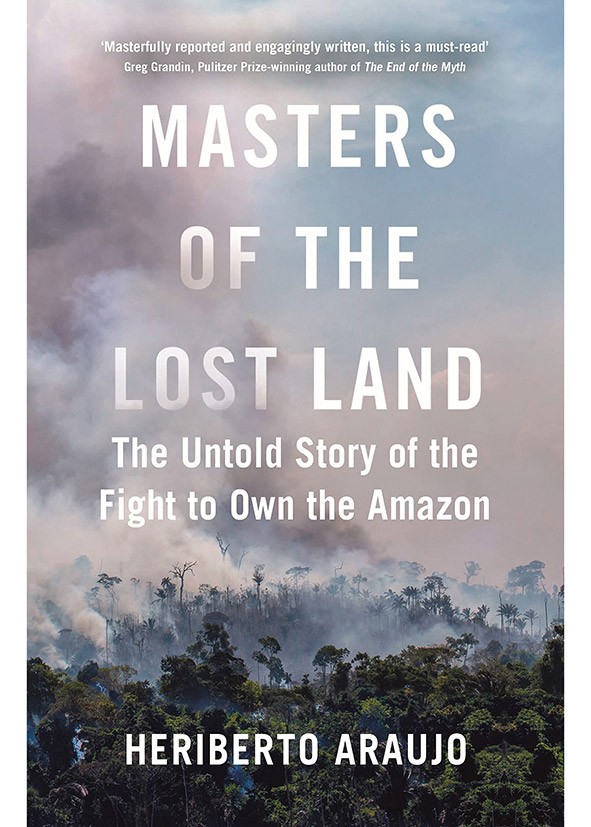
Masters of the Lost Land
Heriberto Araujo Atlantic (2023)
Since 2000, more than 2,000 people worldwide have been murdered for defending their lands or the environment. About one-third were Brazilian, mostly from the Amazon rainforest, notes investigative journalist Heriberto Araujo. He tells the story of the courageous Maria Joel, widow of Dezinho, the leader of a small Amazonian farmworkers’ union. Joel has fought to bring to justice the land baron who ordered her husband’s death. Based on four years of research in Brazil, the book is original, detailed and persuasive.
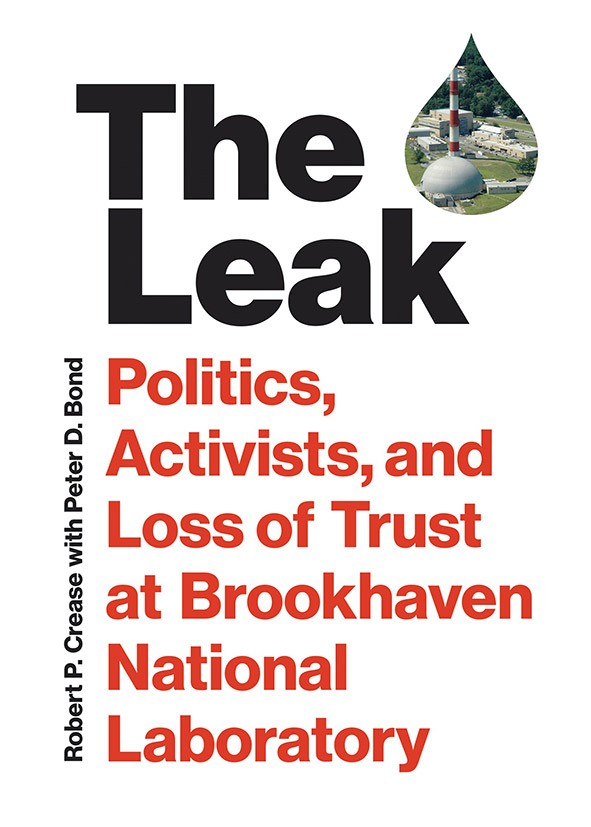
The Leak
Robert P. Crease & Peter D. Bond MIT Press (2022)
Seven Nobel prizes have been awarded for work at Brookhaven National Laboratory in Upton, New York. Yet a leak of radioactive water from the facility turned its 50th anniversary in 1997 into a year of “chaos rather than celebration”, write philosopher of science Robert Crease — author of a history of the lab — and former Brookhaven physicist Peter Bond. Although the incident posed no health hazard, according to federal, state and local officials, it sparked a “firestorm” of activism and politics, captured in this vivid first-hand account.
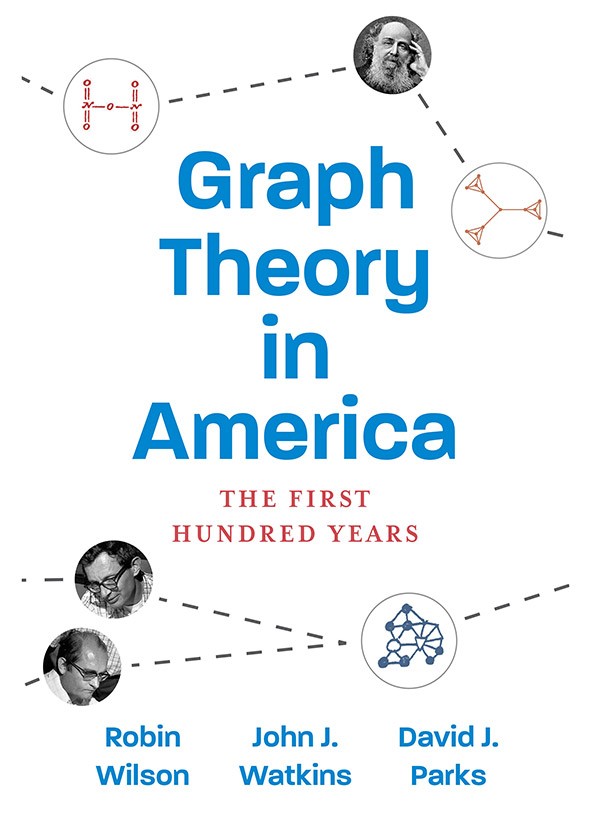
Graph Theory in America
Robin Wilson et al. Princeton Univ. Press (2023)
The modern development of graph theory — which models relationships between pairs of objects in groups — began in 1876 with James Joseph Sylvester, a British mathematician then in the United States. His work was first published in Nature. In 1976, US mathematicians Kenneth Appel and Wolfgang Haken solved a long-standing conundrum in the field, the four-colour problem. The intervening century is described in this graphically illustrated historical treatise by three British and US mathematicians.
Defamation isn’t the only legal threat to investigative journalism. Data protection and privacy laws are increasingly used as alternatives to a libel claim. Unlike a defamation writ, which claimants generally have only a year to file, data protection and privacy actions can be taken up to six years after publication, and there is no defence of truth.
Medieval Christians understood themselves to be interconnected to an extent that would surprise many people today, at least in Western cultures. Their minds and hearts were legible to other people as well as to God and the devil, and they saw themselves as vulnerable to interference from human and supernatural forces, to both good and bad ends.
The majority of women artists who exhibited at the Salon in the revolutionary period had never before shown their work in public. During the 1790s and early 1800s, several of them submitted self-portraits or portraits of other women artists, presenting, implicitly, an idea of the female painter as both a subject for portraiture and a professional in her own right.



 Gestalten Publishing (May 2023) – From spectacular fjords in Norway, the arctic tundra and serene forests in Sweden, to a plethora of enchanting lakes in Finland and the Ice Sheet of Greenland —the Nordics offer a breathtaking variety of landscapes and endless options to hike.






/https%3A%2F%2Fdev.lareviewofbooks.org%2Fwp-content%2Fuploads%2F2023%2F03%2Fcurrency_of_politicsArtboard-1.png)
/https%3A%2F%2Fdev.lareviewofbooks.org%2Fwp-content%2Fuploads%2F2023%2F03%2Ffree_market.jpg)






 Boomers Daily
