Category Archives: Architecture

Blenheim Palace: Britain’s Answer To Versailles

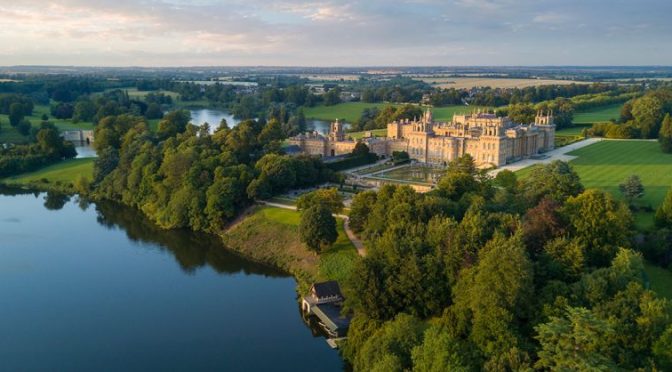
Blenheim Palace, Oxfordshire — the seat of the Duke of Marlborough — is one of the outstanding palaces of Baroque Europe, and was planned as both a residence and national monument.

Towards the end of the day on August 13, 1704, John Churchill, Duke of Marlborough, exhausted by an intense day of fighting near Blindheim, a village on the Danube, famously scrawled a note to his wife on the back of a tavern bill: ‘I have not time to say more but to beg you will give my duty to the Queen and let her know her army has had a glorious victory.’ The battle of Blenheim — as the name has been anglicised — was, in fact, a confrontation between a Franco-Bavarian army and the forces of a grand alliance of European powers, including the Dutch republic, Austria and Britain, over control of Spain and its empire. It was the first major defeat inflicted on a French army in the field for 50 years and was crowned by the capture of Louis XIV’s commander-in-chief, Marshal Talleyrand, who waited in the Duke’s coach as he scribbled his hasty message.

Although the plans of the building changed considerably over time, something close to the final design was published in the first part of Colen Campbell’s Vitruvius Britannicus (1715). As described by Campbell, ‘the manner is grand, the parts noble, and the air majestick of this palace, adapted to the martial genius of the patron…’ This latter quality was celebrated both in the ornament of the building with military trophies and its original title, ‘Blenheim Castle’.

Fig 5: The Saloon is overlooked by figures representing the four Continents and the marble doorcase is ornamented with an imperial eagle. Blenheim Palace, Woodstock, Oxfordshire, photographed for Country Life Magazine by Will Pryce. ©Country Life

Both Vanbrugh and Hawksmoor were well versed in medieval castle architecture and their knowledge of it shines through the spectacular outline of this building, its great angle towers and the rugged articulation of the masonry. Yet this is really a Classical castle suitable for a general of Britain in its newly assumed character as an Imperial power and second Rome. Borrowing Hawksmoor’s description of Castle Howard, as ‘the seat of one of the chief nobles of Britain, it is both a castle and palace conjoined’.

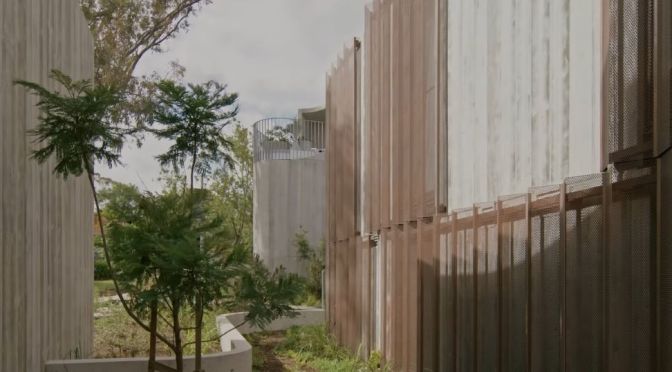
Design: Seymour House In Melbourne, Australia

An Architect’s own home, Seymour House is inserted as a respectful addition to its neighbourhood, openly embracing the streetscape lined with heritage-listed properties and modernist gems. In crafting the dwelling, Lani Fixler of Lani Fixler Studio has created a place that is private and personal whilst also engaging in an open conversation with the surrounds.

Timeline: 00:00 – The Local Project Print Publication 00:10 – Creating a Family Home 00:40 – Introduction to the Home 01:25 – Entering the Modernist Home 02:04 – Walking through the Home 02:47 – The Bedrooms and Bathrooms 03:19 – Landscaping 03:40 – Courtyard Sculpture 03:54 – Artwork Throughout the Home 04:29 – What the Architect is Most Proud Of 05:00 – Subscribe to The Local Project Print Publication

Located in a south-eastern suburb of Melbourne, Seymour House is an architect’s own home that draws from Lani Fixler Studio’s long-standing familiarity with the built environment. The project is one that expertly merges personal responses with the contextual. In the construction of Seymour House, a connection to the street was important, as well as embracing the constricted site instead of challenging it. Sitting adjacent to Harleston Park, Seymour House is an architect’s own home crafted to be a continuation of its natural setting, with only two concrete plinths defining the barrier between the public and the private. Throughout the building, modernism is championed through a natural and restrained materiality with the use of concrete, terrazzo, timber and slate. The consistency with which the palette is applied – with blockwork featuring as both an internal and external architectural element – celebrates the environment surrounding an architect’s own home. Expressing considered detail and the characteristics of an architect’s own home, Seymour House is imbued with a sense of personality that uplifts its understated aesthetic. Crafted to complement the history and culture of the surrounding neighbourhood, Lani Fixler Studio graciously allows past narratives to continue as new chapters unfold.

Australian Architecture: A Tour Of Courtyard House Near Melbourne

Working with its signature material base, FGR Architects creates Courtyard House – a concrete dream house with a functional and airy interior. Shielded from the street, the minimalistic home enables natural ventilation and a sunlit landscape.

Timeline: 00:00 – The Client Brief for the Home 00:46 – Surprising Entryway 01:09 – A Sense of Intimacy from the Street 01:31 – Entering the Home 02:34 – Concrete Features 03:20 – Other Materials Used in the Home 04:03 – The Architect’s Favourite Part of the Home

A low-profile building, Courtyard House represents a structural shift from the local built environment; an intriguing blur in the pattern of gable-roof constructions. Set back in its site, the dream house embraces its contextual standing, opening its grounds to the natural northern sunlight.

Upon approach, the architecture of the dream house outlines a sequence of 90 degree turns that leads residents from the footpath to the front gate, then to the main entry of the home. The journey serves to introduce the idea of connectivity, echoed within the interior design. The layout of Courtyard House intentionally fosters passive solar heating and natural ventilation. A sightline directly connects the entrance of the dream house to the backyard, whilst large sliding doors join the living-kitchen-dining area to the outdoor space. Though unique and compelling, Courtyard House is ultimately understated. Demonstrating skill in concrete and light play, FGR Architects creates a practical and elegant dream house that enables an immersive natural connection.

Homes: Anderson Road, Hawthorn, Australia

When an architect designs a home, the idea of balance is keenly considered. Testifying to this notion is Anderson Road, which sees B.E Architecture use custom flooring and landscape architecture to control the impact of a raw material palette.

00:00 – Introduction to the Home 00:41 – Utilising Raw and Natural Materials 01:22 – Strong Features and Elements in the Home 01:57 – Unique Connection of Buildings and Spaces 03:06 – Landscape Architecture 03:32 – Customised, Natural Timber Flooring 04:58 – Low Maintenance Living 05:19 – What the Architect is Most Proud Of 05:39 – What Made by Storey is Most Proud Of

A house tour of the resulting residence reveals a harmonious pairing of brickwork and natural timber. Located in the Melbourne suburb of Hawthorn, Anderson Road embraces the spatial opportunities afforded by its site. Externally, the architect designs a home that is staggered in levels; a series of buildings, separated by surprising pockets of landscape architecture. To the rear of the property, an expanse of greenery leads to the swimming pool. Internally, the architect designs a home with a dynamic spatial arrangement. Whilst the soaring ceiling of the living room interacts with the compressed hallway space, a statement ribbon staircase flows smoothly into an open kitchen that is centred on a concrete island bench. Responding to the brickwork of the house, timber flooring by Made by Storey softens the material character of the dwelling. When an architect designs a home, Made by Storey is on-hand to provide bespoke flooring solutions that embrace the desire for customisation. Selected in the warming colour of Sesame, the flooring of Anderson Road is comprised of narrow boards, with each echoing the profile of the brickwork. Pushing the boundaries of residential interior design, the architect designs a home that serves as a lesson in materiality. By balancing the impactful brickwork with timber flooring, B.E Architecture creates a sense of harmony within a dynamic and custom-made project.

Modern Architecture: 10 Apartment Home ‘Fenwick’, Kew, Melbourne, Australia

Uniting the gestures of interior design, architecture and landscape, Fenwick embodies a coherent vision of modern apartment homes. Developed by ANGLE in collaboration with Edition Office and Flack Studio, the building uses an evolving connection to context to answer an open design brief.

00:00 – Introduction to the Modern Apartment Homes 00:42 – The Client Brief 01:29 – Finding Inspiration for the Apartment’s Design 02:18 – The Kitchen Island Bench 02:35 – Durable Material Selection 03:10 – Hero Spaces 03:30 – Landscape Architecture 04:42 – Connection to Country

Situated on the banks of Yarra River in the Melbourne suburb of Kew, Fenwick straddles environments of dense forest and heritage buildings. As a unique by-product of its location – wherein nothing can be built in front of the home – the ten modern apartment homes have access to immersive, panoramic views that capture both the wilderness and city.

The exterior of Fenwick purposefully interacts with the natural surrounds. Conceived as a broken mass, the modern apartment homes are divided amongst three distinct pavilions that allow for view corridors between parts, extending across the gardens to the landscaped scenes beyond. Presenting Fenwick as an extension of the environment, Eckersley Garden Architecture designs a landscape reminiscent of the neighbouring greenery.

Lying beyond the modern apartment homes are layers of native shrubs, grasses and lower ground covers that change in accordance with the seasons, continuing to establish the development over time. With an interior design that draws the eye towards the outdoors, Fenwick thoroughly embraces its Kew context. By pursuing a connection to nature through interior design, architecture and landscaping, ANGLE ensures that the modern apartment homes effectively echo the language of the surrounds.

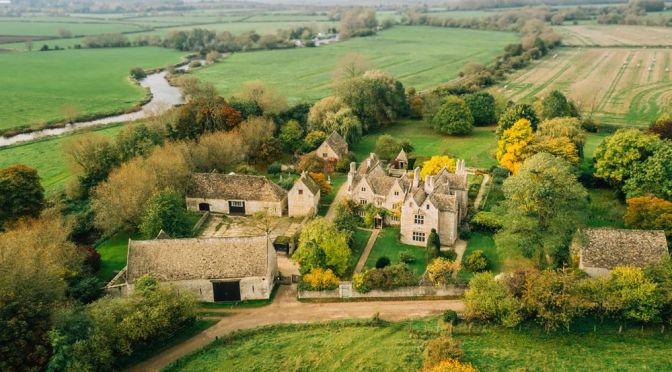
Home Tours: Kelmscott Manor In The Cotswolds

The architecture of Kelmscott Manor is woven into William Morris’s 1890 novel, News from Nowhere, in which a journey exploring utopian ideals in a post-industrial world leads, after much wandering, to a ‘many-gabled old house built by the simple country-folk of the long-past times’. There is no ‘extravagant love of ornament’ here, only a feeling that ‘the house itself and its associations was the ornament of the country life amidst which it had been left stranded from old times’. It is a poignant vision that underlines both a respect for the past and an ideal of a new society based on mutual interest and support.

Jeremy Musson, May 15, 2022

Today, this old stone-built farm house is best known as the Morrises’ country home, from 1871. First leased as a retreat from busy London life, it became a vital point of reference for Morris, as artist, designer and poet; it was his ‘Heaven on Earth’, and a source of profound emotional and artistic inspiration.

Kelmscott Manor, Oxfordshire

Fig 2: The first-floor Tapestry Room, with a carved 1660s chimneypiece, is hung with a late-17th-century Oudenarde tapestry. Kelmscott Manor, Oxfordshire. ©Paul Highnam for Country Life

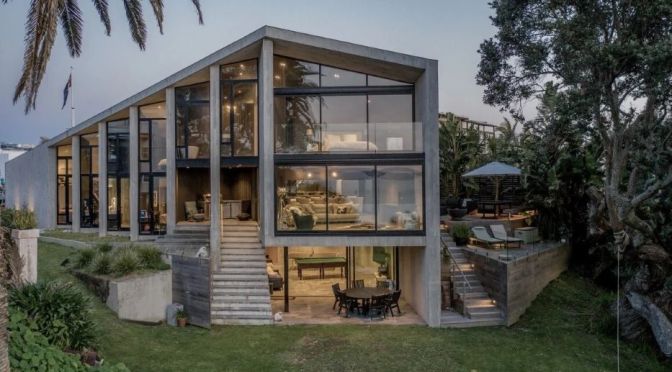
Concrete Architecture: The Sandcastle In Point Chevalier, New Zealand

As an architectural house, The Sandcastle by Ponting Fitzgerald Architects champions the creative and structural benefits of concrete. Inspired by a sandcastle and built by Bannan Construction, the sculptural building is firmly established within its coastal context.

00:00 – An Introduction to the Architectural House 00:53 – Creating a Sandcastle 01:19 – Entering the House 02:06 – Building for the Coastal Climate 02:32 – A Unique Use of Concrete 03:37 – Materiality 04:07 – Lighting in the House 04:25 – Unique Qualities of the House 05:00 – What the Builder is Most Proud Of

Built within the inner harbour zone of Point Chevalier, The Sandcastle is situated directly above the shore. Sitting on a bluff of land that resembles a sand dune in constitution, the three-storey concrete home is conceived as an architectural house that naturally extends from the surrounding landscape. A house tour of The Sandcastle evidences its status as an architectural house, with the form of the building representing a playful yet sophisticated interpretation of a sandcastle. Concrete plays an important role in realising the shape of the home, offering endless formal possibilities in its pre-set, liquid state. Ponting Fitzgerald Architects crafts a dynamic materiality that withstands the erosive coastal climate. Although the concrete exterior interacts with the salt, wind and water of the environment – gracefully expressing the passage of time through a weather-beaten appearance – The Sandcastle maintains its structural integrity, establishing itself as an architectural house embedded in the landscape. With the help of Bannan Construction, Ponting Fitzgerald Architects creates an architectural house that is both rugged in nature and refined in form and concept. The Sandcastle stands as an enduring aspect of the coast; a solid piece of architecture, made in recognition of place.

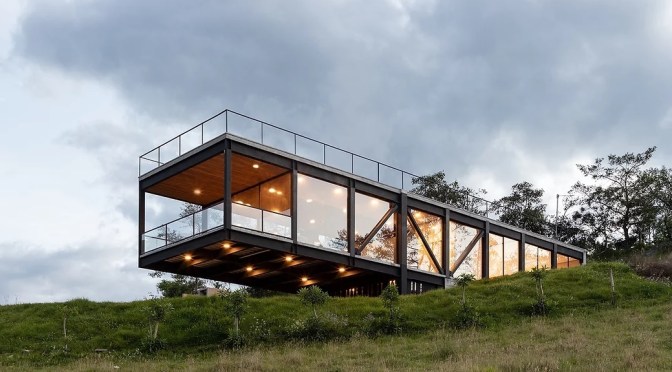
Architecture: CASA SAN PABLO DEL LAGO In Ecuador

Bernardo Bustamante Arquitectos realizes this ‘Casa San Pablo del Lago’ SPL house as a retreat to inspire a connection with the landscape of  Ecuador. Emerging from the slopes of San Pablo Lake, the  dwelling  overlooks the community of Pijal — a place populated primarily by indigenous Otavaleña people. From its sloping site, the mountains and volcanoes which make up the North Ecuadorian Andes stand in full view, creating a grand frame around the scenic lake below.

Read more

English Architecture: Arts And Crafts Willards Farm In Surrey & Sussex

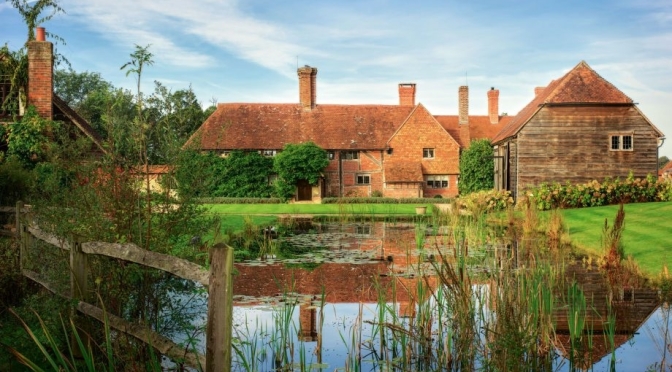
The older farmhouses scattered across rural, deeply wooded areas on the Surrey and Sussex border have lost nothing of their appeal in the 21st century. Willards Farm, near Dunsfold, has recently been subject to sympathetic renovation and substantial extension. At its core, the house is a four-bay, 16th-century timber-frame house of two storeys, under a clay-tile roof, with a substantial off-centre chimney stack. It occupies an elevated site and was extended to its northern end in the 1930s and to the south in the 1980s. The latest works, completed in 2019, were imaginatively designed by architect Stuart Martin for a young family.

The brick walls enclosing the pool house create the impression of a traditional farmstead enclosure and the tiled coping echoes the treatment of a Lutyens pergola at Pasture Wood, Dorking, of about 1912. One angle of the walls is resolved with a fine dovecote and ceramic decoration of the pool by Craig Bragdy means that it resembles an ornamental pond.

Willards Farm

Willards Farm, Surrey. ©Paul Highnam for Country Life

Architecture: Flinders Residence – A Modern Cabin Design In Australia

Flinders Residence is a modern cabin mansion imbued with the romantic character of a farm-style home. Created by Abe McCarthy Architects with an interior crafted by AV-ID, the coastal building combines minimalism and luxury to benefit a growing family.

Timeline: 00:00 – Introduction to The Modern Cabin Mansion 00:46 – The Reveal 02:09 – Collaboration Between Architect and Interior Designer 02:47 – Use of Materials 03:27 – Contrast Between Light and Dark 04:10 – Design and Detail 04:44 – Materials, Products and Furniture Round-Up 06:18 – What the Interior Designer is Most Proud Of

Aptly removed from the city workings of nearby Melbourne, Flinders Residence sits in its namesake town as a modern cabin mansion. The building is first revealed at the end of a long driveway, standing as three interconnected pavilions nestled within the landscape. Located at the entry point of the home is an architecturally framed view of the horizon, whilst a sense of volume created by the barn-style framework contributes to the dramatic experience of the internal envelope of the modern cabin mansion.

The interior design of the modern cabin mansion intertwines the aesthetic preferences of both homeowners. A minimalist scheme of contrasting light and dark tones is complemented by luxurious materials and finishes, including Brazilian granite, marble, brass and bronze.

The use of timber pays homage to both clients’ involvement in the timber industry. Inspired by European and American homesteads, Flinders Residence stands as a refined and modern cabin mansion. Using a sophisticated and restrained materiality, the design successfully captures the romantic appeal of a farm-style home whilst adding a luxurious touch.