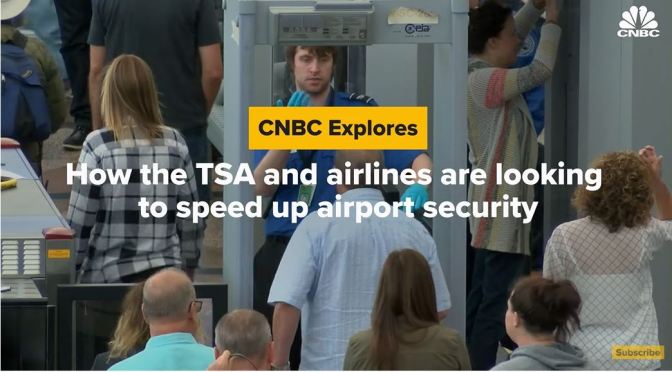
There once was a time when getting through airport security was quick and easy. But after the attacks on 9/11, the TSA, or Transportation Security Administration, was created and security screenings became much more thorough. With millions of people passing through TSA checkpoints everyday, this can create excruciating long lines, especially during holiday travel. Despite enhancements in technology like millimeter wave imaging and CT scanners, the airport security process has been slow to evolve. But that may soon be changing.
Delta, JetBlue, and American Airlines are just a few of the U.S. airlines starting to test facial recognition for boarding and TSA checkpoints. The TSA is also working with companies on designing better screeners so passengers don’t have to remove anything from bags and can leave their shoes on. CNBC explores how far we’ve come in airport security and the ways the TSA and airlines are looking to speed up and make airport security even safer.
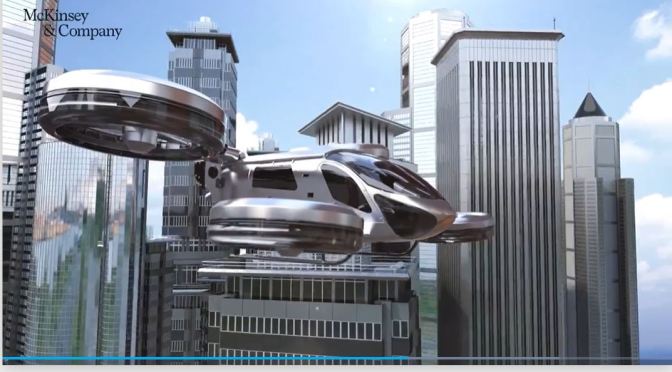
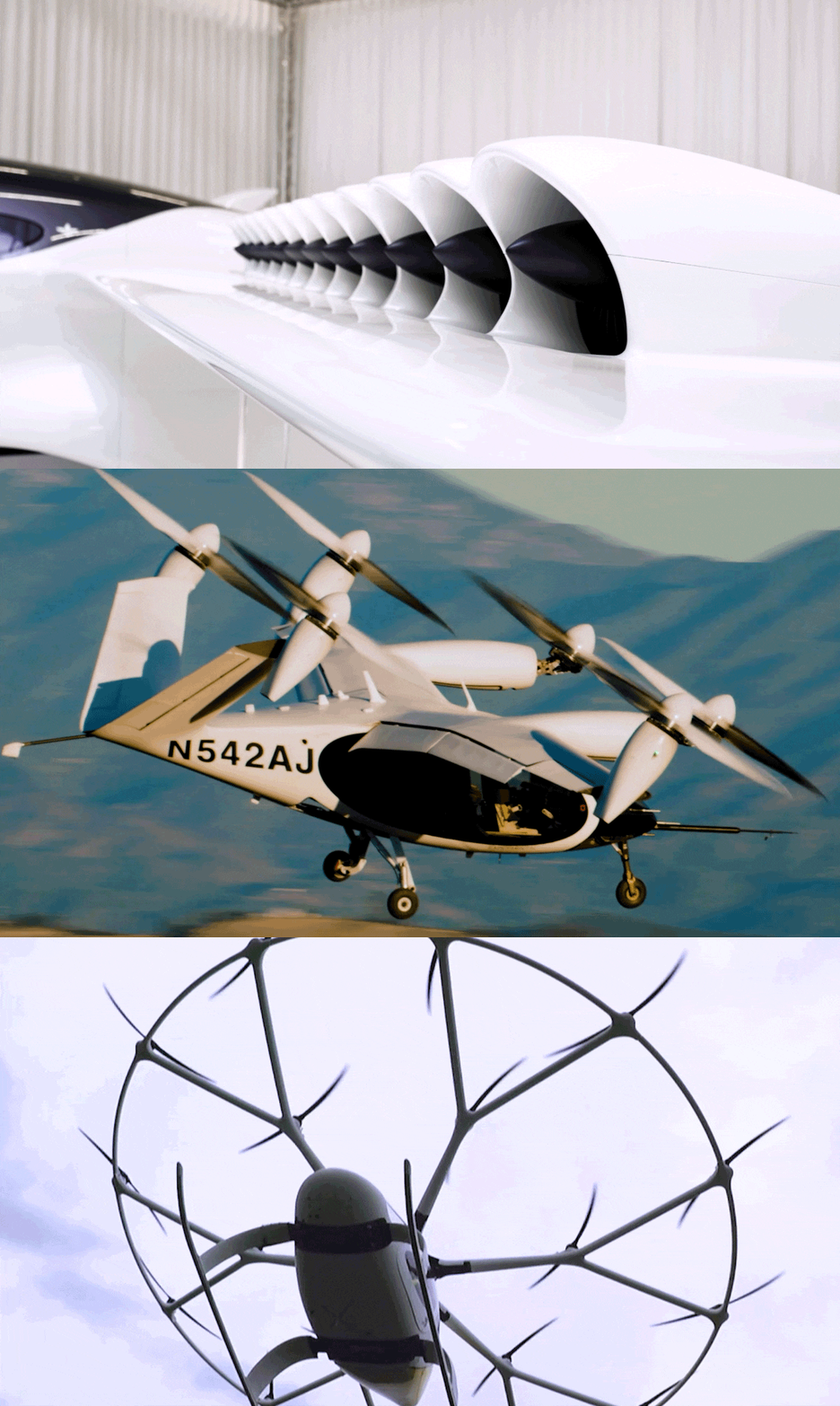
Look! Up in the sky! Not a bird … or a plane … it’s an eVTOL! An eVTOL (pronounced “ee-vee-tol”) is an electric vertical takeoff and landing aircraft—and thousands of them could be flying above cities by 2030.
“Flying taxis will happen; it’s a question of ‘when,’ not ‘if’”
What new modes of air transportation will exist in 2030? Could eVTOLs replace cars by then? Will passenger aircraft be piloted or autonomous—or somewhere in between? McKinsey’s Kersten Heineke, Benedikt Kloss, and Robin Riedel imagine the future of advanced air mobility.
Passenger airlines are a crucial industry in the global economy, but the sector is also extremely volatile. Running a passenger airline is an asset-intensive industry with narrow profit margins.
Despite the risks, the industry has experienced some periods of consistent growth, which can lull investors into a false sense of security. Watch the video above to learn whether investors should steer clear of the sector and why passenger airlines struggle to stay profitable.
Video timeline: 0:00 – Introduction 1:35 – Industry shocks 6:16 – Business models 8:28 – Deregulation and consolidation 12:55 – Industry outlook
Billionaire investor Warren Buffett once called himself an “air-o-holic” because of how tempted he is to invest in commercial airlines. But he learned the hard way, twice, that the industry can be a risky bet. Airline stocks have been on a wild ride since the beginning of the pandemic, which shows just how volatile the sector can be. “It seems that airlines once or twice a decade are hit with these really hard-to-process exogenous shocks, whether it’s something like 9/11 or the Great Recession,” said Adam Gordon, managing director and partner at Boston Consulting Group’s Airline Practice. The passenger airline industry is already asset-intensive, with narrow profit margins. Despite the risks, the industry has experienced some periods of consistent growth. Airlines saw big growth in profits for about a decade prior to Covid, which analysts attribute to the airlines restructuring post-9/11. These periods can lull investors into a false sense of security. In 2017, the CEO of American Airlines said he was confident the business was never going to lose money again. Airline stocks may be appealing to investors because the industry is crucial to the global economy. “If you just step back and you think about what service airlines are offering, they’re putting you in a metal tube, taking you up to 40,000 feet, and transporting you in relative or absolute comfort at hundreds of miles an hour to get from point A to point B. And if you think about the substitutes for that service, like, there really aren’t any,” said Gordon. “So it’s kind of surprising to me that an industry that delivers that kind of a service and does it with an absolutely impeccable operational and safety record is able to come under such pressure,” he added.
This $30 million Super Scooper is the only plane in the world that was designed specifically to fight wildfires. The aircraft performs a dangerous dive down to a body of water, scoops up 1,400 gallons of water in 12 seconds, and drops its load of water on raging forest fires. We went inside this massive aircraft to find out how it works, what it takes to fly it, and why it’s considered the most efficient aerial-firefighting aircraft in the world.
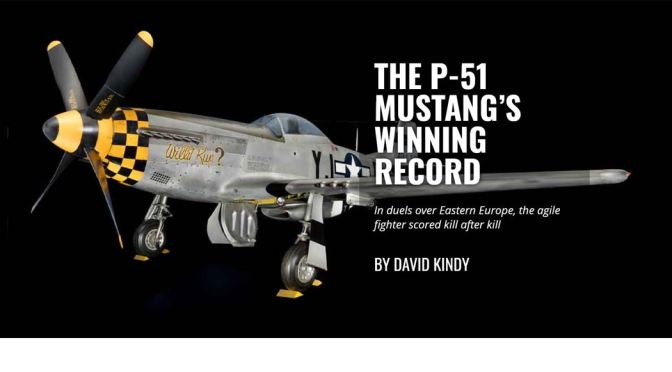
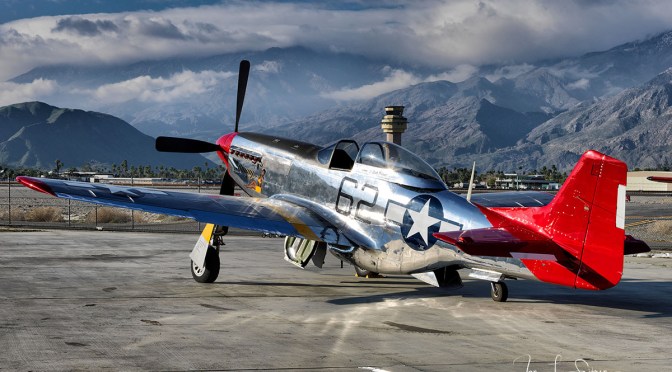
The P-51 was the darling of the Army Air Forces. Aerodynamically agile and acrobatic, the Mustang was fast and furious in its effectiveness in downing enemy aircraft. A latecomer to World War II, it first saw combat over Europe near the end of 1943. The long-range fighter proved to be just what the Allies needed to escort bombers to and from Germany as they hammered enemy targets.
Aug. 2, 2021, 6 a.m.
“In terms of the air war over Europe with the strategic bombing campaign, the P-51 was a war-winning weapon,” says Jeremy Kinney, associate director of research and curatorial affairs at the Smithsonian’s National Air and Space Museum. “As a fighter escort, it enabled the successful bombing of targets deep in Nazi Germany from bases in England and Italy. That was a crucial component in the destruction of strategic sites such as factories and munition plants.”
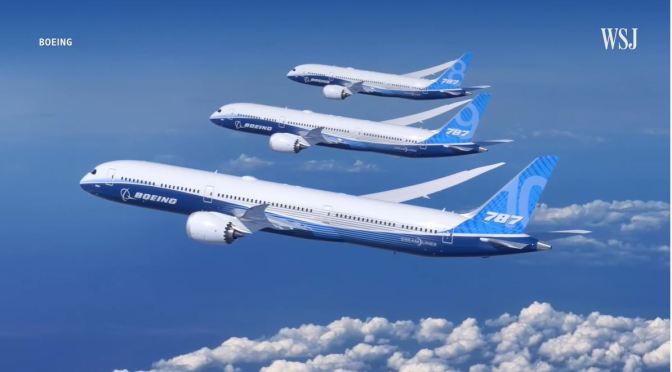
Inventories of the wide-body planes are piling up, as deliveries remain halted A new defect on Boeing’s Dreamliner aircraft surfaced in July, the latest in a series of issues that arose late last summer. Deliveries of the popular plane are now halted, pressuring Boeing’s profits. WSJ’s Andrew Tangel explains how Boeing got here. Photo: Bloomberg News
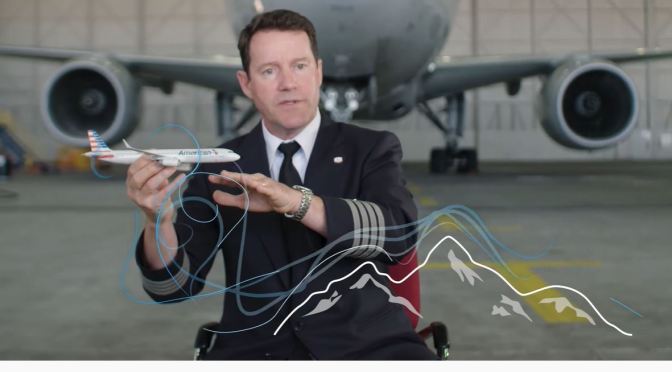
After decades of flying, pilot Stuart Walker says turbulence isn’t entirely predictable. But there are different types of turbulence pilots watch for. Walker explains each one and what pilots do to avoid a bumpy ride. Illustration: Alex Kuzoian for The Wall Street Journal
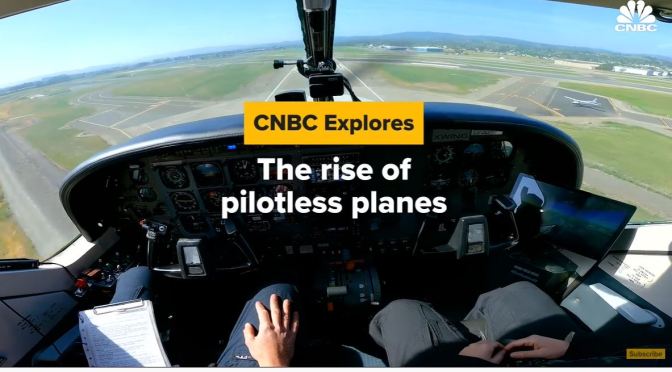
Over the past 100 years, the technology inside airplanes has become more and more advanced from jumbo jets to smaller Cessna’s. Some see the next step to full automation as removing the pilot completely. Reliable Robots and Xwing are two Bay Area start-ups working on doing just that. Rather than build new aircraft, both companies have retrofitted Cessna Grand Caravan’s. The planes can fly autonomously with a remote operator who monitors the flight and can take control if needed. Both companies are working with the FAA on getting approval. Xwing took CNBC for a test flight, where the pilot didn’t touch the controls once. Watch the video to learn how it works and when pilotless planes will become the norm.
The Palm Springs Air Museum, is a non-profit educational institution in Palm Springs, Riverside County, California. The Museum’s mission is to exhibit, educate and eternalize the role of the World War II combat aircraft and the role the pilots and American citizens had in winning the war.
The Concorde was one of the most spectacular passenger aircraft ever built. But 113 people died when a French Concorde crashed in July 2000. Soon afterward, the era of the supersonic passenger plane came to an end.
The legend of the Concorde lives on, not least because it was a technical marvel. For 30 years, it thundered across the Atlantic at the speed of a bullet: Concorde could outrun the clock, arriving in New York earlier than it had departed Paris or London. Only a few could afford to fly at double the speed of sound: executives, pop stars and luxury vacationers who didn’t balk at ticket prices of around $10,000.
The disaster occurred on July 25, 2000, near Paris. It still raises questions. Few know that on that fateful day two Concordes left Paris for New York due to a high number of passengers flying to board a cruise. Travelers had the ability to switch their booking between two flights, a decision that would cost some of them their lives. This documentary tells the eventful story of supersonic flight, including other planes like the Soviet TU-144, known as “Konkordski”. Plans for a new supersonic passenger jet have long been in the works. The first prototypes are on the way, but air travelers still have a while to wait before they can again reach supersonic speeds.
News, Views and Reviews For The Intellectually Curious




 Boomers Daily