
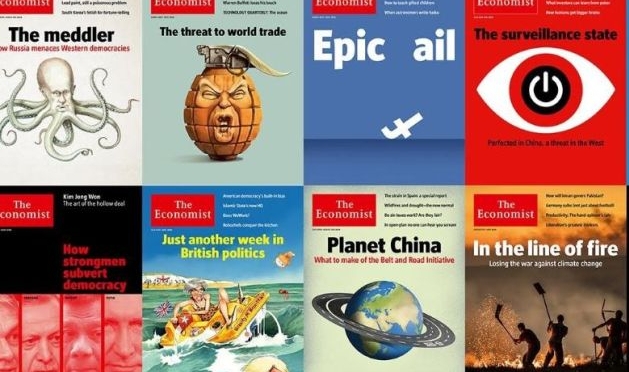
Vladimir Putin is isolated and morally dead. He is turning himself into a 21st-century Stalin, resorting as never before to lies, violence and paranoia at home. Our cover this week https://t.co/hjbSofY2U4 pic.twitter.com/dhqEnX2ZLq
— The Economist (@TheEconomist) March 10, 2022
All posts by She Seeks Serene

Science: Scanning Sewage For Covid-19, Pandemic Questions, Future Threats
First up, Contributing Correspondent Gretchen Vogel joins host Sarah Crespi to discuss what scientists have learned from scanning sewage for COVID-19 RNA. And now that so many wastewater monitoring stations are in place—what else can we do with them?
Next, we have researcher Katia Koelle, an associate professor of biology at Emory University. She wrote a review on the evolving epidemiology of SARS-CoV-2: What have been the most important questions from epidemiologists over the course of the pandemic, and how can they help us navigate future pandemic threats?
Check out the full COVID-19 retrospective issue on lessons learned from the pandemic.
This week’s episode was produced with help from Podigy.
[Image: Stephan Schmitz/Folio Art; Music: Jeffrey Cook]
[alt: partially constructed bridge over water filled with giant SARS-CoV-2 viral particles]
Authors: Sarah Crespi; Gretchen Vogel
Episode page: https://www.science.org/doi/10.1126/science.adb1867
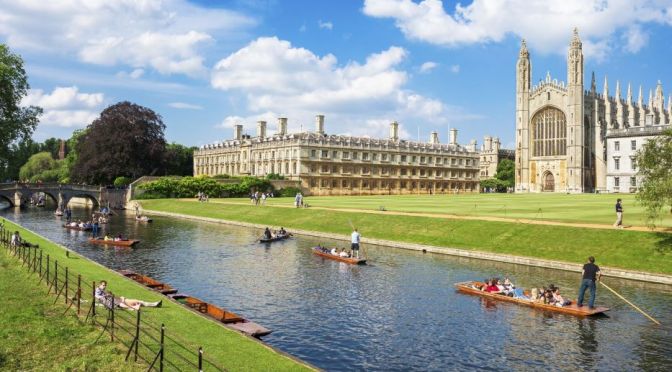
Tours: The University Of Cambridge In England
University of Cambridge, English autonomous institution of higher learning at Cambridge, Cambridgeshire, England, on the River Cam 50 miles (80 km) north of London.
The start of the university is generally taken as 1209, when scholars from Oxford migrated to Cambridge to escape Oxford’s riots of “town and gown” (townspeople versus scholars). To avert possible troubles, the authorities in Cambridge allowed only scholars under the supervision of a master to remain in the town. It was partly to provide an orderly place of residence that (in emulation of Oxford) the first college, Peterhouse, was founded in 1284 by Hugo de Balsham, bishop of Ely. Over the next three centuries another 15 colleges were founded, and in 1318 Cambridge received formal recognition as a studium generale from Pope John XXII.

Science: Future Of Energy, Amazon Rainforest, CRISPR
The war in Ukraine has sparked an energy crisis, as European countries attempt to cut ties with Russia. The team discusses what this means for the future of energy production and how it may speed up our pivot to renewable energy. They also explore the growing concerns at various nuclear sites in Ukraine, as some have been seized by the Russians, while others have been damaged during the conflict.
For the first time a virgin birth has taken place in a mammal – a female mouse has given birth without any input from a male. The team explains how CRISPR gene editing has been used to create embryos from unfertilised eggs.
As the Amazon rainforest becomes less resilient to drought, there are fears it may be passing a tipping point that could turn the whole system from forest into savannah. Earth system scientist Tim Lenton of the University of Exeter explains the devastating global impact this would have.
Taking a much-needed trip off the planet, the team discusses two stories from Mars, one from NASA’s Perseverance rover and another from China’s Zhurong rover. We also present an audio space-quiz you can take part in! Thanks to NASA/JPL-Caltech/LANL/CNES/CNRS/ISAE-Supaéro for the audio clips.
And legendary cosmologist Martin Rees shares his thoughts on the existence of extraterrestrial intelligence in the universe and the fascinating concept of ‘secular’ intelligent design.
On the pod are Rowan Hooper, Penny Sarchet, Matt Sparkes, Adam Vaughan and Richard Webb. To read about these stories and much more, subscribe at newscientist.com/podcasts.

Museum Tour: ‘Van Gogh And The Olive Groves’ (4K)
‘Van Gogh and the Olive Groves’ (11 March 2022 – 12 June 2022).
Van Gogh made fifteen paintings of olive groves, constantly experimenting with various approaches. Fascinated by the gnarly shapes of the olive trees and their ever-changing colours, he painted them over and over. He painted at different times of the day and used colours inspired by the season. Vincent himself considered his paintings of olive trees to number amongst the best he had made in the South of France.
This exhibition reunites Van Gogh’s paintings of olive groves and exhibits them together for the first time, thanks to unique loans from museums in Europe and the United States.
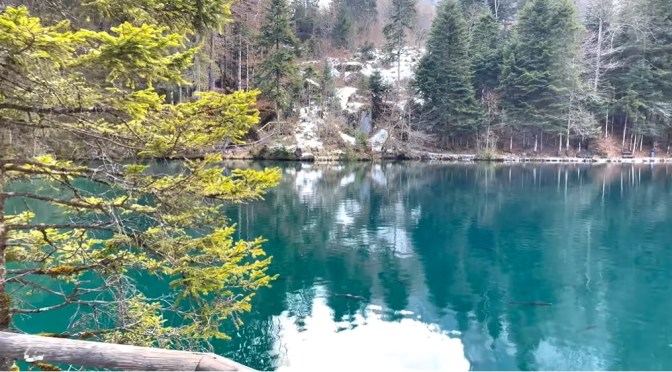
Lake Walks: Blausee In Western Switzerland
Blausee, Switzerland is a beautiful lake where the water is crystal clear with a lot of fish with relaxing music and nature sounds. Blausee is a lake in Bernese Oberland, Kandergrund, Switzerland. It is located near the Kander river. The lake has an elevation of 887 metres and an area of 0.64 hectares. The eyes of the beautiful maiden who died of a broken heart were deep blue. The Blue Lake is also deep blue, in eternal memory of the love of the maiden, which persists beyond death. The small Blausee, steeped in legend, is located in the midst of a small nature park.

Morning News: Economic Fallout From War, Energy Prices & Inflation, Europe
A.M. Edition for March 11. The economic fallout caused by the war in Ukraine, higher energy prices and inflation isn’t being felt equally around the world.
WSJ columnist Jon Sindreu details why the Senate’s passage of an omnibus spending bill could provide a tailwind to the U.S. economy, even as BMO GAM’s chief economist Steven Bell explains why Europe may soon face a recession risk. Luke Vargas hosts.

Front Page View: The Wall Street Journal – March 11
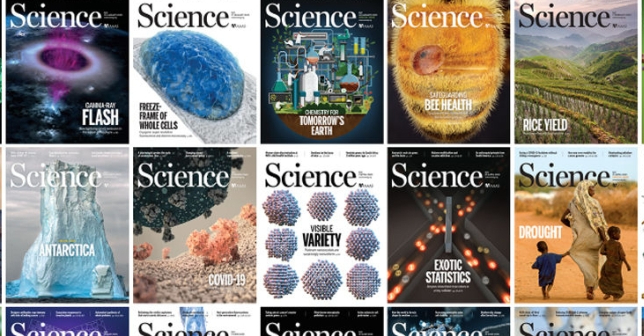
Cover Preview: Science Magazine – March 11
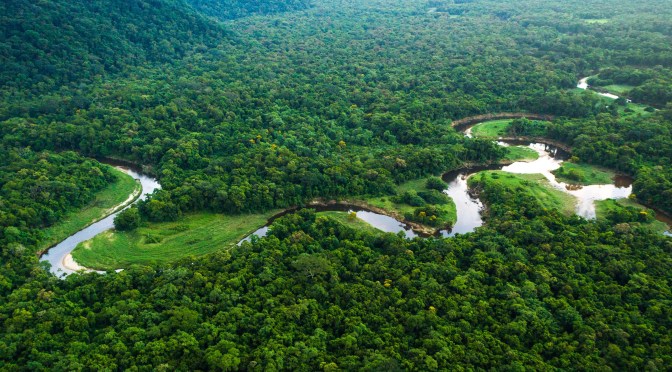
Rainforests: Indigenous People Struggle In Brazil
“They used to kill us with guns, now they kill us with deforestation and dams.” The Brazilian government’s failure to protect the Amazon forest is forcing the Munduruku indigenous people to take action against land grabs and illegal logging – and try to save the rain forest on their own.
In an unprecedented movement led by Chief Juarez Saw Munduruku, for the last six years indigenous people have been fighting the theft and destruction of their forest home. Since 1970, 20% of the Brazilian Amazon has been deforested. Logging and forest fires are threatening a further 20%. Scientists say that at 40% deforestation, we will reach the point of no return. The forest will be lost forever, replaced by savannahs – and the environmental consequences will be catastrophic.
The Amazon is often known as ‘the lungs of the planet,’ producing 6% of the world’s oxygen. It is no secret that the rainforest has been losing a dramatic fight against an array of threats, encouraged by capitalism, consumerism and greed – both legal and illegal.
In today‘s Brazil, some 600,000 square kilometers of land – an area about the size of France — are farmed by farmers who don’t officially own it. The military dictatorship (1964-1985) encouraged them to settle on state-owned land, but the farmers never became legal owners. As a result, speculators now seize the areas, clear the forests, then resell the plots with forged title deeds. This land grab, known as “grilagem” in Portuguese, has led to uncontrolled forest clearing and fierce conflicts.
The documentary was shot from 2014 to 2020, under three different Brazilian governments. It provides deep insights into the drama of the illegal occupation of state land and forest areas by organized crime groups. Several indigenous peoples have united under Juarez Saw Munduruku, leader of the Munduruku people, in a last-ditch bid to save the planet’s most important forest.
 Boomers Daily