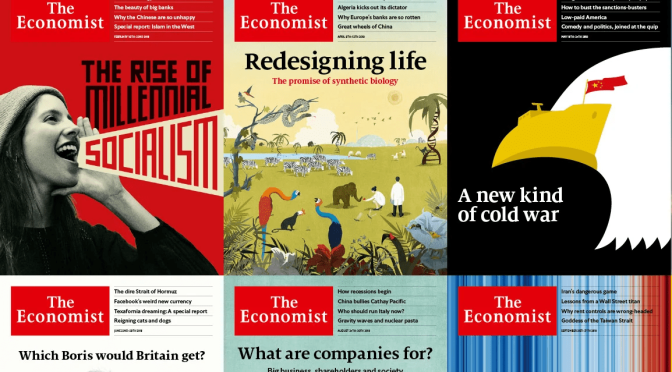
THE ECONOMIST MAGAZINE – AUGUST 16, 2025 PREVIEW

THE ECONOMIST MAGAZINE: The latest issue features How to win at foreign policy

How to win at foreign policy

Donald Trump’s capricious dealmaking destabilizes the world

Xi Jinping’s weaponisation of rare-earth elements will ultimately backfire

How the West can break China’s grip on these vital minerals

America and its Asian allies need to spend more to deter China

It should be a two-way street

The shutdown of ocean currents could freeze Europe

When climate change poses a strategic threat, it needs a strategic response

Why South Africa should scrap Black Economic Empowerment

The ruling party’s flagship policy is a cause of the country’s problems, not a solution

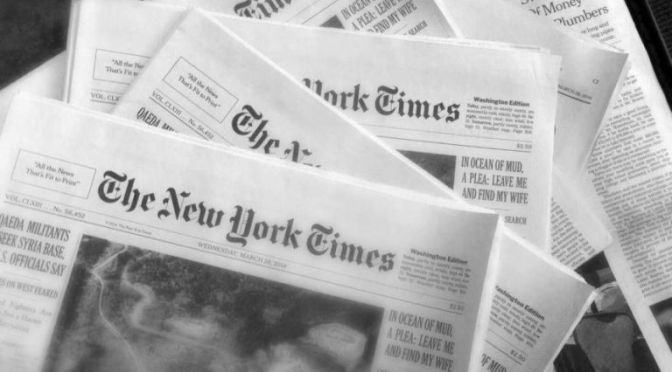
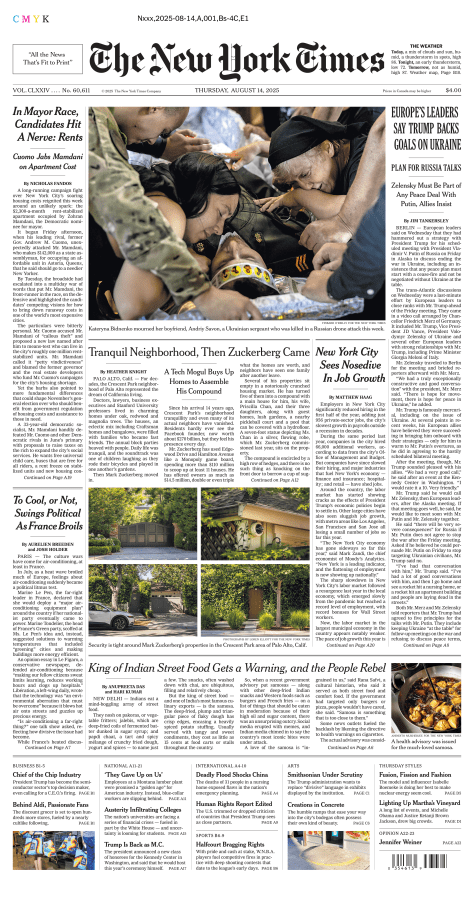
THE NEW YORK TIMES – THURSDAY, AUGUST 14, 2025

Why Putin Thinks Russia Has the Upper Hand

As he heads to Alaska for talks with President Trump, Vladimir Putin is projecting confidence that his edge on the battlefield will secure a peace deal on his terms.

How a Call From President Trump Ignited a Frantic Week of Diplomacy by Ukraine

Once a vague proposal for a territorial swap gained clarity, a worried President Volodymyr Zelensky worked to rally allies before Friday’s Trump-Putin summit.

Fed Faces High Bar for Big Cuts Despite White House Pressure

The Federal Reserve is poised to lower interest rates in September. But signs of stickier inflation could limit how much relief officials can ultimately provide.

Trump Wants to ‘Take Back’ D.C., but the Federal Government Controls Much of It

President Trump and his allies have berated local officials. Yet the federal government has often made it harder for those officials to manage the capital.

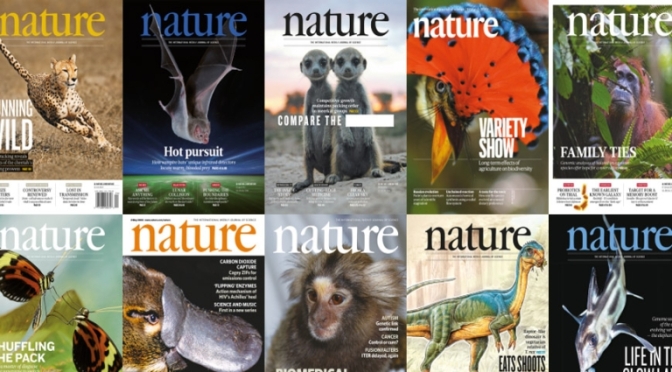
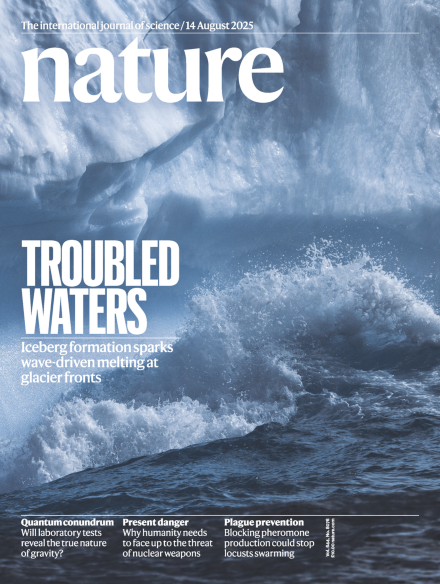
NATURE MAGAZINE – AUGUST 14, 2025 RESEARCH PREVIEW

Volume 644 Issue 8076

NATURE MAGAZINE: The latest issue features ‘Troubled Waters’ – Iceberg formation sparks wave-driven melting at glacier fronts.

Globally recognized island is losing its trademark glaciers

Ice coverage is shrinking on Heard Island — a UNESCO World Heritage Site and a haven of biodiversity.

Tiny motor uses heat to perform molecular magic

A nanoscopic machine transforms a molecular chain into interlocking loops.

How animal paw pads got their toughness

In creatures that walk on land, a protein called Slurp1 protects skin cells from stress.

Mystery of billions of sea-star deaths solved at last

Experiments identify a bacterium as the cause of sea-star wasting disease, which has devastated populations along the western coast of North America.

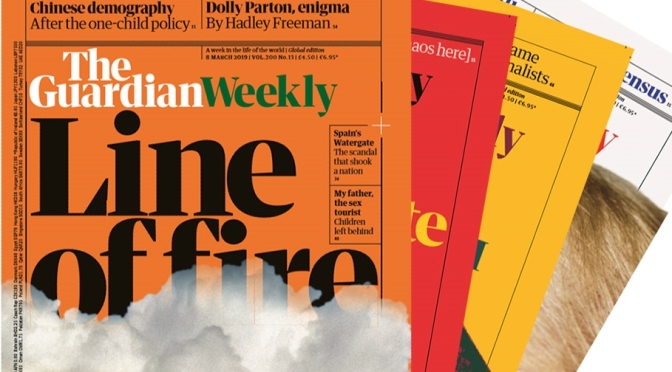
THE GUARDIAN WEEKLY – AUGUST 15, 2025 PREVIEW

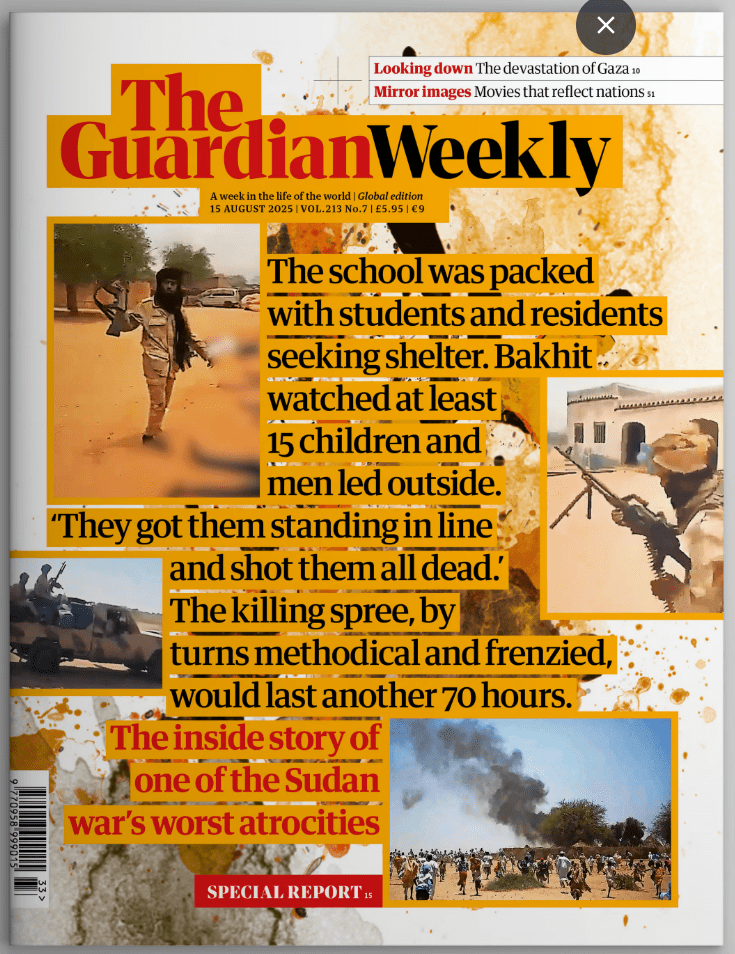
THE GUARDIAN WEEKLY: The latest issue features Sudan’s hidden horror: The inside story of a refugee camp massacre. Plus: The films that capture a nation’s soul

While the wars raging in Ukraine and Gaza have dominated global news agendas for months turning into years, relatively little attention has been paid to the ongoing civil war in Sudan – which for many western media outlets remains out of sight and largely out of mind.

This can’t be said of the Guardian’s Mark Townsend, who has reported tirelessly on the effects of the war between the Arab-led Rapid Support Forces and Sudanese military since it broke out in April 2023. It’s a conflict that has been characterised by repeated atrocities, forcing millions from their homes and causing the world’s largest humanitarian crisis.

In April this year, just as a British-led conference was being held in London to explore how to end the war, one such atrocity was unfolding in Zamzam refugee camp in North Darfur. Details were at first sketchy, but only now – thanks to the piecing together of intelligence reports and witness testimony – can it be revealed what happened during the attack on the camp by RSF forces and why it was not stopped.

As Mark’s remarkable account reveals, the 72-hour rampage in April may have taken the lives of more than 1,500 civilians in one of the most notorious war crimes of Sudan’s catastrophic conflict.

Five essential reads in this week’s edition

The big story | The ruins of Gaza, as seen from above
Guardian international correspondent Lorenzo Tondo joins a Jordanian military airdrop for a rare chance to observe a landscape devastated by Israel’s offensive. With photography by Alessio Mamo

Science | The truth about sunscreen
Too much exposure to the sun has traditionally been seen as a danger. Now claims that sunscreen is toxic flood the internet. Our science editor, Ian Sample, weighs up the evidence

Interview | Demis Hassabis, the cautious AI optimist
The head of Google’s DeepMind tells Steve Rose how artificial intelligence could usher in an era of ‘incredible productivity’ and ‘radical abundance’. But who will it benefit?

Opinion | The world is in flames. But I’ve found some hope amid the gloom
Columnist Jonathan Freedland makes a moral case for escapism, as a means of retaining the ability to see the world – and the people – around us

Culture | The films that capture a nation’s soul
What single film best represents a nation? Twelve writers choose the one work they believe most captures their home’s culture and cinema – from a bold cricket musical to a nine-hour documentary, gritty crime dramas to frothy tales of revenge

The Multi-Faith Prosperity Of 10th-Century Córdoba

By Michael Cummins, Editor, August 13, 2025

While much of Christian Europe was mired in the intellectual and economic stagnation of the so-called “Dark Ages,” 10th-century Córdoba, the capital of the Umayyad Caliphate of al-Andalus, blazed as a singular exception in the medieval world. It was not merely its population of over 250,000, its paved streets, or its public baths that made it a marvel. The true marvel of Córdoba lay in its unprecedented model of intellectual and economic collaboration, a model that harnessed the talents of its diverse Muslim, Jewish, and Christian populations. While modern historians like [suspicious link removed] have rightly challenged the romanticized notion of a perfect convivencia—or coexistence—there is no denying that the collective contributions of its Jewish and Christian communities were not peripheral. They were, in fact, integral to the caliphate’s rise as a preeminent power, forging a society so unique that it stands apart in human history.

This era’s success was a testament to a pragmatic, collaborative environment. As scholar María Rosa Menocal eloquently argued in her book, The Ornament of the World, the period was defined by a culture where “tolerance was an inherent aspect of Andalusian society,” allowing for an extraordinary degree of exchange and innovation. In this multi-faith environment, Jewish and Christian communities were not simply tolerated subjects; they were indispensable collaborators. Their contributions were so intertwined with the caliphate’s achievements that its success would have been impossible without them. This collaborative ethos also extended to the roles of women, who, despite the era’s patriarchal legal framework, rose to prominence as scholars, poets, scribes, and even political figures, further enriching the city’s intellectual and cultural life.


The Engine of Scholarship: A Shared Knowledge Base

The intellectual life of 10th-century Córdoba was a testament to the power of a shared, multilingual knowledge base, a system that was virtually without parallel in the medieval world. The Umayyad rulers, particularly Caliph al-Hakam II, created the institutional framework for learning. A dedicated bibliophile, al-Hakam II amassed a caliphal library that some sources claim numbered as many as 400,000 volumes, commissioning scribes and bookbinders to produce new copies.

While monastic libraries in Christian Europe contained only a few hundred manuscripts, often focused on religious dogma, the caliphal library was a dynamic workshop where scholars of all faiths worked side by side to translate ancient Greek and Latin texts, a process that preserved and expanded upon classical knowledge largely lost to the rest of Europe. The caliph’s agents were dispatched across the Islamic world and beyond to acquire rare manuscripts on every conceivable subject, from medicine and astronomy to poetry and philosophy.

The caliph’s patronage extended to a diverse group of intellectuals who curated the collection, and the role of women in this intellectual flowering was particularly striking. Among them was Lubna of Córdoba, a remarkable intellectual, poet, and mathematician who rose from slavery to become one of al-Hakam II’s most trusted secretaries, instrumental in the administration of the library itself. Her story is a powerful example of the city’s unique meritocratic ethos, where talent and intellect could transcend social barriers.

The contributions of women in scholarship were not limited to Lubna; records show that hundreds of women worked as professional scribes and copyists, transcribing books and manuscripts for the royal library. Beyond the library, the era produced celebrated female poets and scholars whose work was highly regarded, such as ‘A’isha bint Ahmad al-Qurtubiyya, a renowned poet and calligrapher, and the poet Wallada bint al-Mustakfi, famous for her sharp wit and love poems.

The Great Mosque of Córdoba served as the city’s de facto university, a hub of religious and secular learning where scholars and students from diverse backgrounds gathered for instruction. The caliphs funded chairs for distinguished professors, and the mosque’s courtyards provided a space for open intellectual exchange, fostering a culture of critical inquiry and debate. As Dr. Nowar Nizar Al-Ani and his colleagues noted, this institutional framework was designed to “foster a kind of intellectual pluralism that was revolutionary for its time.”

It was in this environment that Jewish and Christian scholars were not just conduits for old ideas but active contributors to new ones. The Jewish community, in particular, experienced a golden age under this system. Hasdai ibn Shaprut, a Jewish court physician and scholar, was at the forefront of medical research and botanical studies. He was also a major patron of Jewish intellectual life, sponsoring scholars and poets who would compose masterpieces of Hebrew literature and helping to establish Córdoba as a new center for Jewish scholarship, eclipsing the traditional academies in Baghdad.

This era also produced pioneering scientific advancements, such as those of the physician Abulcasis (Al-Zahrawi), a key figure of the late 10th century. He wrote a comprehensive 30-volume medical encyclopedia, Al-Tasrif, which was revolutionary for its detailed descriptions of surgical procedures and instruments, many of which he invented. His work would become a standard medical text in Europe for centuries, directly influencing the development of surgery.

The fusion of knowledge and faith led to a unique intellectual environment where, as Jerrilynn D. Dodds‘s edited volume, Al-Andalus: The Art of Islamic Spain, suggests, “the arts of the mind were as celebrated as the arts of the hand.” This collaborative spirit permeated scholarly life: a Christian monk might have been translating a Greek medical treatise in one corner of a library while a Jewish botanist analyzed a new plant in another. It was this cross-pollination of ideas, made possible by the linguistic and cultural fluency of the Christian and Jewish communities, that truly powered Córdoba’s intellectual engine.


The Foundation of Prosperity: Economic and Diplomatic Contributions

The wealth and political stability of the Umayyad Caliphate did not emerge in a vacuum; they were built on the contributions of its non-Muslim subjects, who served as a vital economic and diplomatic backbone. In a period when European feudal society was strictly hierarchical and exclusive, Córdoba’s pragmatic approach was historically unique.

The Jewish community was essential to Córdoba’s sophisticated diplomatic network, with its members highly valued for their linguistic skills and relative neutrality in disputes between Muslim and Christian rulers. The elevation of Hasdai ibn Shaprut to a position of such immense influence—a Jewish diplomat and physician serving as a key advisor to the caliph—was a political innovation without parallel in the medieval West. Fluent in Arabic, Hebrew, and Latin, Hasdai was an indispensable intermediary in diplomatic missions to Christian kingdoms like León and the Holy Roman Empire, skillfully navigating political tensions and securing alliances. He also served as the head of the Jewish community, centralizing cultural life in Córdoba and fostering its independence from the Jewish academies in Baghdad.

The economic engine of Córdoba was also powered by its minorities. The Jewish community was instrumental in the city’s robust international trade, acting as merchants and financiers. Their extensive networks across Europe and the Mediterranean were crucial to Córdoba’s commercial success, helping to establish trade routes that brought precious silks, spices, and other luxury goods into al-Andalus. This immense wealth funded the caliphate’s ambitious building projects. As L. P. Harvey notes in his work, Islamic Spain, 1250 to 1500, the caliphate’s political authority rested on a “pragmatic reliance on a professional class of civil servants, many of whom came from the dhimmi communities, whose loyalty and expertise were a cornerstone of the administrative apparatus.”

Christians, known as Mozarabs, also played critical, though often different, roles. While the highest offices were reserved for Muslims, some Christians rose to positions of influence. For example, a Christian cleric named Recemund served as a civil servant for ‘Abd al-Rahman III and even undertook a diplomatic mission to the Holy Roman Emperor, Otto I. However, the majority of the Christian population was essential to the agricultural economy in the surrounding rural areas. Their contributions as farmers and artisans, who continued many of the traditions and techniques from the Visigothic period, were fundamental to the food supply and wealth of the caliphate.


The Unique Fabric: Cultural and Artistic Synthesis

The artistic and cultural identity of 10th-century Córdoba was a magnificent tapestry woven from the threads of all three religions. The caliphs’ patronage of the arts led to a unique blending of styles that is most famously showcased in the Great Mosque. Its most significant and elaborate expansion, led by Caliph al-Hakam II, featured intricate polylobed arches, ribbed domes, and the lavish use of mosaics—a technique learned directly from Byzantine Christian craftsmen. According to the article “Historical restorations of the Maqṣūrah glass mosaics from the Great Mosque of Córdoba” by J. V. Tarín et al., the caliph specifically sought out Byzantine craftsmen, a profound act of cultural confidence that integrated Christian artistic tradition into the very heart of Islamic worship. In a world often defined by sectarian art, this was a revolutionary aesthetic vision.

Beyond the grand monuments, this cultural synthesis permeated everyday life. The “Mozarabic” style of art and architecture—a blend of Christian and Islamic design—flourished. Christian artisans were not only employed on royal projects but also developed their own unique style that incorporated elements of Islamic geometric patterns and calligraphy. This fusion was also evident in language and literature. Many Christians and Jews adopted Arabic as their language for daily life and scholarship, leading to a unique body of work where Jewish poets composed in a sophisticated Hebrew deeply influenced by Arabic meter and rhyme schemes. As the volume Al-Andalus: The Art of Islamic Spain captures, the art of the period was a “visual dialogue between cultures.” The result was a truly syncretic culture, a unique and irreplaceable expression of the people who created it.

The caliphate’s immense wealth also fueled a boom in refined artistic crafts. Cordoban artisans were celebrated for their skills in calligraphy, which adorned not only architecture but also the lavish ivory caskets and boxes that were prized possessions of the caliph’s court. These caskets, often carved with intricate scenes and calligraphic inscriptions, are a perfect example of how different artistic traditions were fused. Similarly, the city was famous for its fine metalwork, glazed tiles, and high-quality textiles, which were not only major economic drivers but also expressions of a sophisticated and cosmopolitan taste. The creation of the palatine city of Madinat al-Zahra, a new capital built by ‘Abd al-Rahman III, further exemplified this artistic ambition. Its lavish palaces and gardens, described in scholarly works as “a testament to the state’s power and artistic ambition,” were a massive undertaking that drew on the combined skills of Muslim, Jewish, and Christian artisans, cementing the visual legacy of the golden age.


Conclusion

Córdoba in the 10th century was more than just a powerful city; it was a testament to the potential for a pluralistic society to flourish. Its success was a collaborative endeavor, with Jewish, Christian, and female communities providing the crucial intellectual, economic, and cultural components that enabled the Umayyad Caliphate to achieve its zenith. Through their roles as translators, scholars, diplomats, merchants, and artisans, these groups were not simply tolerated subjects but indispensable collaborators in the creation of a sophisticated civilization.

The modern scholarship of historians like Kenneth Baxter Wolf has rightly challenged the romanticized “myth of coexistence,” pointing to the complex realities of power dynamics. But even with this more critical lens, the story that emerges is not one of a failed paradise, but a more compelling and historically significant narrative: a society where, for a sustained period, deep cultural and intellectual collaboration was possible. The lessons of Córdoba continue to resonate today, reminding us that cultural exchange is often the true catalyst for progress.

This legacy is perhaps best captured by a post on the Jewish Andalusian Heritage Route, which describes how the Jewish sages of Andalusia “loved the Torah but understood existence and Judaism as a whole that encompassed religion, spirituality, science, poetry and literature, music, medicine and philosophy.” This powerful insight tells a more complete and hopeful story of how diverse people, bound together by a shared quest for knowledge and prosperity, can build an enduring legacy.

THIS ESSAY WAS WRITTEN AND EDITED UTILIZING AI

The Nation Magazine – SEPTEMBER 2025 Preview

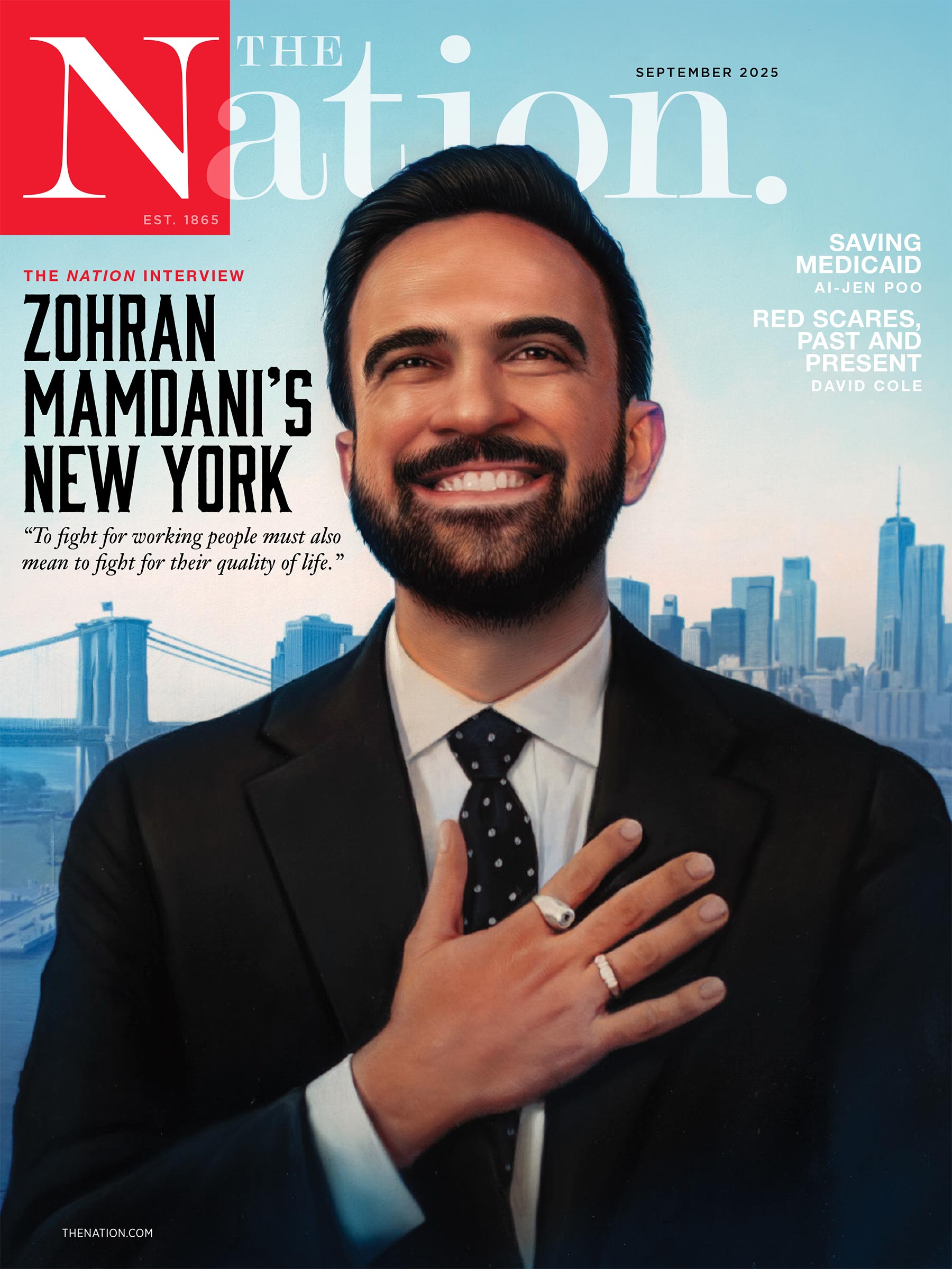
Cover of September 2025 Issue

THE NATION MAGAZINE: The latest issue features ‘Zohran Mamdani’s New York’ – “To fight for working people must also mean fighting for their quality of life”

Mamdani’s Victory Over Fear

New York’s political establishment threw the whole post-9/11 playbook against the Democratic nominee for mayor, and came up empty. By Spencer Ackerman

Why We Must Release the Epstein Files

We need justice for the survivors of his predations, and we need to restore public trust in our institutions. By Rep. Ro Khanna

On the Power of Small Acts of Noncompliance

At a moment when large-scale resistance can feel futile,
there are other ways to oppose, engage, and fight back. By Elie Mystal

Washington’s Dangerous China Consensus

Fantasies of national unity drive the bipartisan push for a new cold war. By Jeet Heer

THE NEW YORK TIMES – WEDNESDAY, AUG 13, 2025

Trump Has Made Himself the Chip Industry’s Leading Decision Maker

By imposing new fees on exports and briefly demanding a C.E.O.’s firing, President Trump has bluntly intervened in the operations of major companies.

Show of Force Begins to Take Shape as Guard Troops Deploy in D.C.

President Trump has deployed 800 Guard members and 500 federal agents to fight crime, even as official figures show a sharp drop

Trump Deploys Guard for D.C. Crime but Called Jan. 6 Rioters ‘Very Special’

President Trump said he needed the National Guard to secure the capital. But on the most lawless day in its recent history, he had a very different reaction.

Trump to Speak With Zelensky and European Allies on Ukraine

Several allies will host President Trump and Volodymyr Zelensky for a video call, the latest in a summer-long effort to hold ranks in supporting Ukraine.

Putin and Trump Will Meet at U.S. Military Base in Anchorage on Friday

The Enduring Power of Place: Step Into Historian David McCullough’s Work

By Michael Cummins, Editor, August 12, 2025

A vast stone arch, a suspension of steel, a ribbon of concrete stretching across a chasm—these are not merely feats of engineering or infrastructure. They are, in the words of the great historian David McCullough, monuments to the human spirit, physical places that embody the stories of ingenuity, perseverance, and sacrifice that created them. While the written word provides the essential narrative framework for understanding the past, McCullough’s work, from his celebrated biographies to his upcoming collection of essays, History Matters (2025), consistently champions the idea that visiting and comprehending these physical settings offers a uniquely powerful and visceral connection to history.

These places are not just backdrops; they are tangible testaments, silent witnesses to the struggles and triumphs that have shaped our world, offering a depth of understanding that written accounts alone cannot fully provide. In History Matters, McCullough writes, “History is a guide to navigation in perilous times. History is who we are and why we are the way we are.” This philosophy is the essay’s core, as we explore how the places he chronicled are integral to this understanding.

In his extensive body of work, McCullough frequently returned to this theme, demonstrating how the physical presence of a historical site grounds the abstract facts of the past in the authentic, palpable reality of the present. He believed that the stories of our past are a “user’s manual for life,” and that the places where these stories unfolded are the most direct way to access that manual. By examining four of his most iconic subjects—the Brooklyn Bridge, the “White City” of the 1893 World’s Fair, the Panama Canal, and Kitty Hawk—we can see this philosophy in action.

Each of these monumental endeavors was an audacious, against-all-odds project that faced incredible technical and personal challenges, including political opposition, financial struggles, and tragic loss of life. Yet, McCullough uses them as a lens to explore the character of the people who built them, the society of the time, and the very idea of American progress and ingenuity. These structures, built against overwhelming odds, stand as powerful reminders that history is an active, ongoing force, waiting to be discovered not just in books, but in the very soil and stone of the world around us.

The Brooklyn Bridge

The Brooklyn Bridge stands as a primary example of a physical place as tangible testimony to human ingenuity. In his landmark book The Great Bridge (1972), McCullough details the seemingly insurmountable challenges faced by the Roebling family in their quest to connect Manhattan and Brooklyn. In the mid-19th century, the idea of spanning the East River, with its powerful currents and constant ship traffic, was seen as an engineering impossibility. The technology for building such a massive structure simply did not exist. The bridge, therefore, was not merely constructed; it was invented. The vision of John Roebling, who conceived the revolutionary design of a steel-wire suspension bridge, was cut short by a tragic accident. His son, Washington, took over the project, only to be struck down by the debilitating effects of “the bends,” a crippling decompression sickness contracted while working in the underwater caissons. These massive timber and iron chambers, filled with compressed air, allowed workers to lay the foundations for the bridge’s monumental stone towers deep below the riverbed. The work was brutal, dangerous, and physically taxing. Washington himself spent countless hours in the caissons, developing the condition that would leave him partially paralyzed. As McCullough writes, “The bridge was a monument to faith and to the force of a single will.” This quote captures the essence of the Roeblings’ spirit, and the enduring structure itself embodies this unwavering faith.

Paralyzed and often bedridden, Washington continued to direct the project from his window, observing the progress through a telescope while his wife, Emily Warren Roebling, acted as his liaison and de facto chief engineer, mastering advanced mathematics and engineering to communicate her husband’s instructions to the men on site. The Roeblings’ story is a personal drama of vision and perseverance, and the physical bridge is a direct reflection of it. The monumental stone towers, with their Gothic arches, are a direct result of the design choices made to withstand immense pressure. The intricate web of steel cables, which Roebling so meticulously calculated, hangs as a monument to his genius. The wooden promenade, a feature initially ridiculed by critics, stands as a testament to the Roeblings’ foresight, offering a space for the public to walk and experience the grandeur of the structure.

A person can read McCullough’s narrative of the Roeblings’ saga and feel inspired by their resilience. However, standing on the promenade today, feeling the subtle vibrations of the traffic below, seeing the cables stretch into the distance, and touching the cold, ancient stone of the towers provides a profound, non-verbal understanding of the sheer audacity of the project. The physical object makes the story of vision, sacrifice, and perseverance feel not like a distant myth, but like a concrete reality, etched into the very materials that compose it. The bridge becomes a silent orator, telling its story without a single word, through its breathtaking scale and enduring presence. It connects us not only to a piece of engineering but to the very human story of a family that poured its life’s work into a single, magnificent idea.

The White City

The “White City” of the 1893 World’s Columbian Exposition, as chronicled in The Devil in the White City (2003), serves as a different but equally powerful example of a place as a testament to human will and ambition. Unlike the permanent structures of the Brooklyn Bridge and Panama Canal, the White City was a temporary, almost mythical creation. Built from scratch on swampy land in Chicago, it was a colossal feat of city planning and architectural design that captured the imagination of the world and showcased America’s coming of age. The place itself—with its majestic, neoclassical buildings, grand boulevards, and sprawling lagoons—was a physical manifestation of a nation’s collective vision. The narrative is driven by figures like architect Daniel Burnham, who, much like Washington Roebling, faced immense pressure, logistical nightmares, and constant political infighting. The physical challenges were immense: transforming a marsh into a breathtaking cityscape in just a few short years, all while coordinating the work of an entire generation of architectural titans like Frederick Law Olmsted and Louis Sullivan.

McCullough uses the White City to show how an ambitious idea can be willed into existence through relentless determination. The physical city, for its brief, glorious existence, was the living embodiment of American progress, ingenuity, and the Gilded Age’s opulent grandeur. It was a place where millions came to witness the future, to marvel at electric lights, and to see new technologies like the Ferris wheel. As McCullough writes, “The fair, a world of its own, had a power to transform those who visited it.” This quote highlights the profound, almost magical impact of this temporary place. However, McCullough masterfully contrasts the gleaming promise of the White City with the dark underbelly of the era, epitomized by the psychopathic serial killer H.H. Holmes and his “Murder Castle,” located just a few miles away. The physical contrast between these two places—the temporary, luminous dream and the permanent, sinister reality—is central to the book’s power. Even though the structures of the White City no longer stand, the historical record of this magnificent place—its photographs, its architectural plans, and McCullough’s vivid descriptions—serves as a tangible window into that moment in time, reminding us of the powerful, transformative potential of a shared human vision and the complex, often contradictory, nature of the society that produced it.

The Panama Canal

Finally, the Panama Canal serves as a powerful testament to the theme of human sacrifice and endurance. The canal was not just a feat of engineering; it was a grueling, decades-long battle against nature, disease, and bureaucratic inertia. As chronicled in McCullough’s Pulitzer Prize-winning book, The Path Between the Seas (1977), the French attempt to build a sea-level canal failed catastrophically under the direction of Ferdinand de Lesseps, the engineer of the Suez Canal. They grossly underestimated the challenges of the tropical climate, the unstable geology, and the devastating diseases, costing thousands of lives and ultimately leading to financial ruin. The subsequent American effort, led by figures like Dr. William Gorgas, who tirelessly fought the mosquito-borne diseases, and engineer John Frank Stevens, who abandoned the sea-level plan for a lock-and-lake system, was equally defined by a titanic human cost. The physical canal itself—the vast, deep Culebra Cut that slices through the continental divide, the enormous locks that lift ships over a mountain range, the sprawling Gatun Lake—serves as a permanent memorial to this immense struggle.

The sheer physical scale of the canal is an emotional and intellectual experience that far surpasses any numerical data. One can read that “25,000 workers died” during the French and American construction periods, a statistic that, while tragic, can be difficult to fully comprehend. But to stand at the edge of the Culebra Cut, staring down at the colossal gorge carved out of rock and earth, is to feel the weight of those lives. The physical presence of the cut makes the abstract struggle of “moving a mountain” feel real. The immense size of the locks and the power of the water filling them evokes a sense of awe not just for the engineering, but for the human will that made it happen. The canal is not just a shortcut for global trade; it is a monument to the thousands of unnamed laborers who toiled in oppressive conditions and to the few visionaries who refused to give up. As McCullough wrote, the canal was a testament to the fact that “nothing is more common than the wish to move mountains, but a mountain-moving event requires uncommon determination.” The physical place makes the concept of perseverance tangible, demonstrating in steel, concrete, and water that impossible tasks can be conquered through sheer, relentless human effort. The canal also represents a pivot point in American history, marking the nation’s emergence as a global power and its willingness to take on monumental challenges on the world stage.

Kitty Hawk

In The Wright Brothers, McCullough presents a different kind of historical place: one that is not a monumental structure, but a desolate, windswept beach. The story of Wilbur and Orville Wright’s quest to achieve controlled, powered flight is inextricably linked to this specific location on the Outer Banks of North Carolina. Kitty Hawk was not a place of grandeur, but one of raw, challenging nature. Its consistent, stiff winds and soft, sandy dunes made it an ideal testing ground for their gliders. This place was a crucial collaborator in their scientific process, a physical laboratory where they could test, fail, and re-evaluate their ideas in relative isolation. As McCullough writes of their success, “It was a glorious, almost unbelievable feat of human will, ingenuity and determination.” This triumph was born not on a grand stage, but on a patch of ground that was, at the time, little more than a remote stretch of sand.

McCullough’s narrative emphasizes how the physical conditions of Kitty Hawk—the powerful gales, the endless expanse of sand, and the isolation from the public eye—were essential to the Wrights’ success. They didn’t build a monument to their achievement in a city; they built it in the middle of nowhere. It was a place of quiet, methodical work, of relentless trial and error. The physical space itself was a character in their story, a partner in their success. The first flight did not happen on a grand stage, but on a patch of ground that was, at the time, little more than a remote stretch of sand. Today, when one visits the Wright Brothers National Memorial, the monument is not just the stone pylon marking the first flight, but the entire landscape—the dunes, the wind, and the expansive sky—that made their achievement possible. This place reminds us that some of history’s greatest triumphs begin not with a bang, but in the quiet, isolated spaces where innovation is allowed to thrive.

Conclusion

Beyond these specific examples, McCullough’s philosophy, as expected to be reiterated in History Matters, argues that this direct, experiential connection to place is vital for a vibrant and engaged citizenry. It is the authenticity of standing on the same ground as our forebears that makes history feel relevant to our own lives. A book can tell us about courage, but a place—the Brooklyn Bridge, the Panama Canal, the White City, or a humble battlefield—can make us feel it. These places are the physical embodiment of the narratives that have defined us, and by seeking them out, we are not simply looking at the past; we are a part of a continuous story. They remind us that the qualities of human ingenuity, sacrifice, and perseverance are not merely historical attributes, but enduring elements of the human condition, available to us still today.

Ultimately, McCullough’s legacy is not only in the stories he told but also in his fervent plea for us to recognize the importance of the places where those stories occurred. His work stands as a powerful argument that history is not abstract but is profoundly and permanently embedded in the physical world around us. By preserving and engaging with these historical places, we are not just honoring the past; we are keeping its most powerful lessons alive for our present and for our future. They are the tangible proof that great things are possible, and that the struggles and triumphs of those who came before us are forever etched into the landscape we inhabit today. His writings on these three monumental locations—one that stands forever as a testament to the Roeblings’ vision, another that vanished but whose story remains vivid, and a third that forever altered global commerce—each demonstrate the unique and irreplaceable power of place in history. As he so often reminded us, “We have to know who we are, and where we have come from, to be able to know where we are going.”

THIS ESSAY WAS WRITTEN AND EDITED UTILIZING AI

COMMENTARY MAGAZINE – SEPTEMBER 2025 PREVIEW

Commentary Magazine – A Jewish magazine of politics, high culture, cultural  and literary criticism, American and Israeli campaigns and elections, and  world affairs.

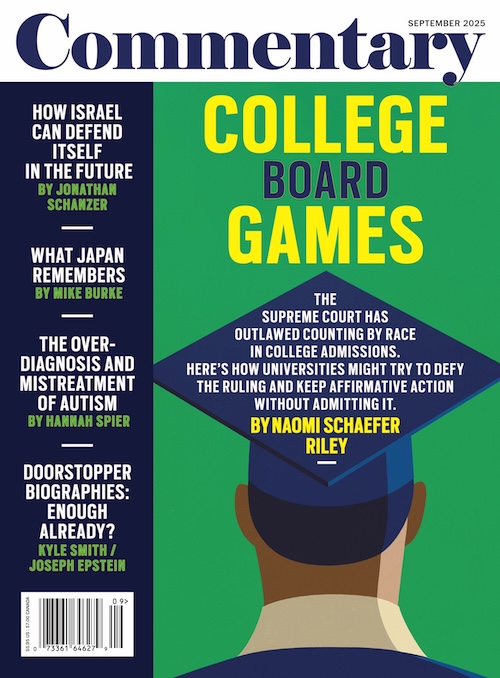
COMMENTARY MAGAZINE: The latest issue features ‘Board Games’ – The Supreme Court has outlawed counting by race in college admissions. Here’s how universities might try to defy the ruling and keep affirmative action without admitting it.

How Israel Can Defend Itself in the Future

Can it take lessons from a policy that failed even as it succeeded? by Jonathan Schanzer

College Board Games

The Supreme Court has outlawed counting by race in college admissions. Here’s how universities might try to defy the ruling and keep affirmative action without admitting it. by Naomi Schaefer Riley

When Artificial Intelligence Goes Nuts

by James B. Meigs

Why Jeans Are Making Progressives Blue

by Christine Rosen

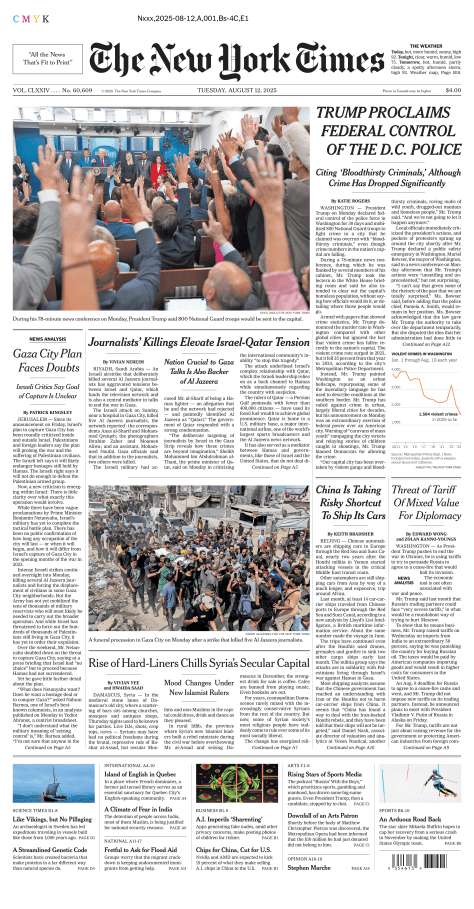
THE NEW YORK TIMES – TUESDAY, AUGUST 12, 2025

U.S. Inflation Report Shows Effects of President Trump’s Tariffs

One gauge showed prices increasing at the fastest annual pace in five months, a sign that businesses are passing along tariff-related costs to customers.

Gaming Out the Price of a Trump Trade Deal With China

President Trump again delayed higher tariffs on China. But his recent moves on chips have stoked fears he’s willing to give too much to make a deal.

Trump, Seeking Friendlier Economic Data, Names New Statistics Chief

Russia Makes a Swift Battlefield Advance, Seeking an Edge in Trump Talks

Russian forces have moved several miles into Ukrainian-held territory in the east, threatening to outflank Ukraine’s positions.

Ahead of Trump-Putin Talks, Europe Says Ukraine Must Be Part of Peace Process

See more updates ›