

Casual Teppanyaki in Amsterdam, the chef is preparing mushrooms, scallops, lamb, lobster, wagyu beef and fried rice.
Videos

Walks: Oia – Island Of Santorini, Greece (4K)
Santorini is the most spectacular island in Greece and one of the geologic treasures of Europe. Perched at the northern tip of this volcanic island and built into the rocky cliffside, Oia is the most picturesque and romantic village in Santorini.
Video Timeline Links: 00:00 – Oia, Santorini Walking Tour Intro 09:08 – Saint George Church (Agios Georgios) 19:37 – Virgin Mary Church (Panagia Platsani) 23:57 – Oia Blue Dome Viewpoint 33:17 – Castle of Oia (Agios Nikolaos) 34:17 – Oia Lookout Panoramic Viewpoint 44:30 – The Windmills
The village extends for almost 2 km (1.2 miles) along the northern edge of the caldera, at a height of between 70 and 100 m (230 and 330 feet) above sea level. It is built on the steep slope of the caldera and the houses and restaurants are built into niches carved into the caldera on the seaward side. Oia paths are very narrow and hence gets congested during the tourist season. The idyllic surroundings of the village have a complex of white washed, blue domed churches and charming, traditional Cycladic houses. Oia has some of the island’s best hotels and restaurants as well as high-end shopping. Our guided walking tour is about 1.86 miles (3 km) long, starts at Saint George Church (Agios Georgios) and covers most attractions and historic sites of Oia, Santorini.

Political Analysis: Brooks & Capehart On Capitol Hill Attack Investigation
New York Times columnist David Brooks and Washington Post columnist Jonathan Capehart join Judy Woodruff to discuss the week in politics, including the Jan. 6 insurrection investigation, the infrastructure and budget negotiations in Congress, and vaccination efforts in America.

Western Drought: Expect More Fires & Water Wars
As of mid-June, nearly three-quarters of the US’s West has been experiencing “severe,” “extreme,” or “exceptional” drought conditions. In addition to the states above, it also includes northern states like North Dakota and Montana.
Overall, climate change is playing a role. But there are smaller factors at play that are tied to climate change as well. Including…
- Not enough rain. The National Oceanic and Atmospheric Association (NOAA) said the Southwest’s 2020 monsoon season (read: ‘nonsoon’) was “the hottest and driest summer/monsoon season on record.” And the decrease in rainfall is having an impact on today’s drought (think: not enough water for crops, lakes, or reservoirs). And for the little rain that has fallen, it could dry up faster because of…
- Warmer temps. The NOAA dubbed 2020 the second-hottest year on record. And in late June, a record-breaking heat wave hit the Pacific Northwest, with the temperature reaching up to 112 degrees Fahrenheit in places like Portland, OR. (Psst…if you’re dealing with hot weather, here are some tips to stay safe.) Hotter, drier weather creates a thirsty environment, which speeds up evaporation. Rising temps are also causing snowpacks to melt faster, and they’re reportedly producing less runoff – a vital water resource. All of which means there’s less water available for communities and ecosystems.
Experts are also worried that the current dry and hot conditions will have a ripple effect, which brings us to wildfires. Last year’s West Coast wildfire season was the worst ever. Fires in California killed 31 people, burned more than 4 million acres, and destroyed thousands of buildings and structures. And this year, states like Arizona have seen an early start to their wildfire season. But the effects of the drought stretch even further.

Bike Tours: Janiculum Hill In Rome, Italy (4K Video)
The Janiculum, occasionally the Janiculan Hill, is a hill in western Rome, Italy. Although it is the second-tallest hill in the contemporary city of Rome, the Janiculum does not figure among the proverbial Seven Hills of Rome, being west of the Tiber and outside the boundaries of the ancient city.

Views: Olympic Athletes Movements In 3-D (Video)
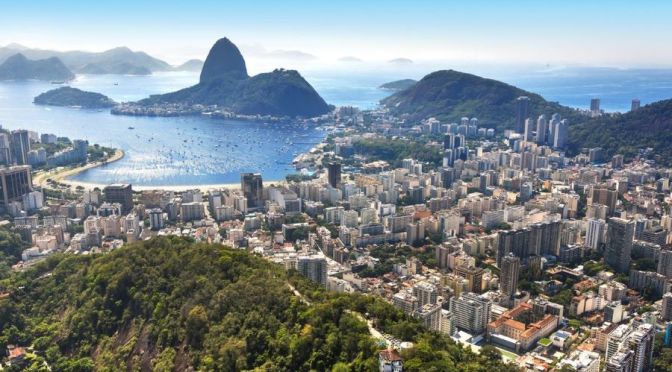
Aerial City Views: Rio de Janeiro, Brazil (4K Video)
Rio de Janeiro is a huge seaside city in Brazil, famed for its Copacabana and Ipanema beaches, 38m Christ the Redeemer statue atop Mount Corcovado and for Sugarloaf Mountain, a granite peak with cable cars to its summit. The city is also known for its sprawling favelas (shanty towns). Its raucous Carnaval festival, featuring parade floats, flamboyant costumes and samba dancers, is considered the world’s largest.
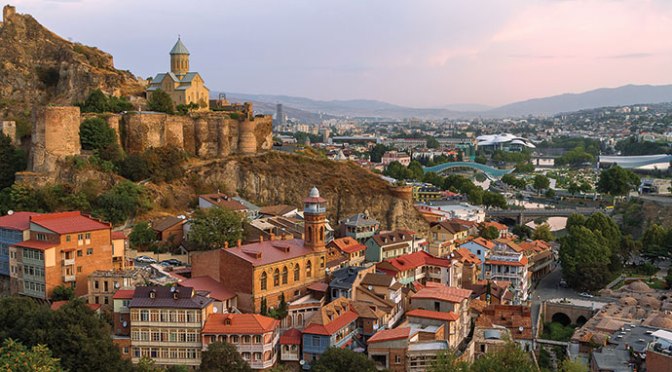
Aerial Views: The Country Of Georgia (4K Video)
Georgia, a country at the intersection of Europe and Asia, is a former Soviet republic that’s home to Caucasus Mountain villages and Black Sea beaches. It’s famous for Vardzia, a sprawling cave monastery dating to the 12th century, and the ancient wine-growing region Kakheti. The capital, Tbilisi, is known for the diverse architecture and mazelike, cobblestone streets of its old town.

Covid-19: How The Delta Variant Spread Globally
Covid-19’s Delta variant is proliferating world-wide threatening unvaccinated populations and economic recovery. WSJ breaks down events in key countries to explain why Delta spreads faster than previously detected strains. Composite: Sharon Shi
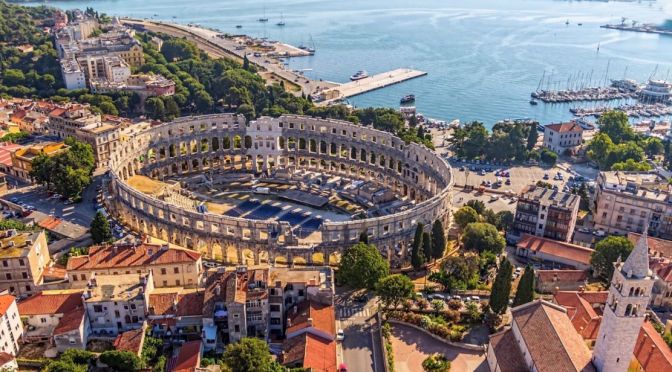
Walks: Pula – Istrian Peninsula, Croatia (4K)
Pula, a seafront city on the tip of Croatia’s Istrian Peninsula, is known for its protected harbor, beach-lined coast and Roman ruins. Settled in the prehistoric era and valued for its strategic location, Pula has been occupied, destroyed and rebuilt numerous times. The Romans, Ostrogoths and Venetians, as well as the Allied Forces in World War II, have each administered the city.
 Boomers Daily