

 You may have seen the aftermath of a landslide, driving along a twisty mountain road—a scattering of rocks and scree impinging on the pavement. And up until now, that’s pretty much how scientists have tracked landslides—roadside observations and spotty satellite images. Now, researchers are hoping to track landslides systematically by instrumenting an entire national park in Taiwan. The park is riddled with landslides—so much so that visitors wear helmets. Host Sarah Crespi talks with one of those visitors—freelance science journalist Katherine Kornei—about what we can learn from landslides.
In a second rocking segment, Sarah also talks with Manvir Singh about the universality of music. His team asked the big questions in a Science paper out this week: Do all societies make music? What are the common elements that can be picked out from songs worldwide? Sarah and Manvir listen to songs and talk about what love ballads and lullabies have in common, regardless of their culture of origin.
To read more: https://www.sciencemag.org/podcast/building-landslide-observatory-and-universality-music
 A SELECTION of three essential articles read aloud from the latest issue of The Economist. This week, Hong Kong is not the only part of China’s periphery to resent
 Benjamin Thompson brings you the latest science news. This week, an antibiotic that targets difficult to treat bacteria, and a roundup of the latest science news.
 A 2019 Super Bowl ad kicked off a showdown between the maker of Bud Light and the maker of Coors Light. WSJ’s Jennifer Maloney explains how that standoff has led to accusations of corporate espionage, two lawsuits and questions about the future of the beer industry.
 NPR’s Tamara Keith and Amy Walter of the Cook Political Report join Amna Nawaz to discuss the latest political news, including Pete Buttigieg’s surge in Iowa, former Vice President Joe Biden’s lead in South Carolina polls, Sen. Elizabeth Warren’s health care plan update and what another Democratic gubernatorial upset in Louisiana means for President Trump in 2020.
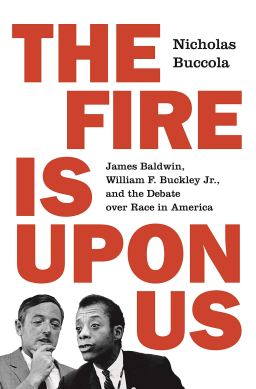 In 1965, James Baldwin, by then internationally famous, faced off against William F. Buckley Jr., one of the leading voices of American conservatism, in a debate hosted by the Cambridge Union in England. The debate proposition before the house was: “The American dream is at the expense of the American Negro.”
 Syndicated columnist Mark Shields and New York Times columnist David Brooks join Judy Woodruff to discuss the week in politics, including whether public impeachment hearings are making President Trump more or less vulnerable, what stood out about the witnesses who testified so far, whether Trump’s Ukraine dealings are surprising or “in character” and the latest dynamics among 2020 Democrats.
 An obscure think tank in Boston is getting drug companies to lower their prices – using something called a QALY. WSJ’s Denise Roland explains what a QALY is, and why it’s controversial.
 A selection of three essential articles read aloud from the latest issue of The Economist. This week, Democrats want
  Boomers Daily