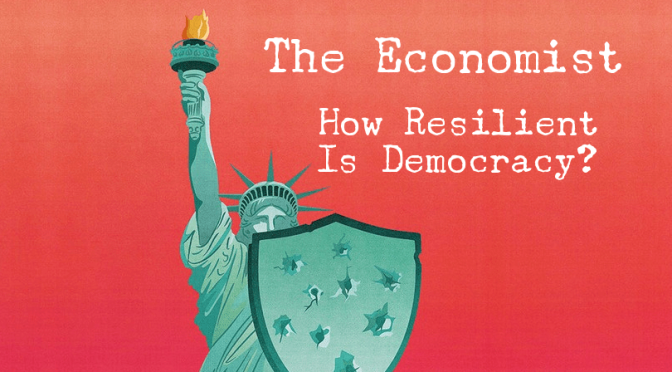

A selection of three essential articles read aloud from the latest issue of The Economist. This week, how resilient is democracy? Nordic politics (11:00) and remembering Diego Maradona (19:34)

A selection of three essential articles read aloud from the latest issue of The Economist. This week, how resilient is democracy? Nordic politics (11:00) and remembering Diego Maradona (19:34)

The weekend’s defining discussion topics with Tyler Brûlé, Christof Münger, Eemeli Isoaho, Mark Dittli and our Tokyo bureau chief Fiona Wilson. Plus, Monocle’s style director Marcela Palek’s Christmas gift tips.
From Milan: Salone highlights, interviews and a daily running guide.

Radio News 24/7 reports: Iran blames Israel for killing of top nuclear scientist, French police beating of black man, and other top world news.

In this audio interview conducted on November 25, 2020, the editors look at new studies of disease transmission in closed environments and provide updates on convalescent plasma and hydroxychloroquine.

Biden is expected to announce more members of his cabinet. His administration will place a focus on civil rights. And, stores are changing things up to keep shoppers safe on Black Friday.

Many schools closed in the spring, during the first wave of the coronavirus pandemic. Many opened in the fall. Staff Writer Jennifer Couzin-Frankel joins host Sarah Crespi to talk about what was learned in spring about how coronavirus spreads in schools that might help keep children safe as cases surge once again.
Also this week: What makes leaves fall off deciduous trees when they do—is it the short, cold nights? Or is the timing of so-called “leaf senescence” linked to when spring happens? Sarah talked to Constantin Zohner, a lead scientist at the Institute of Integrative Biology at ETH Zurich, about his tree leaf timing study. Sarah also spoke with commentary author Christy Rollinson, a forest ecologist at the Morton Arboretum, about how important these trees and the timing of their leaf drop is for climate change. In the books segment, host Kiki Sanford talks with Ruth DeFries about her book, What Would Nature Do? A Guide for Our Uncertain Times.

Thanksgiving – Why 2020 now represents a turning point, toward parts unknown, the seasonal hazard of working from home, and tips for a cozier Zoom Thanksgiving.

Scientists have finally confirmed the existence of a CNO cycle fusion reaction in the Sun, and why women’s contraception research needs a reboot.
In this episode:
Since the 1930s it has been theorised that stars have a specific fusion reaction known as the CNO cycle, but proof has been elusive. Now, a collaboration in Italy report detection of neutrinos that show that the CNO cycle exists.
Research article: The Borexino Collaboration
News and Views: Neutrino detection gets to the core of the Sun
We discuss the search for the animal origin of SARS-CoV-2, with researchers raiding their freezer draws to see if any animals carry similar viruses, and the latest vaccine results.
News: Coronaviruses closely related to the pandemic virus discovered in Japan and Cambodia
News: Why Oxford’s positive COVID vaccine results are puzzling scientists
How sleep patterns relate to ageing, and a solar-powered steam sterilizer.
Research Highlight: For better health, don’t sleep your age
Research Highlight: Technology for sterilizing medical instruments goes solar
Since the 1960s there has been little progress on research into women’s contraceptives. This week in Nature, researchers argue that this needs to change.
Comment: Reboot contraceptives research — it has been stuck for decades
We discuss a highlight from the Nature Briefing. This time, a tool to summarise papers.
Nature News: tl;dr: this AI sums up research papers in a sentence

NPR News Now reports: Biden Administration transition is taking shape, Covid-19 cases surge in the Midwest, and other top news.

Presidential transition process to begin after weeks of delay, Biden picks Janet Yellen for Treasury Secretary, and holiday shopping is different this year.



 Boomers Daily