

Prime Minister Boris Johnson has re-allocated a number of key government posts. We ask how the changes reflect his political standing and what they mean for his agenda. A first-of-its-kind study that deliberately infected participants with the coronavirus is ending; we examine the many answers such research can provide. And the rural places aiming to capitalise on their dark skies.
Audio

Science: Aquatic Foods To Aleviate World Hunger, Australian Wildfires
How aquatic foods could help tackle world hunger, and how Australian wildfires spurred phytoplankton growth in the Southern Ocean.
In this episode:
00:45 The role of aquatic food in tackling hunger
Ahead of the UN’s Food Systems Summit, Nature journals are publishing research from the Blue Food Assessment, looking at how aquatic foods could help feed the world’s population in a healthy, sustainable and equitable way.
We speak to Ismahane Elouafi, Chief Scientist at the Food and Agriculture Organization of the United Nations, who tells us about the role of blue foods in future food systems.
Immersive feature: Blue Foods
12:27 Research Highlights
The ingestible capsule that injects drugs straight into stomach tissue, and a soft material that changes colour when twisted.
Research Highlight: An easily swallowed capsule injects drugs straight into the gut
Research Highlight: Flowing crystals for quick camouflage
14:52 How Australian wildfires spurred phytoplankton blooms
The devastating Australian wildfires of 2019-2020 released plumes of iron-rich aerosols that circled the globe, fertilizing oceans thousands of miles away. New research suggests that these aerosols ultimately triggered blooms of microscopic phytoplankton downwind of the fires, in the Southern Ocean.
Research Article: Tang et al.
Morning News: Economic Collapse In Afghanistan, Apple Lawsuit, Polluters
Economic collapse and halting international aid following the Taliban’s takeover have compounded shortages that were already deepening; we examine the unfolding disaster.
The verdict in a blockbuster case against Apple might look like a win for the tech giant; a closer read reveals new battle lines. And the data that reveal how polluters behave when regulators are not watching.
Morning News: Elections In Norway & Canada, China Offers Aid To Afghanistan
We analyse the Norwegian election results and hear about China’s plans to send aid to Afghanistan. Plus: our Canadian election series shines a spotlight on Conservative leader Erin O’Toole.
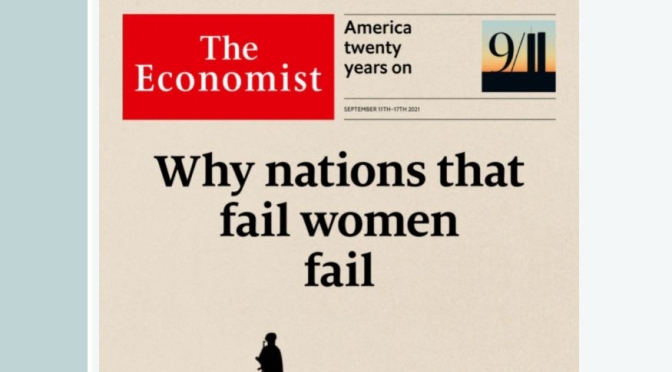
Political Analysis: Bitter Legacy Of 9/11, Nations Failing Women & Pottery
A selection of three essential articles read aloud from the latest issue of The Economist. This week, America then and now: the bitter legacy of 9/11. Why nations that fail women fail, (9:42) and a forgotten revolution in pottery (17:58)
Morning News: America’s Vaccine Mandate, Cities Shift & Ancient Finland
President Joe Biden’s requirements for employers to insist on vaccinations are a bold move amid flatlining inoculation rates. But will they work?
For decades the world’s cities seemed invincible, but the pandemic has hastened and hardened a shift in urban demographics and economics. And an ancient Finnish burial site scrambles notions of gender roles in the distant past.

Sunday Morning: Latest News From Zurich, Berlin, London & Hong Kong
Monocle’s editorial director, Tyler Brûlé, and our panellists round up the weekend’s biggest news. Plus, we check in with our friends and correspondents in Berlin, London and Hong Kong.

Saturday Morning: News And Stories From London
Monocle’s Georgina Godwin and Christopher Cermak review the day’s papers for the biggest news, including the 20th anniversary of the September 11 attacks.
Morning News: Benefits To Workers, China Sells Oil, Packed Stadiums
A.M Edition for Sept. 10. WSJ’s Chip Cutter discusses efforts by Amazon and other companies to lure workers amid a tight workforce.
Oil prices drop after China says it will release its reserves. And, both football and packed stadiums are back. Marc Stewart hosts.

Science: NASA’s First Moon Mission In 50 Years, Robots That Look, Act Like People
Staff Writer Paul Voosen talks with host Sarah Crespi about plans for NASA’s first visit to the Moon in 50 years—and the quick succession of missions that will likely follow.
Next, Eileen Roesler, an engineering psychologist at the Technical University of Berlin, discusses the benefits of making robots that look and act like people—it’s not always as helpful as you would think.
 Boomers Daily