
A selection of three essential articles read aloud from the latest issue of The Economist. This week, the real-time revolution transforming economics, how insurgency, secessionism and banditry threaten Nigeria (10:06) and our Bartleby columnist on why corporate mission statements deserve more than an eye-roll (17:39).
Audio

Sunday Morning: Stories From London And Zurich
Monocle’s Emma Nelson and panelists Benno Zogg, Latika Bourke and Stephen Dalziel on the weekend’s biggest news stories. Plus: what’s making headlines on the pages of ‘La Repubblica’?

Saturday Morning: News From London – OCT 23
Top news and stories from London.

Morning News: Poland & European Union, Politics In Latin America, Zimbabwe
We get the latest from Brussels as the EU ponders how to hit back at Poland, following Warsaw’s controversial court ruling. Plus: a round-up of the morning papers and the latest retail and fashion news.
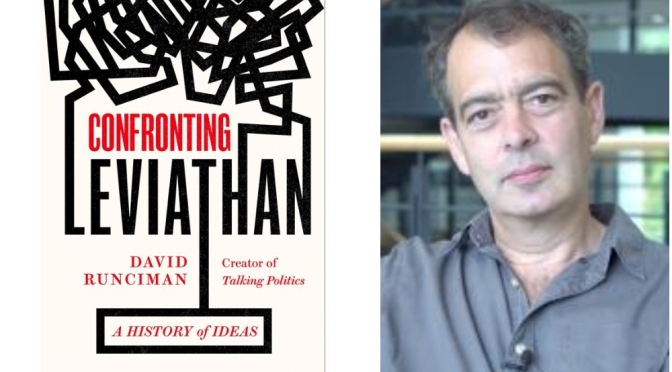
Top Podcast Interviews: ‘Confronting Leviathan’ Author David Runciman
Morning News: Crime & Crisis In Nigeria, South Korea’s Samsung, “Dune”
Criminal gangs in north-western states, jihadists in the north-east, a rebellion in the south-east: kidnappers, warlords and cattle rustlers are making the country ungovernable.
The new head of Samsung Electronics has a legacy to build—and aims to do so by breaking into the cut-throat business of processor chips. And the sci-fi classic “Dune” gets a good cinematic treatment at last.
Science: Vikings In North America, Magnets Moving Non-Magnetic Metals
An ancient solar storm helps pinpoint when Vikings lived in the Americas, and using magnets to deftly move non-magnetic metals.
In this episode:
00:53 Pinpointing Viking presence in North America
It’s well-understood that Vikings went to North America around a thousand years ago. However, working out a precise date has proven difficult. Now, thanks to an ancient solar storm, researchers have been able to identify an individual year when Vikings were definitely living on the continent.
Research article: Kuitems et al.
14:57 Research Highlights
How shoulder muscles gave Pterosaurs an aerodynamic edge, and mysterious radio waves coming from near the centre of the Milky Way.
Research Highlight: How ancient reptiles were streamlined for flight
Research Highlight: A mysterious radio signal object is beaming radio waves into the Milky Way
17:45 Magnets move non-magnetic metals
Scientists have created an array of magnets capable of moving non-metallic objects in 6 dimensions. They hope their new approach could one day be used to clean up debris in space.
Research article: Pham et al.
News and Views: Non-magnetic objects induced to move by electromagnets
27:06 What Francis Collin’s retirement means for the US NIH
After 12 years, Francis Collins announced plans to retire from his role as Director of the United States National Institutes of Health. We discuss his legacy and what this means for the world’s biggest public funder of biomedical research.
Editorial: COVID, racism, China: three tests for the next NIH leader
News: Francis Collins to step down at NIH: scientists assess his legacy
Morning News: Taliban And Afghanistan Talks In Moscow, Life In Wales
We head to Moscow as Russia hosts talks on Afghanistan with representatives from China, Iran, Pakistan and the Taliban. Plus, we discuss what Wales could do to keep its best and brightest at home.
Morning News: Japan’s Political Debate, Climate Change Meeting, Finland
We analyse the public debate between the heads of Japan’s major political parties and look ahead to COP26 in Glasgow. Plus: the future of high-speed rail in Finland.
Analysis: Green Era Energy Shock, From Pandemic To Endemic, Poland’s ‘Polexit’
A selection of three essential articles read aloud from the latest issue of The Economist. This week, the first big energy shock of the green era, how covid-19 will move from pandemic to endemic (11:29) and our Charlemagne columnist assesses the odds of “Polexit” versus a “dirty remain” (17:21).
 Boomers Daily