
Georgina Godwin and the weekend’s biggest topics. Simon Brooke reviews the newspapers, Andrew Mueller explains what we’ve learned this week and Monocle’s editor in chief Andrew Tuck is back with his weekend column.
Audio

Science: Fiber Optic Cables Detecting Seismic Activity, The Oil & Water Interface
Geoscientists are turning to fiber optic cables as a means of measuring seismic activity. But rather than connecting them to instruments, the cables are the instruments. Joel Goldberg talks with Staff Writer Paul Voosen about tapping fiber optic cables for science.
Also this week, host Sarah Crespi talks with Sylvie Roke, a physicist and chemist at the Swiss Federal Institute of Technology, Lausanne, and director of its Laboratory for fundamental BioPhotonics, about the place where oil meets water. Despite the importance of the interaction between the hydrophobic and the hydrophilic to biology, and to life, we don’t know much about what happens at the interface of these substances.

Morning News: U.S. Anti-Authoritarian Agenda, Farmer Protests In India
We discuss whether Joe Biden’s Summit for Democracy can advance Washington’s anti-authoritarian agenda and whether farmers’ protests in India were successful. Plus: could Swiss national service one day be mandatory for both men and women?
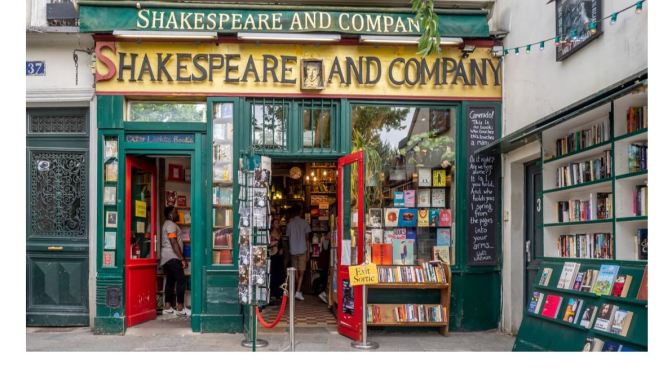
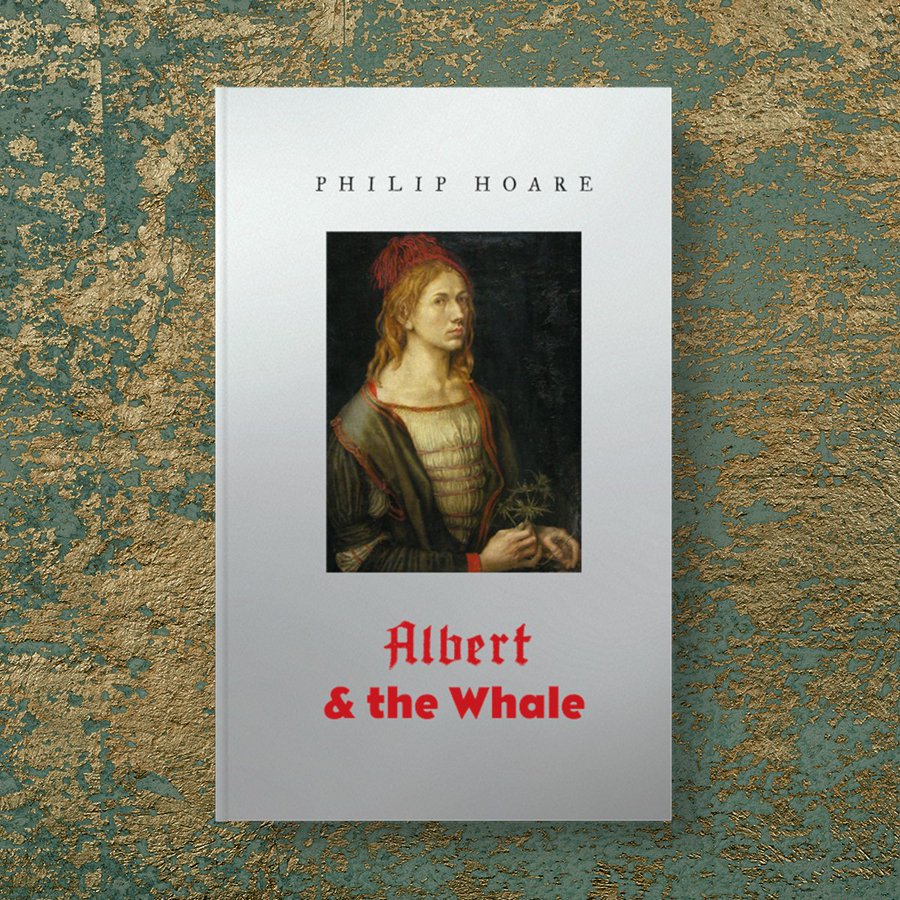
Shakespeare & Company: Author Philip Hoare On ‘Albert & The Whale’ (2021)
Morning News: Virtual Democracy Summit, Poll On Inflation, Instagram
The White House gathers more than 100 nations at a virtual summit aimed at promoting democracy worldwide, a new NPR/Marist poll offers disappointing approval numbers for the administration on its handling of inflation, lawmakers gave Instagram’s CEO a chilly reception at Wednesday’s Senate hearing.

Podcasts: Conserving Ancient Bagan, Myanmar
“Bagan is actually a splendid site. You can imagine in only in this, like, fifty square kilometers, they have more than 3,000 monuments. And then all the monuments have different styles and different architecture”.
The ancient past of Bagan, Myanmar, is still visible today in the more than 3,000 temples, monasteries, and works of art and architecture that remain at the site. Beginning around 1000 CE, Bagan served as the capital city of the Pagan Kingdom. Many of the surviving monuments date from the 11th to 13th centuries. A number of these temples are still used by worshippers and pilgrims today. A 2016 earthquake, which damaged over 400 structures, brought renewed international attention to Bagan and its future.
In February 2020, a team from the Getty Conservation Institute (GCI) returned from doing intensive preparatory work with international and local colleagues in Bagan to launch a long-term conservation project there. Soon after, the worldwide outbreak of COVID-19 closed borders and halted travel. In February 2021, a coup d’état staged by the Burmese Military plunged the country into further uncertainty.
In this episode, Susan Macdonald, head of Buildings and Sites at the GCI, and Ohnmar Myo, the GCI’s consultant in Myanmar, discuss the history of Bagan, the demands and challenges of conservation there, and their hopes for the future of the site. Myo is a former project officer of the Cultural Unit, UNESCO, and was a principal preparator of the report that confirmed Bagan’s World Heritage Site status in 2019. This conversation was recorded in January 2021, under very different circumstances, but it captures the curiosity, ambitions, optimism, and collaborative spirit that guided the project at that time.
Morning News: U.S.-Russia Talks On Ukraine, Unrest In Solomon Islands, UAE
We discuss what happens now for the US, Russia and Ukraine after talks between Joe Biden and Vladimir Putin. Plus: unrest in the Solomon Islands, Rohingya refugees take on Facebook and the UAE adapts its working week.
Morning News: 80 Years After Pearl Harbor, Car Politics, Office & Home
The Japanese attack set America on a course toward military hegemony; recent administrations have walked it back. We ask what the country would fight for now.
A clash of priorities between national and city-level politicians the world over makes for fraught politics on car ownership. And our columnist envisages how the office will compete with home in a post-pandemic world.
Analysis: Omicron & The Economy, Stablecoins & Russia’s Gulag Legacy
A selection of three essential articles read aloud from the latest issue of The Economist. This week: what the Omicron variant means for the world economy, what experiments with “free banking” in the 18th and 19th centuries reveal about the future of stablecoins (10:53) and how the legacy of Stalin’s gulag continues to shape Russian fortunes (18:16).

Sunday Morning: Stories From Zurich And London
Monocle’s editorial director Tyler Brûlé brings us a festive programme while our Christmas market takes place in Zürich. Featuring Priska Amstutz, Chandra Kurt and Monocle’s Chris Cermak and Emma Nelson.
 Boomers Daily