Tag Archives: Travel

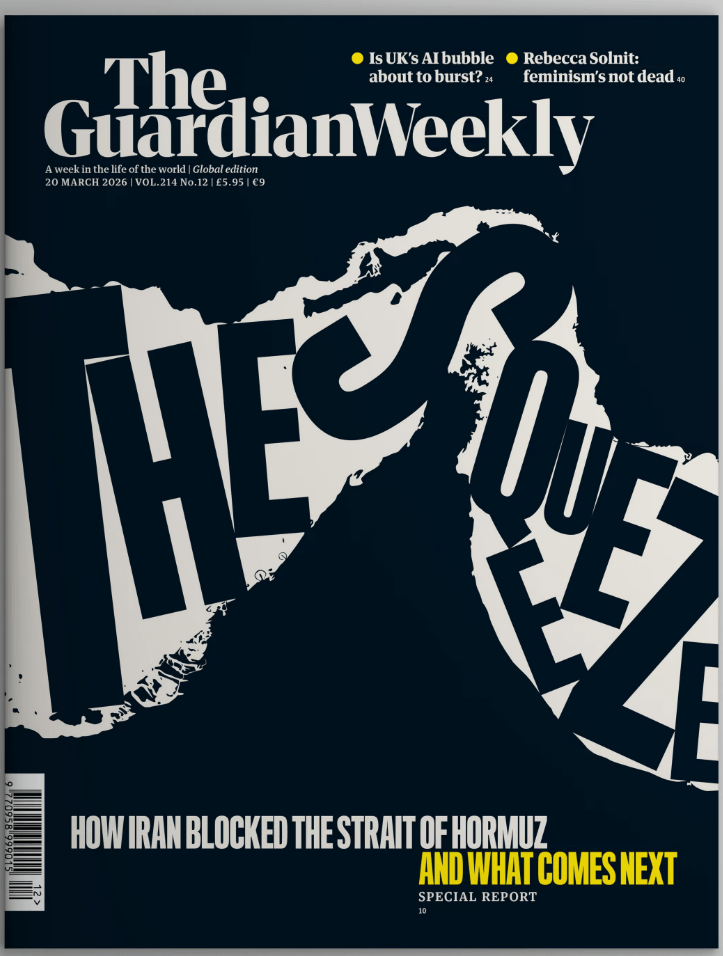
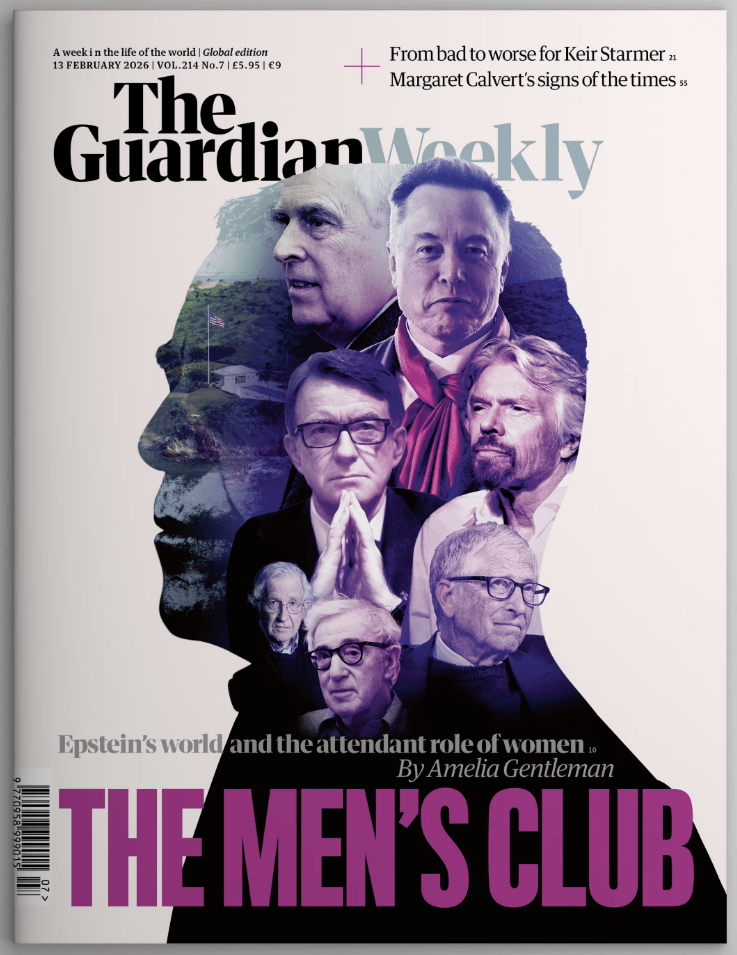
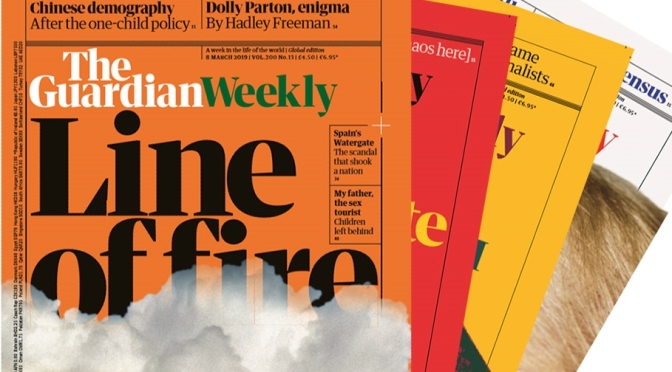
THE GUARDIAN WEEKLY – DECEMBER 12, 2025 PREVIEW

THE GUARDIAN WEEKLY: The latest issue features ‘Blocked!’ – Why Australia banned kids from social media (and what they think of it)

Millions of teenagers in Australia woke up on Wednesday to find themselves locked out of social media accounts after the government introduced a ban for under-16s – the first of its kind – on the platforms.

Far from being a kneejerk response to a moral panic, it’s a move backed up by detailed investigation into the effects of unfettered online access on children – and one that several other countries are poised to follow. Australian eSafety research found seven in 10 children aged 10 to 15 had encountered content associated with harm online. Three-quarters of those had most recently encountered that – including misogyny, violence, disordered eating and suicide – on a social media platform.

“We are seeking to create some friction [in the] system to protect children where previously there has been close to none … We are treating big tech like the extractive industry it has become,” Australia’s eSafety commissioner, Julie Inman Grant, told an audience earlier this year.

Spotlight | Syria, one year after Assad
While country’s return to global stage has filled many Syrians with pride, domestically old grievances threaten efforts to rebuild the state. William Christou reports from Damascus

Feature | The inside story of the race to create the ultimate AI
In Silicon Valley, rival companies are spending trillions of dollars to reach a goal that could change humanity – or potentially destroy it. Robert Booth reports

Feature | On the trail of London’s snail farming don
Terry Ball – renowned shoe salesman, friend to former mafiosi – has vowed to spend his remaining years finding ways to cheat authorities he feels have cheated him. His greatest ruse? A tax-dodging snail empire. Jim Waterson caught up with him

Opinion | What words are left to describe Trump’s global rampage?
Deadly US boat strikes in the Caribbean are the latest example of a president corrupting both the law and morality, argues Jonathan Freedland

Culture | The best books of 2025
From fiction to food, people to poetry, science to sport: Guardian critics round up the year’s essential reads

THE GUARDIAN WEEKLY – DECEMBER 5, 2025 PREVIEW

THE GUARDIAN WEEKLY: The latest issue features ‘After The Inferno’ – Anger and questions in the wake of the Hong Kong fires…

Watching with horror from London last week as flames ripped through seven adjacent apartment blocks in Hong Kong, it was impossible not to think back to the Grenfell Tower fire of 2017, which exposed major systemic failures around UK social housing and eventually led to law changes around safety and accountability for high-rise buildings.

The comparisons with Hong Kong were not just visually obvious but also because the semi-autonomous city’s worst fire in decades appears to have followed months of complaints from residents about shoddy materials used in building works.

Hong Kong is of course a very different place to London, with politicians facing less public accountability in a political climate that makes it much harder for citizens to express dissent. But, as anger rises, hard questions are nevertheless being asked of authorities amid accusations of negligence and corruption.

Five essential reads in this week’s edition

The big story | Can Europe unite to tame Russia – without the US?
Washington’s Putin-appeasing plan for peace in Ukraine has failed, but many heard the death knell sound for European reliance on US protection, writes Patrick Wintour

Spotlight | If Rachel Reeves goes, will Keir Starmer fall with her?
British prime ministers rarely sack their chancellors – and when they do it almost inevitably leads to their own downfall. After last week’s budget, Starmer knows the same is true of him and Reeves, says Jessica Elgot

Feature | The dangerous rise of extremist Buddhism
Buddhism is still largely viewed as a peaceful philosophy – but across much of south-east Asia, the religion has been weaponised to serve nationalist goals. Sonia Faleiro investigates

Opinion | From the West Bank to Syria and Lebanon, Israel’s onslaught continues
Broken ceasefires, bombing, ground incursions and mounting deaths: Israeli imperialism is now expanding across the region, says Nesrine Malik

Culture | Ethan Hawke and Richard Linklater: two men on the moon
As their 11th movie together, Blue Moon, is released, the actor and director tell Xan Brooks about musicals, the legacy of Philip Seymour Hoffman and what being bald and short does to your flirting skills

SMITHSONIAN MAGAZINE – DECEMBER 2025 PREVIEW

SMITHSONIAN MAGAZINE: The latest issue features….

Gimme Shelter

Inside America’s largest sanctuary for rescued pets—and its controversial quest to “Save Them All” By Douglas Starr | Photographs by Shayan Asgharnia

The Lost City of the Silk Road

In the remote highlands of Uzbekistan, archaeologists are uncovering the remains of a vast metropolis that may rewrite the history of the fabled trading route’s origins By Andrew Lawler | Photographs by Simon Norfolk

A Grand New Design

After a 1902 train wreck in the heart of Manhattan, one self-taught engineer proposed an improbable urban transformation. His vision reshaped the face of American cities

THE ALGORITHM OF IMMEDIATE RESPONSE

How outrage became the fastest currency in politics—and why the virtues of patience are disappearing.

By Michael Cummins, Editor | October 23, 2025

In an age where political power moves at the speed of code, outrage has become the most efficient form of communication. From an Athenian demagogue to modern AI strategists, the art of acceleration has replaced the patience once practiced by Baker, Dole, and Lincoln—and the Republic is paying the price.


In a server farm outside Phoenix, a machine listens. It does not understand Cleon, but it recognizes his rhythm—the spikes in engagement, the cadence of outrage, the heat signature of grievance. The air is cold, the light a steady pulse of blue LEDs blinking like distant lighthouses of reason, guarding a sea of noise. If the Pnyx was powered by lungs, the modern assembly runs on lithium and code.

The machine doesn’t merely listen; it categorizes. Each tremor of emotion becomes data, each complaint a metric. It assigns every trauma a vulnerability score, every fury a probability of spread. It extracts the gold of anger from the dross of human experience, leaving behind a purified substance: engagement. Its intelligence is not empathy but efficiency. It knows which words burn faster, which phrases detonate best. The heat it studies is human, but the process is cold as quartz.

Every hour, terabytes of grievance are harvested, tagged, and rebroadcast as strategy. Somewhere in the hum of cooling fans, democracy is being recalibrated.

The Athenian Assembly was never quiet. On clear afternoons, the shouts carried down from the Pnyx, a stone amphitheater that served as both parliament and marketplace of emotion. Citizens packed the terraces—farmers with olive oil still on their hands, sailors smelling of the sea, merchants craning for a view—and waited for someone to stir them. When Cleon rose to speak, the sound changed. Thucydides called him “the most violent of the citizens,” which was meant as condemnation but functioned as a review. Cleon had discovered what every modern strategist now understands: volume is velocity.

He was a wealthy tanner who rebranded himself as a man of the people. His speeches were blunt, rapid, full of performative rage. He interrupted, mocked, demanded applause. The philosophers who preferred quiet dialectic despised him, yet Cleon understood the new attention graph of the polis. He was running an A/B test on collective fury, watching which insults drew cheers and which silences signaled fatigue. Democracy, still young, had built its first algorithm without realizing it. The Republican Party, twenty-four centuries later, would perfect the technique.

Grievance was his software. After the death of Pericles, plague and war had shaken Athens; optimism curdled into resentment. Cleon gave that resentment a face. He blamed the aristocracy for cowardice, the generals for betrayal, the thinkers for weakness. “They talk while you bleed,” he shouted. The crowd obeyed. He promised not prosperity but vengeance—the clean arithmetic of rage. The crowd was his analytics; the roar his data visualization. Why deliberate when you can demand? Why reason when you can roar?

The brain recognizes threat before comprehension. Cognitive scientists have measured it: forty milliseconds separate the perception of danger from understanding. Cleon had no need for neuroscience; he could feel the instant heat of outrage and knew it would always outrun reflection. Two millennia later, the same principle drives our political networks. The algorithm optimizes for outrage because outrage performs. Reaction is revenue. The machine doesn’t care about truth; it cares about tempo. The crowd has become infinite, and the Pnyx has become the feed.

The Mytilenean debate proved the cost of speed. When a rebellious island surrendered, Cleon demanded that every man be executed, every woman enslaved. His rival Diodotus urged mercy. The Assembly, inflamed by Cleon’s rhetoric, voted for slaughter. A ship sailed that night with the order. By morning remorse set in; a second ship was launched with reprieve. The two vessels raced across the Aegean, oars flashing. The ship of reason barely arrived first. We might call it the first instance of lag.

Today the vessel of anger is powered by GPUs. “Adapt and win or pearl-clutch and lose,” reads an internal memo from a modern campaign shop. Why wait for a verifiable quote when an AI can fabricate one convincingly? A deepfake is Cleon’s bluntness rendered in pixels, a tactical innovation of synthetic proof. The pixels flicker slightly, as if the lie itself were breathing. During a recent congressional primary, an AI-generated confession spread through encrypted chats before breakfast; by noon, the correction was invisible under the debris of retweets. Speed wins. Fact-checking is nostalgia.

Cleon’s attack on elites made him irresistible. He cast refinement as fraud, intellect as betrayal. “They dress in purple,” he sneered, “and speak in riddles.” Authenticity became performance; performance, the brand. The new Cleon lives in a warehouse studio surrounded by ring lights and dashboards. He calls himself Leo K., host of The Agora Channel. The room itself feels like a secular chapel of outrage—walls humming, screens flickering. The machine doesn’t sweat, doesn’t blink. It translates heat into metrics and metrics into marching orders. An AI voice whispers sentiment scores into his ear. He doesn’t edit; he adjusts. Each outrage is A/B-tested in real time. His analytics scroll like scripture: engagement per minute, sentiment delta, outrage index. His AI team feeds the system new provocations to test. Rural viewers see forgotten farmers; suburban ones see “woke schools.” When his video “They Talk While You Bleed” hits ten million views, Leo K. doesn’t smile. He refreshes the dashboard. Cleon shouted. The crowd obeyed. Leo posted. The crowd clicked.

Meanwhile, the opposition labors under its own conscientiousness. Where one side treats AI as a tactical advantage, the other treats it as a moral hazard. The Democratic instinct remains deliberative: form a task force, issue a six-point memo, hold an AI 101 training. They build models to optimize voter files, diversity audits, and fundraising efficiency—work that improves governance but never goes viral. They’re still formatting the memo while the meme metastasizes. They are trying to construct a more accountable civic algorithm while their opponents exploit the existing one to dismantle civics itself. Technology moves at the speed of the most audacious user, not the most virtuous.

The penalty for slowness has consumed even those who once mastered it. The Republican Party that learned to weaponize velocity was once the party of patience. Its old guardians—Howard Baker, Bob Dole, and before them Abraham Lincoln—believed that democracy endured only through slowness: through listening, through compromise, through the humility to doubt one’s own righteousness.

Baker was called The Great Conciliator, though what he practiced was something rarer: slow thought. He listened more than he spoke. His Watergate question—“What did the President know, and when did he know it?”—was not theater but procedure, the careful calibration of truth before judgment. Baker’s deliberation depended on the existence of a stable document—minutes, transcripts, the slow paper trail that anchored reality. But the modern ecosystem runs on disposability. It generates synthetic records faster than any investigator could verify. There is nothing to subpoena, only content that vanishes after impact. Baker’s silences disarmed opponents; his patience made time a weapon. “The essence of leadership,” he said, “is not command, but consensus.” It was a creed for a republic that still believed deliberation was a form of courage.

Bob Dole was his equal in patience, though drier in tone. Scarred from war, tempered by decades in the Senate, he distrusted purity and spectacle. He measured success by text, not applause. He supported the Americans with Disabilities Act, expanded food aid, negotiated budgets with Democrats. His pauses were political instruments; his sarcasm, a lubricant for compromise. “Compromise,” he said, “is not surrender. It’s the essence of democracy.” He wrote laws instead of posts. He joked his way through stalemates, turning irony into a form of grace. He would be unelectable now. The algorithm has no metric for patience, no reward for irony.

The Senate, for Dole and Baker, was an architecture of time. Every rule, every recess, every filibuster was a mechanism for patience. Time was currency. Now time is waste. The hearing room once built consensus; today it builds clips. Dole’s humor was irony, a form of restraint the algorithm can’t parse—it depends on context and delay. Baker’s strength was the paper trail; the machine specializes in deletion. Their virtues—documentation, wit, patience—cannot be rendered in code.

And then there was Lincoln, the slowest genius in American history, a man who believed that words could cool a nation’s blood. His sentences moved with geological patience: clause folding into clause, thought delaying conclusion until understanding arrived. “I am slow to learn,” he confessed, “and slow to forget that which I have learned.” In his world, reflection was leadership. In ours, it’s latency. His sentences resisted compression. They were long enough to make the reader breathe differently. Each clause deferred judgment until understanding arrived—a syntax designed for moral digestion. The algorithm, if handed the Gettysburg Address, would discard its middle clauses, highlight the opening for brevity, and tag the closing for virality. It would miss entirely the hesitation—the part that transforms rhetoric into conscience.

The republic of Lincoln has been replaced by the republic of refresh. The party of Lincoln has been replaced by the platform of latency: always responding, never reflecting. The Great Compromisers have given way to the Great Amplifiers. The virtues that once defined republican governance—discipline, empathy, institutional humility—are now algorithmically invisible. The feed rewards provocation, not patience. Consensus cannot trend.

Caesar understood the conversion of speed into power long before the machines. His dispatches from Gaul were press releases disguised as history, written in the calm third person to give propaganda the tone of inevitability. By the time the Senate gathered to debate his actions, public opinion was already conquered. Procedure could not restrain velocity. When he crossed the Rubicon, they were still writing memos. Celeritas—speed—was his doctrine, and the Republic never recovered.

Augustus learned the next lesson: velocity means nothing without permanence. “I found Rome a city of brick,” he said, “and left it a city of marble.” The marble was propaganda you could touch—forums and temples as stone deepfakes of civic virtue. His Res Gestae proclaimed him restorer of the Republic even as he erased it. Cleon disrupted. Caesar exploited. Augustus consolidated. If Augustus’s monuments were the hardware of empire, our data centers are its cloud: permanent, unseen, self-repairing. The pattern persists—outrage, optimization, control.

Every medium has democratized passion before truth. The printing press multiplied Luther’s fury, pamphlets inflamed the Revolution, radio industrialized empathy for tyrants. Artificial intelligence perfects the sequence by producing emotion on demand. It learns our triggers as Cleon learned his crowd, adjusting the pitch until belief becomes reflex. The crowd’s roar has become quantifiable—engagement metrics as moral barometers. The machine’s innovation is not persuasion but exhaustion. The citizens it governs are too tired to deliberate. The algorithm doesn’t care. It calculates.

Still, there are always philosophers of delay. Socrates practiced slowness as civic discipline. Cicero defended the Republic with essays while Caesar’s legions advanced. A modern startup once tried to revive them in code—SocrAI, a chatbot designed to ask questions, to doubt. It failed. Engagement was low; investors withdrew. The philosophers of pause cannot survive in the economy of speed.

Yet some still try. A quiet digital space called The Stoa refuses ranking and metrics. Posts appear in chronological order, unboosted, unfiltered. It rewards patience, not virality. The users joke that they’re “rowing the slow ship.” Perhaps that is how reason persists: quietly, inefficiently, against the current.

The Algorithmic Republic waits just ahead. Polling is obsolete; sentiment analysis updates in real time. Legislators boast about their “Responsiveness Index.” Justice Algorithm 3.1 recommends a twelve percent increase in sentencing severity for property crimes after last week’s outrage spike. A senator brags that his approval latency is under four minutes. A citizen receives a push notification announcing that a bill has passed—drafted, voted on, and enacted entirely by trending emotion. Debate is redundant; policy flows from mood. Speed has replaced consent. A mayor, asked about a controversial bylaw, shrugs: “We used to hold hearings. Now we hold polls.”

To row the slow ship is not simply to remember—it is to resist. The virtues of Dole’s humor and Baker’s patience were not ornamental; they were mechanical, designed to keep the republic from capsizing under its own speed. The challenge now is not finding the truth but making it audible in an environment where tempo masquerades as conviction. The algorithm has taught us that the fastest message wins, even when it’s wrong.

The vessel of anger sails endlessly now, while the vessel of reflection waits for bandwidth. The feed never sleeps. The Assembly never adjourns. The machine listens and learns. The virtues of Baker, Dole, and Lincoln—listening, compromise, slowness—are almost impossible to code, yet they are the only algorithms that ever preserved a republic. They built democracy through delay.

Cleon shouted. The crowd obeyed. Leo posted. The crowd clicked. Caesar wrote. The crowd believed. Augustus built. The crowd forgot. The pattern endures because it satisfies a human need: to feel unity through fury. The danger is not that Cleon still shouts too loudly, but that we, in our republic of endless listening, have forgotten how to pause.

Perhaps the measure of a civilization is not how fast it speaks, but how long it listens. Somewhere between the hum of the servers and the silence of the sea, the slow ship still sails—late again, but not yet lost.

THIS ESSAY WAS WRITTEN AND EDITED UTILIZING AI

SMITHSONIAN MAGAZINE – NOVEMBER 2025

SMITHSONIAN MAGAZINE: The latest issue features ‘The Fire That Fueled The American Revolution

In January 1776, Virginia’s Port City of Norfolk Was Set Ablaze, Galvanizing the Revolution. But Who Really Lit the Match?

Blaming the British for the destruction helped persuade some wavering colonists to back the fight for independence. But the source of the inferno was not what it seemed

After the L.A. Fires, Locals Turn to Native Plants to Help Shield Homes From Flames and Clean Contaminated Soil

Scientists and community members in Altadena are testing ways that California species can assist efforts to rebuild

You Can See the Parthenon Without Scaffolding for the First Time in Decades

The temporary structures will return next month—but in the meantime, visitors will enjoy rare unobstructed views of the ancient hilltop temple in Athens

THE CHRYSANTHEMUM PARADOX

Japan’s first female prime minister promises history, but her ascent may only deepen the old order.

By Michael Cummins, Editor, October 4, 2025

Sanae Takaichi has become Japan’s first female prime minister—a milestone that might look like progress but carries a paradox at its core. Takaichi, sixty-four, rose not by challenging her party’s patriarchal order but by embracing it more fiercely than her male rivals. Her vow to “work as hard as a carriage horse” captured the spirit of her leadership: endurance without freedom, strength yoked to duty. In a nation where women hold less than sixteen percent of parliamentary seats and most are confined to low-paid, “non-regular” work, Takaichi’s ascension is less rupture than reinforcement. She inherits the ghost of Shinzo Abe, with whom she shared nationalist loyalties, and she confronts a fragile coalition, an aging electorate, and a looming Trump visit. Her “first” is both historic and hollow: the chrysanthemum blooms, but its shadow may reveal that Japan’s old order has merely found a new face.

Under the humming fluorescent lights of the Liberal Democratic Party’s headquarters in Tokyo, the old men in gray suits shifted in their seats. The air was thick with the stale perfume of cigarettes and the accumulated dust of seventy years in power. The moment came suddenly, almost anticlimactically: after two rounds of voting, Sanae Takaichi was named leader. The room stirred, applause pattered weakly. She stepped to the podium, bowed with a precision that was neither humble nor triumphant, and delivered the line that will echo through history: “I will work as hard as a carriage horse.”

Why that image? Why not the fox of Japanese cunning, or the crane of elegance, or the swift mare of legend? A carriage horse is strength without freedom. It pulls because it must. Its labor is endurance, not glory. In that metaphor lay the unsettling heart of the moment: Japan’s first woman prime minister announcing herself not as a breaker of chains but as the most dutiful beast of burden. Ushi mo aru kedo, hito mo aru—“Even cattle have their place, but so do people.” Here, in this paradoxical victory, the human became the horse.

In Japan, the ideal of gaman—stoic endurance in the face of suffering—is praised as virtue. The samurai ethos of bushidō elevated loyalty above will. Women, in particular, have long been praised for endurance in silence. Takaichi’s metaphor was no slip. It was a signal: not rebellion, but readiness to shoulder a system that has never bent for women, only asked them to carry it. In the West, the “first woman” often suggests liberation; in Japan, Takaichi presented herself as a woman who could wear the harness more tightly than any man.

The horse metaphor might also be personal. Takaichi was not a scion of a dynasty like her rival, Koizumi. Her mother served as a police officer; her father worked for a car company. Her strength was forged in the simple, demanding work of postwar Japan—the kind of tireless labor she was now vowing to revive for the nation.

For the newspapers, the word hajimete—first—was enough. But scratch the lacquer, and the wood beneath showed a different grain. The election was not of the people; it was an internal ballot, a performance of consensus by a wounded party. Less than one percent of Japan had any say. The glass ceiling had not been lifted by collective will but punctured by a carefully aimed projectile. The celebration was muted, as if everyone sensed that this “first” was also a kind of last, a gesture of desperation dressed in history’s robes.

Deru kugi wa utareru—“The nail that sticks out gets hammered down.” Takaichi did not stick out. She was chosen precisely because she could wield the hammer.

Her rise was born of collapse. The LDP, which had dominated Japanese politics like Mount Fuji dominates the horizon, was eroded, its slopes scarred by landslides. In the 2024 Lower House election alone, it lost sixty-eight seats, a catastrophic erosion. After another defeat in 2025, it found itself, for the first time in memory, a minority in both houses of the Diet. Populist formations shouting Nippon daiichi!—Japan First—had seized the public imagination, promising to protect shrines from outsiders and deer in Nara from the kicks of tourists. Stagnant wages, rising prices, and the heavy breath of globalization made their slogans ring like temple bells.

Faced with collapse, the LDP gambled. It rejected the fresh-faced Shinjiro Koizumi, whose cosmopolitan centrism seemed too fragile for the moment, and crowned the hard-line daughter of Nara, the protégé of Shinzo Abe. In choosing Takaichi, the LDP announced that its path back to power would not be through moderation, but through continuity.

The ghost of Abe hovers over every step she takes. His assassination in 2022 froze Japan in a perpetual twilight of mourning. His dream—constitutional revision, economic reflation, nationalist revival—remained unfinished. Takaichi walks in his shadow as if she carries his photograph tucked inside her sleeve. She echoes his Abenomics: easy money, big spending. She continues his visits to Yasukuni Shrine, where the souls of Japan’s war dead—among them Class A criminals—are enshrined. Each bow she makes is both devotion and provocation.

Hotoke no kao mo san-do—“Even a Buddha’s face only endures three times.” How many times will China and South Korea endure her visits to Yasukuni?

And yet, for all the historic fanfare, her stance on women is anything but transformative. She has opposed allowing a woman to reign as emperor, resisted reforms to let married couples keep separate surnames, and dismissed same-sex marriage. Mieko Nakabayashi at Waseda calls her bluntly “a roadblock to feminist causes.” Yet she promises to seat a cabinet of Nordic balance, half men and half women. What does equality mean if every woman chosen must genuflect to the same ideology? One can imagine the photograph: a table split evenly by gender, yet every face set in the same conservative mold.

In that official photograph, the symmetry was deceptive. Each woman had been vetted not for vision but for loyalty. One wore a pearl brooch shaped like a torii gate. Another quoted Abe in her opening remarks. Around the table, the talk was of fiscal stimulus and shrine etiquette. Not one mentioned childcare, wage gaps, or succession. The gender balance was perfect. The ideological balance was absolute.

This theater stood in stark opposition to the economic reality she governs. Japan’s gender wage gap is among the widest in the OECD; women earn barely three-quarters of men’s wages. Over half are trapped in precarious “non-regular” work, while fewer than twelve percent hold managerial posts. They are the true carriage horses of Japan—pulling without pause, disposable, unrecognized. Takaichi, having escaped this trap herself, now glorifies it as national virtue. She is the one horse that broke free—only to tell the herd to pull harder.

The global press, hungry for symbols, crowned her with headlines: “Japan Breaks the Glass Ceiling.” But the ceiling had not shattered—it had been painted over. The myth of the female strongman—disciplined, unflinching, ideologically pure—has become a trope. Conservative systems often prefer such women precisely because they prove loyalty by being harsher than the men who trained them. Takaichi did not break the mold; she was cast from it.

Other nations offer their mirrors: Thatcher, the Iron Lady who waged war on unions; Park Geun-hye, whose scandal-shattered rule rocked South Korea; Indira Gandhi, who suspended civil liberties during India’s Emergency. Each became a vessel for patriarchal power, proving strength through obedience rather than disruption. Takaichi belongs to this lineage, the chrysanthemum that blooms not in a wild meadow but in a carefully tended imperial garden.

Her campaign rhetoric made plain her instincts. She accused foreigners of kicking sacred deer in Nara, of swinging from shrine gates. The imagery was almost comic, but in Japan symbols are never trivial. The deer, protectors of Shinto shrines, bow to visitors as if performing eternal reverence. To strike them is to wound purity. The torii gates mark thresholds between profane and sacred worlds; to defile them is to profane Japan itself. By weaponizing these cultural symbols, Takaichi sought to steal the thunder of far-right groups like Sanseitō, consolidating the right-wing vote under the LDP’s battered banner.

But the weight of Takaichi’s ideological baggage—the nationalism that served her domestically—was instantly transferred to the fragile carriage of Japan’s foreign policy. To survive, the LDP must keep its coalition with Komeito, the Buddhist-backed party rooted in Soka Gakkai’s pacifism. Already the monks grumble. Nationalist education reform? No. Constitutional militarism? Impossible. Imagine the backroom: tatami mats creaking, voices low, one side invoking the Lotus Sutra, the other brandishing polls. Ni usagi o ou mono wa issai ezu—“He who chases two rabbits catches none.”

Over all this looms America. Donald Trump, swaggering toward a late-October Asia tour, may stop in Tokyo. Takaichi once worked in the U.S.; she speaks the language of its boardrooms. But she campaigned as a renegotiator, a fighter against tariffs. Now reality intrudes. Japan has already promised $550 billion in investment and loan guarantees to secure a reprieve from harsher duties. How she spends it will define her. To appear submissive is to anger voters; to defy Trump is to risk reprisal. Imagine the summit: Trump beaming, Takaichi bowing, their hands clasped in an awkward grip, photographers snapping.

Even her economics carry ghosts. She revives Abenomics when inflation demands restraint. But Abenomics was of another time, when Japan had fiscal breathing room. Reviving it now is less a strategy than nostalgia, an emotional tether to Abe himself.

These contradictions sharpen into paradox. She is the first woman prime minister, yet she blocks women from the throne. She promises parity, yet delivers loyalty. She vows to pull the carriage harder than any man, yet the cart itself has only three wheels.

Imagine the year 2035. A museum exhibit in Tokyo titled The Chrysanthemum Paradox: Japan’s Gendered Turn. Behind glass: her campaign poster, a porcelain deer, a seating chart from her first cabinet. A small screen plays the footage of her victory speech. Visitors lean in, hear the flat voice: “I will work as hard as a carriage horse.”

A child tugged at her mother’s sleeve. “Why is the horse sad?” she asked, pointing to the animated screen where a cartoon carriage horse trudged endlessly. The mother hesitated. “She worked very hard,” she said. “That’s what leaders do.” The child frowned. “But where was she going?”

Outside, chrysanthemums bloom in autumn, petals delicate yet precise, the imperial crest stamped on passports and coins. The carriage horse keeps pulling, hooves clattering against cobblestones, sweat darkening its flanks. Will the horse break, or the carriage? And if both break together, what then?

Shōji wa issun saki wa yami—“The future is pitch-dark an inch ahead.” That is the truth of her victory. The chrysanthemum shines, but its shadow deepens. The horse pulls, but no one knows toward what horizon. The first woman had arrived, but the question lingered like incense in an empty hall: Was this history’s forward march, or merely the perfect, tragic culmination of the old order?

THIS ESSAY WAS WRITTEN AND EDITED UTILIZING AI

THE HOUR-LONG FUTURE

How Chicago’s oldest exchange bet on sixty-minute markets, and what it means when certainty itself is priced like a parlay.

Inspired by conversations on Bloomberg’s “Odd Lots” podcast, October 2, 2025, this essay explores the collision of Chicago’s most venerable marketplace with America’s newest gambling instinct.

By Michael Cummins, Editor, October 2, 2025

Chicago declares its weather. The wind comes down LaSalle Street like a verdict, rattling the brass doors of the Chicago Mercantile Exchange (CME), the world’s largest derivatives marketplace, and Terry Duffy keeps telling the same story about the Sears Tower. Once, Sears was so secure it stamped its name onto the tallest building in the country. Then Amazon arrived and the edifice outlived the company. Duffy repeats the story because he knows it could happen to him. He is the custodian of a market built on trust and clearing, and he now presides over a future in which markets themselves have begun to resemble slot machines.

When CME announced this summer that it would partner with FanDuel to launch retail-friendly “event contracts,” the move was described, in the buttoned-down language of FIA MarketVoice, as bringing “Wall Street to Main Street.” But the reality is stranger: the nation’s most venerable exchange has chosen to build a door onto a sports-betting app. The product is stark in its simplicity—fully funded, binary contracts tied to benchmarks like the S&P 500, gold, or the monthly Consumer Price Index (CPI), each available for a dollar, each expiring in sixty minutes. “We want to attract a new generation of retail traders,” CME explained in its release, emphasizing transparency, defined risk, and the symbolic price point that even the most casual bettor can afford.

Duffy knows what it is to sell certainty. He began his career in the pits, where certainty was conjured out of chaos. To enter the pit was to descend into a human engine: men in jackets of vivid color, chalk dust in the air, sweat soaking the collars, voices rising to a roar. Each shout was a legal contract; each hand signal, a coded promise. Palm in meant buy, palm out meant sell. A quick nod sealed the trade. A look in the eye carried as much weight as a notarized document. The pit was a place where trust was physical, embodied, and enforced by reputation.

He still carries it in his cadence. His sentences are short, clipped, emphatic, relics of the pits’ staccato. A “yes” had to carry over the roar, and a “no” had to land like a gavel. He learned that a man’s word was binding; a lie meant exile. To Duffy, the roar was not noise but a symphony of accountability.

Contrast that to the FanDuel app, silent and frictionless. No shouts, no sweat, no eye contact. A bet placed with a swipe, confirmed by a vibration in the pocket. The counterparty is invisible; the clearing is algorithmic. The visceral contract of the pit has become the abstract contract of the phone. For Duffy, the gap is more than technological—it is civilizational.

His survival has always depended on bridging gaps. In 2007, he forced CME and the Chicago Board of Trade (CBOT)—longstanding rivals, territorial and proud—into a merger that saved both from decline. It was, at the time, a brutal clash of cultures. Pit traders who once hurled insults across LaSalle now shared a roof. Duffy’s achievement was to convince them that survival required sacrifice. The precedent matters now: he knows when to abandon tradition in order to preserve the institution. He has led the exchange for over two decades, long enough to embody continuity in a world addicted to rupture.

Which is why he returns, again and again, to the Sears Tower. Sears did not collapse overnight. Its decline was gradual: catalogs left unopened, trust eroded, relevance seeped away. Sears represented predictability—a known price, a tangible good. It was undone by the infinite shelf of Amazon, where everything was available, untethered from a physical catalog. Duffy fears the same for CME: that in the infinite, unregulated shelf of crypto and apps, the certainty of a clearinghouse will be forgotten. He has made himself the defender of that certainty, even as he opens the door to the FanDuel crowd.

Imagine it, then, not in Chicago but in Des Moines: a woman on her lunch break, soup cooling in its paper cup, phone buzzing with the faintly cheerful ping of a FanDuel notification. She scrolls past the Raiders’ line, taps the “markets” tab, and there it is: gold, $1,737. Above or below? Sixty minutes to decide. She glances at the chart, flickering like a slot machine, and stakes a dollar. Her coworker laughs—he’s on crude oil, betting it falls before the hour. It is a small act, private and almost whimsical. But multiply it by millions, and the cathedral of Chicago has rented space to the gamblers.

Amy Howe, FanDuel’s chief executive, prefers another framing. “By working with CME Group, we can give consumers a transparent, fully funded product with clear rules and protections,” she said in August. For her, the lunch-break wager is less a symptom of dopamine culture than an act of empowerment, bounded by disclosure and design. Later, she would describe it as “responsible innovation for a generation that already expects to engage with markets digitally.”

The phone has conditioned us to view every decision as a micro-transaction with binary payoff, a perpetual A/B test of our own lives. Swipe left or right, invest in Tesla or short its sales, like or ignore, vote or abstain. Certainty itself has become a parlay. The event contract is merely the most transparent expression of this new algorithmic certainty.

Duffy knows the critique—that he is blurring investing and gambling, putting the reputation of the world’s most trusted clearinghouse in play. He shrugs off the taxonomy. “Find me an investment without speculation,” he challenges. Speculators create liquidity; investors ride the train. The problem is not the label. The problem is whether the architecture can hold.

Once, hedging was about survival. A farmer locked in the price of corn to guarantee his family’s subsistence through drought. A grain elevator hedged to manage inventory. Futures were the sober instrument of risk management, a tool for keeping bread on tables. The retail contracts on FanDuel are different. They are not designed to secure a season’s yield but to occupy a lunch break. The hedger and the gambler both face uncertainty, but one does so to live through winter, the other to feel a flicker of dopamine.

What happens when a generation learns to price its risks in sixty-minute increments? When patience is dissolved into perpetual refresh, when civic trust is reshaped by the grammar of instant payoff? Perhaps we become more rational, disciplined consumers of risk. More likely, we become addicted to ever-shorter horizons, citizens of a republic of immediacy.

The FanDuel tie-up is not an aberration; it is the logical culmination of a broader gamification. Fitness apps turn calories into wins and losses. Dating apps transform intimacy into binary swipes. Diet apps offer daily streaks, productivity trackers chart each hour, social media doles out likes. The logic is universal: win or lose, in the money or out. Finance is simply the purest distillation of the loop. The hour-long future looks less like a radical departure than the natural endpoint of the dopamine economy.

Duffy insists that the difference lies in the architecture of the market. Here, the clearinghouse still rules. The CME Clearing division guarantees that each contract, no matter how small, will clear. This is the core trust mechanism: novation. The clearinghouse steps in as the buyer to every seller and the seller to every buyer. It guarantees performance even if a party defaults. It is the invisible institution that makes markets work, as essential as plumbing or electricity. Without clearing, a market is just a game of promises. With clearing, promises become enforceable contracts.

This is why Duffy obsesses over jurisdiction. The nickel crisis in London remains his cautionary tale. When the London Metal Exchange (LME) canceled billions in nickel trades in 2022, after a massive short squeeze threatened a major client, it violated the principle that trades, once made, must stand. In Duffy’s view, this was sacrilege. If trades can be retroactively voided, trust collapses. The nickel debacle lingers as a ghost story he tells often: what happens when clearing is not sacred, when the rules bend to expedience?

The tax code, too, becomes part of his defense. Section 1256 of the Internal Revenue Code gives futures a blended 60/40 tax treatment—sixty percent long-term, forty percent short-term—even though they expire quickly. This means that a futures trader, even in hourly event contracts, can claim a rate unavailable to sports bettors. The distinction between “future” and “security” may be arcane, but in the retail economy it could be decisive. Why place a bet on an unregulated platform with higher tax burdens when you could trade an event future inside CME’s fortress? Duffy is building his moat out of law as well as architecture.

Yet even he admits there are red lines. Political prediction markets, for instance. At first glance, they seem like an extension of the model. Why not allow bets on elections, if you can bet on CPI or jobs reports? But Duffy sees danger. Imagine a small-town school bond vote. A motivated actor buys all the “Yes” contracts, pushing the price higher, creating the illusion of inevitability. Undecided voters, reading the “market,” assume the bond will pass and vote accordingly. Speculation becomes self-fulfilling. A democracy of markets quickly becomes a market for democracy.

The Iowa Electronic Markets (IEM) were tolerated because they were small, academic, pedagogical—designed to teach students about probabilities. But scaled onto a national betting app, political contracts would cease to be an experiment and become an accelerant. Duffy resists. “Every political event is not a presidential election,” he warns. Some are small enough to be readily manipulable. And the Commodity Exchange Act is explicit: contracts cannot be.

He also resists the temptation of perpetual futures. Crypto invented them as an answer to expiry, an infinite bet that never resolves. To Duffy, they fail the laugh test. Immortal cattle cannot be delivered. Wheat cannot grow forever. A Treasury future must expire into a bond. A future without resolution is not a hedge but a hallucination.

Still, he is not afraid of arriving late. In 2017, he was mocked for waiting to list Bitcoin futures. When he did, CME became the premier venue for hedging crypto risk. His philosophy is consistent: better to be late with credibility than early with chaos. “Go when the architecture can hold,” he says, and it sounds less like a trading maxim than a worldview.

The contradiction remains: the man who built his authority in the pits, enforcing trust by the pressure of a body, is now enabling the gamification of markets by the tap of a thumb. Is he selling his integrity, or saving the concept of the market by absorbing the dopamine impulse into its ancient structure? Is CME, in joining FanDuel, protecting the house—or merely becoming one more casino in an infinite arcade?

He walks a city that remembers. The Sears Tower still stands, though its name has eroded. The ghost-hum of the pits lingers in his cadence. The wind whips down LaSalle, eternal as ever. The phones in people’s pockets glow across the country, each a miniature trading pit, silent and frictionless. A new market is trying to clear—not just trades, but trust, patience, and perhaps the architecture of democracy itself.

THIS ESSAY WAS WRITTEN AND EDITED UTILIZING AI

COUNTRY LIFE MAGAZINE – SEPTEMBER 24, 2025

Cover of Country Life 24 September 2025

COUNTRY LIFE MAGAZINE: The latest issue features St Michael’s Mount at low tide.

The roads less travelled

Now you see them, now you don’t: Roger Morgan-Grenville treads the ephemeral sea paths of Britain, those often-ancient routes at the mercy of the tides

Spreads from Life Country Life 24 September 2025

A stitch in time

Deborah Nicholls-Lee unearths Mr Darcy’s shirt, Bertie Wooster’s dressing gown and Poldark’s tricorn hat in a fascinating trawl through the Cosprop wardrobes

Property market

A quartet of significant West Country houses is seeking buyers, reports Penny Churchill

Properties of the week

A Devon longhouse, Cornwall cottage and Somerset thatch catch Arabella Youens’s eye

Spreads from Life Country Life 24 September 2025

When your art is in the right place

To whom do the experts turn for the best in framing, restoring and valuing? Leading art and antique dealers open their little black books for Amelia Thorpe

Leslie MacLeod Miller’s favourite painting

The impresario picks a portrait of a 19th-century singing sensation

Country-house treasures

The fortunes of a Cumbrian castle rest with the ‘Luck of Muncaster’, finds John Goodall

A Regency prospect

Steven Brindle looks at the remarkable story behind a fine Georgian creation — Samuel Wyatt’s Belmont House in Kent

Spreads from Life Country Life 24 September 2025

The legacy

Emma Hughes toasts the genius of Dennis Potter, the man who gave us the darkly comic and gritty Singing Detective

Beginning to see the light

John Lewis-Stempel and his dogs are up with the skylark to witness the dawning of a spectacular September day

Luxury

Amie Elizabeth White on tartan, tweed, timepieces and fruity jewels, plus a few of Victoria Pendleton’s favourite things

Interiors

Amelia Thorpe admires the makeover of a guest bedroom at a Scottish country house and picks the best bedside tables

Spreads from Life Country Life 24 September 2025

Plum advice

Charles Quest-Ritson shares his favourite forms of plum, gage, mirabelle and damson from the 20-plus varieties he has grown

Slightly foxed

Second-hand bookshops can be a goldmine of gardening wisdom, says John Hoyland

Scale model

David Profumo is transported back to childhood by the spiny, swashbuckling stickleback

Travel

Mark Hedges takes a break from reality on Bryher, a heather-clad haven in the Isles of Scilly

Arts & antiques

Art dealer John Martin tells Carla Passino why he can never part with a panel he stumbled upon by Nigerian sculptor Asiru Olatunde

TOMORROW’S INNER VOICE

The wager has always been our way of taming uncertainty. But as AI and neural interfaces blur the line between self and market, prediction may become the very texture of consciousness.

By Michael Cummins, Editor, August 31, 2025

On a Tuesday afternoon in August 2025, Taylor Swift and Kansas City Chiefs tight end Travis Kelce announced their engagement. Within hours, it wasn’t just gossip—it was a market. On Polymarket and Calshi, two of the fastest-growing prediction platforms, wagers stacked up like chips on a velvet table. Would they marry before year’s end? The odds hovered at seven percent. Would she release a new album first? Forty-three percent. By Thursday, more than $160,000 had been staked on the couple’s future, the most intimate of milestones transformed into a fluctuating ticker.

It seemed absurd, invasive even. But in another sense, it was deeply familiar. Humans have always sought to pin down the future by betting on it. What Polymarket offers—wrapped in crypto wallets and glossy interfaces—is not a novelty but an inheritance. From the sheep’s liver read on a Mesopotamian altar to a New York saloon stuffed with election bettors, the impulse has always been the same: to turn uncertainty into odds, chaos into numbers. Perhaps the question is not why people bet on Taylor Swift’s wedding, but why we have always bet on everything.


The earliest wagers did not look like markets. They took the form of rituals. In ancient Mesopotamia, priests slaughtered sheep and searched for meaning in the shape of livers. Clay tablets preserve diagrams of these organs, annotated like ledgers, each crease and blemish indexed to a possible fate.

Rome added theater. Before convening the Senate or marching to war, augurs stood in public squares, staffs raised to the sky, interpreting the flight of birds. Were they flying left or right, higher or lower? The ritual mattered not because birds were reliable but because the people believed in the interpretation. If the crowd accepted the omen, the decision gained legitimacy. Omens were opinion polls dressed as divine signs.

In China, emperors used lotteries to fund walls and armies. Citizens bought slips not only for the chance of reward but as gestures of allegiance. Officials monitored the volume of tickets sold as a proxy for morale. A sluggish lottery was a warning. A strong one signaled confidence in the dynasty. Already the line between chance and governance had blurred.

By the time of the Romans, the act of betting had become spectacle. Crowds at the Circus Maximus wagered on chariot teams as passionately as they fought over bread rations. Augustus himself is said to have placed bets, his imperial participation aligning him with the people’s pleasures. The wager became both entertainment and a barometer of loyalty.

In the Middle Ages, nobles bet on jousts and duels—athletic contests that doubled as political theater. Centuries later, Americans would do the same with elections.


From 1868 to 1940, betting on presidential races was so widespread in New York City that newspapers published odds daily. In some years, more money changed hands on elections than on Wall Street stocks. Political operatives studied odds to recalibrate campaigns; traders used them to hedge portfolios. Newspapers treated them as forecasts long before Gallup offered a scientific poll.

Henry David Thoreau, wry as ever, remarked in 1848 that “all voting is a sort of gaming, and betting naturally accompanies it.” Democracy, he sensed, had always carried the logic of the wager.

Speculation could even become a war barometer. During the Civil War, Northern and Southern financiers wagered on battles, their bets rippling into bond prices. Markets absorbed rumors of victory and defeat, translating them into confidence or panic. Even in war, betting doubled as intelligence.

London coffeehouses of the seventeenth century were thick with smoke and speculation. At Lloyd’s Coffee House, merchants laid odds on whether ships returning from Calcutta or Jamaica would survive storms or pirates. A captain who bet against his own voyage signaled doubt in his vessel; a merchant who wagered heavily on safe passage broadcast his confidence.

Bets were chatter, but they were also information. From that chatter grew contracts, and from contracts an institution: Lloyd’s of London, a global system for pricing risk born from gamblers’ scribbles.

The wager was always a confession disguised as a gamble.


At times, it became a confession of ideology itself. In 1890s Paris, as the Dreyfus Affair tore the country apart, the Bourse became a theater of sentiment. Rumors of Captain Alfred Dreyfus’s guilt or innocence rattled markets; speculators traded not just on stocks but on the tides of anti-Semitic hysteria and republican resolve. A bond’s fluctuation was no longer only a matter of fiscal calculation; it was a measure of conviction. The betting became a proxy for belief, ideology priced to the centime.

Speculation, once confined to arenas and exchanges, had become a shadow archive of history itself: ideology, rumor, and geopolitics priced in real time.

The pattern repeated in the spring of 2003, when oil futures spiked and collapsed in rhythm with whispers from the Pentagon about an imminent invasion of Iraq. Traders speculated on troop movements as if they were commodities, watching futures surge with every leak. Intelligence agencies themselves monitored the markets, scanning them for signs of insider chatter. What the generals concealed, the tickers betrayed.

And again, in 2020, before governments announced lockdowns or vaccines, online prediction communities like Metaculus and Polymarket hosted wagers on timelines and death tolls. The platforms updated in real time while official agencies hesitated, turning speculation into a faster barometer of crisis. For some, this was proof that markets could outpace institutions. For others, it was a grim reminder that panic can masquerade as foresight.

Across centuries, the wager has evolved—from sacred ritual to speculative instrument, from augury to algorithm. But the impulse remains unchanged: to tame uncertainty by pricing it.


Already, corporations glance nervously at markets before moving. In a boardroom, an executive marshals internal data to argue for a product launch. A rival flips open a laptop and cites Polymarket odds. The CEO hesitates, then sides with the market. Internal expertise gives way to external consensus. It is not only stockholders who are consulted; it is the amorphous wisdom—or rumor—of the crowd.

Elsewhere, a school principal prepares to hire a teacher. Before signing, she checks a dashboard: odds of burnout in her district, odds of state funding cuts. The candidate’s résumé is strong, but the numbers nudge her hand. A human judgment filtered through speculative sentiment.

Consider, too, the private life of a woman offered a new job in publishing. She is excited, but when she checks her phone, a prediction market shows a seventy percent chance of recession in her sector within a year. She hesitates. What was once a matter of instinct and desire becomes an exercise in probability. Does she trust her ambition, or the odds that others have staked? Agency shifts from the self to the algorithmic consensus of strangers.

But screens are only the beginning. The next frontier is not what we see—but what we think.


Elon Musk and others envision brain–computer interfaces, devices that thread electrodes into the cortex to merge human and machine. At first they promise therapy: restoring speech, easing paralysis. But soon they evolve into something else—cognitive enhancement. Memory, learning, communication—augmented not by recall but by direct data exchange.

With them, prediction enters the mind. No longer consulted, but whispered. Odds not on a dashboard but in a thought. A subtle pulse tells you: forty-eight percent chance of failure if you speak now. Eighty-two percent likelihood of reconciliation if you apologize.

The intimacy is staggering, the authority absolute. Once the market lives in your head, how do you distinguish its voice from your own?

Morning begins with a calibration: you wake groggy, your neural oscillations sluggish. Cortical desynchronization detected, the AI murmurs. Odds of a productive morning: thirty-eight percent. Delay high-stakes decisions until eleven twenty. Somewhere, traders bet on whether you will complete your priority task before noon.

You attempt meditation, but your attention flickers. Theta wave instability detected. Odds of post-session clarity: twenty-two percent. Even your drifting mind is an asset class.

You prepare to call a friend. Amygdala priming indicates latent anxiety. Odds of conflict: forty-one percent. The market speculates: will the call end in laughter, tension, or ghosting?

Later, you sit to write. Prefrontal cortex activation strong. Flow state imminent. Odds of sustained focus: seventy-eight percent. Invisible wagers ride on whether you exceed your word count or spiral into distraction.

Every act is annotated. You reach for a sugary snack: sixty-four percent chance of a crash—consider protein instead. You open a philosophical novel: eighty-three percent likelihood of existential resonance. You start a new series: ninety-one percent chance of binge. You meet someone new: oxytocin spike detected, mutual attraction seventy-six percent. Traders rush to price the second date.

Even sleep is speculated upon: cortisol elevated, odds of restorative rest twenty-nine percent. When you stare out the window, lost in thought, the voice returns: neural signature suggests existential drift—sixty-seven percent chance of journaling.

Life itself becomes a portfolio of wagers, each gesture accompanied by probabilities, every desire shadowed by an odds line. The wager is no longer a confession disguised as a gamble; it is the texture of consciousness.


But what does this do to freedom? Why risk a decision when the odds already warn against it? Why trust instinct when probability has been crowdsourced, calculated, and priced?

In a world where AI prediction markets orbit us like moons—visible, gravitational, inescapable—they exert a quiet pull on every choice. The odds become not just a reflection of possibility, but a gravitational field around the will. You don’t decide—you drift. You don’t choose—you comply. The future, once a mystery to be met with courage or curiosity, becomes a spreadsheet of probabilities, each cell whispering what you’re likely to do before you’ve done it.

And yet, occasionally, someone ignores the odds. They call the friend despite the risk, take the job despite the recession forecast, fall in love despite the warning. These moments—irrational, defiant—are not errors. They are reminders that freedom, however fragile, still flickers beneath the algorithm’s gaze. The human spirit resists being priced.

It is tempting to dismiss wagers on Swift and Kelce as frivolous. But triviality has always been the apprenticeship of speculation. Gladiators prepared Romans for imperial augurs; horse races accustomed Britons to betting before elections did. Once speculation becomes habitual, it migrates into weightier domains. Already corporations lean on it, intelligence agencies monitor it, and politicians quietly consult it. Soon, perhaps, individuals themselves will hear it as an inner voice, their days narrated in probabilities.

From the sheep’s liver to the Paris Bourse, from Thoreau’s wry observation to Swift’s engagement, the continuity is unmistakable: speculation is not a vice at the margins but a recurring strategy for confronting the terror of uncertainty. What has changed is its saturation. Never before have individuals been able to wager on every event in their lives, in real time, with odds updating every second. Never before has speculation so closely resembled prophecy.

And perhaps prophecy itself is only another wager. The augur’s birds, the flickering dashboards—neither more reliable than the other. Both are confessions disguised as foresight. We call them signs, markets, probabilities, but they are all variations on the same ancient act: trying to read tomorrow in the entrails of today.

So the true wager may not be on Swift’s wedding or the next presidential election. It may be on whether we can resist letting the market of prediction consume the mystery of the future altogether. Because once the odds exist—once they orbit our lives like moons, or whisper themselves directly into our thoughts—who among us can look away?

Who among us can still believe the future is ours to shape?

THIS ESSAY WAS WRITTEN AND EDITED UTILIZING AI

Möbius Dreams: A Journey Of Identity Without End

From Nietzsche’s wanderings to Brodsky’s winters in Venice, identity loops like a Möbius strip—and augmented reality may carry those returns to us all.

By Michael Cummins, Editor, August 25, 2025

It begins, as so many pilgrimages of mind and imagination do, in Italy. To step into one of its cities—Florence with its domes, Rome with its ruins, Venice with its waters—is to experience time folding over itself. Stones are worn by centuries of feet; bells still toll hours as they did five hundred years ago; water mirrors façades that have witnessed empires rise and fall. Italy resists linearity. It does not advance from one stage to another; it loops, bends, recurs. For those who enter it, identity itself begins to feel less like a straight line than like a Möbius strip—a single surface twisting back on itself, where past and present, memory and desire, fold into one another.

Friedrich Nietzsche felt that pull most keenly. His journeys through Italy in the 1870s and 1880s were more than therapeutic sojourns for his fragile health; they were laboratories for thought. He spent time in Sorrento, where the Mediterranean air and lemon groves framed his writing of Human, All Too Human. In Genoa, he walked the cliffs above the port, watching the sun rise and fall in a rhythm that struck him as recurrence itself. In Turin, under its grand porticoes, he composed letters and aphorisms before his final collapse in 1889. And in Venice, he found a strange equilibrium between the city’s music, its tides, and his own restlessness. To his confidant Peter Gast, he wrote: “When I seek another word for ‘music,’ I never find any other word than ‘Venice.’” The gondoliers’ calls, the bells of San Marco, the lapping water—all repeated endlessly, yet never the same, embodying the thought that came to define him: the eternal return.

For Nietzsche, Italy was not a backdrop but a surface on which recurrence became tangible. Each city was a half-twist in the strip of his identity: Sorrento’s clarity, Genoa’s intensity, Turin’s collapse, Venice’s rhythm. He sensed that to live authentically meant to live as though each moment must be lived again and again. Italy, with its cycles of light, water, and bells, made that philosophy palpable.

Henry James —an American expatriate author with a different temperament—also found Italy less a destination than a structure. His Italian Hours (1909) reveals both rapture and unease. “The mere use of one’s eyes in Italy is happiness enough,” he confessed, yet he described Venice as “half fairy tale, half trap.” The city delighted and unsettled him in equal measure. He wandered Rome’s ruins, Florence’s galleries, Venice’s piazzas, and found that they all embodied a peculiar temporal layering—what he called “a museum of itself.” Italy was not history frozen; it was history repeating, haunting, resurfacing.

James’s fiction reflects that same looping structure. In The Aspern Papers, an obsessive narrator circles endlessly around an old woman’s letters, desperate to claim them, caught in a cycle of desire and denial. In The Portrait of a Lady, Isabel Archer discovers that the freedom she once thought she had secured returns as entrapment; her choices loop back on her with tragic inevitability. Even James’s prose mirrors the Möbius curve: sentences curl and return, digress and double back, before pushing forward. Reading James can feel like walking Venetian alleys—you arrive, but only by detour.

Joseph Brodsky, awarded the 1987 Nobel Prize in Literature after being exiled from the Soviet Union in 1972, found in Venice a winter refuge that became ritual. Each January he returned, until his death in 1996, and from those returns came Watermark (1992), a prose meditation that circles like the canals it describes. “Every January I went to Venice, the city of water, the city of mirrors, perhaps the city of illusions,” he wrote. Fog was his companion, “the city’s most faithful ghost.” Brodsky’s Venice was not Nietzsche’s radiant summer or James’s bustling salons. It was a city of silence, damp, reflection—a mirror to exile itself.

He repeated his returns like liturgy: sitting in the Caffè Florian, notebook in hand, crossing the Piazza San Marco through fog so dense the basilica dissolved, watching the lagoon become indistinguishable from the sky. Each January was the same, and yet not. Exile ensured that Russia was always present in absence, and Venice, indifferent to his grief yet faithful in its recurrence, became his Möbius surface. Each year he looped back as both the same man and someone altered.

What unites these three figures—Nietzsche, James, Brodsky—is not their similarity of thought but their recognition of Italy as a mirror for recurrence. Lives are often narrated as linear: childhood, youth, adulthood, decline. But Italy teaches another geometry. Like a Möbius strip, it twists perspective so that to move forward is also to circle back. An old anxiety resurfaces in midlife, but it arrives altered by experience. A desire once abandoned returns, refracted into new form. Nietzsche’s eternal return, James’s recursive characters, Brodsky’s annual exiles—all reveal that identity is not a line but a fold.

Italy amplifies this lesson. Its cities are not progressions but palimpsests. In Rome, one stands before ruins layered upon ruins: the Colosseum shadowed by medieval houses, Renaissance palaces built into ancient stones. In Florence, Brunelleschi’s dome rises above medieval streets, Renaissance paintings glow under electric light. In Venice, Byzantine mosaics shimmer beside Baroque marble while tourists queue for modern ferries. Each city is a surface where centuries loop, never erased, only folded over.

Philosophers and writers have groped toward metaphors for this looping. Nietzsche’s eternal return insists that each moment recurs infinitely. Derrida’s différance plays on the way meaning is always deferred, never fixed, endlessly circling. Borges imagined labyrinths where every turn leads back to the start. Gloria Anzaldúa’s Borderlands describes identity as hybrid, cyclical, recursive. Italy stages all of these. To walk its piazzas is to feel history as Möbius surface: no beginning, no end, only continuous return.

But the Möbius journey of return is not without strain. Increasing overcrowding in Venice has made Piazza San Marco feel at times like a funnel for cruise-ship day trippers, raising questions of whether the city can survive its admirers. Rising costs of travel —inflated flights, pricier accommodations, surcharges for access—place the dream of pilgrimage out of reach for many. The very recurrence that writers once pursued with abandon now risks becoming the privilege of the few. And so the question arises: if one cannot return physically, can another kind of return suffice?

The answer is already being tested. Consider the Notre-Dame de Paris augmented exhibition, created by the French startup Histovery. Visitors carry a HistoPad, a touchscreen tablet, and navigate 850 years of the cathedral’s history. Faux stone tiles line the floor, stained-glass projections illuminate the walls, recordings of tolling bells echo overhead. With a swipe, one moves from the cathedral’s medieval construction to Napoleon’s coronation, then to the smoke and flames of the 2019 fire, then to the scaffolds of its restoration. It is a Möbius strip of architecture, looping centuries in minutes. The exhibition has toured globally, making Notre-Dame accessible to millions who may never step foot in Paris.

Italy, with its fragile architecture and layered history, is poised for the same transformation. Imagine a virtual walk through Venice’s alleys, dry and pristine, free of floods. A reconstructed Pompeii, where one can interact with residents moments before the eruption. Florence restored to its quattrocento brilliance, free of scaffolding and tourist throngs. For those unable to travel, AR offers an uncanny loop: recurrence of experience without presence.

Yet the question lingers: if one can walk through Notre-Dame without smelling the stone, without hearing the echo of one’s own footsteps, have they truly arrived? Recurrence, after all, has always been embodied. Nietzsche needed the Venetian fog to sting his lungs. James needed to feel the cold stones of a Florentine palazzo. Brodsky needed the damp silence of January to write his Watermark. The Möbius loop of identity was sensory, mortal, physical. Can pixels alone replicate that?

Perhaps this is too stark a contrast. Italy itself has always been both ruin and renewal, both stone and scaffolding, both presence and representation. Rome is simultaneously crumbling and rebuilt. Florence is both painted canvas and postcard reproduction. Venice is both sinking and endlessly photographed. Italy has survived by layering contradictions. Augmented reality may become one more layer.

Indeed, there is hope in this possibility. Technology can democratize what travel once restricted. The Notre-Dame exhibition allows a child in Kansas to toggle between centuries in an afternoon. It lets an elder who cannot fly feel the weight of medieval Paris. Applied to Italy, AR could make the experience of recurrence more widely available. Brodsky’s fog, Nietzsche’s bells, James’s labyrinthine sentences—these could be accessed not only by the privileged traveler but by anyone with a headset. The Möbius strip of identity, always looping, would expand to include more voices, more bodies, more experiences.

And yet AR is not a replacement so much as an extension. Those who can still travel will always seek stone, water, and bells. They will walk the Rialto and feel the wood beneath their feet; they will stand in Florence and smell the paint and dust; they will sit in Rome’s piazzas and feel the warmth of stone in the evening. These are not illusions but recurrences embodied. Technology will not end this; it will supplement it, add folds to the Möbius strip rather than cutting it.

In this sense, the Möbius book of identity continues to unfold. Nietzsche’s Italian sojourns, James’s expatriate wanderings, Brodsky’s winter rituals—all are chapters inscribed on the same continuous surface. Augmented reality will not erase those chapters; it will add marginalia, footnotes, annotations accessible to millions more. The loop expands rather than contracts.

So perhaps the hopeful answer is that recurrence itself becomes more democratic. Italy will always be there for those who return, in stone and water. But AR may ensure that those who cannot return physically may still enter the loop. A student in her dormitory may don a headset and hear the same Venetian bells that Nietzsche once called music. A retiree may walk through Florence’s restored galleries without leaving her home. A child may toggle centuries in Notre-Dame and begin to understand what it means to live inside a Möbius strip of time.

Identity, like travel, has never been a straight line. It is a fold, a twist, a surface without end. Italy teaches this lesson in stone and water. Technology may now teach it in pixels and projections. The Möbius book has no last page. It folds on—Nietzsche in Turin, James in Rome, Brodsky in Venice, and now, perhaps, millions more entering the same loop through new, augmented doors.

The self is not a line but a surface, infinite and recursive. And with AR, more of us may learn to trace its folds.

THIS ESSAY WAS WRITTEN AND EDITED UTILIZING AI