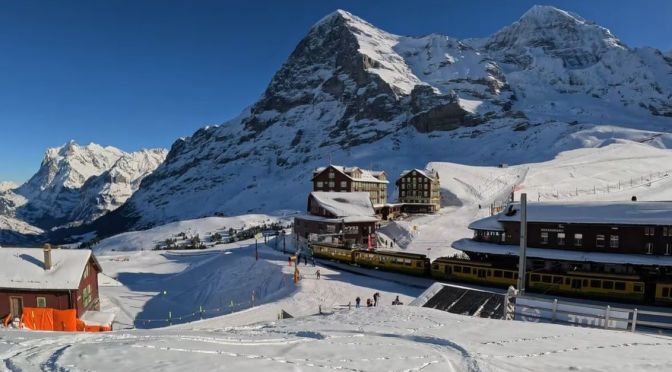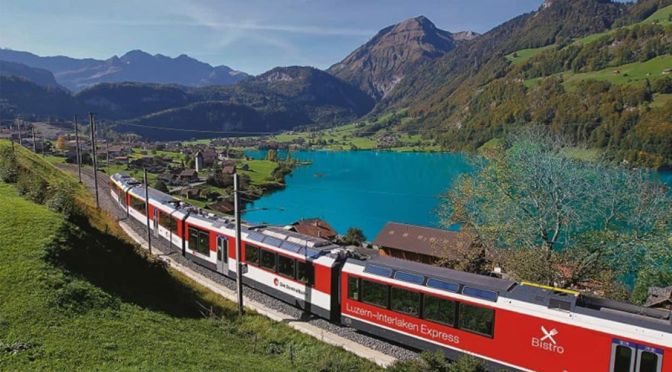

AKSense – Zurich Films (January 13, 2024) – This 4K HDR video features a train driver’s view of the trip to Grindelwald village (3392 ft) from Kleine Scheidegg mountain station (6762 ft).
The Kleine Scheidegg is located directly at the foot of Eiger North Face. It is the watershed between the two Lütschinen valleys. It is a popular starting point for the Jungfrau train to the Jungfraujoch-Top of Europe station, the highest train station of Europe.
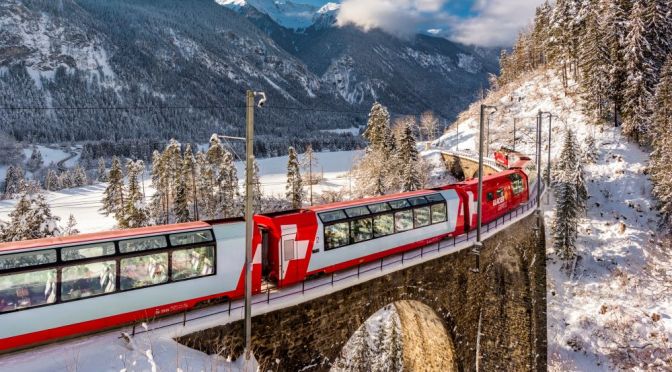
AKSense – Zurich Films (December 24, 2023) – The Glacier Express is the world’s slowest and Switzerland’s most elegant express train. This video is between Brig and Andermatt stations.
The entire route takes around 8 hours, the Glacier Express takes you across the Swiss Alps between St. Moritz and Zermatt regions, passing through narrow valleys, tight curves, 91 tunnels, and over 291 bridges including the unique Landwasser viaduct (UNESCO site).
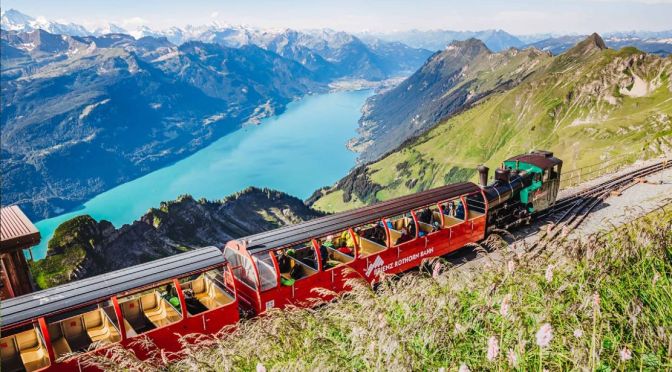
Sylvia Michel Photography (July 12, 2023) – The Brienz Rothorn Railway is a tourist rack railway in Switzerland, which climbs from Brienz, at the eastern end of Lake Brienz, to the summit of the Brienzer Rothorn.
AKSense – Zurich Films (June 21, 2023) – A train driver’s view aboard the Goldenpass panoramic train of the Montreux Oberland Bernois (MOB) railway. The train journey is from Saanen, through Gstaad, on to Zweisimmen, in Switzerland.
The Montreux Oberland Bernois Railway, is an electrified railway line that operates in southwest Switzerland. It is one of the oldest electric railways in the country. Its main line, 62.4 km in length, is built to the 1,000 mm gauge.
World Economic Forum (April 15, 2023) – This week’s top stories of the week include:
0:15 China build’s the world’s largest container ship – Mediterranean Tessa is nearly 400 metres long. Her deck area is the size of 4 football pitches. She can carry up to 240,000 tonnes of cargo or more than 24,000 standard containers. The ship is fitted with an air lubrication system. It blows tiny bubbles along the hull to reduce its resistance in the water.This reduces the ship’s CO2 emissions by up to 4% saving around 6,000 tonnes of CO2 a year.
1:36 The first cellphone call was made 50 years ago – On 3 April 1973, Motorola engineer Martin Cooper stood on a Manhattan street and called the landline of a rival who was racing to develop the cellphone, too. This was the world’s first mobile phone call. “I’m calling you on a cellphone,” Cooper said. ‘‘A personal, handheld, portable cellphone” the race was over. Cooper’s prototype became the first commercially available mobile phone. Motorola released the DynaTAC 8000x a decade later, in 1984. It was about the size of a shoebox and cost $11,500 in today’s money. Since then, mobile technology has transformed our lives. Watch to learn more about the first mobile phone call in the world.
3:40 South Korea to pay its citizens to have children – South Korea has the world’s lowest fertility rate. The average South Korean woman will have 0.78 babies in her lifetime. While the average fertility rate in OECD countries is 1.59. South Korea’s population is shrinking as a result. More people die each year than are born. Left unchecked, the country’s working-age population will almost halve by 2070. Globally, the fertility rate is declining it stands at 2.3 today. In 2000 it was 2.7. The UN predicts the global population will peak at 10.4 billion by 2080, but a recent study suggests the peak could be much lower and could arrive much sooner.
5:01 Why sleeper trains are being revived across Europe – The EU has provisionally agreed to call 2021 the European Year of Rail. It says boosting rail travel could help the bloc reach carbon neutrality by 2050.
_____________________________________________
The World Economic Forum is the International Organization for Public-Private Cooperation. The Forum engages the foremost political, business, cultural and other leaders of society to shape global, regional and industry agendas. We believe that progress happens by bringing together people from all walks of life who have the drive and the influence to make positive change.
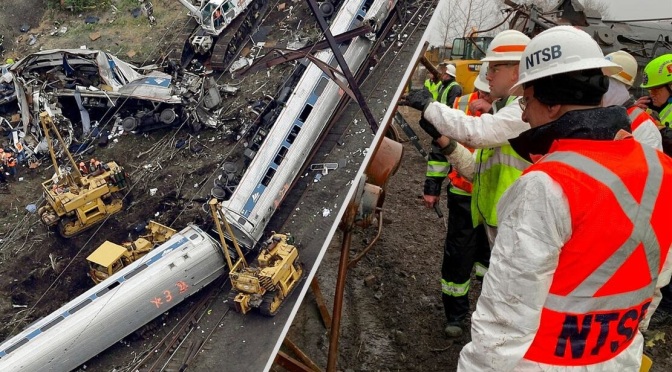
Wall Street Journal (March 28, 2023) – The train derailment in East Palestine, Ohio, was just one of over 1,000 that happen every year. NTSB’s Michael Hiller explains the most common reasons trains come off the tracks and what can be done to prevent derailments.
Video timeline: 0:00 Why do trains derail and how can they be prevented? 0:37 One of the biggest causes of derailments are track issues 3:04 Other derailments stem from human errors or equipment failures 5:01 Why most derailments are not severe and could be prevented
March 17, 2023: We take a trip on the JR Yosan Line through the local history and culture of Ehime Prefecture. Learn modern history at a railroad museum featuring exhibits you can touch and a theme park located on the former site of a copper mine. Dive into an age-old culture at a hot spring town where Geiko entertainers delight guests. A beloved tourist train with dining cars takes us right along the sea and stops at a popular lookout. Experience Gagaku Imperial Court Music at an ancient Shinto shrine.
DW Travel – Castles, palaces, vineyards, and a romantic river valley: experience a train journey along the Rhine with DW’s Hannah Hummel. It is considered the most beautiful train route in Germany!
RIVER RHINE VALLEY
The West Rhine Railway is one of the most beautiful and famous railway lines in Germany. It runs from Cologne via Bonn and Koblenz to Mainz. Its most recognisable part is from Koblenz to Bingen where the trains run directly along the Rhine and its numerous bends. This part of the valley even is part of the World Heritage. Famous trains as the Rhinegold used to run here, however since the high speed line between Cologne and Frankfurt is in operation the majority of long distance trains take this shorter and faster line instead. There are still many trains running on the Rhine Railway including hourly long distance trains.
Rocky Mountaineer from Denver in Colorado to Moab in Utah. During the train journey you will explore the Colorado Rockies, see landscapes that have been transformed over millennium, you’ll pass the Big 10 Curve, the Moffat Tunnel, Byers Canyon, Glenwood Springs, Debeque Canyon, Mount Garfield, Ruby Canyon before finishing in Moab.
1970 marked the start of construction work on the Tanzania-Zambia Railway, or “Tazara” for short. Some 1,860 km of tracks were laid through thick forest, uninhabited savannah and mountainous terrain as part of one of Africa’s boldest infrastructure projects.
The route was inaugurated in 1976. It links the coastal city of Dar es Salam in northeastern Tanzania with the town of Kapiri Mposhi in central Zambia. Local people have an affectionate nickname for it – “Uhuru” or freedom, symbolizing the people’s hope for a more self-determined life.
But some of the stations along the line have been out of operation for years. Drivers always need to be on the lookout for monkeys, elephants, lions, hippos and giraffes. For passengers, the ticket includes a free safari. Leaving the Selous Game Reserve behind, the Tazara enters the most dangerous and spectacular section of the route.
Drone footage shows dramatic images of a largely unknown area sliced through by the railway line.
News, Views and Reviews For The Intellectually Curious