



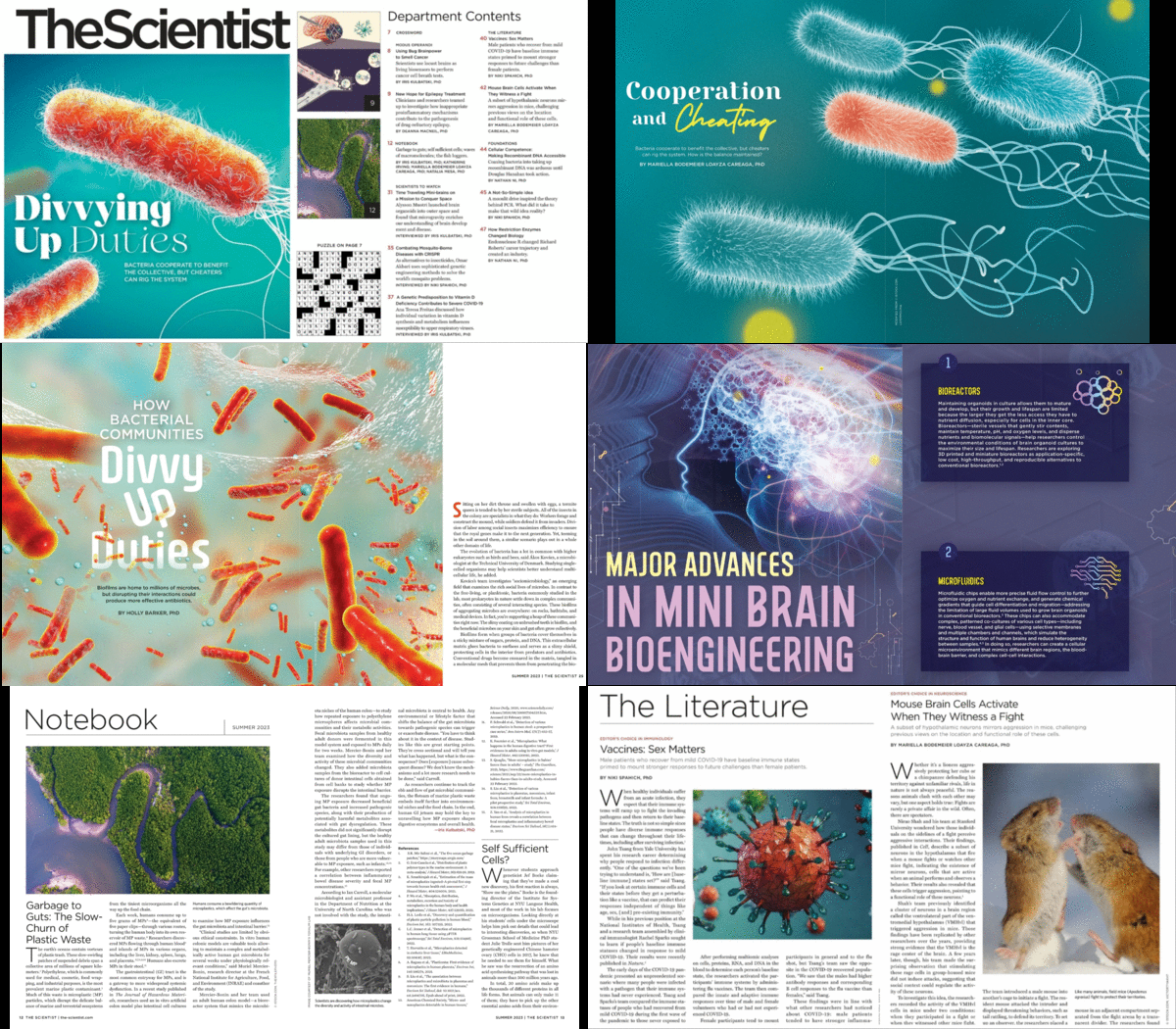
Cooperation and Cheating

Bacteria cooperate to benefit the collective, but cheaters can rig the system. How is the balance maintained?
People often recognize social behaviors in complex organisms such as insects, nonhuman primates, and humans. But Megan Frederickson, an ecologist and evolutionary biologist at the University of Toronto, is interested in a different, microscopic social community: bacteria. “Cooperation is everywhere,” she said. “Cells cooperate in multicellular organisms; individuals cooperate in societies; and different species cooperate… Why would it not be the case that microbes cooperate with each other?”
New Insight into Brain Inflammation Inspires New Hope for Epilepsy Treatment
Clinicians and researchers teamed up to investigate how inappropriate proinflammatory mechanisms contribute to the pathogenesis of drug-refractory epilepsy.

Doctors treat epilepsy with anticonvulsants to control seizures, but some patients do not respond to these first-line therapies. For patients with drug-refractory epilepsy (DRE) whose seizures persist after treatment with two or more anticonvulsants, clinicians must surgically remove part of the brain tissue to cure the disease.



 In this month’s episode, we learn that human brains differentiate musical pitch a way that macaque monkeys do not. In fact, speech and music shaped the human brain’s hearing circuits. Researchers are studying these circuits with an eye on developing treatments for neurological disorders.
 otherwise, long before this latest global pandemic. Cancer, the focus of this issue, is ubiquitous, and one would be hard pressed to find a person anywhere on Earth whose life wasn’t in some way touched by the complex and vexing malady.
  Boomers Daily