Tag Archives: The Local Project

Design: Seymour House In Melbourne, Australia

An Architect’s own home, Seymour House is inserted as a respectful addition to its neighbourhood, openly embracing the streetscape lined with heritage-listed properties and modernist gems. In crafting the dwelling, Lani Fixler of Lani Fixler Studio has created a place that is private and personal whilst also engaging in an open conversation with the surrounds.

Timeline: 00:00 – The Local Project Print Publication 00:10 – Creating a Family Home 00:40 – Introduction to the Home 01:25 – Entering the Modernist Home 02:04 – Walking through the Home 02:47 – The Bedrooms and Bathrooms 03:19 – Landscaping 03:40 – Courtyard Sculpture 03:54 – Artwork Throughout the Home 04:29 – What the Architect is Most Proud Of 05:00 – Subscribe to The Local Project Print Publication

Located in a south-eastern suburb of Melbourne, Seymour House is an architect’s own home that draws from Lani Fixler Studio’s long-standing familiarity with the built environment. The project is one that expertly merges personal responses with the contextual. In the construction of Seymour House, a connection to the street was important, as well as embracing the constricted site instead of challenging it. Sitting adjacent to Harleston Park, Seymour House is an architect’s own home crafted to be a continuation of its natural setting, with only two concrete plinths defining the barrier between the public and the private. Throughout the building, modernism is championed through a natural and restrained materiality with the use of concrete, terrazzo, timber and slate. The consistency with which the palette is applied – with blockwork featuring as both an internal and external architectural element – celebrates the environment surrounding an architect’s own home. Expressing considered detail and the characteristics of an architect’s own home, Seymour House is imbued with a sense of personality that uplifts its understated aesthetic. Crafted to complement the history and culture of the surrounding neighbourhood, Lani Fixler Studio graciously allows past narratives to continue as new chapters unfold.

Australian Architecture: A Tour Of Courtyard House Near Melbourne

Working with its signature material base, FGR Architects creates Courtyard House – a concrete dream house with a functional and airy interior. Shielded from the street, the minimalistic home enables natural ventilation and a sunlit landscape.

Timeline: 00:00 – The Client Brief for the Home 00:46 – Surprising Entryway 01:09 – A Sense of Intimacy from the Street 01:31 – Entering the Home 02:34 – Concrete Features 03:20 – Other Materials Used in the Home 04:03 – The Architect’s Favourite Part of the Home

A low-profile building, Courtyard House represents a structural shift from the local built environment; an intriguing blur in the pattern of gable-roof constructions. Set back in its site, the dream house embraces its contextual standing, opening its grounds to the natural northern sunlight.

Upon approach, the architecture of the dream house outlines a sequence of 90 degree turns that leads residents from the footpath to the front gate, then to the main entry of the home. The journey serves to introduce the idea of connectivity, echoed within the interior design. The layout of Courtyard House intentionally fosters passive solar heating and natural ventilation. A sightline directly connects the entrance of the dream house to the backyard, whilst large sliding doors join the living-kitchen-dining area to the outdoor space. Though unique and compelling, Courtyard House is ultimately understated. Demonstrating skill in concrete and light play, FGR Architects creates a practical and elegant dream house that enables an immersive natural connection.

Concrete Architecture: The Sandcastle In Point Chevalier, New Zealand

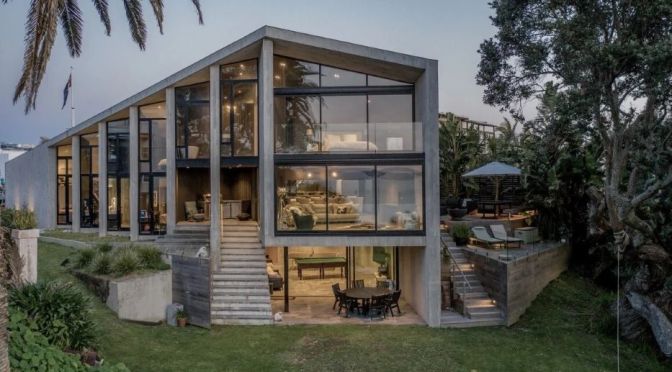
As an architectural house, The Sandcastle by Ponting Fitzgerald Architects champions the creative and structural benefits of concrete. Inspired by a sandcastle and built by Bannan Construction, the sculptural building is firmly established within its coastal context.

00:00 – An Introduction to the Architectural House 00:53 – Creating a Sandcastle 01:19 – Entering the House 02:06 – Building for the Coastal Climate 02:32 – A Unique Use of Concrete 03:37 – Materiality 04:07 – Lighting in the House 04:25 – Unique Qualities of the House 05:00 – What the Builder is Most Proud Of

Built within the inner harbour zone of Point Chevalier, The Sandcastle is situated directly above the shore. Sitting on a bluff of land that resembles a sand dune in constitution, the three-storey concrete home is conceived as an architectural house that naturally extends from the surrounding landscape. A house tour of The Sandcastle evidences its status as an architectural house, with the form of the building representing a playful yet sophisticated interpretation of a sandcastle. Concrete plays an important role in realising the shape of the home, offering endless formal possibilities in its pre-set, liquid state. Ponting Fitzgerald Architects crafts a dynamic materiality that withstands the erosive coastal climate. Although the concrete exterior interacts with the salt, wind and water of the environment – gracefully expressing the passage of time through a weather-beaten appearance – The Sandcastle maintains its structural integrity, establishing itself as an architectural house embedded in the landscape. With the help of Bannan Construction, Ponting Fitzgerald Architects creates an architectural house that is both rugged in nature and refined in form and concept. The Sandcastle stands as an enduring aspect of the coast; a solid piece of architecture, made in recognition of place.

Home Tour: A Single-Story ‘Reimagined’ In Australia

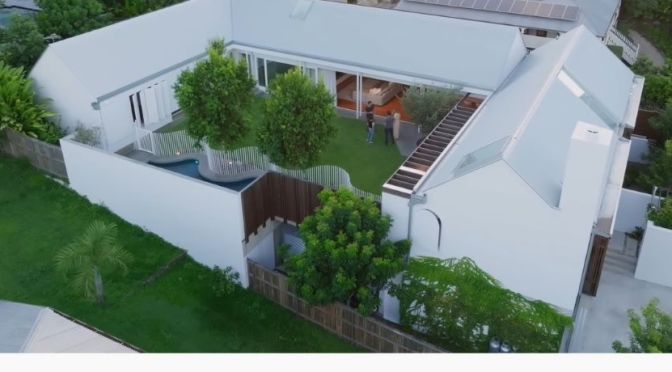
Evelyn is an Australian inspired house designed with a family-first philosophy. Crafted by Myers Ellyett Architects, the single-level home stands as the respectful reimagination of a 1911 cottage.

Timeline: 00:00 – Introduction to the Australian Inspired House 00:51 – Entering the House 01:30 – Responding to the Environment 02:05 – Creating an Inner-City Retreat 02:44 – Joinery and Lighting in the House 03:37 – Features of the House 04:20 – The Arch Motif 04:54 – Making the Backyard the Centrepiece 05:56 – Designing for Lifestyle

Situated in the Brisbane suburb of Paddington, Evelyn offers a tranquil retreat from the hectic nature of inner-city living. Originally a 1911 cottage, the Australian inspired house pays homage to its history with features such as timber materiality and additional gable roofs, which nod towards design methods of the past. As an Australian inspired house, Evelyn engages with the surrounding natural environment.

Glassless shutters catch the breeze as it brushes the side of the house whilst sliding panels in the bedrooms open the home to the external greenery. A house tour of the property reveals the home to be organised around a central lawn where children can play, speaking to the importance of family life as stipulated in the design brief. Raising the standard of a successful Australian inspired house, the interior design of Evelyn also draws upon the colours of the outdoors.

Green terrazzo is used in the bathrooms, wrapping the spaces to create the impression of being immersed in the garden. Throughout the house, simple materials and colours are employed to establish a sense of serenity. Designed to reflect the clients’ lifestyle, Myers Ellyett Architect creates an Australian inspired house that has family life and relaxation at its core. In both interior design and architecture, Evelyn stays true to the vision of family life that was initially shared by both architects and clients.

Townhome Tours: Azura Aspendale, Australia (4K)

Developed by Lowe Living in collaboration with Chamberlain Architects and GOLDEN, Azura Aspendale showcases the very best of beachside living. A house tour of an exemplar modern apartment proves the property to be a well-considered complex, seeing each resident have direct access to the nearby ocean.

Chapters: 00:00 – Introduction to the Modern Apartment 00:43 – Meeting the Brief 01:45 – Beach Access 02:07 – Designing for the Landscape 03:00 – Sustainable Design Features 03:45 – Apartment Living Features 04:24 – Indoor-Outdoor Living 04:55 – Executing a Strong Idea 05:19 – What the Architect is Most Proud Of

Sitting on a slither of land between the beach and the railway in Aspendale, the modern apartment is one of 19 within the complex, which is complemented by eight townhouses. Behind the apartment is a designed landscape that uses walkways to directly connect residents to the beachfront, with the walkways leading to a purposeful cut in the front of the building.

Presenting as a singular form, the external architecture of Azura Aspendale picks up on the vast horizon that the modern apartment faces. The rectilinear structure of the building succeeds in light of its modest presence; as opposed to visually dominating the natural landscape, the development presents as architecturally timeless and in harmony with its context.

The interior design of Azura Aspendale follows from the surrounding landscape. Natural materials such as chalky limestone and textured granite subtly refer to the outdoors whilst testifying to the significance of material longevity. Windows to the front and back of each modern apartment complete the airy, externally focused interior design.

Standing as a highly admirable collection of residences, Azura Aspendale is a gem in the Lowe Living property portfolio. From its materiality to its well-developed connection to the outdoors, each modern apartment provides an elegant means of experiencing beachside living.

Architecture: Hopetoun In Melbourne, Australia

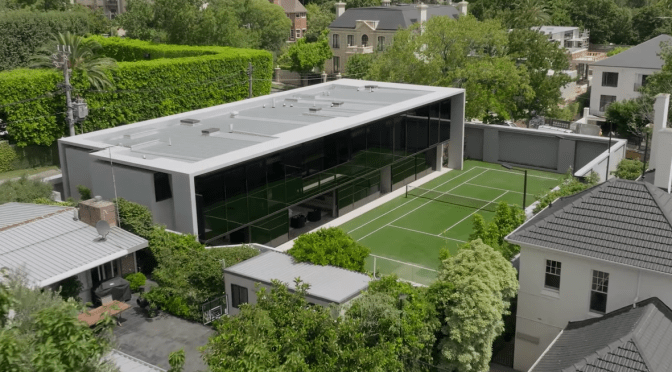
A solid concrete dwelling, The Hopetoun is a luxury super house, complete with a tennis court and sleek garage. Meticulously designed by FGR Architects, the new build combines architecture, lighting and textural detail to reveal internal spaces of surprising delicacy.

Video Timeline: 00:27 – Entering the Super House 01:21 – Minimalist Architecture 01:57 – Connection Between Spaces 02:19 – Positioning the House 02:59 – Lighting in the House 03:40 – Concrete Architecture 04:37 – Utilising Stone and Timber 04:54 – Breaking Tradition

Located in the leafy Melbourne suburb of Toorak, The Hopetoun is a super house designed to accommodate a large family. Situated on the corner of a road, the house is crafted to dramatically embrace the breadth of its site, presenting a broad and expansive façade to the street. A house tour of the property sheds light on the layout of the super house, carefully planned by the architect.

FGR Architects configures the home to maximise solar penetration via the northern aspect, fitting the sunlit side of the house with ample glazing and arranging the internal spaces to reflect the need for natural light. Whilst the southern orientation houses utilities and services, the northern counterpart is occupied by the most frequently habited rooms. A sculptural set of stairs forms the highlight of the interior design. FGR Architects uses lighting to express the structural prowess of the concrete super house, including the implemented overhangs within the architecture.

The delicate interaction between the undulating texture of the concrete walls and the warm wash of artificial light presents lighting almost as a material in itself, equal amongst the concrete, glass, stone and timber. Utilising the refined nature of concrete in relation to light, FGR Architects is able to create a sophisticated super house that possesses the robust material character to age elegantly through time. 00:00 – Introduction to the Super House

Architecture: Otsu House In Casuarina, Australia

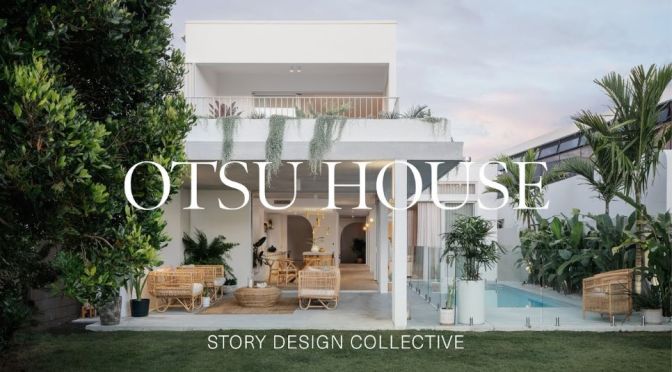
A modern-day dream home, Otsu House is a refreshing and timeless exploration of texture, material and light. The site’s proximity to the beach called for a pared back and neutral colour palette, filling the internal spaces with warmth and reflective character.

Video Timeline: 00:00 – Introduction to the House 00:29 – Design Influenced by the Environment 01:04 – Designing for Light and Airflow 01:25 – Concrete and Clay Finishes 02:57 – The Courtyard 03:15 – Neutral Colour Palette 03:40 – Landscaping and Pool Design 04:10 – Helical Staircase 04:53 – Ensuite Bathroom Features 05:18 – Concrete Kitchen Bench 05:36 – Successful Partnership

With easy access to the beach, it was important that the materials used within the structure were able to be self-maintained and endure the harsh Australian climate and beachside environment.

The dream home embraces open spaces, reminiscent of the nearby ocean. A continued theme of open space is felt throughout the house and is extended out towards the garden. The entryway is greeted with a void and an enticing sculptural staircase. Feeling as though it evolved out of the ground, the staircase draws the eye inward and up to the second level. The curve of the stairs reflects the textured clay render, Rockcote Japanese Otsumigaki, used throughout the interior and evokes a visual connection to ocean waves.

The Otsumigaki is both subtle and reflective, interacting with natural light and giving forth a lustre that is completely distinctive to the interior space. The raw nature of the Japanese clay and concrete used throughout the dream home acts as a significant connection to the beachfront. The textured material brings with it a warmth whilst also an endurance to the elements, specifically the salt from the ocean and the strength of the Australian sun.

Concrete is also used in the home’s ceiling, allowing for both thermal and noise barriers within the interior spaces. The material is also used in the kitchen bench and is in keeping with the natural, neutral colour palette present within the dream home. Otsu House also features a courtyard space, acting as both a lightwell and a visual connection for the downstairs rooms. The doors are able to be opened to allow a breeze to flow throughout the dream home, creating patterns with light and shadows. The linen curtains soften the raw concrete throughout and provide a delicate balance within the natural material palette.

Architectural Tours: Malvern House – 100-Year Old ‘Modern’ In Australia

Malvern House sees Lande Architects convert a one-hundred-year-old house into a modern home with a minimal addition. Traditionally, when architects convert a one-hundred-year-old house into a refreshed dwelling, they take care to preserve the heritage features of the property – Malvern House was no different.

Video Timeline: 00:00 – Blueland 00:09 – Introduction to the 100 Year Old House 00:45 – Modernising a Weatherboard Victorian Cottage 01:23 – The Client Brief 02:08 – Green Motif Throughout the House 03:30 – Utilising Natural Light 04:10 – Outdoor Areas 04:25 – Working Together with the Clients 04:58 – Blueland Home Cleaning Products 06:24 – Final Look at the Converted House

Lande Architects retains the original, decorative front of the Victorian weatherboard cottage, maintaining a connection to the defining architecture of the location. Lande Architects reconfigures the extension of Malvern House – located to the rear of the structure and comprising of the kitchen, living and dining spaces – to propose a larger footprint. Seven internal courtyards are added in adherence to the brief, which stipulated that the pockets of green space should feature within the interior design.

Softly defined by functional glazing, the courtyards form an important part of the overall scheme as Lande Architects convert a one-hundred-year-old house into a modern home. The design of Malvern House champions efficiency. Lande Architects insulates the home with double brick walls and a large concrete slab positioned to the north orientation, with the slab absorbing heat during the day and radiating the heat back into the house overnight.

Cross-flow ventilation is provided via the seven courtyards. Such mastery over the internal environment of Malvern House sees Lande Architects convert a one-hundred-year-old house into a home that can meet 21st century standards of liveability. Whilst the heritage front of Malvern House remains purposefully untouched, the rear extension is changed for the better. Lande Architects converts a one-hundred-year-old-house into a residence with a rich and evolving narrative.

Architecture: SRG House In Sydney, Australia (Video)

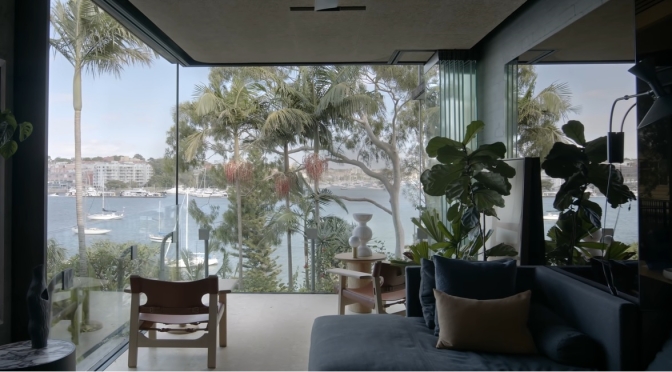
As an architect’s own home, SRG House by Studio Johnston balances its heritage context with contemporary design aesthetics. Facing the nearby water, the family home retains natural qualities through a strong connection to the surrounding bushland. Despite its inner-city location, the structure has an almost tree house-like quality to it, relating to its waterfront position in subtle and interesting ways.

The original building was dilapidated and had a number of unsympathetic alterations. Being an architect’s own home and after being stripped back, SRG House was reimagined to capture an element of discovery, seen through the materials used and maintained. The house stands as three storeys with an entrance at its middle level. To the left sits the kitchen, and adjacent to this is the dining area with inbuilt furniture.

The house tour then follows the floor plan out to the living space that looks out towards the water. In the original structure, the downstairs space was underutilised and was transformed to become bedrooms and a lounge room overlooking the pool.

Video Timeline: 00:00 – Introduction to the Architect’s Own Home 00:40 – Heritage and History of the Tree House 01:27 – House Design of the Architect’s Own Home 02:10 – Reimagining and Utilising Materials 03:40 – The Aspect of the Tree House 04:23 – The Architect’s Favourite Part of the Home 04:58 – Materials, Products and Furniture Round-Up

Tours: ‘Skylark Cabin’ – Off Grid Tiny Home In Twizel, New Zealand

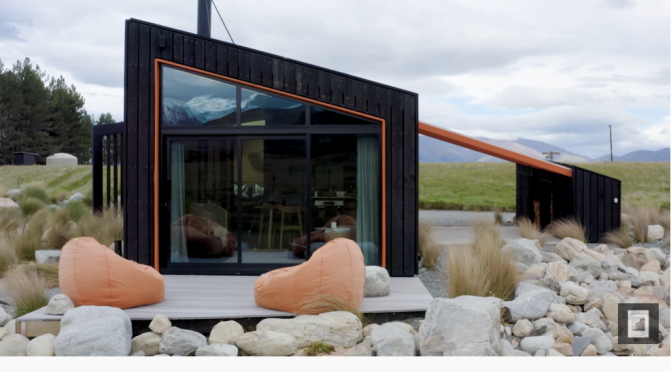
A tiny off grid cabin, Skylark Cabin embraces the incredible views afforded by its location. Barry Connor Design opens the cabin to the foothills of the Ben Ohau Mountain Range, establishing the residence as a dream home. Settled into the rugged environment of Twizel, Canterbury, the tiny off grid cabin is under 50 square metres and under four metres in height. From the cabin tour, i

Video timeline: 00:00 – The Local Project Print Publication 00:20 – The Brief for the Architect 00:45 – The Location of the Off Grid Cabin 01:03 – The Layout of the Cabin 02:40 – The Exterior from the Street 03:00 – The Layout Continued 03:26 – The Weather and Environment Around the Cabin 04:08 – Using Orange on the Exterior 04:20 – The Exterior of the Off Grid Cabin 04:51 – The Skylight in the Bedroom 05:04 – The Outdoor Bath 05:55

t becomes clear that the home has many features that make it a special addition to Airbnb. The architecture of Skylark Cabin encourages residents to enjoy the New Zealand landscape. Windows of various sizes throughout the home make for defined views of Backbone Peak and the Ben Ohau Range, whilst an open sightline from the bedroom to the reserve – passing through the living room – allows the tiny off grid cabin to borrow visual space from the outdoors. Barry Connor Design ensures that the interior design of the tiny off grid cabin references the natural scenery. Sheets of beech plywood pull the colours of the surrounding landscape into the cabin, whilst a large skylight above the bed alludes to the night sky in oversized, telescopic fashion. By creating a tiny off grid cabin that bears witness to its ever-changing external environment, Barry Connor ensures that the experience of backcountry Ben Ohau Range is like no other.