Tag Archives: The Local Project Videos

Design: Laneway Glass House In NSW Australia

Pointing towards the future of urban living, Laneway Glass House is an extended terrace house and a designer’s own inner-city home. Collaborating with Brad Swartz Architects, Henry Wilson reconfigures the spatial plan of an existing residence, establishing an exemplar contemporary space.

Video timeline: 00:00 – Introduction to Laneway Glass House 00:21 – The Architect and The Home Owner 00:47 – An Inner-City Location 01:25 – A Rear Lane Addition 01:43 – The Original Brief 02:21 – Flipping The Typical Terrace House 02:56 – The Creation of An Efficient Floor Plan 03:20 – The Spiral Staircase 03:56 – Utilising Materials In Unique Ways 04:20 – The Kitchen 05:01 – Taking Inspiration from Maison de Verre 06:00 – The Architect and The Home Owner’s Favourite Aspects

Settled onto a Darlinghurst laneway branching off Oxford Street, Laneway Glass House is a designer’s own inner-city home that aligns with its built context; a compact terrace house set among others of its kind. Organically brought together, Henry Wilson and Brad Swartz Architects quickly acknowledged the opportunity to build on the site, creating a rear lane addition that would serve as a prototype for similar developments in the future.

Materials are uniquely applied to the residence, suggesting the individual character of the project. In contrast to regular dwellings, this is a designer’s own inner-city home that sees materials used to articulate natural forms and subvert expectations for a compact space. In the kitchen, travertine is employed in a standard size without grout lines, enabling a broad, sophisticated and slab-like presentation. A designer’s own inner-city home, the contemporary kitchen is a room of cleans lines and volumes.

A commercial-like, monolithic space, the kitchen features stainless steel and presents as a formation of blocks slotted together to create a cohesive whole. Fisher & Paykel’s products are easily incorporated into the space – the Integrated Refrigerator seamlessly blends into the joinery and the Minimal Oven and Induction Hob complement the kitchen’s sleek aesthetic.

Paying homage to the Maison de Verre in Paris, glass blocks are employed to reflect and refract natural light whilst maintaining the private interior of a designer’s own inner-city home. Integrated into the façade, the blocks present Laneway Glass House as a shining jewel, sitting upon an otherwise mundane road.

Architectural Remodels: North Adelaide House

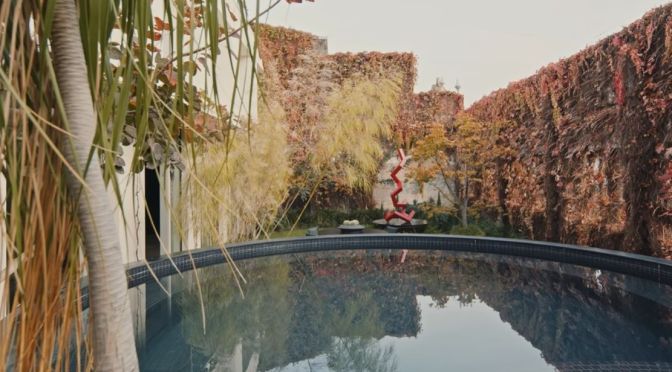
With calming detail and considered materiality, Williams Burton Leopardi transforms the heritage listed North Adelaide Residence into a modern home. Through the new expansions, different moods are evoked from room to room, seeing the modern home uplifted into a refined contemporary context.

Video timeline: 00:00 – Subscribe to The Local Projects Print Publication 00:13 – Introduction to North Adelaide Residence 00:38 – Single Fronted Cottages 01:07 – Bringing Grandness into A Workers Cottage 01:38 – Working with An Unusual Brief 02:13 – Creating Different Moods Throughout The Home 02:46 – The Separation of Old and New 03:17 – The Impact of A Narrow Site 04:00 – The Handmade Aspect to A Heritage Home 04:33 – The Materials Palette 05:18 – Subtle but Beautiful Details 06:02 – The Architects Favourite Aspects of The Home 06:49 – The Local Projects Print Publication

The infusion of muted natural light demarks the old from the new whilst material choices reference the original worker’s cottage. Inspired by a desire for simplicity and quality detail, the redesign of the modern home mirrors the original fabric of the residence. The choice to remove the third bedroom allows for an extra living area, whilst elongating the structure into the garden ensures the home aligns with the lifestyle of its occupants. The residence provides a visual experience with increased access to sunlight through integrated skylights and the introduction of natural materials.

The use of oak wood references the heritage sandstone exterior and grounds the modern home. Further echoing the outdoors is joinery toned to match the washed oak flooring and the Turco Argento limestone kitchen benchtops. By establishing an indoor-outdoor connection, a natural flow between the garden and the modern home is seamlessly achieved. Through folded doors and a large picture window, the inviting garden helps to enhance the liveability of North Adelaide Residence – where an intentional quality resonates through each material choice.

Design: ‘Sunrise House’ In Melbourne, Australia

Designing an architect’s own home and office space, Jolson architecture and interior design studio combines two distinct spaces that remain inherently separate. With a fascination of blurring lines between architecture, interior design and landscape design, Sunrise House becomes an exploration of how each discipline crafts a sense of space within.

Video timeline: 00:00 – Masterworks Advertisement 00:11 – Introduction to Sunrise House 00:42 – The Original 1950s Confectionary Factory 01:01 – Combining A Family Home and A Commercial Office Space 01:17 – Placing An Emphasis on Natural Light and Garden Space 01:27 – A Sanctuary with Sculptural Elements 02:19 – A Connection Between Outside and Inside 02:52 – Moving Vertically Through The House 03:32 – Connection to History Through The Gym and Courtyard Space 04:14 – Living With Colour, Texture and Memories 04:55 – A Reaction to The Original Facade 05:25 – Masterworks Advertisement

Sitting on the edge of an industrial commercial zone, Sunrise House by Jolson architecture and interior design studio was once a 1950s sweet factory before becoming an architect’s own home. Greenery covers the building’s façade, offering a dynamic sense of style not often seen within Melbourne’s cityscape. Yet inside, the connection from inside to out is made through an open floor plan that allows for the family to easily transition between living areas.

From the entrance, the office and ground level of the house honours the original build by keeping the concrete, paring it back to expose the aggregate. Although, in spaces where new concrete was poured, Jolson celebrates the new markings with memories of his own family, establishing the structure as an architect’s own home as well as a workplace. Retaining as much of the honesty and texture of the original building was key to bringing forth vibrancy.

The main design idea in the open living space was to insert three walls. Black joinery adorns one wall containing a concealed kitchen, another a large artwork that celebrates the history of the building and a third wall containing a luxurious fireplace. Through optimising the entirety of the volume within, Sunshine House becomes more than an architect’s own home, it becomes an art form. Jolson balances life, texture and colour – further complementing the minimal design aspects of an architect’s own home.

Design: ‘D_Residence’ In Scarborough, Australia

Complementing an established art collection, D_Residence is a modern home with an open interiority. Crafted by Carrier and Postmus Architects (CAPA), the serene residence represents a unique approach to interior design and architecture. Located in the maritime suburb of Scarborough in Western Australia,

00:00 – Introduction to D_Residence 00:32 – Behind The Name D_Residence 01:00 – Taking A Journey with Landscaping 01:41 – The Street Presence of the Modern Home 01:57 – The Endemic Landscape Character 02:20 – Separating Interior Design from Exterior Architecture 02:40 – Venturing Through D_Residence 03:03 – Concrete and Brickwork 03:46 – The Range from Brickworks and Austral Bricks 04:11 – Favourite Aspects of the Modern Homes and Proud Moments

D_Residence is named in reference to the nearby sand dunes. A house tour of the modern home begins at its façade, where lush greenery is positioned as a natural barrier between the home and the harsh wind. Utilising light and dark-toned brickwork from Austral Bricks at Brickworks, CAPA gently defines the modern home. Applied at the garage, basement level and entry, the dark-toned brickwork causes the practical amenities to visually recede and create an intimate arrival experience.

Combining with the blockwork which comprises the remainder of the façade, the bricks form a textural backdrop to the initial greenery. As the builder’s chosen medium, concrete is also featured in the modern home, offering a neutral complement to the owners’ art collection. Aesthetically flexible, D_Residence testifies to the impressive design restraint of CAPA. Ultimately determined by the influence of its occupants, the modern home welcomes personal injections of colour, texture and vibrancy.

Australian Architecture: ‘Jan Juc Studio’ Home Tour

Sitting underneath the eucalyptus trees, a slice of paradise awaits. As an architect’s own home, Jan Juc Studio creates a subtle ease between home and work life, whilst also establishing a humble presence within the surrounding landscape.

Video timeline: 00:00 – Roborock’s S7MaxV Ultra 00:15 – Introduction to Jan Juc Studio 00:41 – The Redevelopment of Jan Juc 01:08 – The Exterior vs. The Interior 01:36 – Creating Openness Through Doors 01:57 – Maximising What’s Available 02:23 – Multifunctional Screens 03:02 – The Materiality of The House 03:51 – Designing on The Move 04:10 – Surveying The Landscape 04:47 – Sun Filtration 05:14 – Architectural Clarity and A Humble Presence 05:52 – Roborock’s S7MaxV Ultra

Eldridge Anderson Architects draws inspiration from the architectural design they saw while travelling through Japan and incorporate nods to the built proportions, finishes and materials they experienced. In establishing an architect’s own home, Eldridge Anderson Architects creates architectural clarity by maximising what already existed.

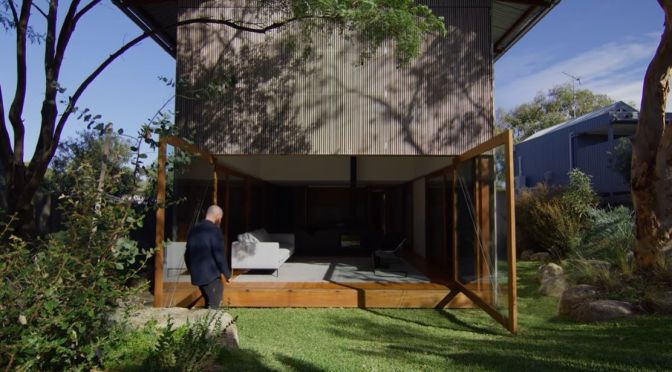
Surrounding the façade of the home with wide timber screens made of pre-aged wood enables an indoor-outdoor connection. Able to adjust to the changing weather and seasons, the sliding timber screens and opening doors offer a range of different lighting configurations throughout the day.

When opened, the diffusing of light through the bedrooms creates a relaxed start to the day and, by afternoon, the warm golden glow reflects off the blackbutt flooring throughout, creating a gilded living space. Complementing the interior of an architect’s own home, the recycled blackbutt is used for doors and floors which harmonise with the timber façade and the eucalyptus trees surrounding the exterior. Eldridge Anderson Architects engages with an open plan living that allows for an architect’s own home to flow from room to room while optimizing upon liveable space throughout the home.

Encouraging a journey through light diffused halls, Eldridge Anderson’s design emphasises the idea of open plan living with rear doors that slide open to the backdrop of vegetation and landscape of Jan Juc Studio. As the sun dances through the coastal home, timber and humble material choices combine to establish a composed presence.

Striving for architectural clarity, Eldridge Anderson Architects’ Jan Juc Studio presents a refined execution of ideas that were inspired by travelling through Japan, materials that help interchange moods throughout the day and the connection of an architect’s own home to the surrounding landscape.

Architecture: Grandview House In Sydney, Australia

Balancing a striking southern perspective with a warm internal character, Grandview House overcomes the limitations of its former self. Created by Ian Bennett Design Studio, the contemporary home undergoes the tactful renovation of a pre-existing family dwelling.

Video timeline: 00:00 – Introduction to Grandview House 00:40 – A Walkthrough The Contemporary Home 01:16 – Altering The Existing House 01:42 – An Introduction to The Owners 02:14 – A Collaboration of Architect and Owner 02:50 – A Floor Plan Designed for Family Living 03:31 – Family Conscious Design 03:57 – Utilising Durable Materials 04:55 – The Architect’s Favourite Part of The Home

Situated on the southern side of the Mona Vale headland, Grandview House once existed as a cold and uninviting residence with only minimal access to sunlight. The collaboration between Ian Bennett Design Studio and the clients – one of whom heads Northern Beaches Constructions – sees the house transformed into a warm and contemporary home, capitalising on views of Mona Vale Beach, Long Reef and Manly.

Entering the contemporary home, a walkway bridge sits above the ground floor, delineating two voids which allow sunlight to stream into the home. Further into the residence, the kitchen-living-dining area flows towards the external southern aspect. Upstairs, two children’s bedrooms branch off from the bridge, whilst the southern side of the house encloses a master suite, ensuite and an additional children’s bedroom.

An open plan format expands the visual field, softening the sense of transition between spaces and encouraging residents to explore the contemporary home. Voids crafted to the east and west draw natural light into the residence – as do apertures inserted into the awning – with louvre windows maximising cross-ventilation. Crafting authoritatively in a maritime location, Ian Bennett Design Studio nods towards its working history in the Northern Beaches region. Grandview House stands as an intuitive response to its site; a contemporary home that effortlessly captures natural light and inspiring southern views. 00:00 – Introduction to Grandview House 00:40 – A Walkthrough The Contemporary Home 01:16 – Altering The Existing House 01:42 – An Introduction to The Owners 02:14 – A Collaboration of Architect and Owner 02:50 – A Floor Plan Designed for Family Living 03:31 – Family Conscious Design 03:57 – Utilising Durable Materials 04:55 – The Architect’s Favourite Part of The Home

Architectural Tour: ‘Way House’ In Perth, Australia

An architectural family house, The Way House stands steeped in history. Originally crafted by Darryl Way Architect, the renovated dwelling by vittinoAshe draws upon its architectural heritage in embracing its future.

Video timeline: 00:00 – Introduction to The Way House 00:28 – The History Behind The Way House 01:16 – The Benefits of Open Plan Living 02:01 – Architectural Features of The Way House 02:24 – Creating Space Through Glass 02:37 – A Tribute to the Original House 03:42 – Introducing Artedomus Products 05:26 – The Embodiment of Family

Settled in close proximity to Perth’s Freshwater Bay, The Way House represents a significant family legacy. Built in 1975 by the client’s father – an established architect – the home stands as a labour of love. As an architectural family house, it was important to respect the built narrative of the residence when executing the modern-day renovation. Internally,

The Way House indicates its status as an architectural family house, with old architectural elements effortlessly cohered with the new. The new studio pays homage to the original house through the replication of clean lines, materiality and finishes. Working with Artedomus – esteemed supplier of natural stone and ceramic tiles – DWA Architects highlights The Way House as an architectural family house. Artetech Ombra Carbone porcelain panels are used as a minimal means of ornamenting the kitchen, positioned in striking contrast to red recycled bricks.

In the bathroom, Artedomus INAX tiles communicate a minimal design language to foster a sense of serenity. Crafting a house that embodies a meaningful history, DWA Architects invests in an ongoing residential narrative. An architectural family house, The Way House articulates the important role that architecture plays in family life and provides an inviting space for the next generation.

Design Tour: Crown Jewel Penthouse In Canberra

Named in relation to its amazing city views, Crown Jewel is a luxury penthouse capturing some of Canberra’s most striking vistas. Inside a penthouse crafted by Parallel Workshop Architects, residents are immediately met with a strong sense of natural connection.

Video timeline: 00:00 – Introduction to the Penthouse 00:30 – Creating the Clients Dream Home 01:01 – Incorporation of the Natural Landscape 01:15 – Catering for Different Occasions 01:44 – Referencing the Structural Architecture 02:05 – Creating a Kingdom from the Penthouse 03:10 – The Design Strategy 03:29 – Favourable Aspects of the Penthouse 03:52 – The Freedom of Design

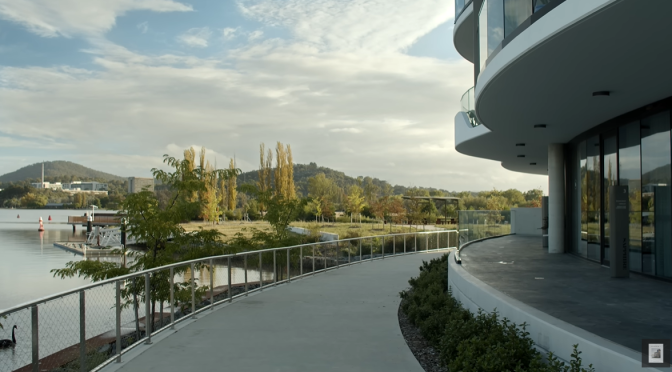
Situated on the southern shore of Lake Burley Griffin in Canberra, Crown Jewel is one of six penthouses in the lavish Sapphire development. From inside a penthouse, occupants can enjoy amazing city views including those of Lake Burley Griffin, Kingston Harbour and the lush wetlands. A tranquil experience inside a penthouse often begins with the occupant feeling settled in place.

Parallel Workshop Architects connects residents to the character of Canberra by reflecting elements of the natural landscape in the architecture and interior design of the home. While joining the apartment to its natural context, Parallel Workshop Architects pays homage to the clients’ request for luxury inside a penthouse. The deep, rich colours of the Australian landscape are featured in the immersive architecture and interior design, including the navy furnishings, muted green finishes and consistent interplays of light and dark grey.

Translating both the surrounds and design brief into a cohesive architectural outcome, Parallel Workshop Architects establishes a family life in place. Functional and aesthetically generous, Crown Jewel is equipped to provide for multiple generations, fostering an authentic love for living inside a penthouse in Canberra.

Australian Architecture: A Tiny Home In Adelaide

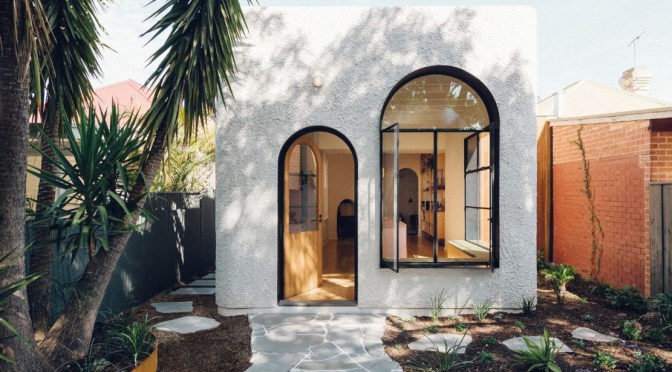
A sculptural tiny house enveloped by the garden, Plaster Fun House represents a light-hearted shift from the residential norm. Designed by Sans-Arc Studio, the extension of the tiny house sees the old and new united in a home defined by curves. Located in Torrensville, a western suburb of Adelaide, Plaster Fun House takes inspiration from its cultural surroundings.

Video timeline: 00:00 – The Local Project’s Print Publication 00:14 – Introduction to Plaster Fun House 00:50 – An Interesting Brief 01:15 – Integrating Old and New 01:41 – A Backyard Oasis 02:00 – Curves in all the Right Places 02:28 – Taking Inspiration from Migrant Housing 03:00 – Colour Splashing Throughout 03:50 – A Display of the Clients Personalities 04:32 – Interacting with the Surrounding Environment 05:45 – Subscribe to The Local Project’s Print Publication

Though, a house tour reveals that the primary architectural aspects of the tiny house contrast the immediate built landscape, testifying instead to an art deco style. Sans-Arc Studio introduces curves into the architecture, interior design and particularly the custom joinery of the tiny house.

As well as injecting a playful character into the home, the curves enable effortless movement through the compact space. Responding to the clients’ request for terrazzo to be used wherever possible, Sans-Arc Studio employs terrazzo benchtops. Stepping down into the extension of the home, the terrazzo material of the kitchen island benchtop unites the old and new aspects of the dwelling, a staggering from kitchen bench to dining surface marks the threshold between new and existing.

Across the façade of the tiny house, natural light plays across the stucco wall treatment; a crafted ode to the Mediterranean-inspired housing of the surrounds. The resulting home is peaceful, artistic and unique, providing the clients with a new and inviting extension.

Design: Hidden Garden House, Sydney, Australia

Imbued with a sense of tranquillity, Hidden Garden House is a minimalist residence with a restrained materiality. Designed by TRIAS in collaboration with the clients, the home emerges as a peaceful ode to simplicity.

Video timeline: 00:00 – The Local Project’s Print Publication 00:15 – Introduction to Hidden Garden House 00:40 – The Surrounding Neighbourhood 01:01 – A Walkthrough of the House 01:43 – Views from the Upper Level 01:54 – The Hidden Garden 02:13 – The Creative Clients 02:35 – Hand Made House Features from the Client 03:09 – Warmth Through Material Selections 04:17 – Taking Pride in the Project 05:09 – The Architects Favourite Features 05:38 – Subscribe to The Local Project’s Print Publication

Located in the Sydney suburb of Darlinghurst, Hidden Garden House celebrates small living on the fringe of the CBD. A house tour of the property elucidates its floor plan. Entering the home, the living room leads to an elevated dining room, which in turn flows to the kitchen space. The kitchen wraps around a courtyard garden and upstairs, the bedroom and bathroom are separated by blocks of joinery. As one of the occupants of Hidden Garden House is a ceramicist, their influence is apparent throughout the home. Terracotta floor tiles line the kitchen whilst white tiles in the lightwell bounce sunlight into the home. Brass hardware and elegant furniture also testify to the quality of the client’s work. TRIAS uses natural materials to establish a sense of warmth in Hidden Garden House. Bagged brickwork proposes a feeling of tactility, while timber floors and joinery visually soften the interior. Smaller details such as pendant lights and brass finishes speak endearingly to the idea of careful consideration. Refined and minimal, Hidden Garden House stands as a timeless residence; a ceramicist’s own home. Working closely with the clients and embracing their unique contributions, TRIAS translates a joint vision into an architectural success.