MicroHaus structures are portable and easy to transport. You can rapidly respond to changing circumstances and environments and change your rental business location in hours.
MicroHaus’ natural wood and fabric interiors are durable and beautiful. Designed in Europe and crafted in the USA, the interior elements are also a sign of our modern times.
These homes are energy efficient with low operating costs. They are durable and made from eco-friendly materials that are safe for you and the environment. Back-up power, a large water tank, and our Cloud Self-Diagnosis system make each one perfectly sustainable.
The system could be one answer to slashing Earth’s carbon emissions. A Swiss startup has created a giant vacuum cleaner to capture carbon dioxide from the air, helping companies offset their emissions. WSJ visits the facility to see how it traps the gas for sale to clients like Coca-Cola, which uses it in fizzy drinks. Composite: Clément Bürge.
According to Rakuten Intelligence, the cost of a ride from a ride-sharing app like Uber or Lyft increased 92% between January of 2018 and July of 2021. Many riders have also noticed increased wait times for rides, and a recent driver shortage is likely to blame. In early July 2021, Uber and Lyft drivers were about 40% below capacity. The companies have taken notice of this driver shortage, and are investing millions worth of bonuses and base rates to convince drivers to return. But will it be enough to get drivers back on the roads?
Troubled by his missing goat, Hu-Chun, a herder living in the steppes of Inner Mongolia, embarks on a journey to bring Ghalatar back into the fold. With a smartphone in hand and a motorcycle as his faithful steed, Hu-Chun traverses the mountain and desert plains herding around 500 goats. As a college-educated man who has returned from the city to continue his family’s agricultural way of life, Hu-Chun is part of a new generation of Mongolian herders embracing technology and a traditional lifestyle. He has also installed a 360-degree camera on top of a hill to monitor the precipitous terrain surrounding his home… continue reading on https://o6g7.app.link/kCWWETUZ1ib
China says its spacecraft has more advanced technology. While the future of the nearly 23-year-old International Space Station remains uncertain after 2024, China says its newly equipped Tiangong station will be up and running by next year. WSJ unpacks the design and technology of both space stations. Photo: CCTV; NASA
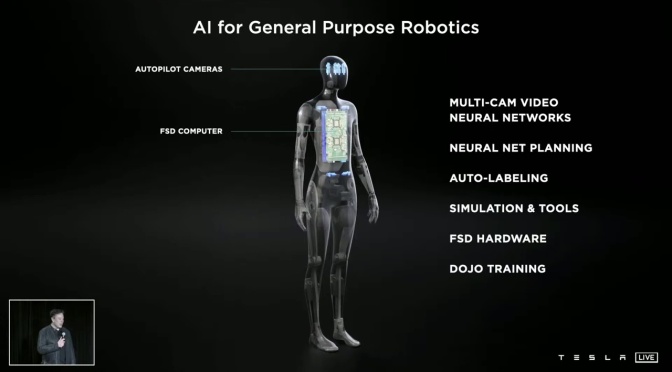
“It’s intended to be friendly.” Elon Musk unveiled the Tesla Bot, a humanoid robot he said the company plans to build, drawing on some of the technology used for its vehicles #AIDay#WSJWhatsNewspic.twitter.com/Qt9pX2ZCet
The covid-19 pandemic has reinforced humanity’s dependence on modern tech, but the same tools that enable remote working are also being used to spread disinformation and perpetuate cybercrime. Ambivalence towards technology is nothing new. Read more of our coverage of Science & technology: https://econ.st/3CdkVa5
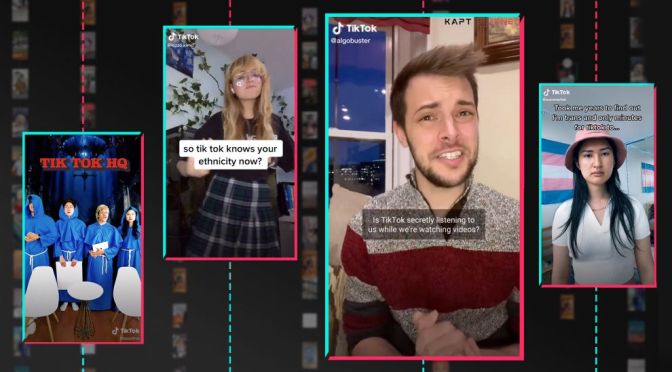
The Wall Street Journal created dozens of automated accounts that watched hundreds of thousands of videos to reveal how the social network knows you so well A Wall Street Journal investigation found that TikTok only needs one important piece of information to figure out what you want: the amount of time you linger over a piece of content. Every second you hesitate or rewatch, the app is tracking you. Photo illustration: Laura Kammermann/The Wall Street Journal
A 12-metre 3D-printed pedestrian bridge designed by Joris Laarman and built by Dutch robotics company MX3D has opened in Amsterdam six years after the project was launched.
The bridge, which was fabricated from stainless steel rods by six-axis robotic arms equipped with welding gear, spans the Oudezijds Achterburgwal in Amsterdam’s Red Light District.
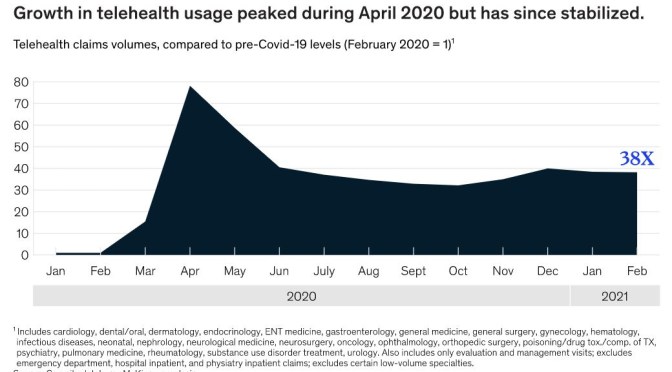
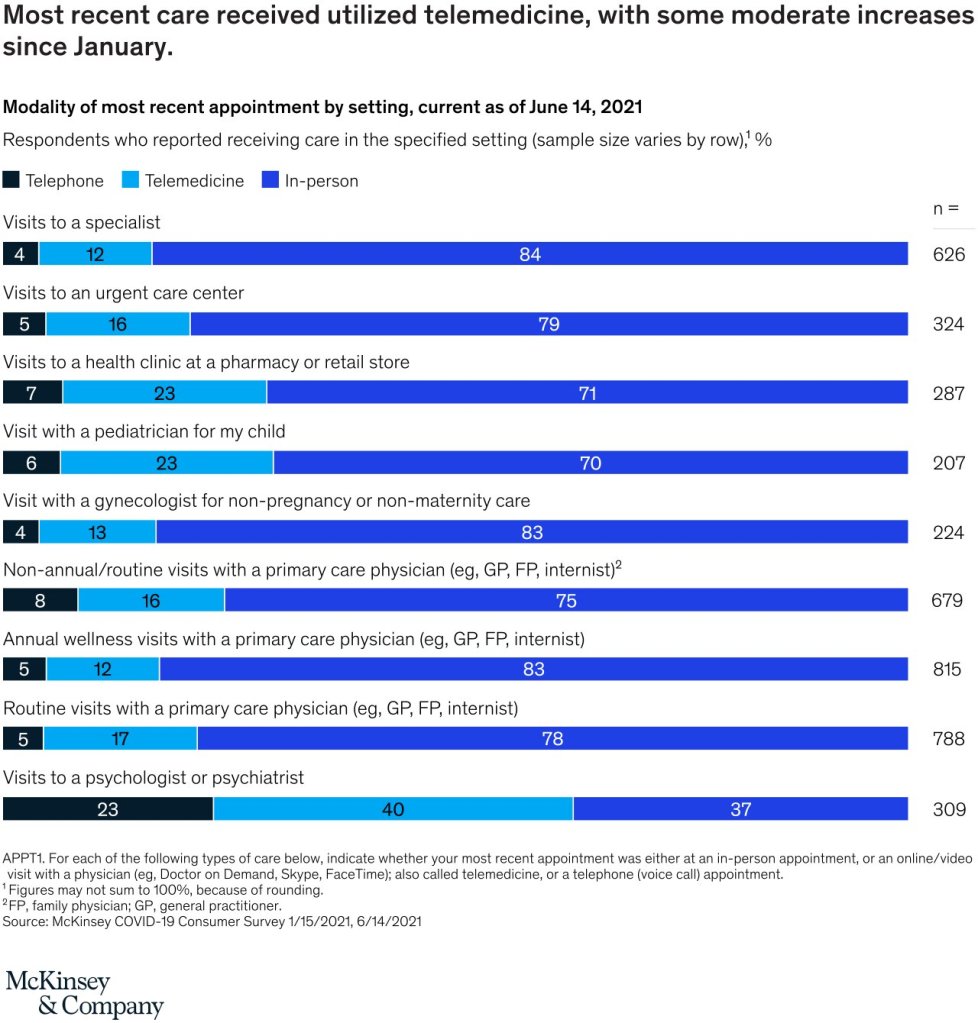
Telehealth utilization has stabilized at levels 38X higher than before the pandemic. After an initial spike to more than 32 percent of office and outpatient visits occurring via telehealth in April 2020, utilization levels have largely stabilized, ranging from 13 to 17 percent across all specialties.2 This utilization reflects more than two-thirds of what we anticipated as visits that could be virtualized.3
Similarly, consumer and provider attitudes toward telehealth have improved since the pre-COVID-19 era. Perceptions and usage have dropped slightly since the peak in spring 2020. Some barriers—such as perceptions of technology security—remain to be addressed to sustain consumer and provider virtual health adoption, and models are likely to evolve to optimize hybrid virtual and in-person care delivery.
Some regulatory changes that facilitated expanded use of telehealth have been made permanent, for example, the Centers for Medicare & Medicaid Services’ expansion of reimbursable telehealth codes for the 2021 physician fee schedule. But uncertainty still exists as to the fate of other services that may lose their waiver status when the public health emergency ends.
Investment in virtual care and digital health more broadly has skyrocketed, fueling further innovation, with 3X the level of venture capitalist digital health investment in 2020 than it had in 2017.4
Virtual healthcare models and business models are evolving and proliferating, moving from purely “virtual urgent care” to a range of services enabling longitudinal virtual care, integration of telehealth with other virtual health solutions, and hybrid virtual/in-person care models, with the potential to improve consumer experience/convenience, access, outcomes, and affordability.








 Boomers Daily